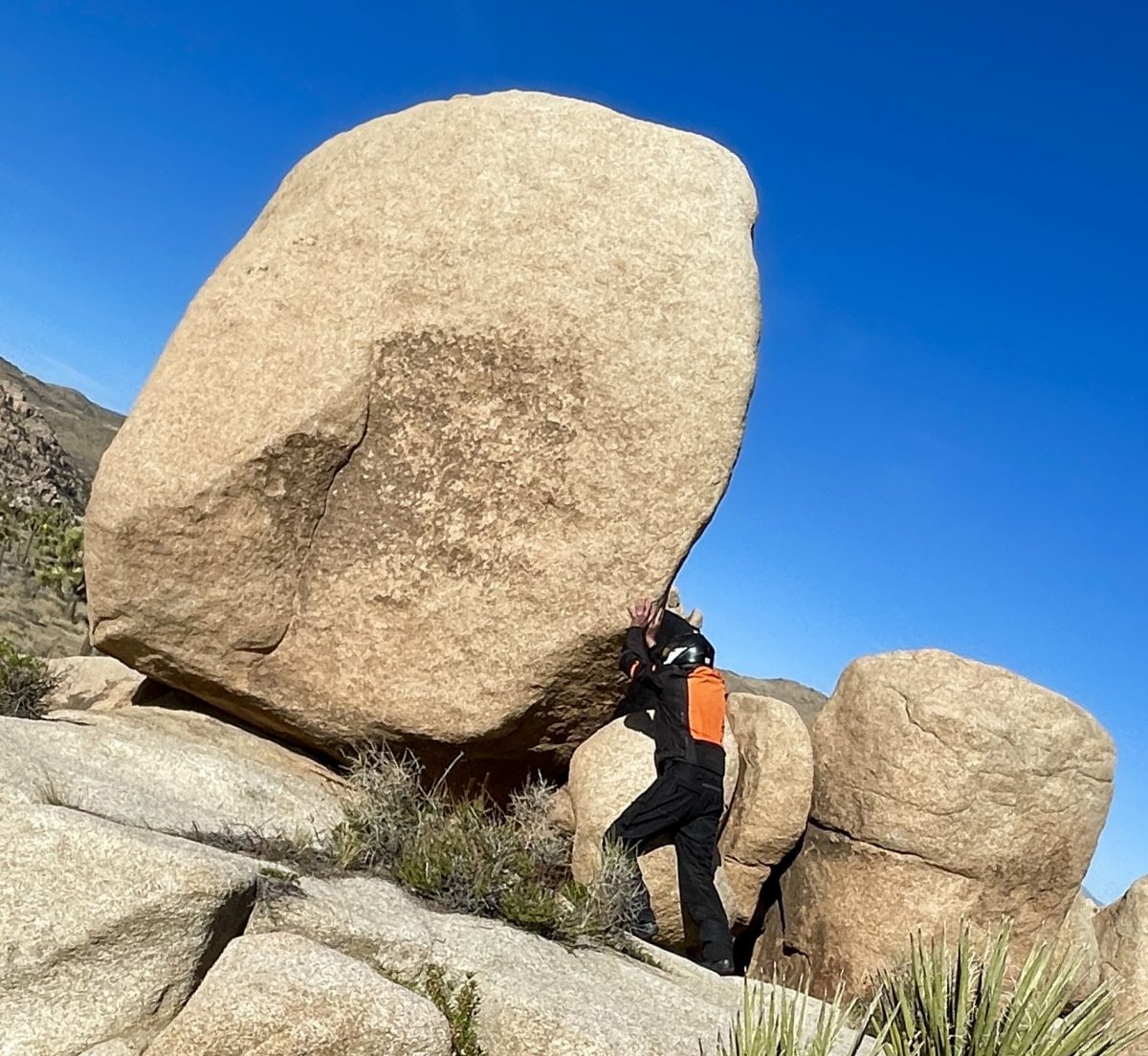
2025 Ruby Mountains Ramble

September 2025

What does a lost wallet, Coors Light, more cows than people, and Theodore Douglas Willer have to do with an epic adventure?
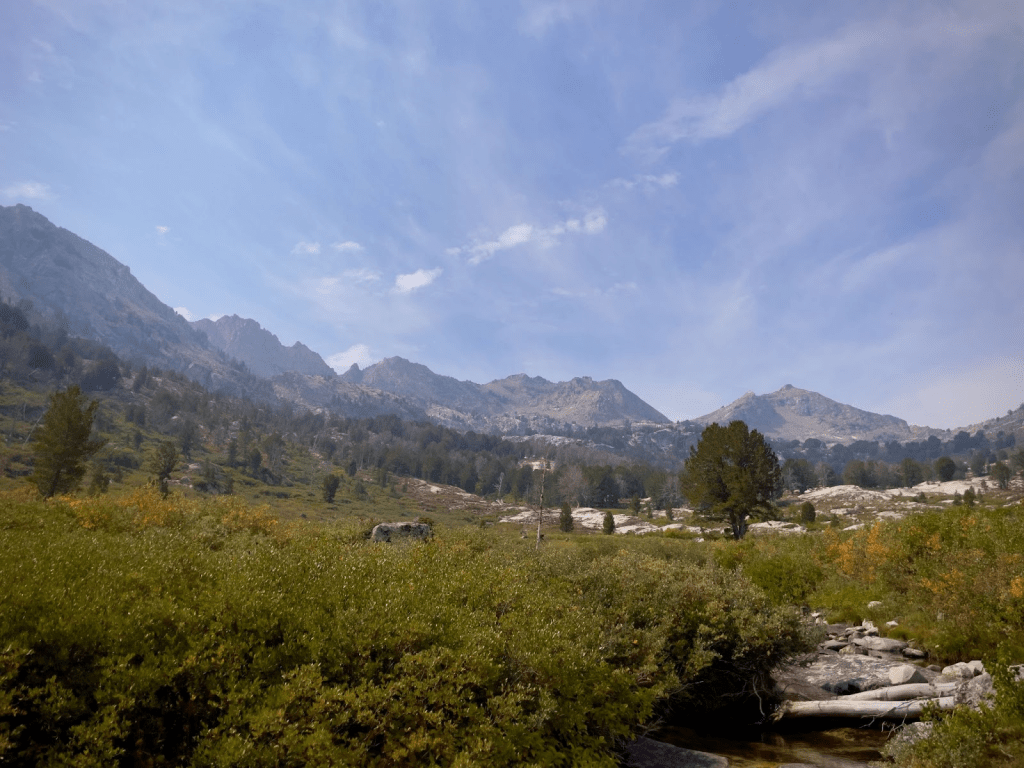
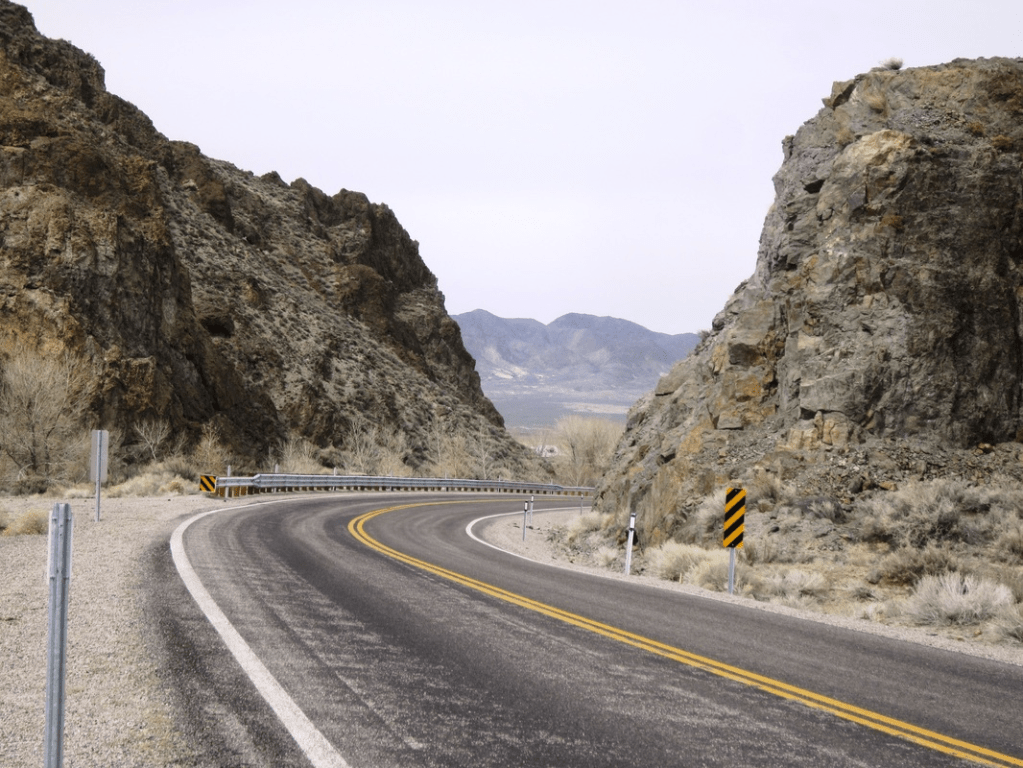
Lemoille Canyon

I, as SisyphusDW7 (my nom de plume), posted Chasing the Perseid’s; An August 2025 Ramble in the Sierra. The ride was a warmup for our fourth ramble of 2025 as we plotted a seven day, six night tour of the Ruby Mountains in Northeastern Nevada.  

With a taste of the billions of galaxies filled with billions of stars as viewed from the Sierra, I figured there was at least as much to view in northeastern Nevada, notwithstanding a full moon, and so the plan to ramble to the Ruby Mountains began to take shape.  

Sisyphus was aboard Bella Rossa, a Moto Guzzi V-85TT and his associate Pete was on his Suzuki V-Strom.  Pete’s not as romantic as Sisyphus and so his moto is nameless.  His imagination an appetite makes up for any other deficiencies.

We packed up and departed on September 7 venturing forth on CA-140/CA-120 bound for a Sierra crossing at Tioga Pass.  I’ll use excerpts from the itinerary to introduce the daily “chapters” of the ramble.

Day 1 / Sunday Sept 7 – Merced to Fallon, NV

Merced to Fallon, NV ~284 miles

  • From US-395 take CA-182 (Sweetwater Rd) in Bridgeport to NV-338 to junction with NV-208 near Smith Valley to the junction of NV-208/NV-339.
  • Continue on NV-339 through Yerington to the junction with US-95 to Silver Springs.  
  • From Silver Springs, ~26 miles to Fallon on US-50
  • Reservation at the Super8 by Wyndham  

Tioga Pass or CA-120 is a familiar Sierra crossing.  Along with Sonora Pass (CA-108), Sherman Pass (Forest Rte 22S05), and Walker Pass (CA-178) we have seasonal options.  In winter Tioga, Sonora, Sherman Passes are closed with the first winter storms.  Walker Pass in Kern County will occasionally close in winter due to snow and regardless of weather, it beats crossing the summit in Tehachapi (CA-58) which is a major commerce route from Bakersfield to the Mojave, US-395, and Interstates 15 to Las Vegas and and I-40, the offspring of Route 66, The Mother Road, all featured in previous rambles on my blog, sisyphusdw7.com .
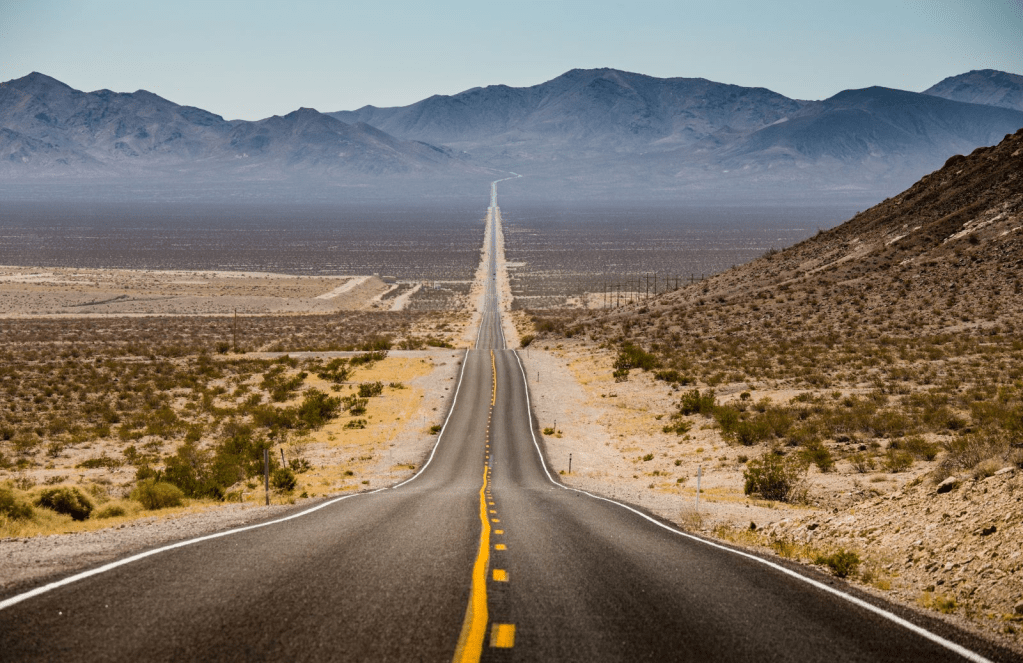
The Mother Road from a past ramble
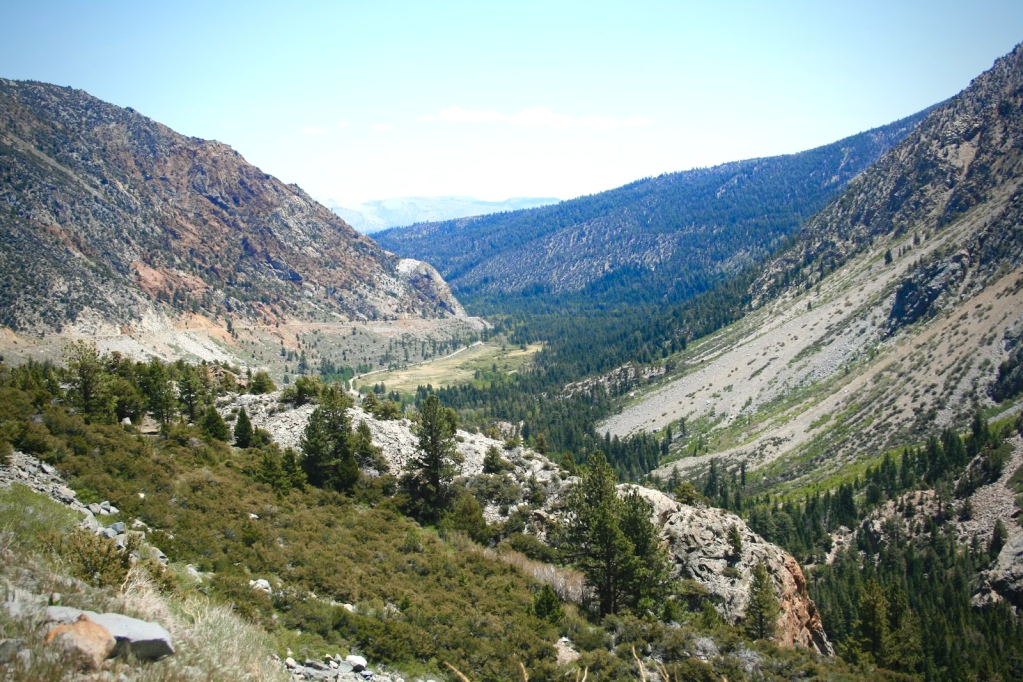
Tioga Pass and Lee Vining Canyon en route to the Ruby Mountains

The vistas up Tioga Pass were somewhat obscured by smoke from wildfires burning in the Western Sierra that resulted from recent monsoonal lightning strikes.  Since the fall colors were only beginning to show, there was no great disappointment on what nature had wrought by way of wildfires compromising the views.

We stopped at the Mono Basin Scenic Area Visitor’s Center on our route along CA-395 to Bridgeport to “de-layer” as the cooler temps at elevation gave way to the late summer heat on the East Side of the Sierra.  The smoke gave a muted hue to the otherwise clear skies. 

Muted skies from the parking lot at the Mono Basin Scenic Area Visitor Center
Un-Muted skies from the Mono Basin Scenic Area Visitors Center Overlook 
(How did they do that?)

Once in Bridgeport we took CA-182, Sweetwater Rd north, crossing the CA-NV border where the road became NV-338 following tributaries to the Walker River to Smith Valley then NV-208 & 339 to Yerington where we fueled up at my favorite petrol shop.  Loves me the Dino. 

Dino Love

Passing the Anaconda Open Pit Copper Mine on Alt US-95 from Yerington following tributaries of the Carson River through dairies and onion fields, we then headed east passing the Lahontan State Recreation Area on the Lincoln Highway, US-50.  Soon we reached our destination for Day 1, Fallon Nevada.  

Fallon is known for being home to Naval Air Station Fallon.  Built in 1942, is located southeast of the city center.  Since 1996, NAS Fallon has been home to the U.S. Navy’s Navy Fighter Weapons School (popularly known as TOPGUN), using several flight training areas and practice ranges in the area.  

In 1963 there was an underground nuclear test known as Project Shoal that took place ~30 miles from Fallon.

I’m no hydrologist, but it seems planting onions in soil irrigated from ground and surface water from a nearby Superfund open pit copper mine or detonating a nuclear bomb in the middle of the potentiometric ground water surface near Fallon was potentially, well, I’ll let you consider the implications*.  It’s kind of how Nevada does environmental things. Needless to say, we drank bottled water while in Nevada.  

*Did I mention I once submitted ten puns to a contest to see which one would win.  No pun in ten did… Well what did you expect?

I chose Fallon for our Day 1 destination, not because of fighter jets, or radioactive water but for the D = ST (distance = speed × time) calculus essential to motorcycles.  Its location on the Lincoln Highway, the first transcontinental thoroughfare,  passes through Fallon from east to west (and vice versa), following the original Pony Express trail.  Today it is designated U.S. Highway 50, and eastward from Fallon is popularly known as The Loneliest Road in America, as it passes through only two towns (Austin and Eureka) and one small city (Ely) between Fallon and the Utah state line, over 400 miles distant.  

Hence, lodging options between our destinations for Days 2-4 were limited.  
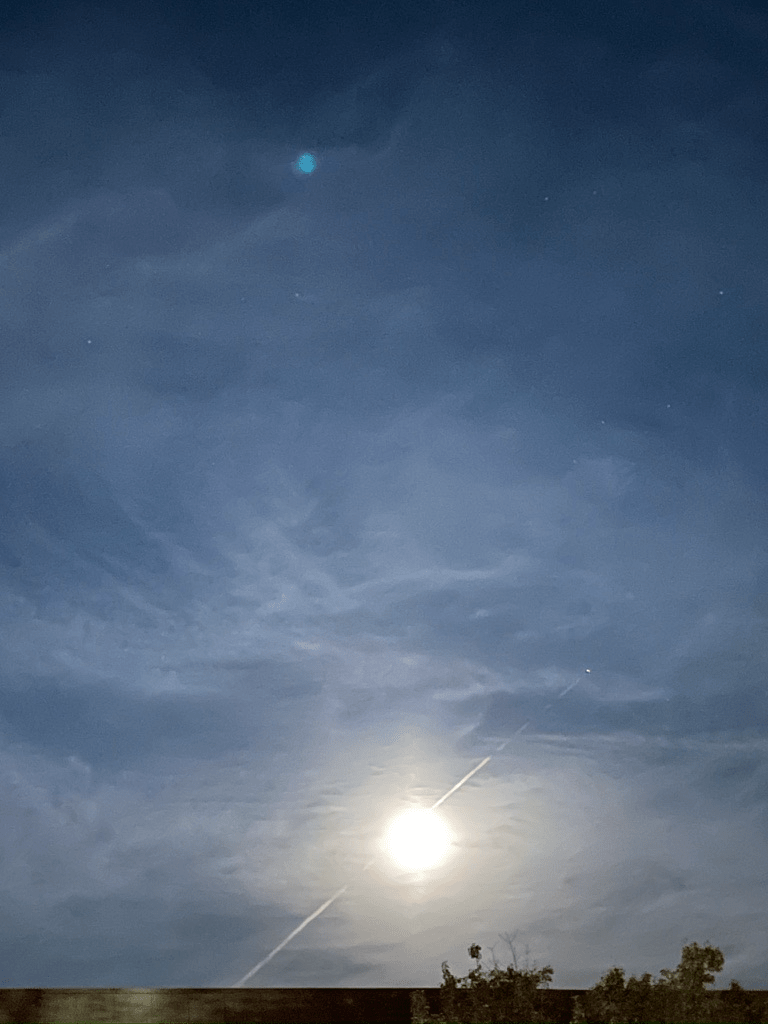
Moonrise over the Super 8 and Bonanza Casino by Wyndham Fallon 
Pete and I concluded the blue sphere above the moon was an alien mothership
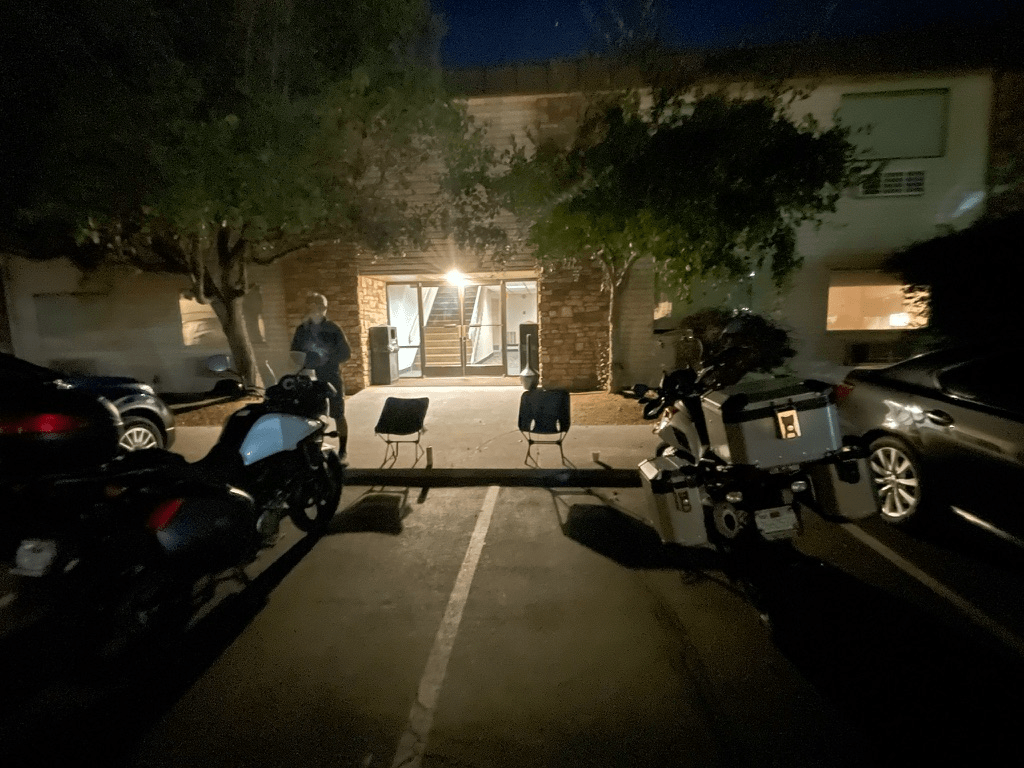
3 R’s smoke free Fallon Style

Day 2 / Monday, Sept 8  – Fallon, NV to Elko/Spring Creek, NV and the South Fork Recreation Area 

Fallon to Elko and South Fork Rec Area ~338 miles  

  • US-50 through Austin to NV-278 N to US-80 at Carlin to Elko (~24 miles).  
  • NV-227/NV-228 to the South Fork Recreation Area (~16 miles from Elko). 
  • Nevada State Parks South Fork State Recreation Area – East Campground – RV or Tent with E Utilities 
  • Confirmation Number: 1057754  Camp host, Theodore (Ted) Douglas Willer Arrive: Mon 09/08/2025 – Depart: Thu 09/11/2025 (3 nights Site 5 #1057754 reserved 9/8-9/11)
  •  Get Supplies in Elko or Spring Creek.

A long day in the saddle, we rode past the Saloon and Shoe Tree at Middlegate and turned off of US-50 on a route we discovered on a previous trip to Austin, (Austin Nevada that is…) on NV-722/2 that took us through the ghost town of Eastgate.  

US-50 art or artifice?
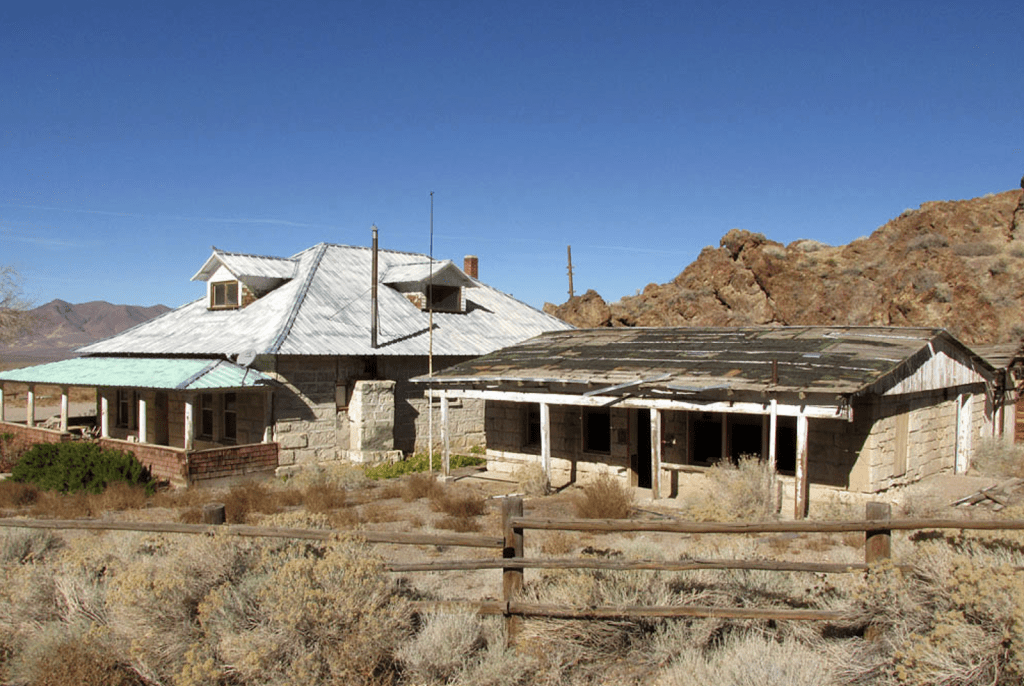
Looking west from East Gate Station aka Gibraltar Gate on NV-722
Eastgate Station, now
East Gate Station, then (image scrubbed from the interwebs)

From Nevada Expeditions: First called Gibraltar Gate, Eastgate was named by Captain James Simpson in the same manner as nearby Middlegate and Westgate. While it never served the Pony Express like the other two ‘gates’, a station and vegetable garden were located here by the Overland Stage and later sold to George S. Williams about 1876. A tufa-block home was built in 1879, leading to the place being known sometimes as “White Rock House”. In 1908, the current tufa-block home was erected. With the formation of the Lincoln Highway in 1913, Eastgate’s importance grew as a new store and gas station were established to service travelers. It probably lasted until around 1967 when the highway was rerouted, bypassing Eastgate completely.   And just like that, Eastgate’s fate, like those along the Mother Road, was determined by a highway realignment.

For a deeper dive into Eastgate and Carroll Summit Stations in Nevada, check out the YouTube video by Two Guys in the Middle of Nowhere The Ghost Town of Eastgate Nevada.

A fuel, nalgas relief, and snack stop in Austin found us eastbound to Eureka where we departed US-50 north on NV-278 enroute to Carlin through arid landscapes interrupted by alfalfa fields quenched by Pine Creek and the Humboldt River.  From Carlin, it was a short leg on I-80 to Elko through the Carlin Tunnel.
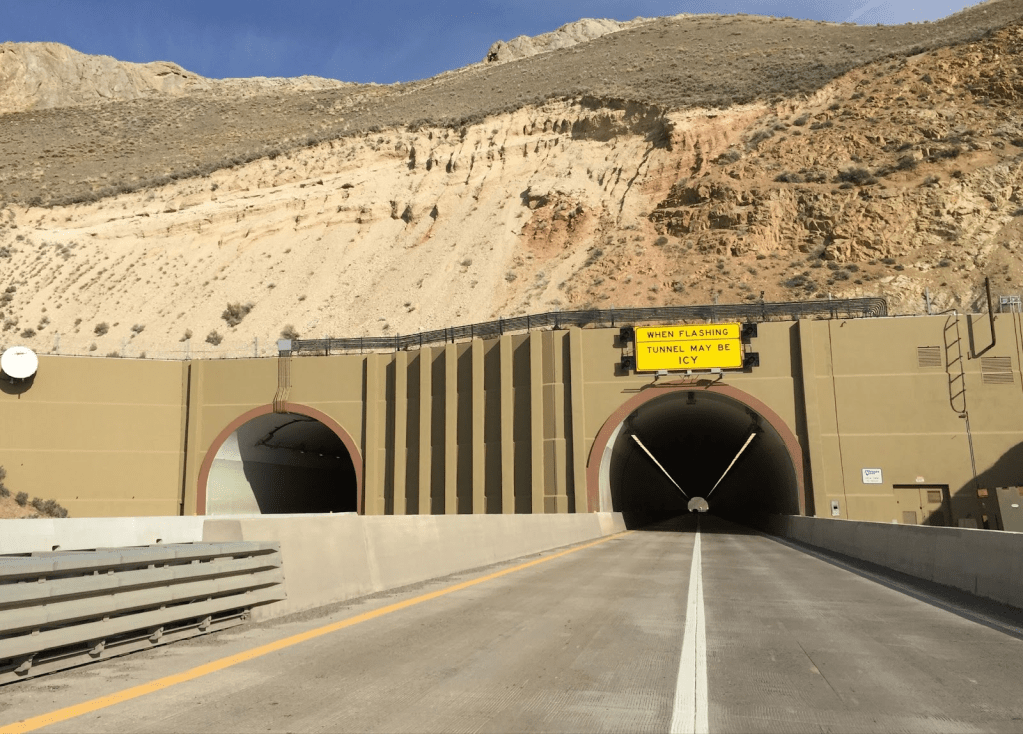
Interstate 80 and the shortest distance between two points

The Carlin Tunnel is a collective name for a set of four tunnel bores in the Humboldt River’s Carlin Canyon, east of Carlin in Elko County, Nevada, United States. Currently, two of the bores carry Interstate 80, while the other two bores carry Union Pacific Railroad’s Overland Route and Central Corridor.

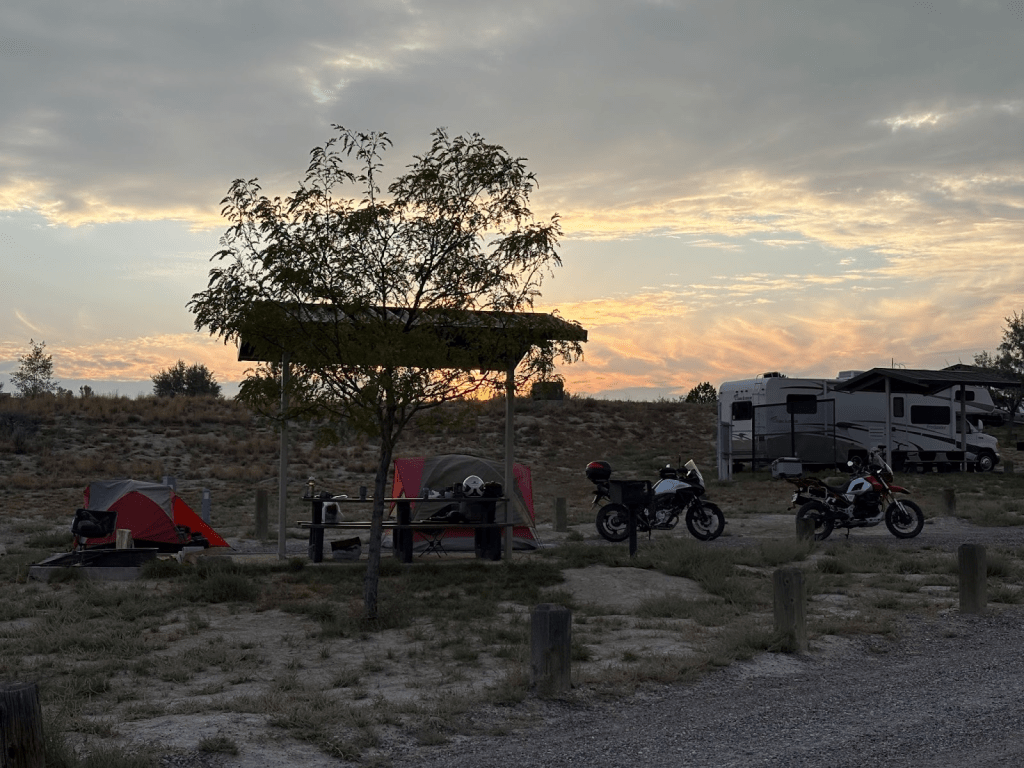
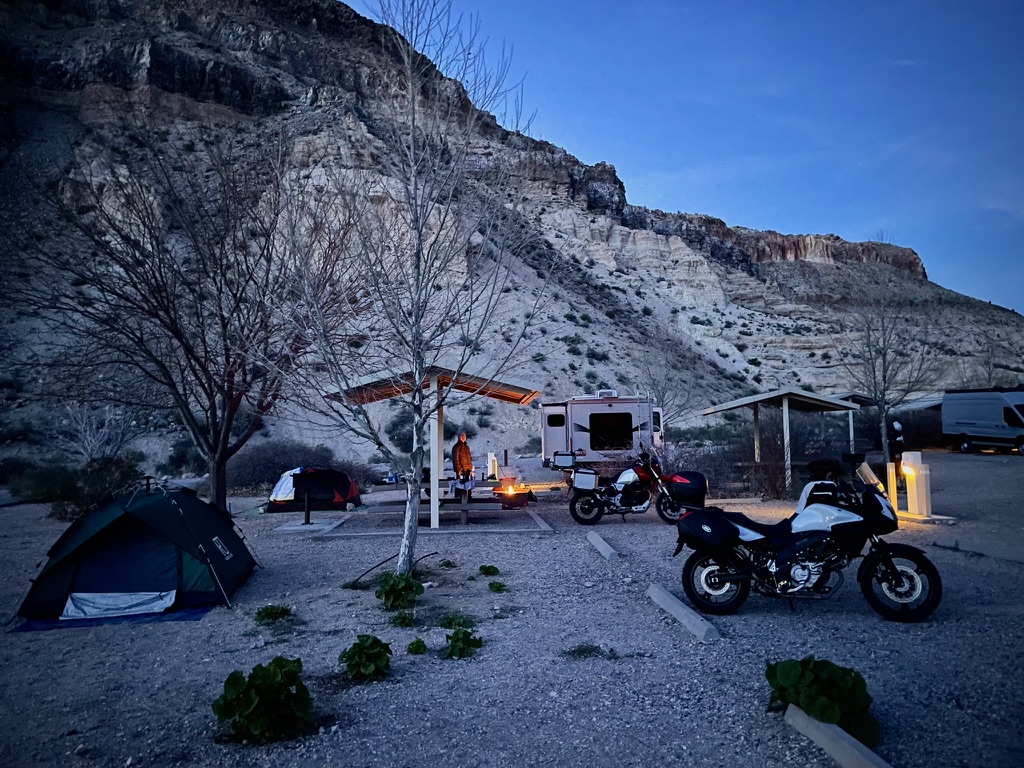
The South Fork State Recreation Area Campground

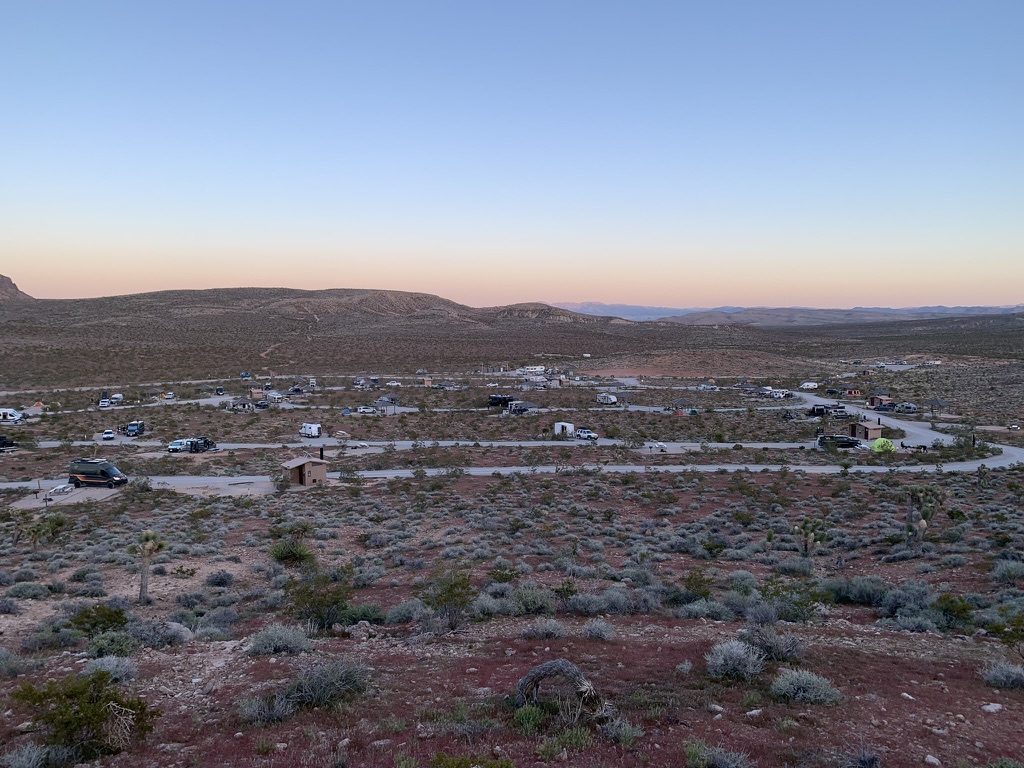
Zipping through Elko we made our way to Spring Creek and our home for the next three nights on the South Fork of the Humboldt River known as the South Fork State Recreation Area. 

From there we would explore the Ruby Mountains, Secret Pass and the Hastings Cutoff on the historic California Trail, the Ruby Valley, Jiggs, and the Owyhee River, Wild Horse, Mountain City and Owyhee on the Nevada side of the border with Idaho.  

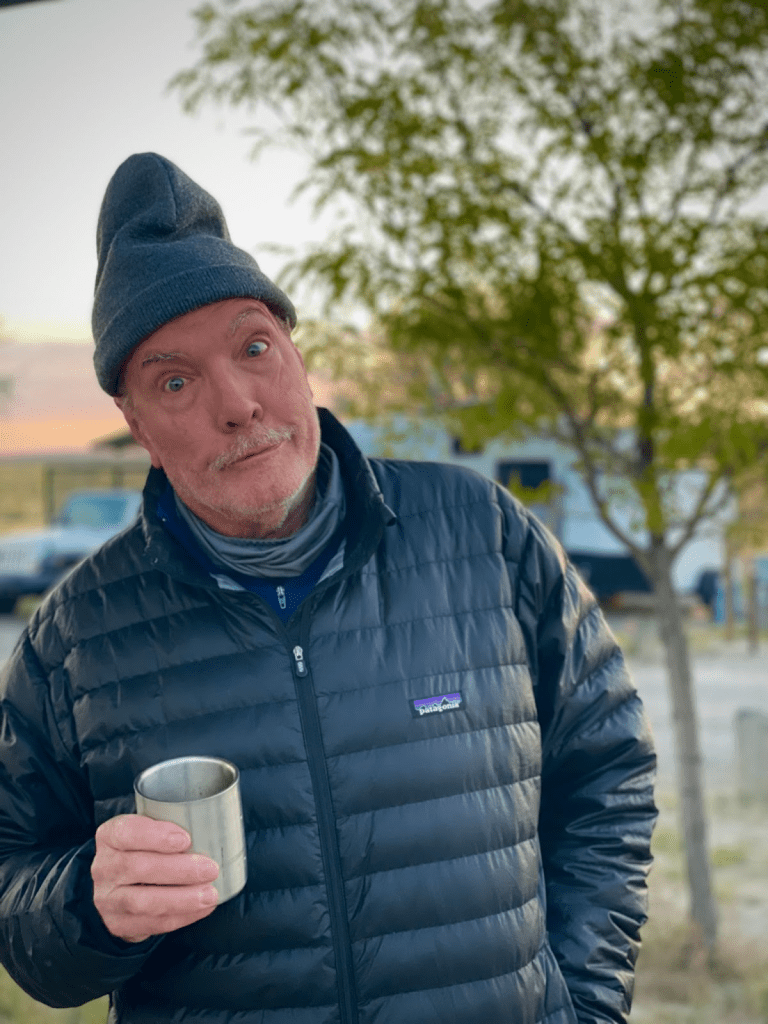
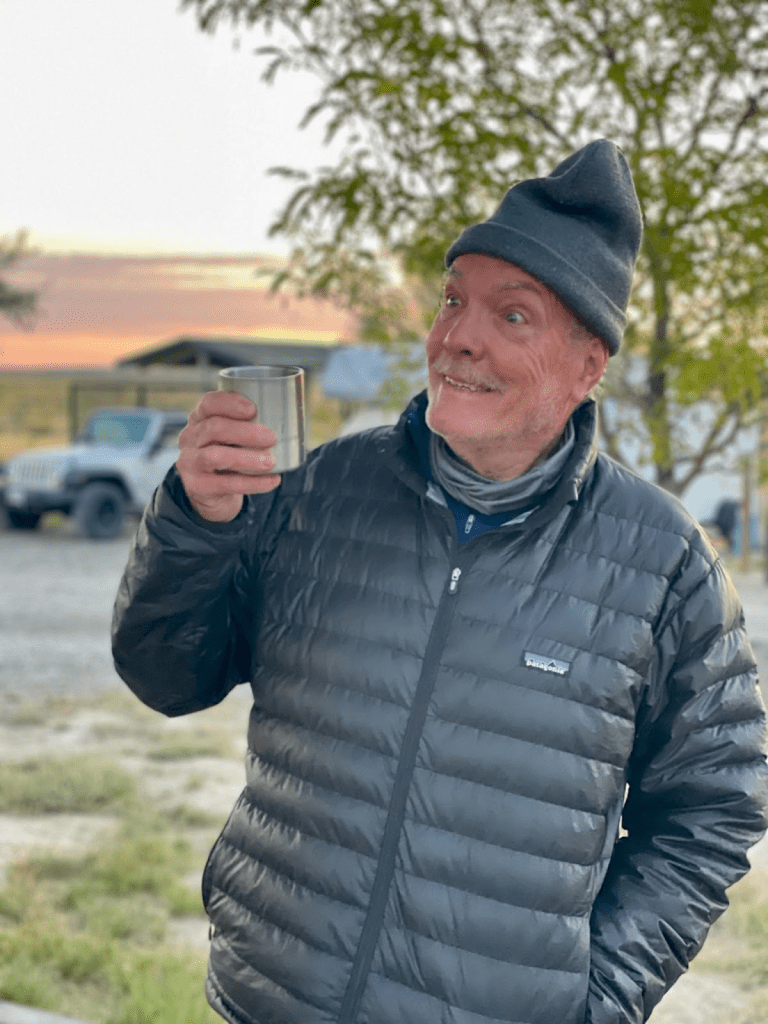
Upon our arrival, within minutes, the camp host, Ted (Theodore Douglas Willer), introduced himself.  When Pete asked where we could get a cold beer, Ted retreated to his mobile abode and produced a pair of Coors Lights.  He explained that he no longer drinks and some fellows on motorcycles had left him an unsolicited tip that he decided would purchase a twelve pack of beer for just this circumstance:  Two parched blokes having ridden hard to reach camp as the sun was setting.  

It only got better from there.  Ted also recommended we switch our campsite reserved on the interwebs for one that was more accommodating for two tents and two bikes.  

Ted was a fascinating character.  A native of Northern Nevada, he had spent his working years in mining, ending his career at the Jerritt Canyon Gold mine.  A true outdoorsman, Ted hunted, fished, backpacked, snow-mobiled, and dirtbiked all throughout the wilderness of Northern Nevada. As a reference for two “born to be mild” adventurers, his local knowledge was gold.  

After touring the facilities that included hot showers and flush toilets, we were quite impressed as Nevada continued regaling us with parks the likes of Kershaw-Ryan State Park in Caliente, and Red Rock Canyon near Lost Wages, NV, with modern, clean, and well maintained accommodations.  In addition to cold beers, we even had electricity at our site!

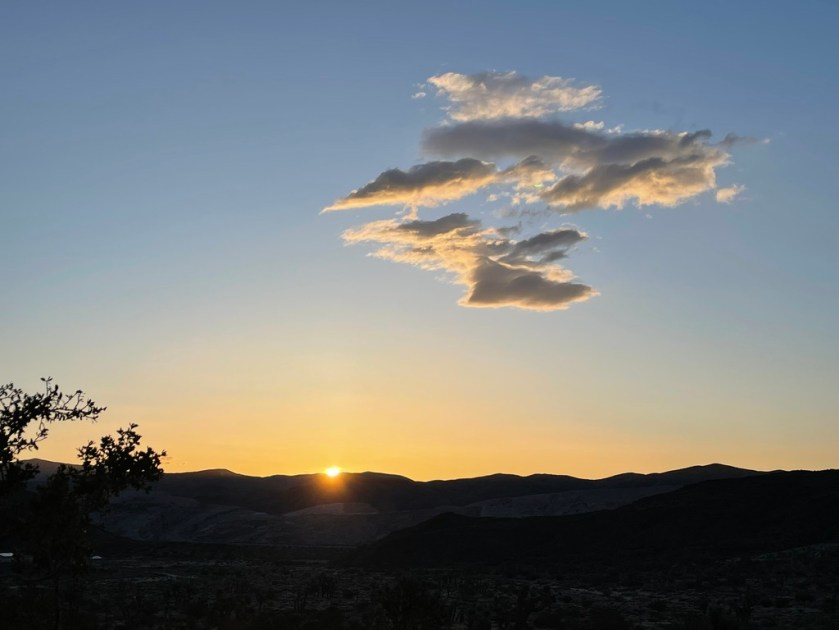
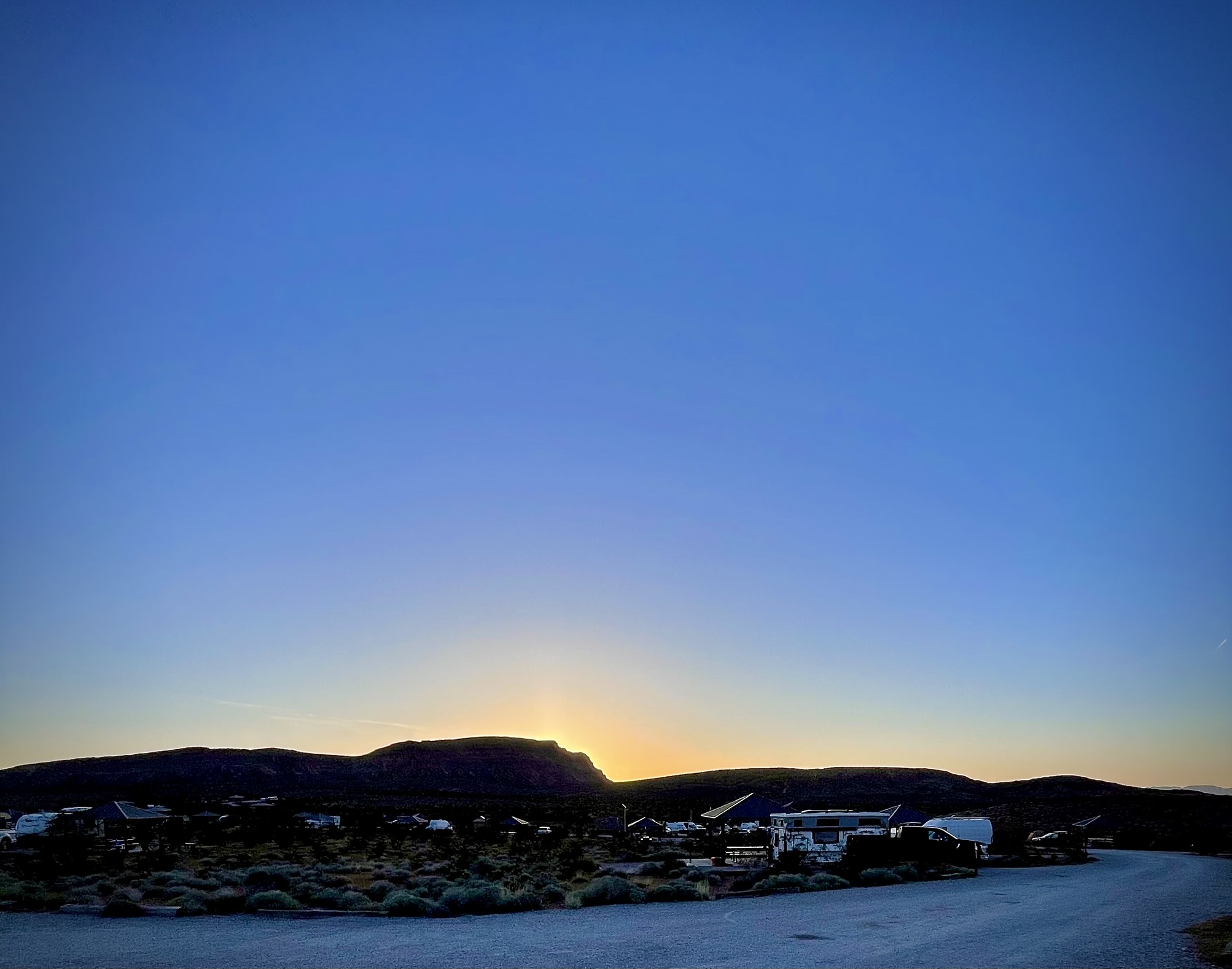
Sunset at the South Fork State Recreation Area
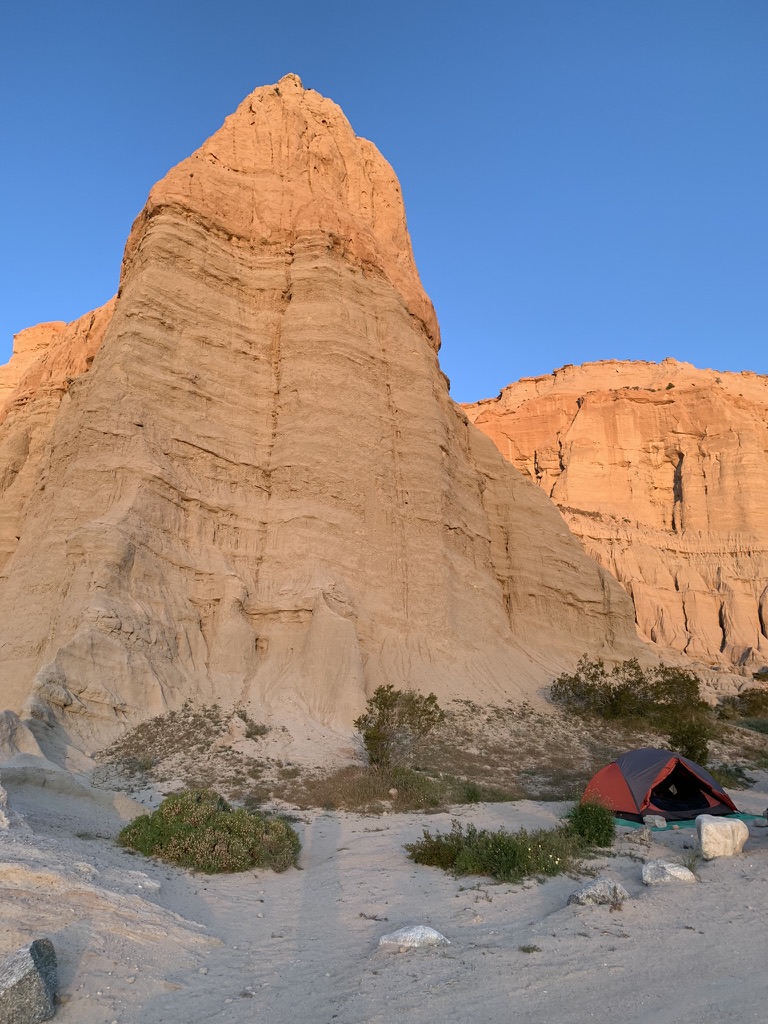
Camp Sisyphus and Associate

Day 3 / Tuesday, Sept 9 – South Fork Recreation Area to Lemoille Canyon Scenic Byway, Secret Pass, Arthur, Ruby Valley, & Jiggs Loop

Lamoille, Halleck, Arthur, Ruby Valley Loop ~132 miles

  • From the Lamoille Scenic Byway, return to Lemoille and take Crossroads and Clubine Rds to Ft. Halleck marker (dirt).  
  • Continue on dirt to paved NV-229 at Poverty Gulch.
  • At the junction of NV-229 dirt road, head south to Ruby Valley to the junction with NF-113/Old Harrison Pass Rd (dirt). 
  • West on NF-113 to the junction with NV-228 (paved) to Jiggs and NV-228 back to the South Fork Recreation Area campgrounds.
  • Get supplies in Spring Creek.

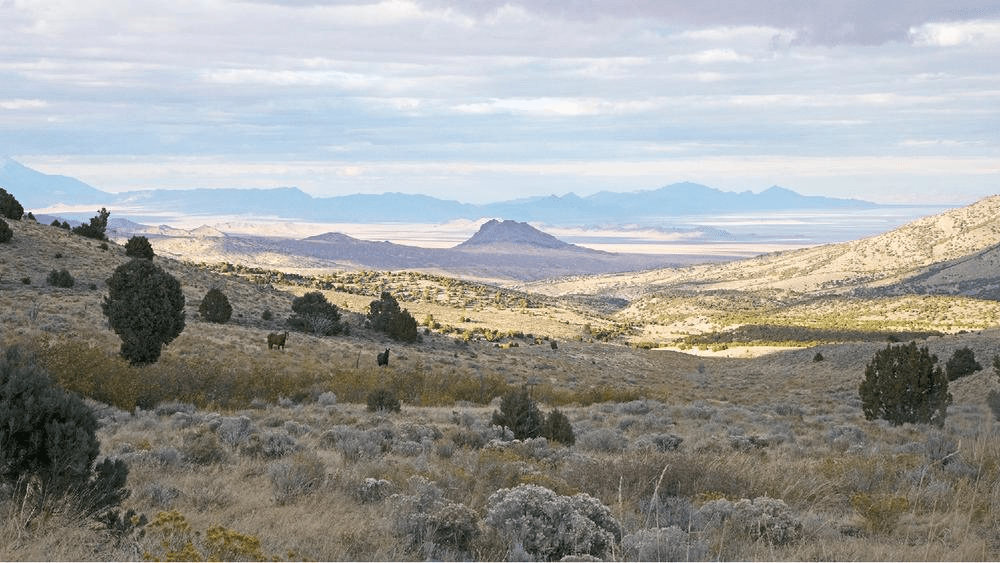
Our intent for the day’s ramble was to explore the Ruby Mountains.   The range reaches a maximum elevation of 11,387 feet on the summit of Ruby Dome. 

To the north is Secret Pass, part of the historic Hasting Cutoff, and the East Humboldt Range.  From there the Rubies run south-southwest for about 80 miles. To the east lies Ruby Valley, and to the west lie Huntington and Lamoille Valleys. It’s alleged that the mountain range was named after the garnets found by early explorers. 

The central core of the range shows extensive evidence of glaciation during recent ice ages, including U-shaped canyons, moraines, hanging valleys, and steeply carved granite mountains, cliffs, and cirques.

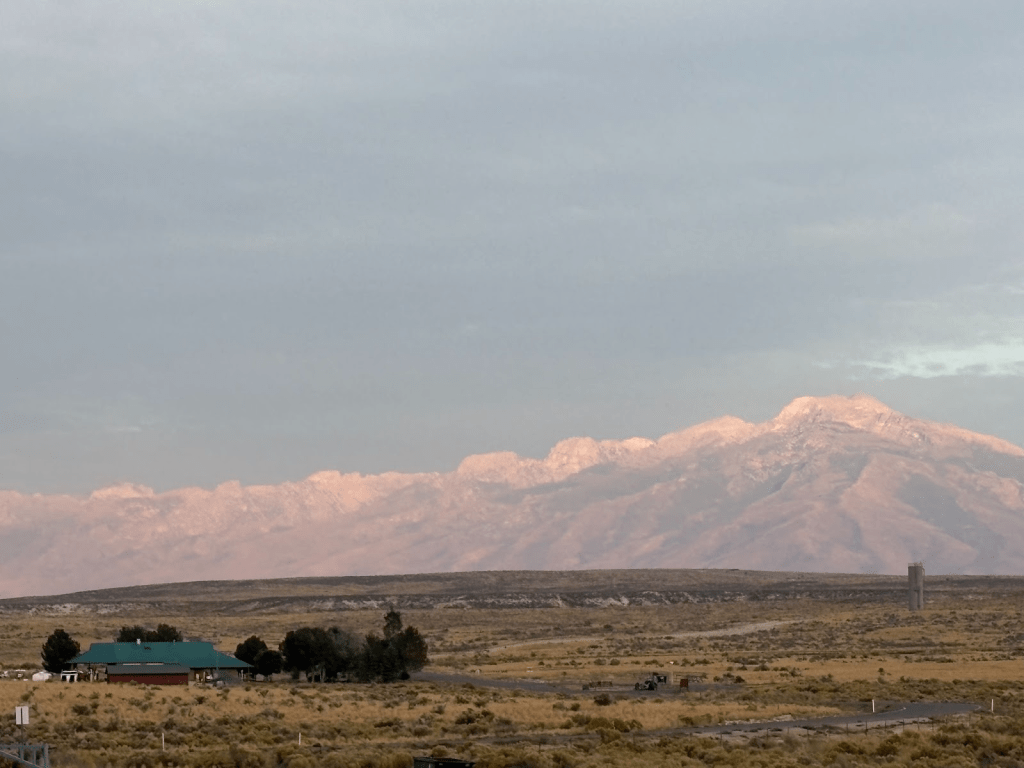
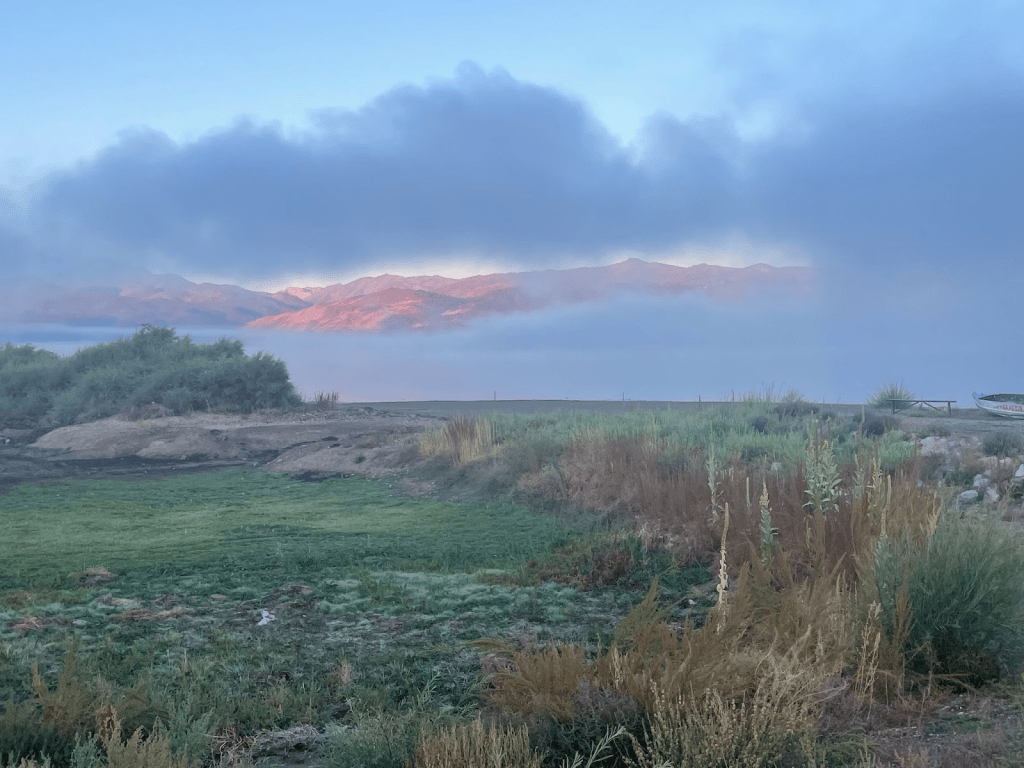
Pre-sunrise view of blossoming sage and the Ruby’s
The view east of the Ruby’s from our campsite with the park HQ in the foreground 
and Ruby Dome towering in the background
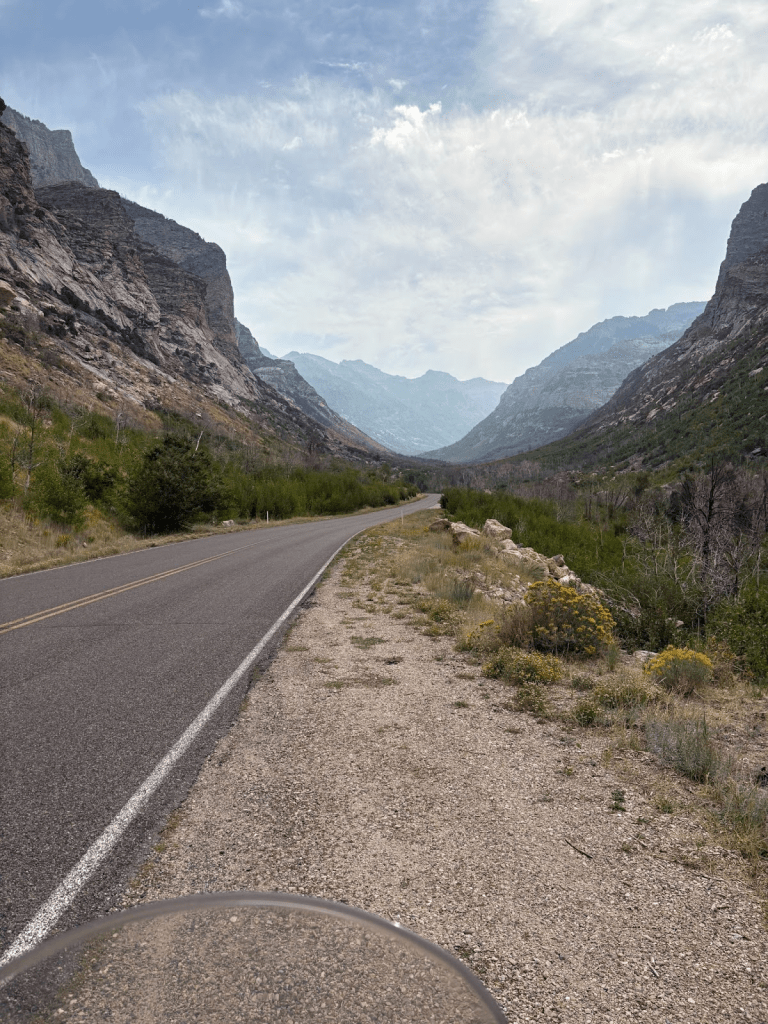
The Lemoille Canyon Scenic Byway, entering Lemoille Canyon
Classic glaciated amphitheater in Right Fork Canyon
Glacial cirques

Having gone over the route with Ted, our camp host, a virtual guide with extensive knowledge of the local terrain, we felt confident that what amounted to our longest stretch on gravel was doable.  The route took us into Lemoille Canyon following Lemoille Creek.  An out-and-back then took us through the village of Lemoille where we met the first 18 miles of gravel road leading to NV-229 and Secret Pass into Ruby Valley.  

The Donner Party passed through the southern end of the valley in 1846, heading for the Overland Pass route across the Ruby Mountains – part of the Hastings Cutoff.  A sentence in Hastings’ guidebook briefly describes the cutoff:

The most direct route, for the California emigrants, would be to leave the Oregon route, about two hundred miles east from Fort Hall; thence bearing West Southwest, to the Salt Lake; and thence continuing down to the bay of St. Francisco, by the route just described.

The cutoff left the Oregon Trail at Fort Bridger in Wyoming, passed through the Wasatch Range, across the Great Salt Lake Desert, an 80-mile nearly water-less drive, looped around the Ruby Mountains, and rejoined the California Trail about seven miles west of modern Elko (also Emigrant Pass).  
For a detailed account of the route, see Salt & Snow Lansford W. Hastings the Donner Party and the Haste to Blame by Eugene R. Hart, a friend and colleague, for a well researched history of the Donner Party’s ill-fated route on the California Trail.

What did Hastings cut off?

The next 50 miles of pavement on NV-229 took us through the small unincorporated community of Arthur to the junction with NV-767.  

Ranching is the main economic activity in Arthur and the Ruby Valley in general. Most of the ranches have remained in the same families for generations.  
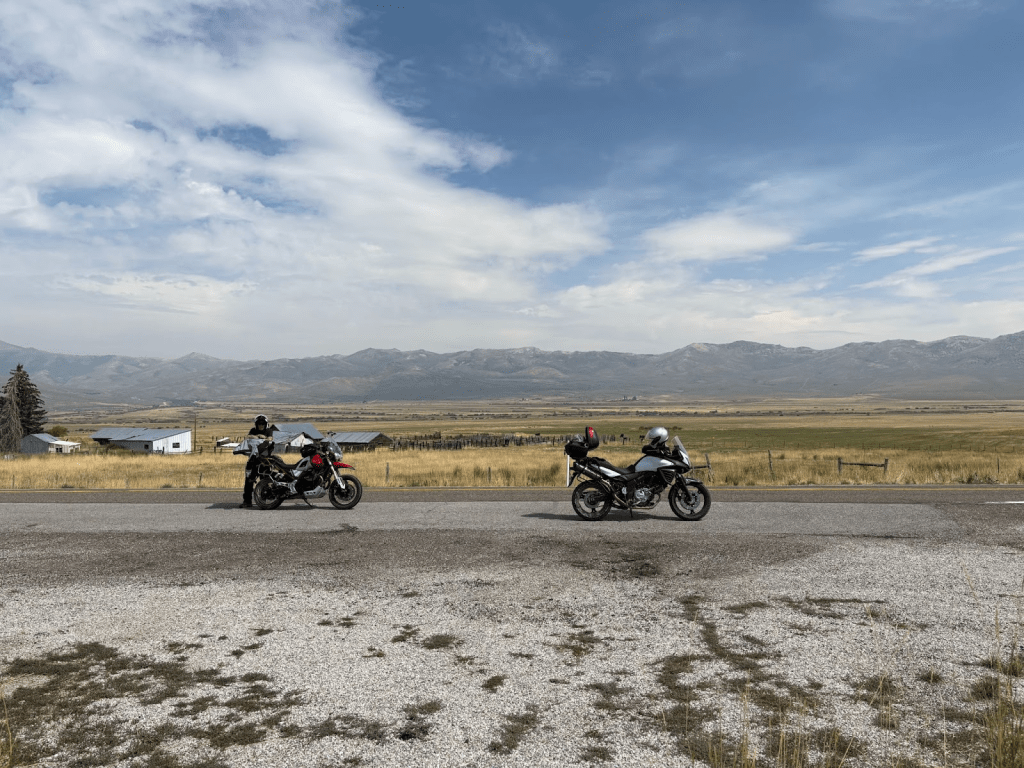
Cattle outnumbered humans by 10,000x 
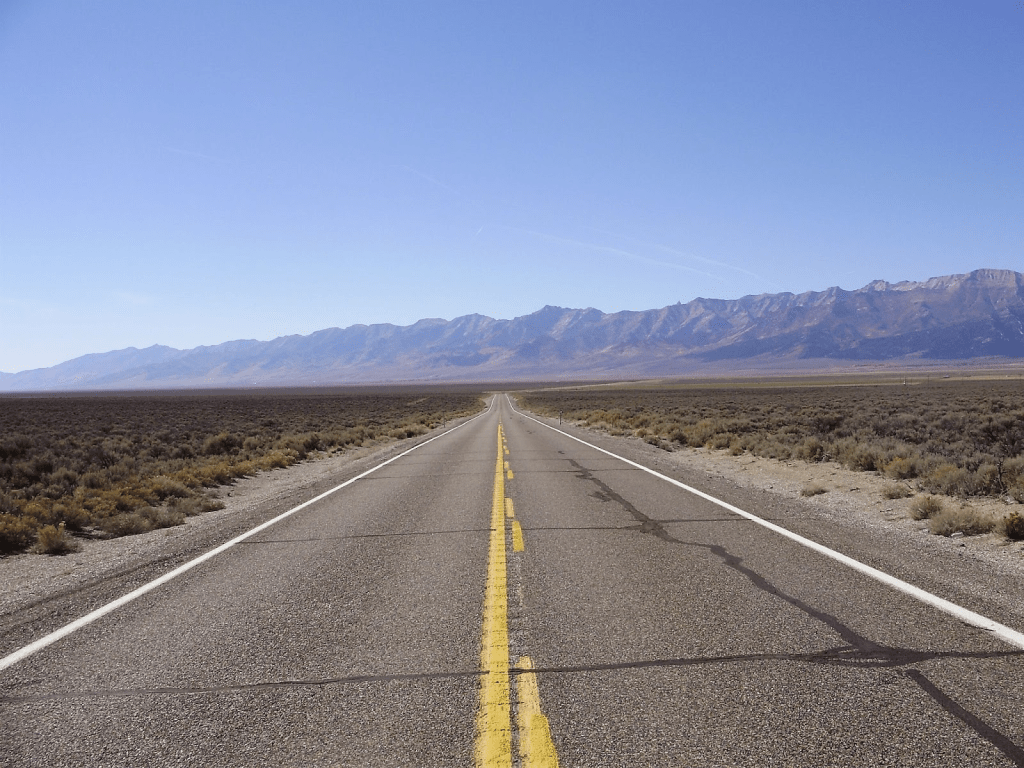
The Long Lonesome Ruby Valley Road

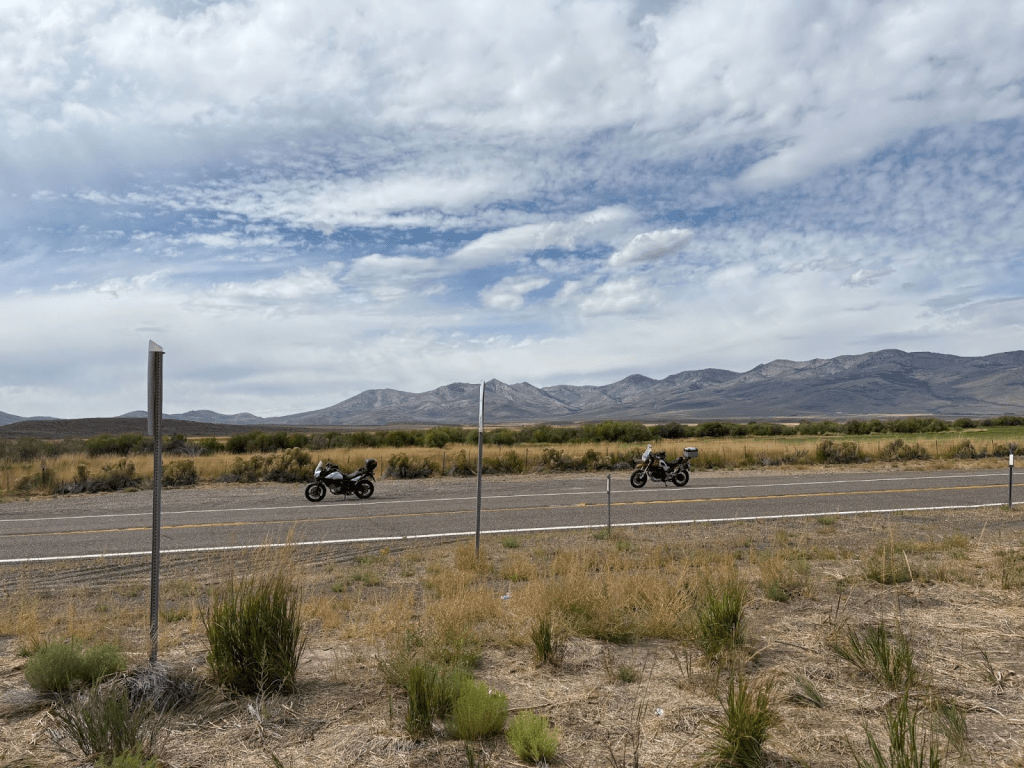
There weren’t may vehicles on the road, but there was infrastructure.

I don’t think Pete was doing what it looks like he was doing

At its south end lies the Ruby Lake National Wildlife Refuge. The valley includes a series of hot springs, known as Ruby Valley Hot Springs, with multiple pools reaching up to 30 feet in diameter and 100 degrees Fahrenheit in temperature.I

NV-229 passes along the northeast edge of the valley, and Ruby Valley Road (NV-767) runs along its western edge. 

Our next dirt section was Harrison Pass Road (CR-718) for 14 miles crossing the Ruby Mountains near the center of the valley at an elevation of 7,247 feet . Much of the floor of Ruby Valley lies at elevations near 6,000 feet. 

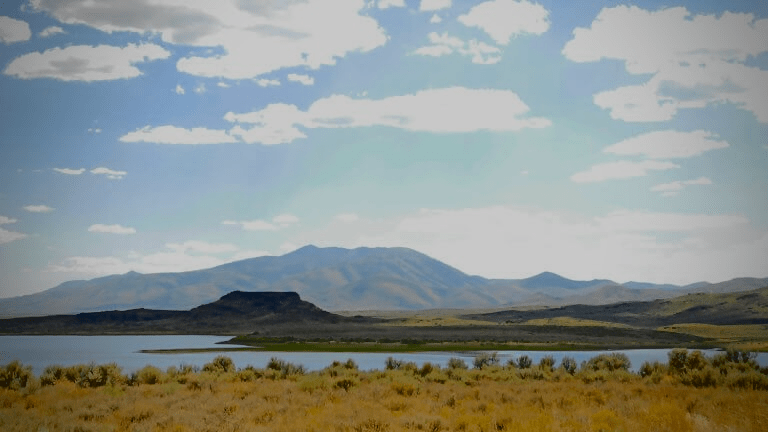
Franklin Lake looking Southeast (photo credit:  Wiki)

At the entry to Harrison Pass Rd we encountered a local rancher and his wife. Perhaps perceiving our born to be mild countenance, they cautioned us about being on point because Harrison Pass Rd is a popular 4-wheel drive road on which speeding vehicles and tight blind curves with sandy washes that can be treacherous.

Fortunately we didn’t encounter any speeding side-by-sides or other ATV’s but the sandy road conditions made for a squirrelly crossing.

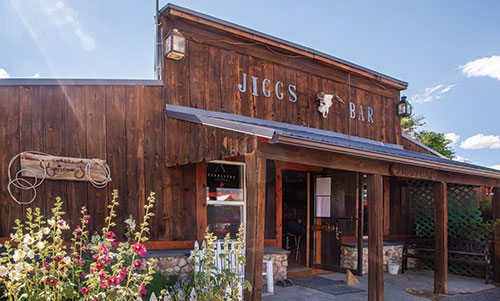
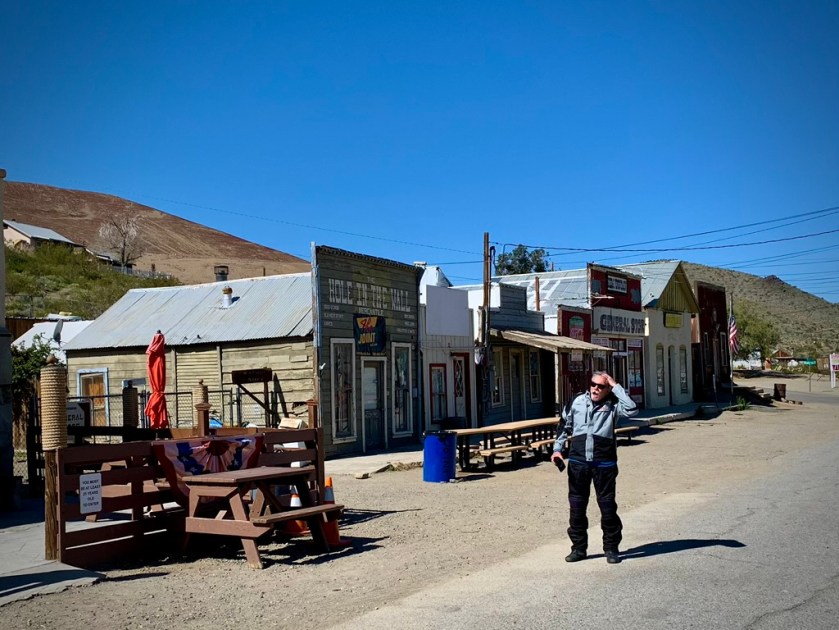
We reached pavement on NV-228 that took us through the small unincorporated community of Jiggs.  In addition to the Jiggs School and Skelton Hotel, two historic buildings from the early 1900’s, there’s the Jiggs Bar, which we regrettably didn’t stop to visit. 
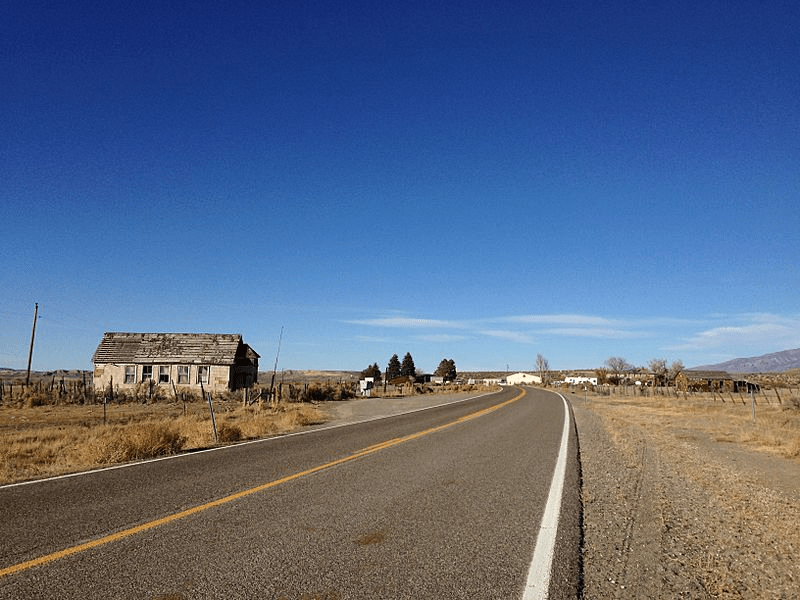
Jiggs schoolhouse on the left
The Skelton Hotel
It’ll just have to wait for our next trip to the Rubys.  Cheers!

The town was featured in a 1965 Volkswagen advertising campaign in which the entire population (5 adults, 4 children and a dog) was shown comfortably seated inside a VW Bus. 
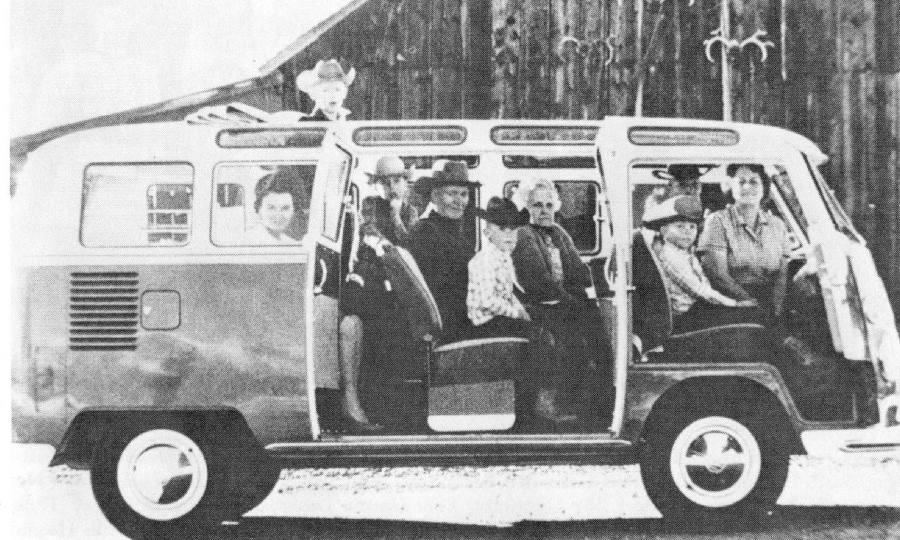
Grandma doesn’t look to be having much fun

Upon returning to the campground, Ted met us with two cold Coors Lights.  In exchange, we offered our enthusiastic reflections on the day’s ride that he had recommended before heading into Spring Creek for bites and beverages.

Another sublime sunset looking west

For a visual record (with soothing soundscapes) of our Ruby Mountain Ramble, check out the video from our day of cattle, canyons, passes, and dirt roads:

Lemoille Canyon and The Ruby Mountains Ramble

Followed by a sublime moonrise over the Ruby’s

Day 4 / Wednesday, Sept 10 – South Fork Recreation Area to Owyhee and back  

South Fork Rec Area to Owyhee Loop ~236 miles

  • From the campgrounds, NV-225 N to Owyhee through Wild Horse and Mountain City, then NV-226 S back to Elko 
  • Lunch at The Star Basque Restaurant and beverages in Spring Creek.  
  • Return to the South Fork Recreation Area campground 

Weather was our consideration for how to approach our ramble to Owyhee on this our fourth day of adventure.  Consulting with Ted we decided to forgo a dirt section that would take us through the Duck Valley Reservation on NV-226 that might be iffy in the rain that was forecast for the afternoon.  Remember, we were born to be mild, having outgrown the wild birth stage of our lives…

It’s perhaps a shame that I didn’t break out the GoPro for yet another view of the road from my handlebars.  I figured the Ruby Mountain Ramble video was enough of mile-after-mile of monotonous, but at times breathtaking, scenery.  And, if you’re not a music nerd, there probably aren’t enough of dramatic cinematic dopamine triggers keep you engaged. That and I don’t own a drone. So the few still photos we took will have to give you some perspective of the landscapes. 
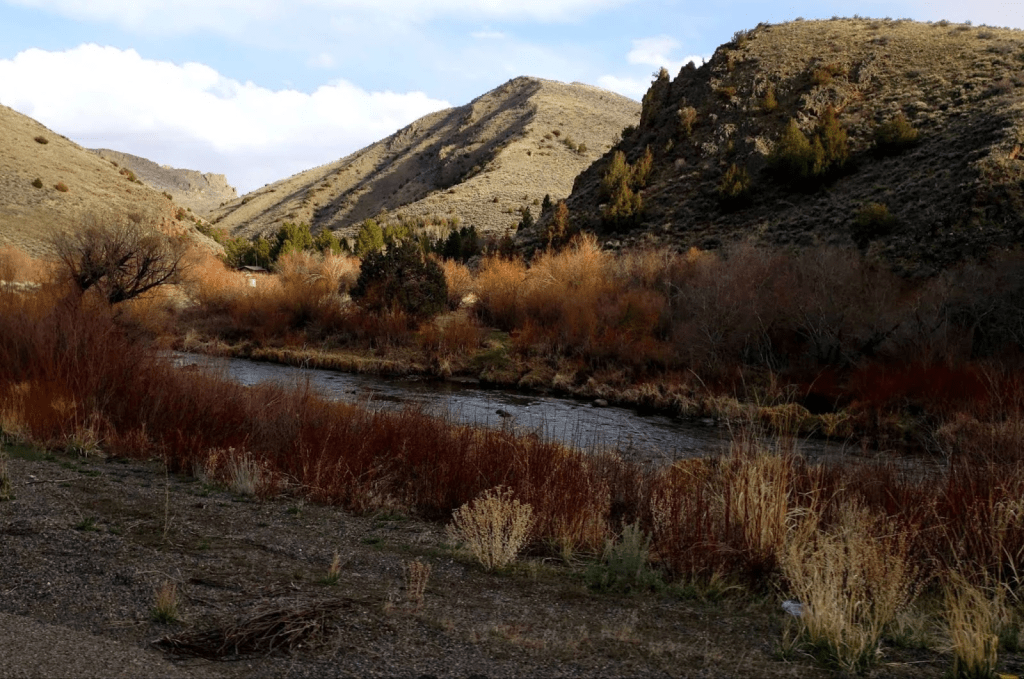
The Owyhee River near the Wild Horse Crossing campground
Volcanic remnant off of NV-225 looking northwest  
Yep, born to be wild horses
Wild Horse State Recreation Area

Not much to see in Owyhee, a small reservation town on the vast volcanic lava flow plain. After a stop for a snack and some nalgas relief, we turned tail to make our way back to the South Fork Recreation campground, but not before stopping for a water bottle leak in Pete’s top case, absorbed by the roll of Scott Shop Towels he always carries and a few interesting sites along the road.

A pioneer’s cabin across from Four Mile Creek, a tributary to
the North Fork of the Humboldt River, on NV-225
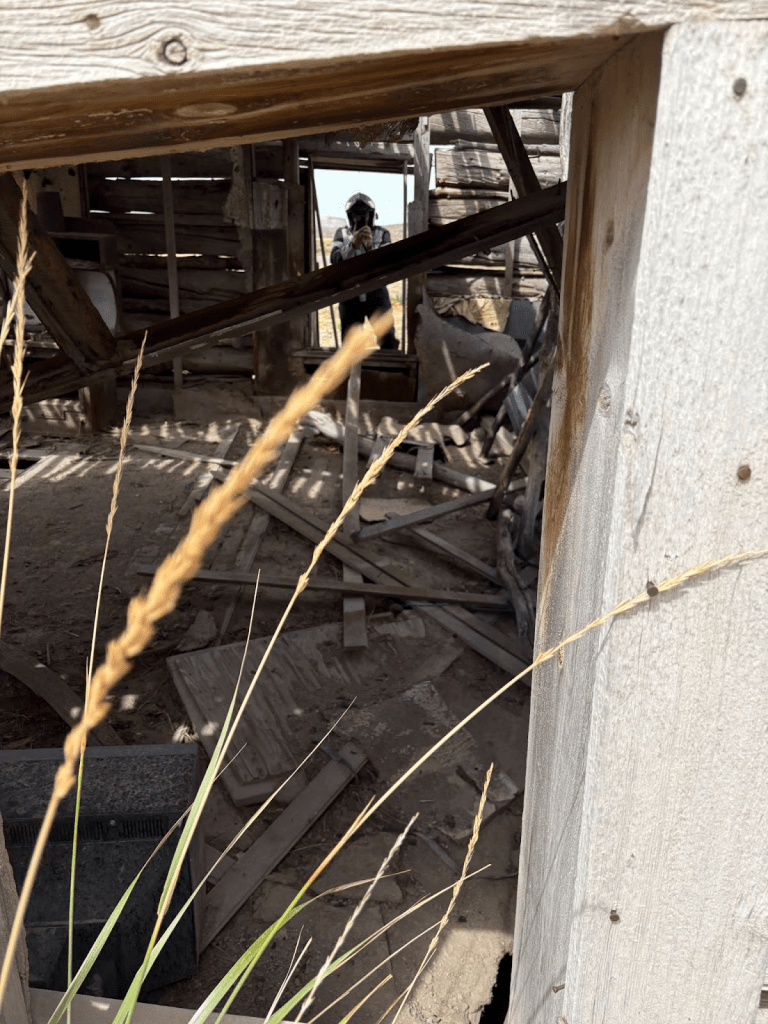
Peek-a-boo
Back at’cha
The Independence Range whose watershed irrigates the foreground pastures

I have mentioned in prior blogs my associate, Pete’s, heritage.  He’s Basque by way of his father.  Nevada is renowned for its Basque population, especially in the Elko area so naturally we sought out the best Basque restaurant in town, The Star.  

As with many Basque restaurants, there was usually lodging associated with the family dining area to accommodate migrant shepherds attending to herds of sheep and this was true of The Star.  We had a wonderful lunch including a Picon Punch I first learned about in Los Banos, near our home in Merced, at the Woolgrowers. According to 23andMe, I have just under 1% Basque heritage myself (that is likely attributed to my promiscuous Neanderthal ancestors).
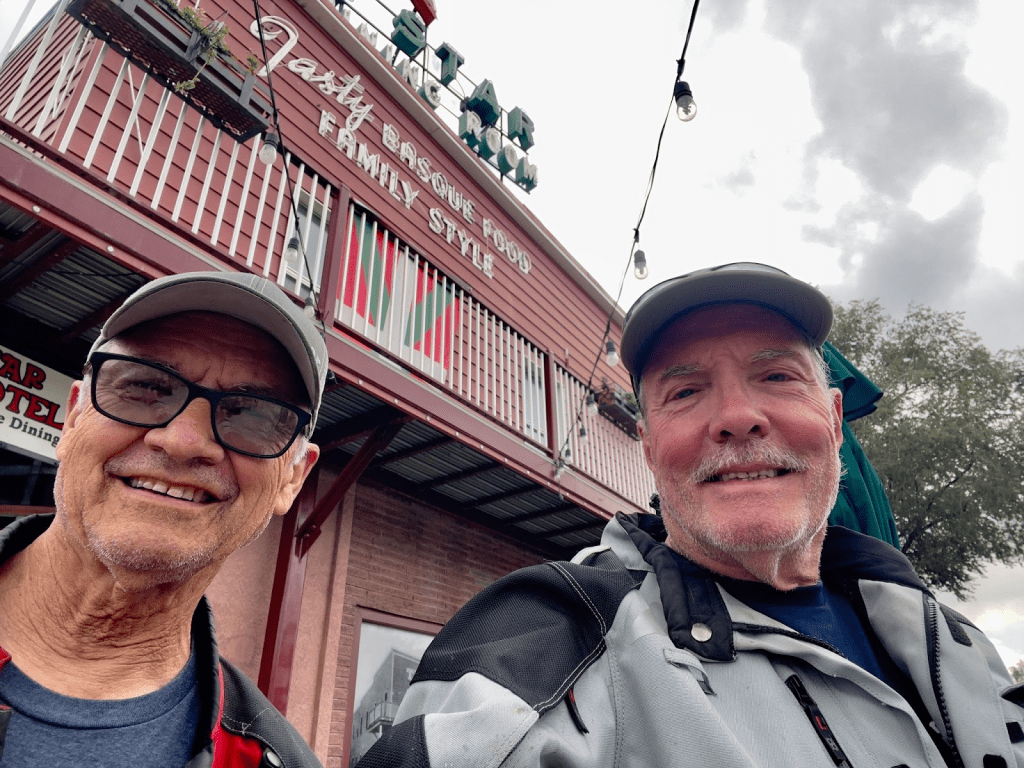
The of the scenes of what would become a frenzied search for a lost wallet…

Making our way to the campground south of Elko, we stopped for fuel in Spring Creek, a suburb of the growing Elko population and our commercial base of operations where fuel, both fossil and fermented, were acquired.  

As I pulled up to the pump and executed the fueling ritual of removing gloves, removing the tank bag, inserting the key into the cap, and reaching for my wallet, I realized it wasn’t nestled in its customary chest pocket.  

Needless to say, panic struck!  I’m on the road in the middle of a seven day ramble and have lost my wallet somewhere during the day. I last remember using my credit card to purchase fuel at the very same Sinclair gas station that morning. I naively thought to inquire at the station’s convenience store if anyone had turned in a wallet. 

The disinterested cashier yelled across the store to another employee who mumbled something and said there was nothing in a basket resembling a wallet.  

After I paid for the fuel with cash and was given $4 and change, I asked, “So you think I can make it back to California on four bucks?”

She replied, “You’re screwed.  Look around.  Do you think someone would turn in a wallet?”

I should have known better.  This is the only Sinclair station we had stopped at that didn’t have a Dino.  There was a pad for the Dino.  Apparently Dino had been abducted.   This did not ensure confidence.

I dialed the Star restaurant and a bit more reassuringly the attentive staff remembered us and stated that after a search there was no wallet near where we were seated.   

I had enough cash to make it home on our remaining three days but it was the drivers license, credit cards, insurance cards, and god forbid, my National Parks Senior Pass that would have to be cancelled and replaced.  I then called my wife after using the app on my phone to put a hold on my Citi credit card, which, as it turns out, I later hastily canceled.  Toni works for the local School Employees Credit Union.  She took care of my backup CU Visa and reminded me that I still had my Apple credit card in my phone’s wallet.  A small measure of relief. One of many fringe benefits to my marriage…

As we made our way back to the camp that afternoon, Ted with Coors Lights awaiting our arrival, I was somewhat crestfallen after what was otherwise a beautiful day on the moto rambling through exquisite terrain. Not much for celebration, I opted for a shower to wash away my woes. 

While stowing my armored jacket and pants, that I had by this time searched in every pocket multiple times, I felt the small rectangular form of my wallet that I had perhaps in haste earlier mistaken for CE armor.  A flood of relief overcame me.  I unzipped a vent on the front of the jacket, opposite the pocket in which I usually stored my wallet, and guess what?  Lost wallet frenzy extinguished!

Fortunately the mesh liner inside of the jacket held the wallet in place.  

Wallet firmly in grasp, we made our way back to town for dinner. After grabbing a bite to eat in Spring Creek at the counter service Mexican restaurant attached to the Casino, we returned to camp after an exhausting search for wine for my pompous palate, where I eventually enjoyed a glass or two of Pinot and Pete a cerveza o dos.  We then set about on a stroll about the campground, a warm campfire, some stargazing and our fourth day of adventure and misadventure was complete.
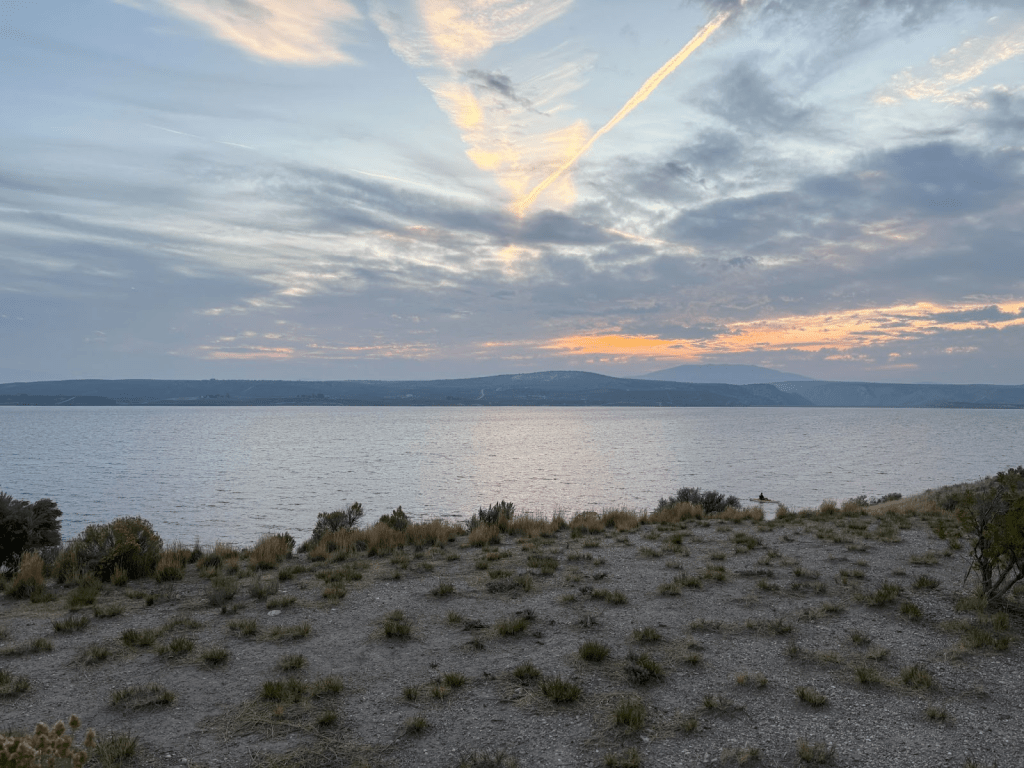
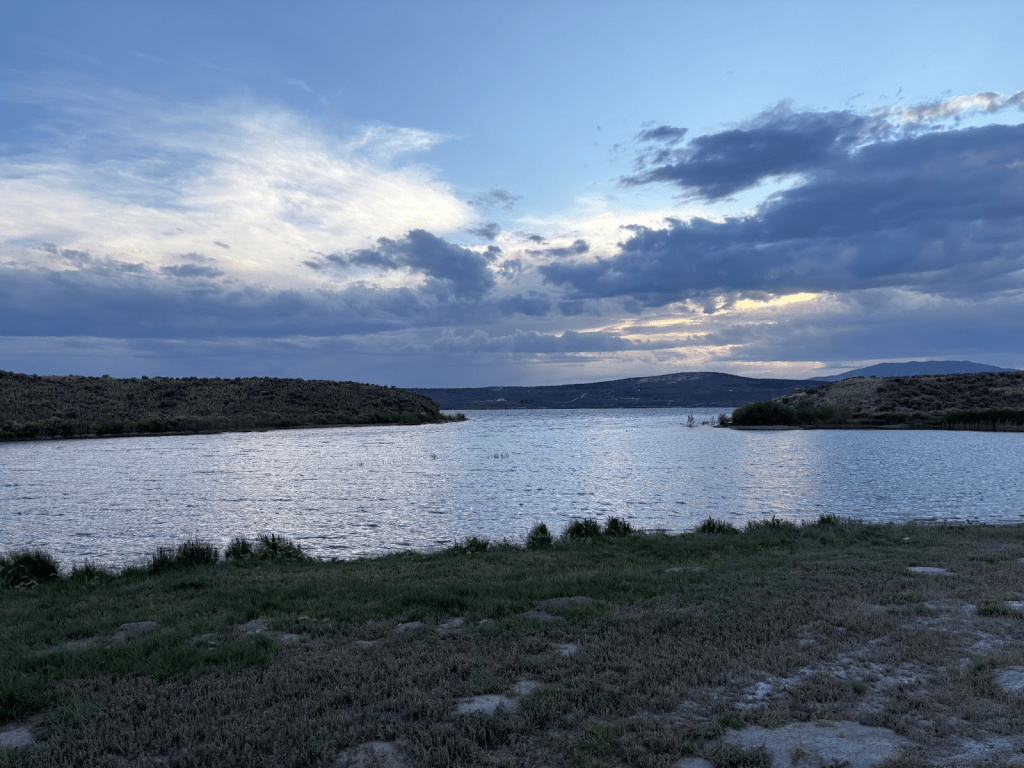
On our evening ritual of a walkabout the lake
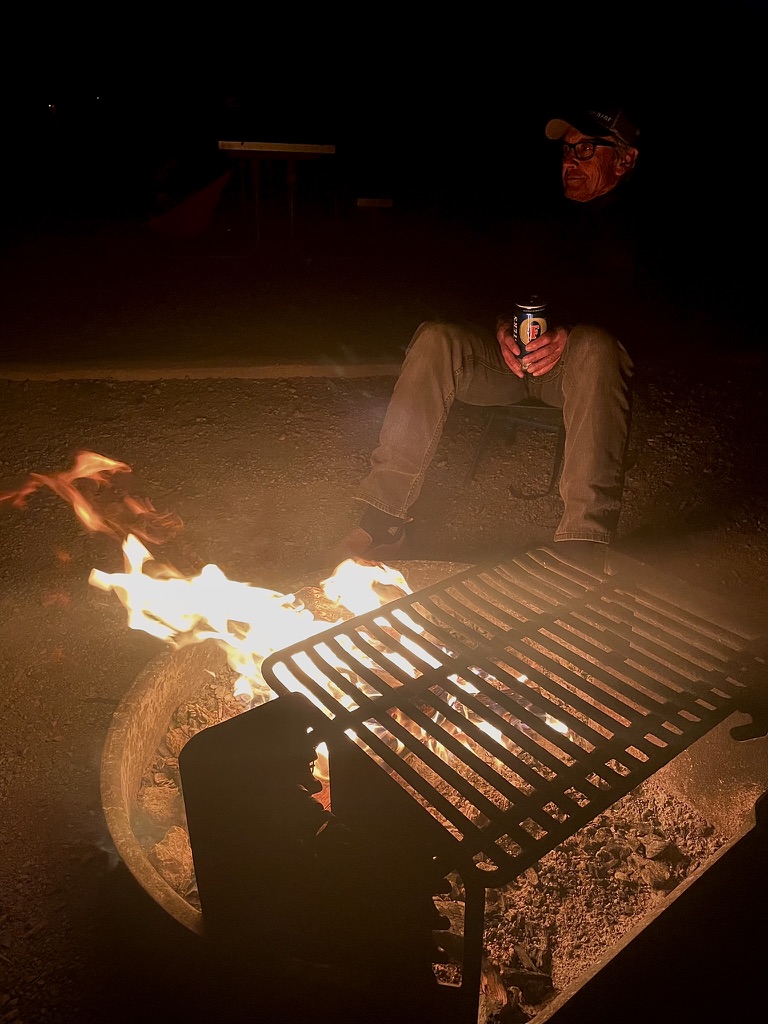
A Ruby Mountain moonrise warmed by campfire

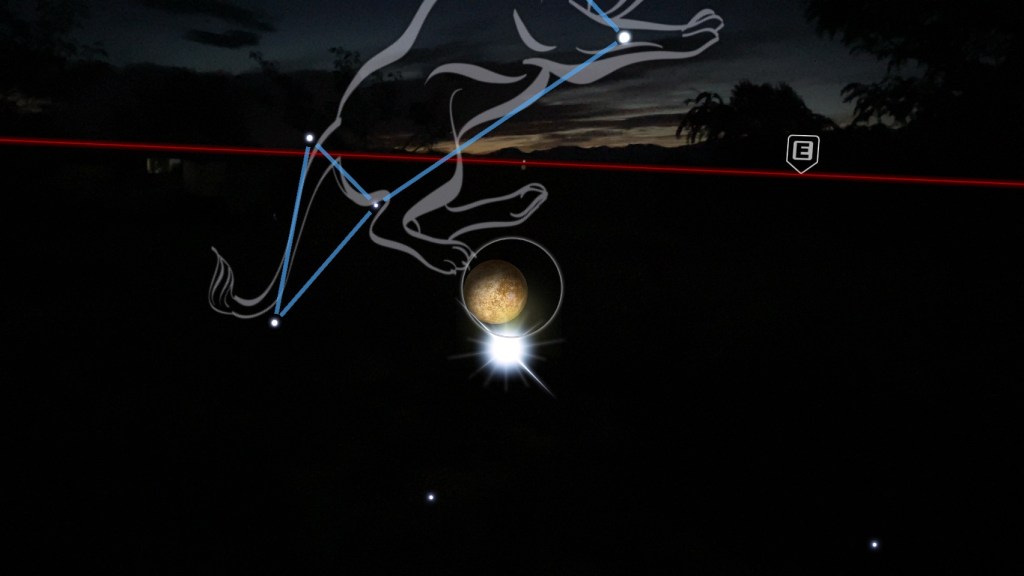
I have an app on my phone called Skyview that identifies constellations, planets and other objects in the night sky placing virtual images of those objects in the direction the phone’s camera is pointed relative to their position in space.  

As is a familiar ritual, well into the night I was up to see a man about a mule and it just so happened that Saturn, Uranus, Jupiter, Mars, the Moon, Venus and Mercury were all visible by way of the app, though not all without magnification to the naked eye throughout the night.  

Top left clockwise Skyview images: Saturn, Venus, the Hubble Space Telescope and International Space Station, Mars, and Mercury. Jupiter was visible too.

Often on our campouts, we see satellites, like Starlink and others. We jest about them being UAP’s. Earlier in the evening we saw the Hubble Space Telescope and the International Space Station streak across the sky just after sunset. They’re only briefly visible as the rotation of Earth and the angle of the setting sun reflects off of them in their transit about the planet.

Day 5 / Thursday, Sept 11 – South Fork Recreation Area to Tonopah, NV

South Fork Recreation Area to Tonopah NV ~294 miles

  • Retrace US-80 W from Elko to NV-278 S to Eureka.  US-50 to the junction with NV-376.  South on NV-376 to junction with US-6 W to Tonopah.
  • Get room at Best Western Hi-Desert Inn in Tonopah across the street from Tonopah Brewing
  • Tour the downtown and the Mizpah and Belvada Hotels

BTW, have I mentioned I never met a sunrise or sunset that wasn’t spectacular. 

Another stunning Ruby Mountains sunrise…

We enjoy documenting our rambles.  I with my monotonous videos and inspired landscapes. Pete too, works hard at photographically capturing the essence of our motocamping experience.  He composes each shot, carefully choosing the angle and composition, especially the backdrop for a photo, setting up and tweaking a tripod and fussing with the timer to express a pictorial narrative of epic adventure. 

Then I come along to tell another version of the tale.

Okay, phone and glasses in hand
Wait, Do I have my wallet?
The feeling when you realize your wallet is safely in your pocket

Soon we would be leaving our outstanding experiences in northeastern Nevada. After exchanging pleasantries with Ted, whose excellent campground oversight and generosity will be the standard by which all future camp experiences are measured, along with my sharing contact information, we bid adieu to the South Fork State Recreation Area.


A shameless plug for the blog I leave at the first sign of interest… Actually, I don’t even wait for a sign before stuffing a card into the hand of an unwitting addition to my 82 fans!

It was on to Tonopah as our destination for day five via the Nevada Scenic Byways of NV-278, US-50, and NV-376.  All with great views, some with vistas reaching over 50 miles in this basin and range geography in Nevada that is second to none. 

 But first we needed to fuel up for those long lonely stretches of pavement awaiting us.  We stopped in Carlin for breakfast, passing a fuel stop we used earlier in the week happening upon a great retro looking cafe, The State Cafe, Bar, Casino

Carlin Nevada’s finest… No joke!

Though intriguing, it was too early for an eye-opener, with too many miles before us, or slots, so we opted for breakfast at the adjacent cafe.

Ahh, biscuits and gravy 
Almost as good as my wife’s, Toni’s

I’ve noted in past posts that Pete has an outsized appetite for his svelte appearance. I, on the other hand, given my hillbilly genetic predisposition of loading on excess caloric storage (fat) have to work hard to even maintain my semi-svelteness. Pete ate half of my breakfast in addition to his. Thanks Pete. I’m able to throw a leg over the motorcyle because of your help with my calorie restriction.

Back on the road again, we stopped briefly for nalgas relief and some hydration at the junction of US-50 and NV-376.  We could see the clouds forming above the Toiyabe Range that augured thunder showers. 
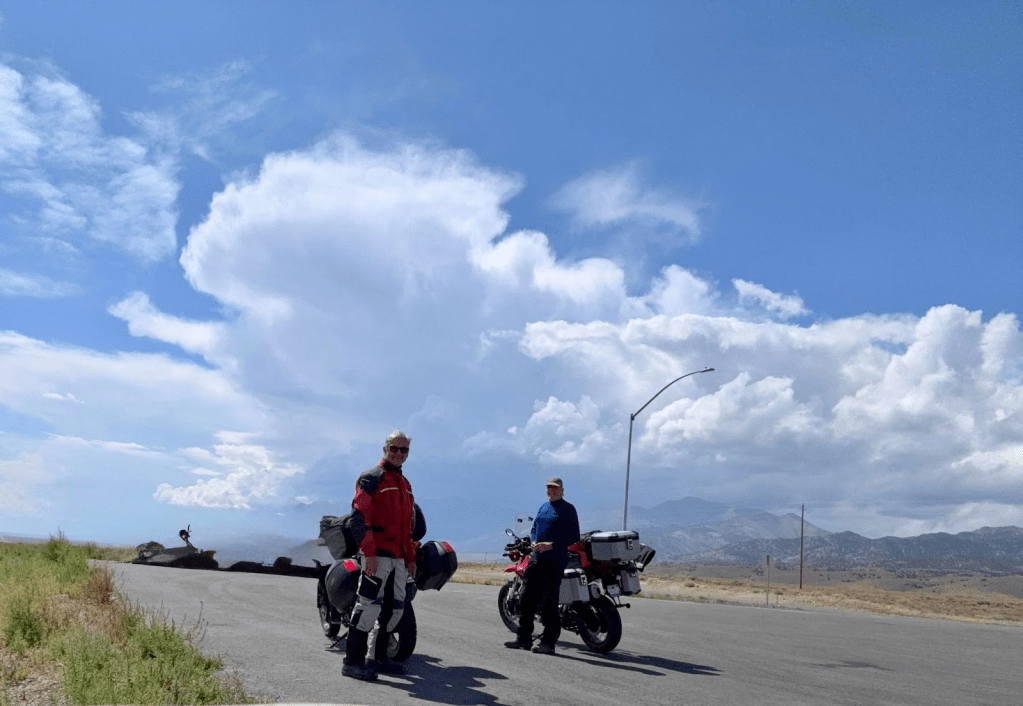
Cumulus Pete and cumulonimbus Sisyphus

Adorning rain gear, we encountered foretold showers and a little hail between Kingston and Carvers for maybe 20 or so miles.  It was all refreshing until we saw ground lightning strike at the base of the Toiyabes, not that far from the road.  

Once out of the thunderstorm we dried quickly in the warm afternoon temps.

Near Carver we passed the Round Mountain Gold Mine, operated by Kinross Gold, which produced approximately 324,277 ounces of gold in the financial year 2020.  Another example of the boom and bust cycles in Nevada.  The mine has a long history, having first opened in 1906 and transitioning from underground to open pit mining over the years.  Its projected annual production (2025): Approximately 2.0 million gold equivalent ounces (Wiki).  Consider this, the price of gold at $3,855.00 per ounce as of this writing x 2 million ounces would be worth $7,710,000,000.  Before expenses.  

Round Mountain Gold Mine (Image “scrubbed,” to use AI parlance, from the interwebs)

Interestingly, when I asked Ted, our camphost with the mostest, what he figured in his responsibility for overseeing gold extraction in his mining career, he had never thought about the value of his work in those terms.  In fact, he called an old mining buddy to discuss this unanticipated quandary. 

I hope to hear from him about what toiling underground for thirty six years for, “sixteen tons and what do I get, but another day older and deeper in debt…”   (For my younger readers:  Sixteen Tons by Tennessee Ernie Ford  Yeah, yeah, it’s about coal mining, but you get the point, right?)

Of course gold prices have fluctuated over time, but it seems that there is a reason the Discovery Channel still produces episodes of the reality show, Gold Rush and the half dozen spinoffs the show has generated.  A guilty pleasure for this environmentally conscious denizen. 
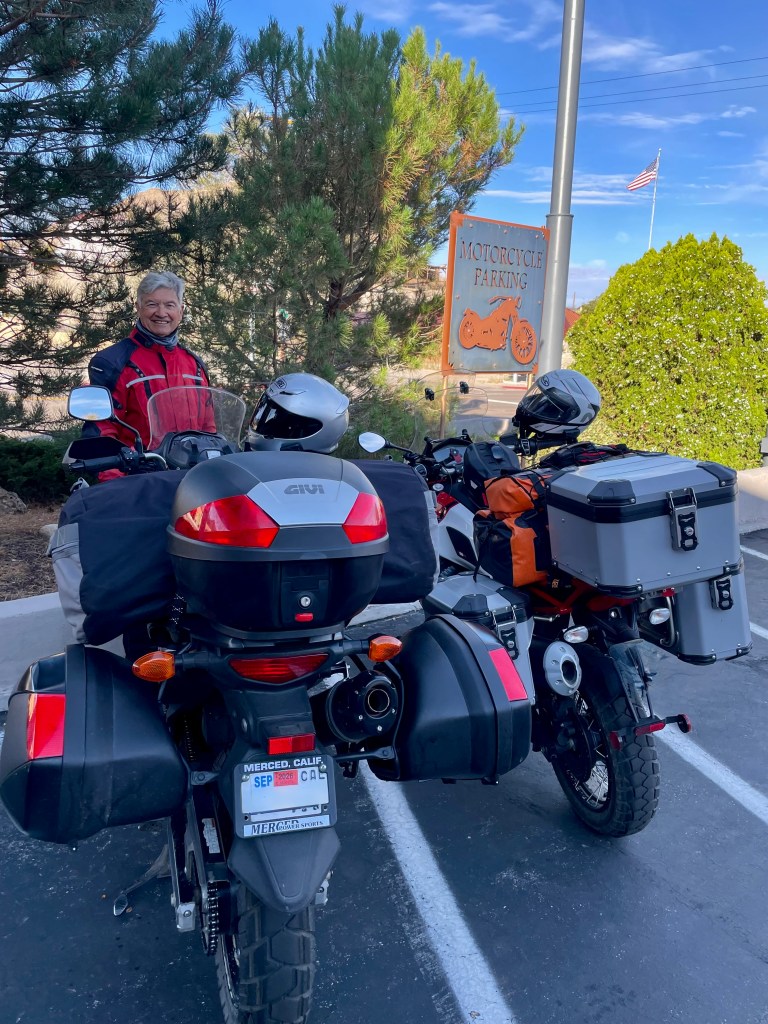
Happy campers anticipating a good night’s sleep on a soft mattress up off the ground

We arrived in Tonopah in mid afternoon.  After unpacking we embarked on a walk about downtown to shake off the miles in the saddle.  Upon entering one of the most acclaimed buildings in Tonopah, we discovered the role of the Cline family, Sonoma California vintners through their Cline Family Ventures, of the restoration of the Mizpah and Belvada Hotels built in the early 1900’s. The Family Ventures was responsible for the establishment of the Tonopah Brewing Company too.  You can read about the family in the article, Vintners breath new life in historic Nevada Town  by John M. Glionna, from the Las Vegas Review-Journal, February 7, 2016.  
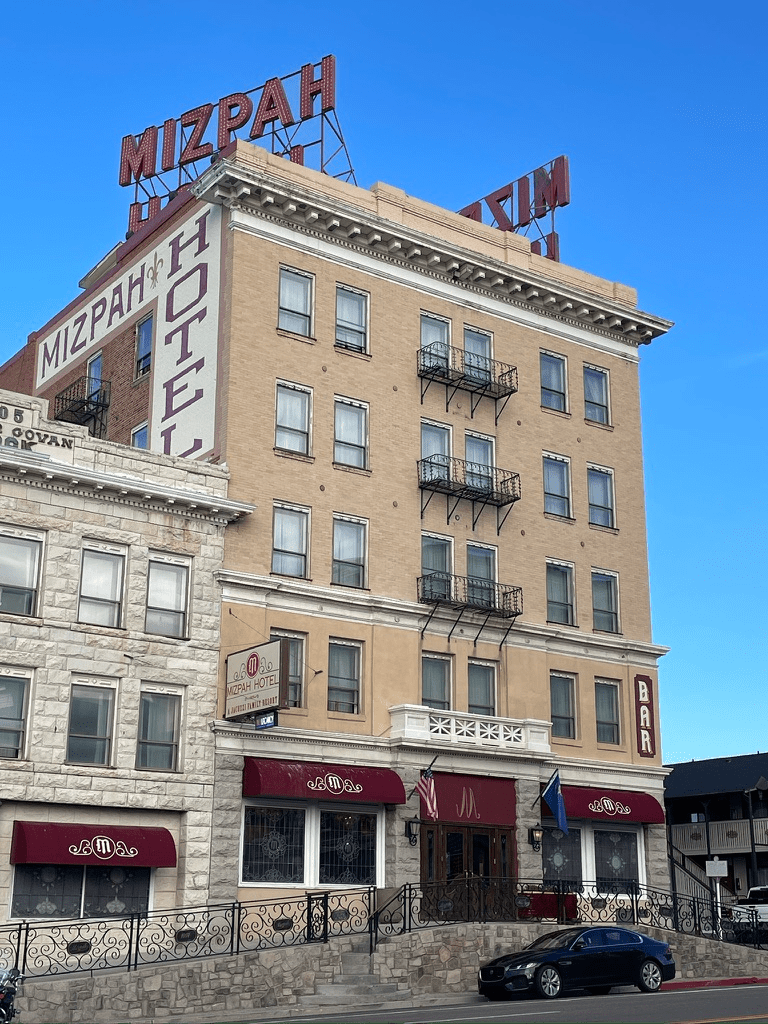
Booming majestically once again

At the time of its opening, the Mizpah was the tallest building in the state and featured modern luxuries such as an electric elevator, steam heat, and hot and cold running water. The hotel quickly became a social and business hub for miners, investors, and visitors. The Belvada originally opened as a bank in 1907 but shuttered four months later as yet another classic example of boom and bust mining economies.  After closing in 1999, the Mizpah and Belvada remained vacant until 2011 when Fred and Nancy Cline, with deep family ties to the region, purchased and carefully restored them.
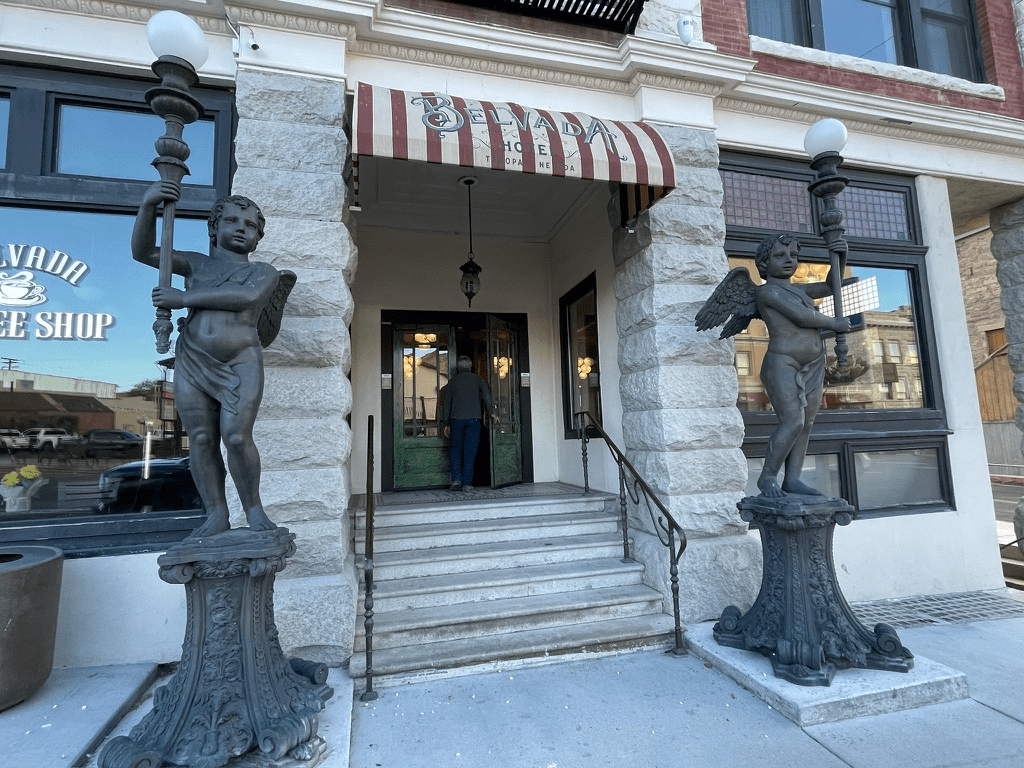
Why stop at restoring one historic property in Tonopah when you can add a pip
Pete with a burrrgherrr and fries and me with a grilled chicken bacon sammie with cole slaw
accompanied by well rounded, lightly hopped, Mucker Reds

The Cline Family venture added to their Tonopah trifecta by creating the Tonopah Brewing Company right across the street, US-6,  from our Best Western Great Basin Inn. After solid pub grub, we settled in for the evening relaxing, rehydrating, and reflecting on five days on the road.  Tomorrow, a short romp to Bridgeport and the Paradise Cove Campground.

Day 6 / Friday, Sept 12 – Tonopah to Bridgeport

Tonopah to Bridgeport ~160 miles

  • US-95 to US-6 to Benton and CA-120 to US-395 N to Bridgeport.

Our route for this day’s ride is well known.  We’ve collectively traveled over this portion of the basin and range a couple of dozen times, in fact I once rode over the very same road on a bicycle in 1993 (See:  The Tour de Life A Tribute to a Dear Friend, Larry Johnston).  A favorite stretch on the moto is the CA-120 leg from Benton Hot Springs to Lee Vining, something of a roller coaster with broad sweepers.
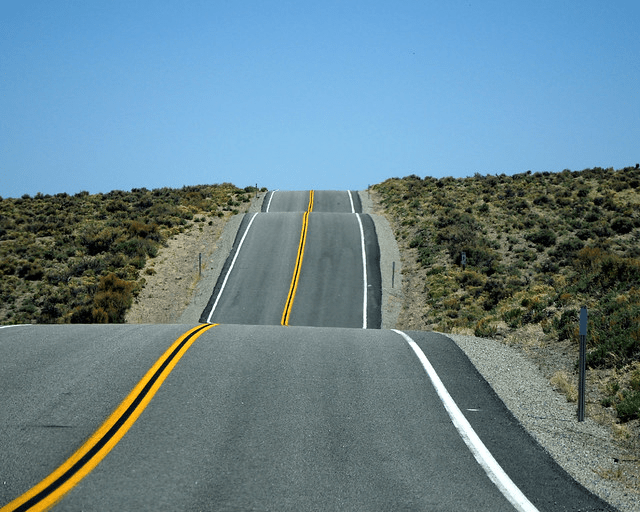
By noon we arrived in Bridgeport.  We set up our campsite and enjoyed a refreshing beverage as we contemplated the weather.
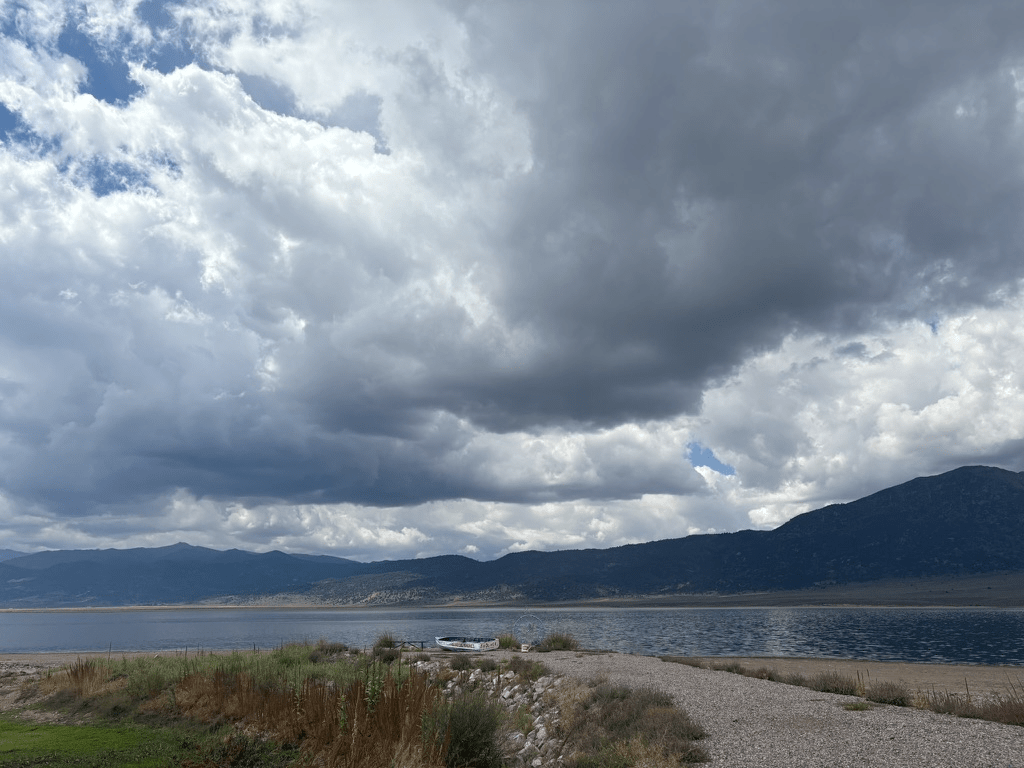
After briefly retreating to our respective ripstop abodes as a squall passed through, we emerged deciding when and where to have dinner and whether we needed to gear up for the weather

After a brief discussion, it was decided that we head into town and have dinner at the Bridgeport Inn.  Famished, as we hadn’t had breakfast sustained only by a cookie from the motel lobby in Tonopah as we left, it was comforting to see meatloaf on the menu.  I am a comfort food sorta guy as is my associate so we both ordered the meatloaf, mash, and a salad. 

It was a Friday night in Bridgeport and as we were dining the skies let loose.  That’s also when we noticed a large number of “Adventure Motorcycles” from that Bavarian manufacturer looming about.  It turns out that an informal group of ramblers from Southern California were on a weekender and were staying at the Inn. 

Perhaps it was because of fatigue or the weather that I didn’t snap a picture of the motorcycles that were parked near ours in front of the Inn.  Nor did I document our conversation with a member of the group who shared his ride up from SoCal.  That or I am guilty of making fun of those pictures of motorcycles taken in front of Starbucks.  The Bridgeport Inn is no Starbucks and so I’m modestly apologetic for making fun of gratuitous motorcycle shots in front of Starbucks and equating that to the Bridgeport Inn. Oh, and for not having a photo.
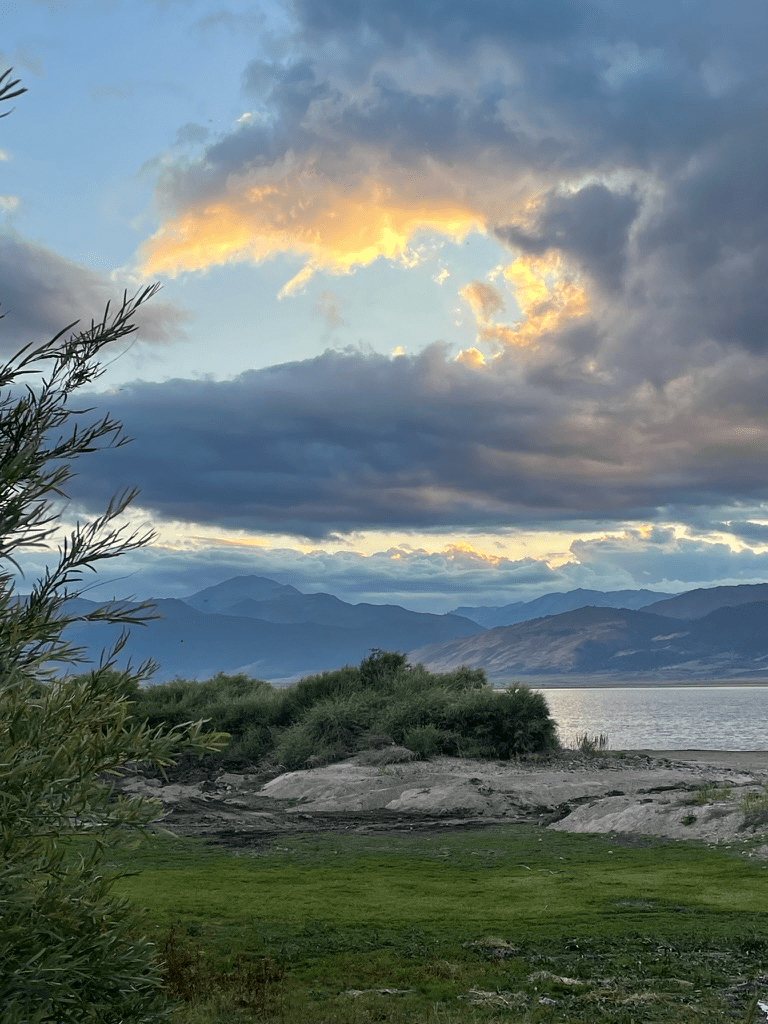
The campground host and hostess were a delightful couple who hailed from Ohio.  The camp was readying to close for the winter.   We decided to purchase two bundles of wood and were determined to hold out for some stars as we anticipated two of the three R’s over a campfire.  Recent storms had soaked the wood, even though wrapped in plastic film.  My associate and I had a real struggle to start a fire, at one point resorting to using my battery powered tire inflator to oxygenate the paltry flames.  I was frantically splitting kindling from the larger pieces as Pete knelt over the flames, blowing to bolster the single element necessary of the three to make fire.
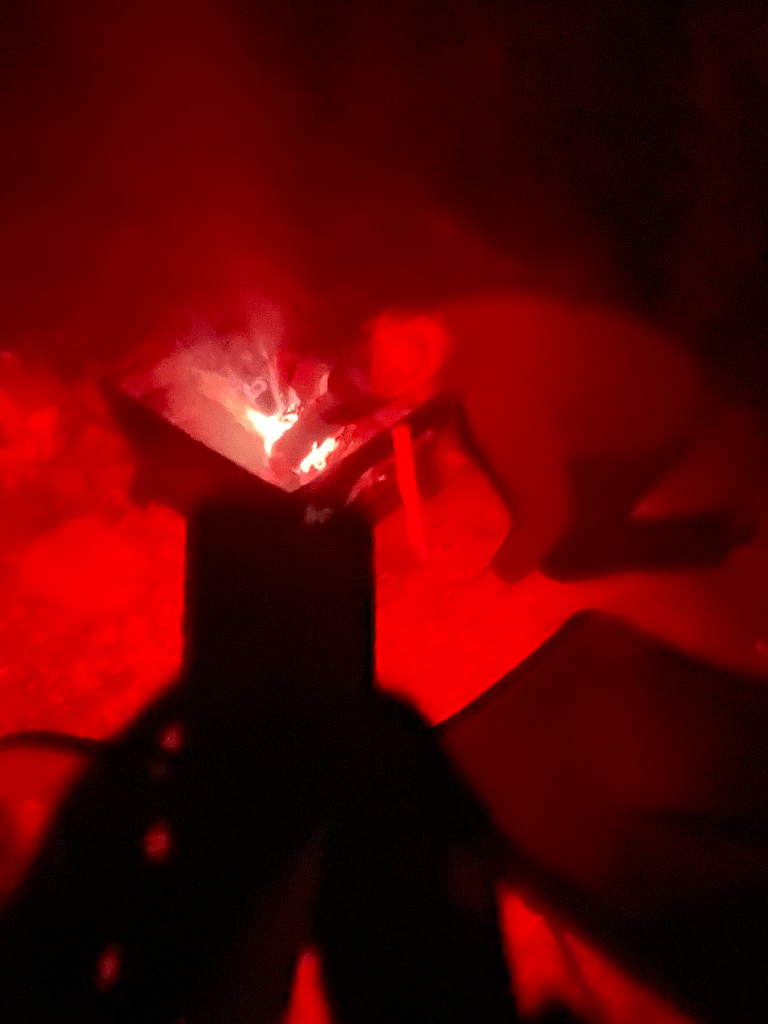
Though we are born to be mild, there was just enough of our neanderthal genome present such that our quest for fire finally generated enough heat to sustain a blaze. The red filter of my headlamp cast an eerily hue of Pete’s hyperventilation of the puny blaze.
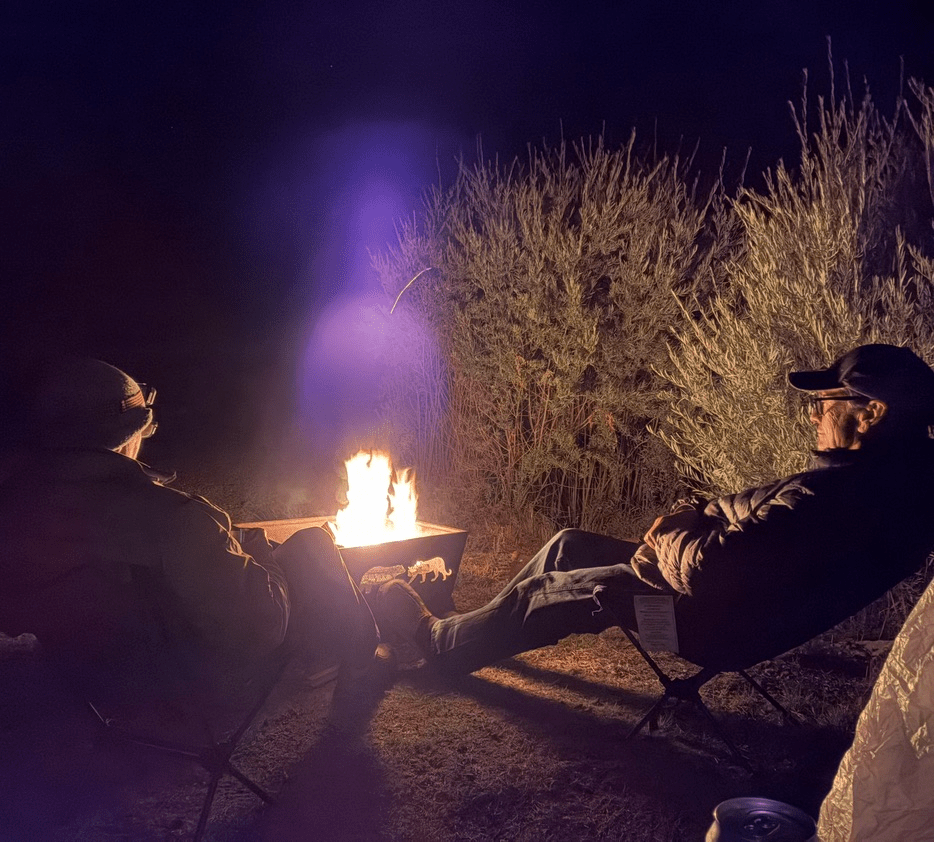
“Ughu,” translated from Neanderthal, “Victory!” We were intent to burn every last log before retreating to our tents. The skies cleared, somewhat, allowing for a spectacular star studded moonrise.  No ambiguity there…

Billions of galaxies of billions of stars only slightly obscured by magnificent clouds…

By now you have noticed I try to bracket the beginning and ending of each day with a sunrise and sunset photo respectively. I would be remiss to not suggest a reasoned explanation of the cosmology to which I have such regard and awe.  This is not something I do just on these motorcycle rambles. It’s a bit of my “spirituality” I try to practice regularly having abandoned, And now I lay me down to sleep…

I offer you Dr. Sagan and invite you to enjoy a moment of respect to stand at the edge of forever… You must understand, I am forever an educator and though retired from the occupation, I continue to cultivate an enlightened understanding of the very phenomenon that produces my regard and awe to which I retire at the end of the day and embrace each new day.

CARL SAGAN COSMOS Episode 10 The Edge Of Forever

Day 7 / Saturday, Sept 13 – Bridgeport → Home

Bridgeport –> Home ~152 miles over Sonora Pass, 168 miles over Tioga Pass

There’s not much that’s complicated about our homeward leg of this seven day Ruby Mountain Ramble. We did need to wait for the sun to rise and dry things out.

Imagine awakening to a fog bank.  Crawling out of our tents, we were met with wetness from within (condensation) and wetness from without, (drizzle).  But the ever-ready JetBoil mochas took away the chill warming within as well as without.

Fortunately, though fall was in the air, the sunrise went to work drying out our gear as we packed for our last leg of the Ruby Mountains Ramble, homeward bound. 

As we were breaking camp, a conversation with a dad we’d briefly encountered the afternoon before, who had that faraway look in his eyes as we shared our journey, turned into what has become a frequent discussion of motorcycles past and present with new acquaintances.  He was with his family of five children, wife, and dog who late in the day before, expertly backed their gigantic 38 foot trailer behind his heavy duty pickup into a narrow RV space.  He saw that Pete and I watched intently, feeling pressure, but performing like Mac Jones in Brock Purdy’s absence in three divisional wins… (I’m composing this some three weeks after the actual ramble).  If that makes no sense, we awarded him straight 10’s.

He shared that he too had motorcycles, an enduro and a Harley, that were gathering dust as soccer, toddlers, and a soon to be high schooler preempted dirt and wind therapy sessions on two wheels.  For now it was 10 wheels and RV park therapy with his family.  We were both impressed and expressed our admiration for his familial commitment.

We bid adieu to our campground neighbors, Bob and Marge across from us who got into an argument the day before as Bob tried well in excess of the number of tries to back his truck and trailer into their site for his fragile pride.  There was the cigarette smoking veteran who shared his experience on baggers across the basin and range of Nevada, along with our committed dad and his tribe, as well as our camphosts who were very attentive to the Paradise Shores infrastructure during our brief stay.
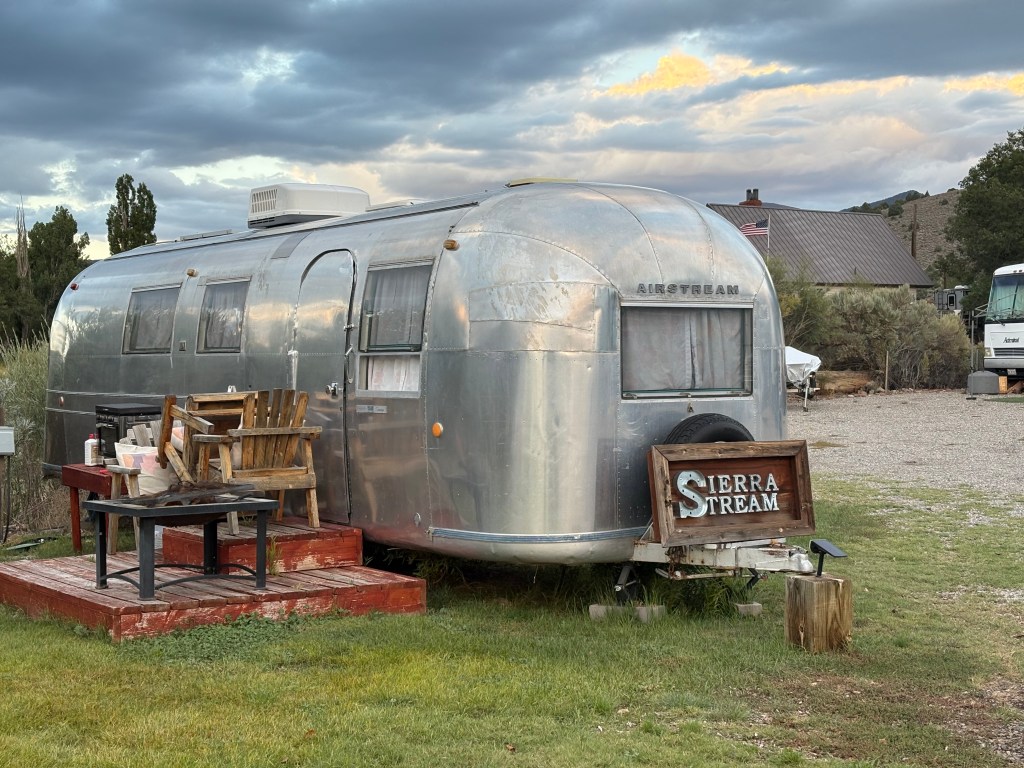

…and to the family of quail who resided along the shore of the Bridgeport Reservoir. Just how many quail qualify as a covey?

After a quick gas station refuel and breakfast of tomato juice for me and a cup of joe and deli sandwich for Pete, we decided to take CA-108 back over Sonora Pass.  Overdressed for the ride over the pass, we stopped briefly at Kennedy Meadows to de-layer before arriving back home a few hours later, all the better for our mild ride or epic adventure.  You can decide for yourself. 

Born to be mild…

Epilogue

1,444 miles on the trip meter.  Another ramble that I hope my sometimes rambling narrative provides inspiration to get out and do it because as Stephen Bruton sings in World’s Fading Man,

Has anybody here

can you find my shadow

Like a slow burning candle

I thought it would last

Seems like I’ve lost

What was too hard to handle

Now there’s less of my future and more of my past

Just ‘cause you can’t recall

don’t mean it didn’t happen

Just ‘cause you can remember

don’t mean that it did

And while you’re at it, Take it Easy

2024 Red Rock Canyons Spring Ramble: Ride, Camp, Repeat

The journey of a thousand miles begins with a single step, a proverbial phrase fittingly describes the writer’s extensive desert adventure. Facing wintry challenges, they embarked on a meticulous journey, blending familiarity with the unfamiliar for an enriched experience. From Red Rock Canyon State Park in California to the Red Rock Canyon National Conservation Area in Nevada, the trip featured unique geological landmarks, encounters with motorcycling enthusiasts, and unexpected surprises along the way. Amidst the landscapes, historical sites, and wildlife encounters, the narrative captures the essence of exploration, camaraderie, and personal reflection. Reflecting on both the joy of seasoned travel and the allure of venturing into the unknown, the writer shares their aspiration for a future adventure, blending nature’s diverse offerings and the prospect of new companionship.

The content provides insights into the challenges and pleasures of the extensive desert trip, offering a captivating blend of personal experiences, historical references, and geographic details.

April 7 – 12

“A journey of a thousand miles begins with a single step” is a common saying that originated from a Chinese proverb. The quotation is from Chapter 64 of the Dao De Jing ascribed to Laozi, although it is also erroneously ascribed to his contemporary Confucius. (Thanks Wiki…)

This saying teaches that even the longest and most difficult ventures have a starting point; something which begins with one first step. 

This spring’s first step took place as the holidays (Thanksgiving and Christmas, 2023) following Austin Bound, Austin Nevada That Is, launched me into planning our next winter/spring desert adventure.  Winter’s heavy snowpack was still blocking the familiar Ebbitts, CA-4/Monitor, CA-78, Sonora, CA-108, Tioga, CA-120, and Sherman Pass Rd, Forest Rte 22S05, all passes we’ve taken from our home in the Central Valley of California to cross the mighty Sierra. Late winter/early spring storms threatened closing our more familiar southern routes including Alta Sierra, CA-155, and Walker Pas, CA-178.  Tehachapi, CA-58 would only be considered in desperation to avoid defeat.  

Timing, as they say, was everything.  Variables informing my route planning included setting a week’s worth of time for a journey of a thousand miles with calendar approvals from the invitees, a cautious eye to 15 day weather forecasts, securing what has become the nuisance of a campsite reservation (given our age induced entitlement, we don’t boondock), and deciding what new features of riding, camping, and repeating would make this spring trip to the Mojave different from those of the past. 

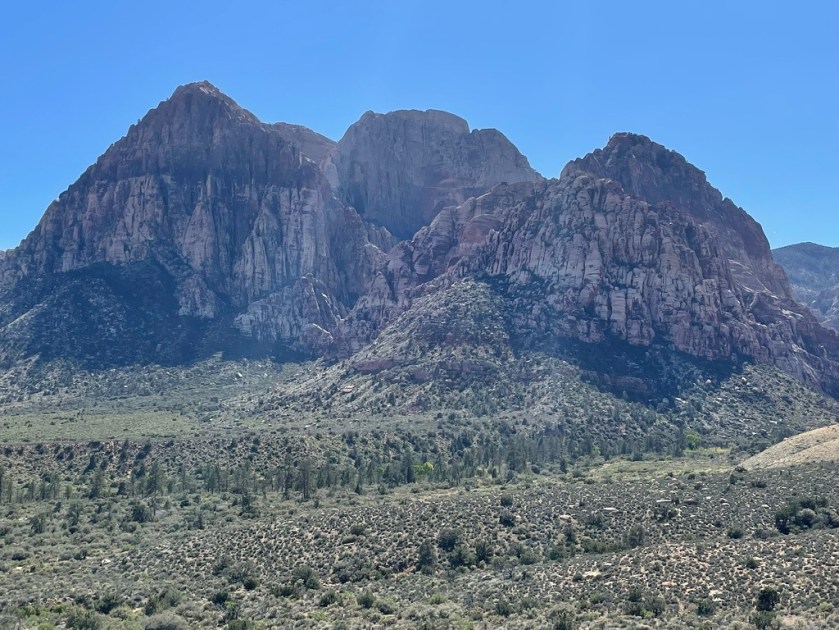
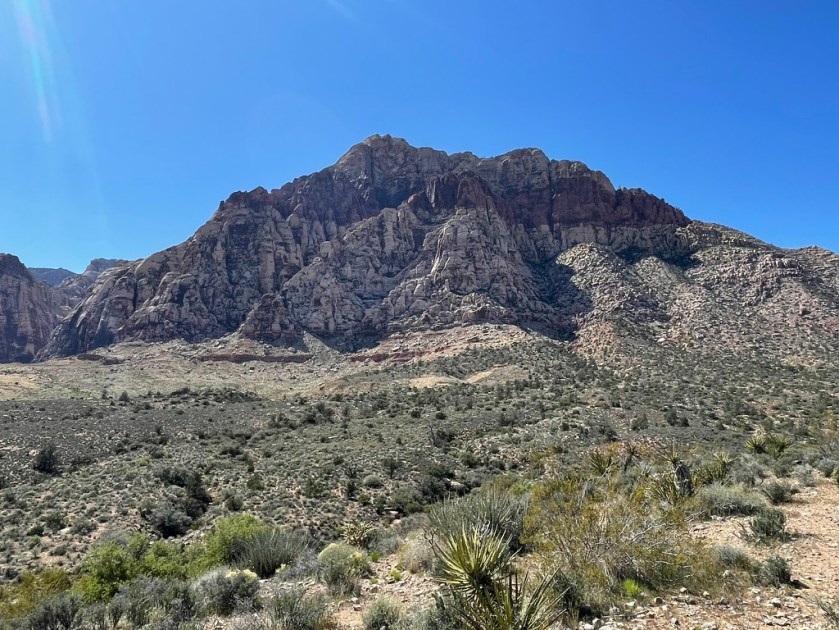
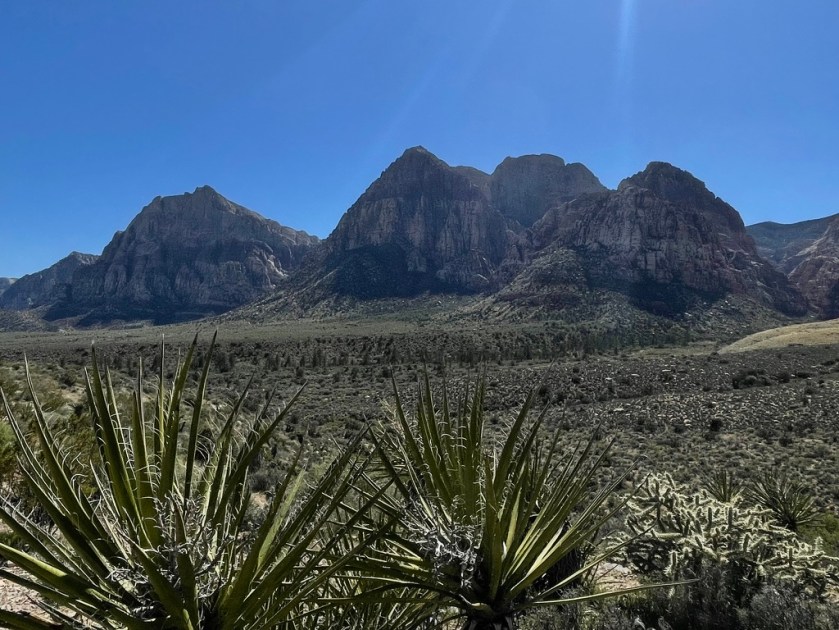
I’ve always wanted to compare California’s Red Rock Canyon State Park to Nevada’s Red Rock Canyon National Conservation Area.  Note that there are “Red Rock Canyons” in California, Nevada, Arizona, Colorado, Utah, perhaps multiple-named features in each state and probably anywhere else there’s oxidized iron in the soil through which a river once flowed.  Laozi would be proud of narrowing the scope of our journey of a thousand miles to just two red rock canyons in two states.  

This tour’s invitees included Pete and Andy.  Pete was “from-the-get-go” a go after prodding him to actually look at a calendar and check in with his partner Cheryl to clear seven days.  Andy was crickets until two days before our planned departure after indicating he’d be available after his wife Toni’s birthday in early March. But he bowed out due to an odd impairment from dragging baggage in Guatemala.  That’s an excuse for the books…

If you have followed the exploits of Sisyphusdw7.com, then you are familiar with Pete and Andy.  Pete rides a Suzuki V-Strom and Andy sports a Moto Guzzi Norge while I mount on a Moto Guzzi V85-TT.  You’ll also be familiar with Andy’s absence on all but one trip, Riding Under a Fool Moon, and Pete’s perfect attendance on each moto adventure I’ve chronicled on Sisyphusdw7.com since its inception in 2016.  Next time, eh Andy?

Click the links of the daily headings to see the route maps.

Day 1, Merced to Red Rock Canyon State Park

Red Rock and sandstone Hoodoos

The first leg of the journey of a thousand miles began at our usual meeting place, the Chevron station on G St and Yosemite Ave in Merced.  There happened to be four fellow bicycle riders who were meeting for a Sunday morning ride when I arrived to meet Pete.  Loaded and ready for rambling, as is often the case describing our plan to our cycling friends, a faraway look in the eyes of one of the bicyclists was punctuated by, “I wanna go! I wanna go!”  

This first step of the journey included some 200 miles through the San Joaquin Valley floor skirting farming communities of Dos Palos, Firebaugh, Mendota, Tranquility, Lemoore, Corcoran, Allensworth, and Wasco.  We even passed near the community of Neufeld, perhaps named for members of Andy’s farming lineage.  Passing by Corcoran, a lake called “Pa’ashi” by the indigenous Tachi Yokut tribe, that had disappeared 130 years ago from California largely by way of the diversion of the Kings, Kaweah, Tule, and Kern Rivers for irrigation and to a lesser extent, periodic drought, and now, after a series of severe weather events in 2023, the lake had returned.  

Images from NASA’s Aqua satellite orbiting the earth show the progression of flooding in the Tulare Lake Basin from March 2 through April 28, 2023

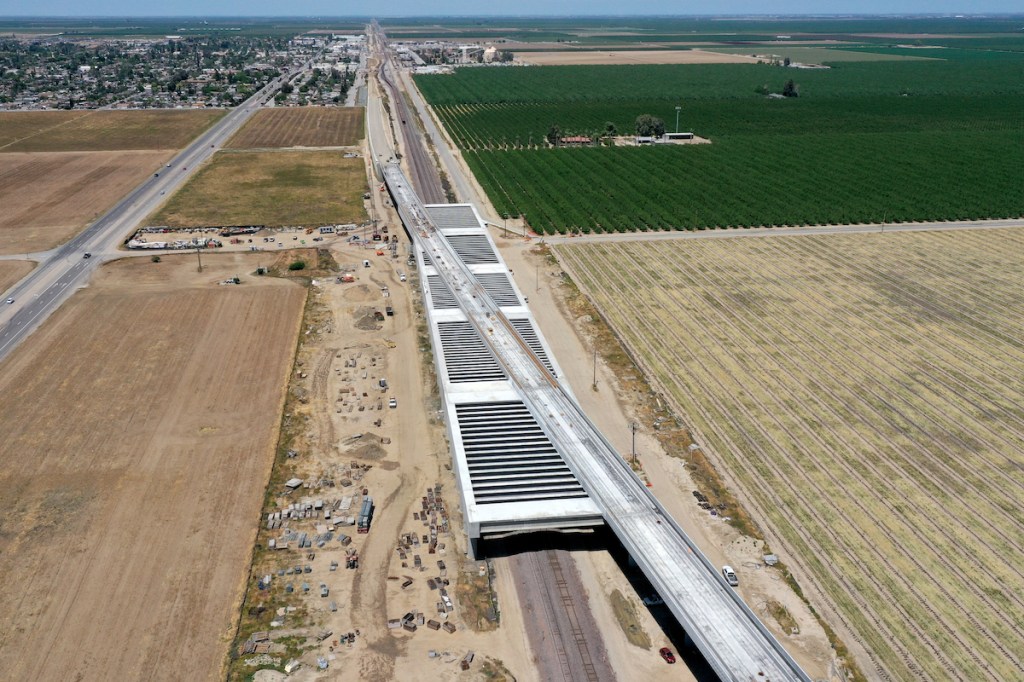
As a result of mitigation by stakeholder groups, the lake is now receding.  What may also be receding are dreams of high speed rail in California as funding of the controversial project is questioned.  Below is a drone image courtesy of hsr.ca.gov taken near Wasco in the southern San Joaquin Valley where the viaduct is being constructed to raise the rail-bed above potential flooding.

Could this become the high speed rail to nowhere?

Leaving the valley, we traveled another 100 miles through the pump-jacks of the Kern River Oilfield, along the outskirts of Oildale, through the Kern River Hart Memorial Park, and then meandering through the Kern River Canyon past Lake Isabella, over Walker Pass on CA-178, to south on CA-14, all en route to our first campsite at Red Rock Canyon State Park.  The California version of a Red Rock Canyon.

Many of the pump-jacks appeared to be new and they were dipping and rising en masse in what must be the expression of how us ‘Meri”can”s have nearly achieved oil independence.  Who needs high speed rail when up through the ground comes a bubblin’ crude?  Just in case, I’m joking.  Though I ride a fossil fuel consuming motorbike, I support alternatives for mass and individual transit (high speed rail and bicycles) that don’t entirely depend on the crude.

The Kern River Oil Field covers an area of 10,750 acres (43.5 km^2) in a rough oval extending over the low hills north-northeast of Bakersfield, in the lower Sierra foothills, hills which are now almost completely barren except for oil rigs, drilling pads and associated equipment. This area is the densest operational oil development in the state of California: Midway-Sunset southeast of the Kern River oilfield, which has more wells, is almost three times as large in surface area, for a lower overall density.

There are others, like the McKittrick fields I’ve featured in a previous Super Bloom post. Yielding a cumulative production of close to 2 billion barrels (320,000,000 m^3) of oil by the end of 2006, it is the third largest oil field in California, after the Midway-Sunset Oil Field and the Wilmington Oil Field, and the fifth largest in the United States.  Its estimated remaining reserves, as of the end of 2006, were around 476 million barrels (75,700,000 m^3), the second largest in the state. It had 9,183 active wells, the second highest in the state. The principal operator on the field is Chevron Corporation.  (Thanks Wiki…) 

The contrast between the verdant ag lands of the valley floor and the desolate oilfield, from which the last barrels of carbon were being extracted, is striking.  For a detailed history and updated production figures, check out:  Kern River Oilfield.  Our impact on the environment for feeding our civilization is fragile when you consider that as few as 150 years ago the indigenous peoples of the region lived in relative harmony with nature.

The temperatures were just right until we began climbing up to Lake Isabella.  Clouds and a passing cold front made for a chilly section of CA-178, the Kern Canyon Road.  Along with a couple of “Roadwork Ahead”, “Prepare to Stop” signages as two lanes merged into a single lane, a chilling scene unfolded as we came upon a motorcyclist who was writhing on the road having apparently been thrown from his bike that was lying against the canyon wall some hundreds of yards away…

Be careful out there… (Pardon the expletive), with the Steve Miller Band, Further On Up the Road

Once we made it to the divided four lane portion of CA-178 as we approached Lake Isabella we experienced a brief respite from the twisty canyon road traffic traveling down the Kern River Valley with a lunch stop at The 178 Bar and Grill.

The sun broke through the clouds and we enjoyed a little thermal respite besides that transmitted through heated grips on the motos.  It’s always a challenge to insulate against the cold and heat when moving from one elevation/climate zone into another, namely the Sierra to the Mojave, regardless of the season.  Passing through the small lakeside communities of South Lake and Waldon, we then passed through the more rural agricultural communities of Onyx and Canebrake.  It’s there we began the climb over Walker Pass (el. 5250 ft) where, coincidentally, the Pacific Crest Trail intersects.  

The pass was charted as a route through the Sierra in 1834 by Joseph Rutherford Walker, a member of the Bonneville Expedition who learned of it from Native Americans. Walker returned through the pass in 1843, leading an immigrant wagon train into California. In 1845 the military surveying expedition of John C. Fremont used the pass. He suggested it be named after Walker.  Walker Pass was used in 1861 by cattlemen from the San Joaquin Valley and the Tejon region of the Tehachapi mountains to drive cattle to the silver boomtown of Aurora near Mono Lake.  Aside from the paved road, the pass is essentially unaltered since Walker mapped it in 1834.  (Thanks Wiki…)

Join Sisyphus with Dwight Yoakam and Neil Young on a hyper-ramble over Walker Pass

The view from Walker Pass to the vast expanse of the Mojave desert is stunning. 

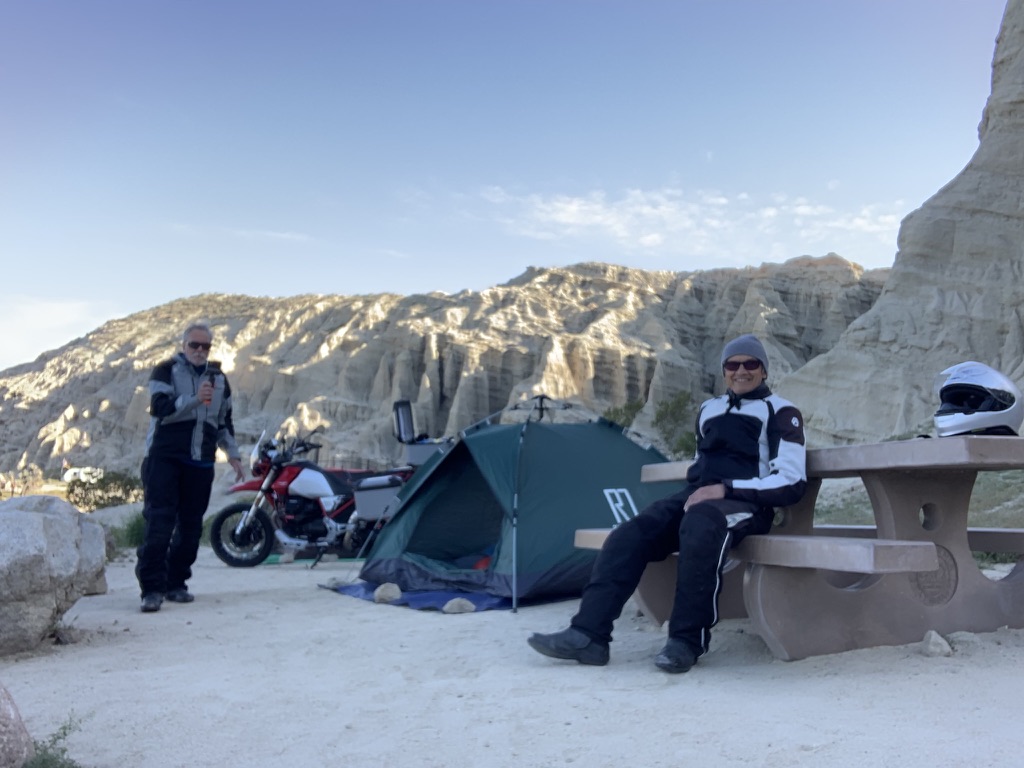
At the intersection of CA-178 and CA-14 we headed south, arriving at Red Rock Canyon State Park in just a few minutes.  This state park has no reservation campsites, however, each site has a table, potable water and pit toilets are available, some even open air stalls!  There is a fee that we paid, including a $2 senior discount and our reasoning that since a second vehicle added $6, our two 2-wheeled motos were the equivalent of a 4-wheeled vehicle requiring no additional fee.  Having no pen or pencil we left the envelope in the drop box (duh) keeping the tag just in case a friendly ranger or maintenance worker checked in with us suspecting turnstile jumping dirtbag motorcyclists.  

The campsite at Red Rocks State Park in eastern Kern County

The area was once home to the Kawaiisu people. Some petroglyphs and pictographs are found in the El Paso Mountains and represent ritual sites from ancestors of the Coso people were early indigenous inhabitants of this locale. They created extensive carvings in rock within the El Paso and neighboring mountains of Red Rock Canyon and conducted considerable trade with other tribes as far as the Chumash on the Pacific coast.

The colorful rock formations in the park served as landmarks during the early 1870s for 20-mule team freight wagons that stopped for water. The park protects significant paleontology sites and the remains of 1890s-era mining operations.

Providing several unique, dramatic areas, and close to Los Angeles, since the 1930s Hollywood has frequently filmed at Red Rock Canyon, including motion pictures, television series, advertisements, and music videos. (Thanks Wiki…)

And of course, here’s one of my very favorite programs filmed in the Red Rock Canyon State Park, Huell Howser’s Golden Parks episode

A blustery welcome to our first night campsite on the Red Rock Canyons Ramble…
Pete’s selfie-ish photo that might have broken the internet if only he had social media…

The nearest provisions were at the Jawbone Canyon Store, whose motto is, “Let them eat dirt!” around 7 miles further south on CA-14. That is where we thought we were going to get our dinner and 3R’s beverages after setting up camp.  By then the wind was howling out of the south.  When we arrived at the store that is popular among the ORV crowd around 5:30 pm, on this Sunday, the store was closed, so I guess, eating dirt was our option. 

A quick search of Google Maps indicated that California City, about 14 miles further south, appeared to be a settlement of some consequence, so off we went battling sidewinds as the sun began to hug the western horizon. 

After fueling up, procuring our favorite beverages, along with a bag of Fritos and a bundle of firewood at the One Stop Market, apparently in the midst of billion dollar lottery fever given the size of the crowd buying quick-picks, we headed back to camp after a 340 mile day.  Fritos would have to do as our hearty lunch in Lake Isabella would sustain us…

3-R’s and combustion

Twas a bit windy through the night, however as the sun arose on Monday morning, the wind had settled down.

Good Morning Red Rock Canyon State Park
Neither Pete nor I are paleontologists, but are both fans of the Flintstones. We agreed we had found the remains of stegosaurus rubrum
There are some rocks worthy of being described as red…
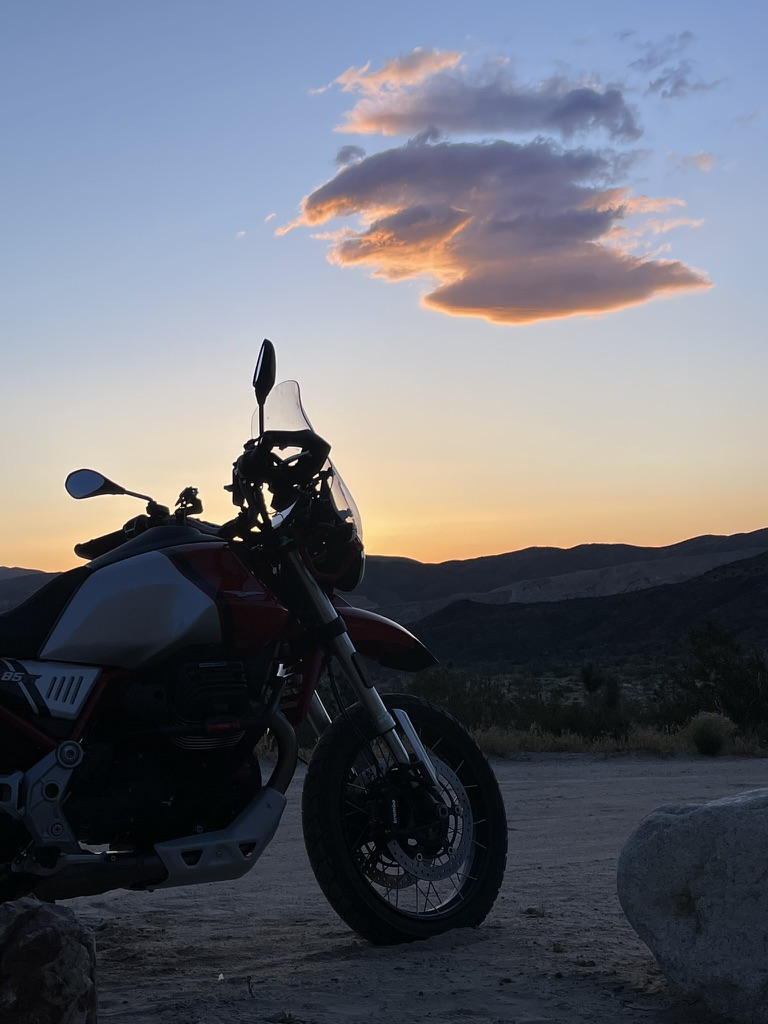
Ill mio bella rosso moto…

A shorter day by ~100 miles lay ahead as we planned to sprint south on CA-14 to Redrock-Randsburg Rd en route to dawdle a bit in Randsburg on our way across Death Valley to Shoshone, one of our favorite stops.

Randsburg California, or Rand Mining District as it is also known, is considered to be a “Living Ghost Town”. Holding on to the very brink of existence, this small mining community is located in the Northern Mojave. Outdoor recreation booms here: ATV, dirt bikes, 4x4s, motorcyclists. RVers & car clubs are welcomed. Weekends can be busy with tourists, local horsemen & desert dirt boys, but on week days you’ll have the place to yourself. An old fashioned soda fountain at the general store & a real old west saloon, hours vary with season. The Joint is the local bar. Randsburg is a great place for interesting desert photography. (Thanks to the Randsburg.com website, the domain for which is 4-sale)
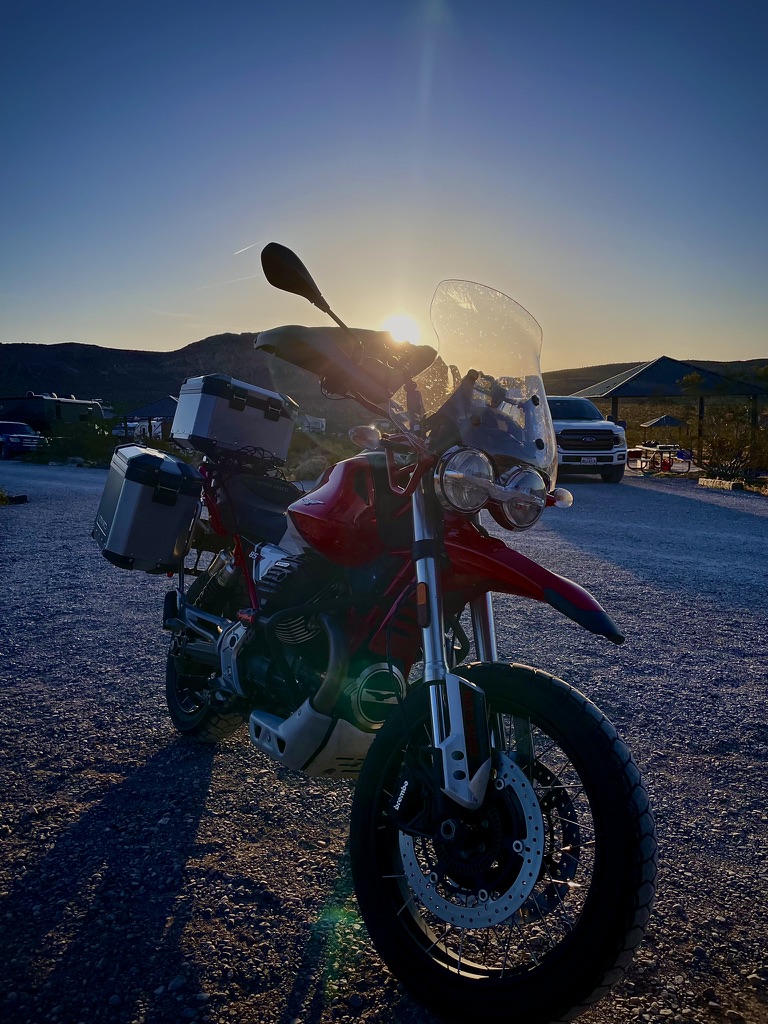
It was around 9:00 am on a Monday morning and in spite of the promotion about how people are dying to go to Randsburg, not a creature was stirring, not even a mouse.  Wait, there was a dog barking at us from afar.  We did pretty much have the place to ourselves except for a couple of local spirits.

Pete was intrigued and wondered how much was that little Yamaha in the window. The Bulltaco was probably a better deal…

Is that an apparition appearing in the photo?

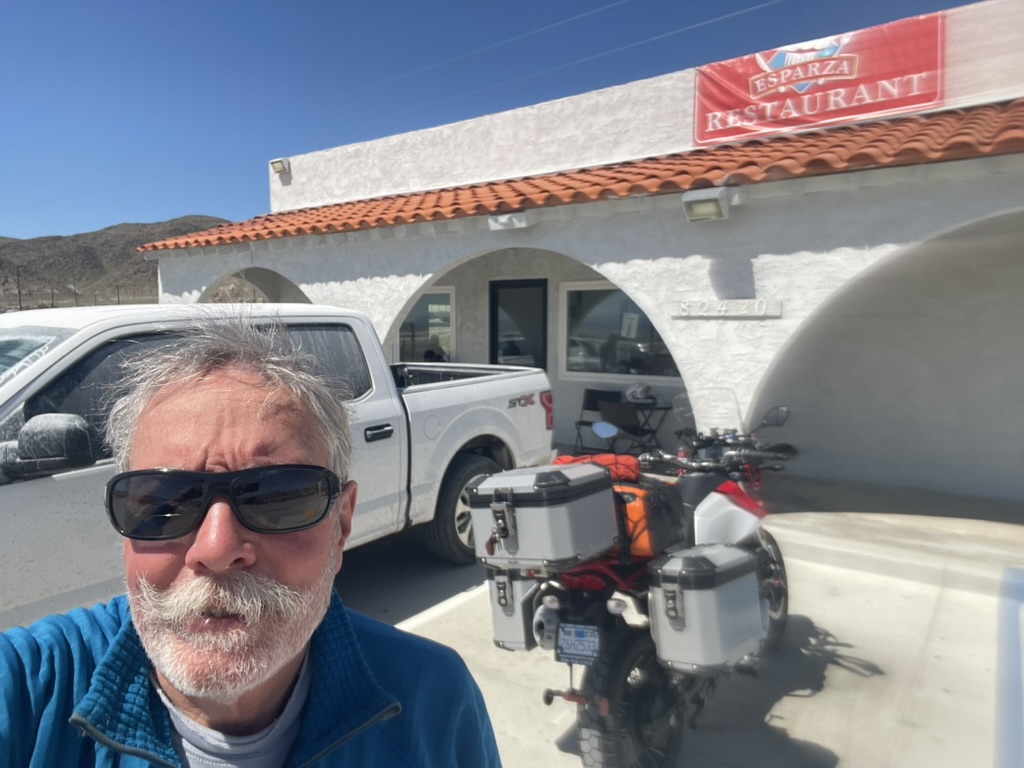
Next we were off to Trona on, what else but, Trona Rd and our favorite Trona cafe, Esparza’s for breakfast. You could consider that Exparza’s has a lakeside location.  Except for the fact it’s Searles Lake.  What the restaurant lacked by way of a view was more than compensated by the delicious fish tacos.  I only hope they weren’t fresh from Searles Lake…

Eclipse? What eclipse? I’m here for the tacos

From there it was off to Death Valley via Trona-Wildrose Rd with a tailwind for a change. At the intersection of the Wildrose entrance to the park and the CA-190 Townes Pass entrance, there appeared a sign warning against the faint-of-heart tackling that route.  We came upon a couple who we speculated were on rented Harleys, harleying their way to Death Valley, in full Haley regalia; riveted black leather jackets with fringe and matching chaps, hers with fringe, the chap’s, fringeless.  They came to a sudden and mildly confused appearing stop as we approached at customary cruising speed on those long lonesome straightaways, safely under 100 mph.  We passed, losing their tableau in the rear view mirror.  I hope they chose well.  It would be sad if they suffered like those bleached Randsburians…

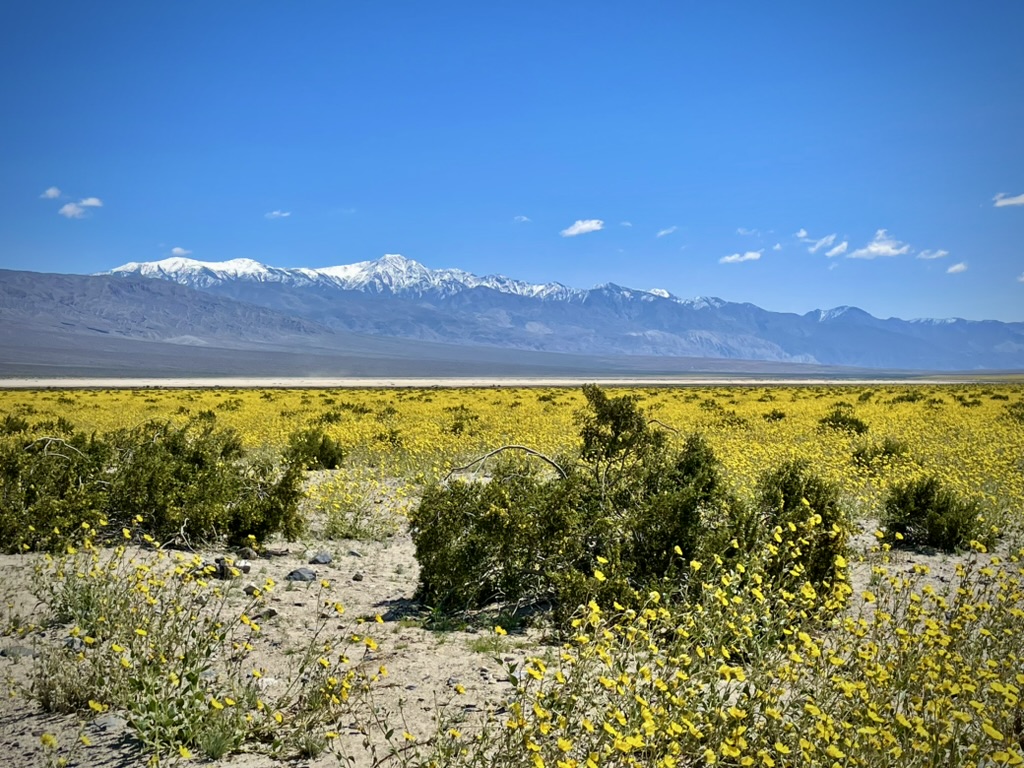
Right on CA-190 and the first real “super-bloom” was evident.

Panamint Valley superbloom

Geraea canescens, commonly known as desert sunflower, hairy desert sunflower, or desert gold, is an annual plant in the family Asteraceae that was showing off.  Telescope Peak from the west, sporting some late spring snow, is still feeding Lake Manley on its eastern flank.

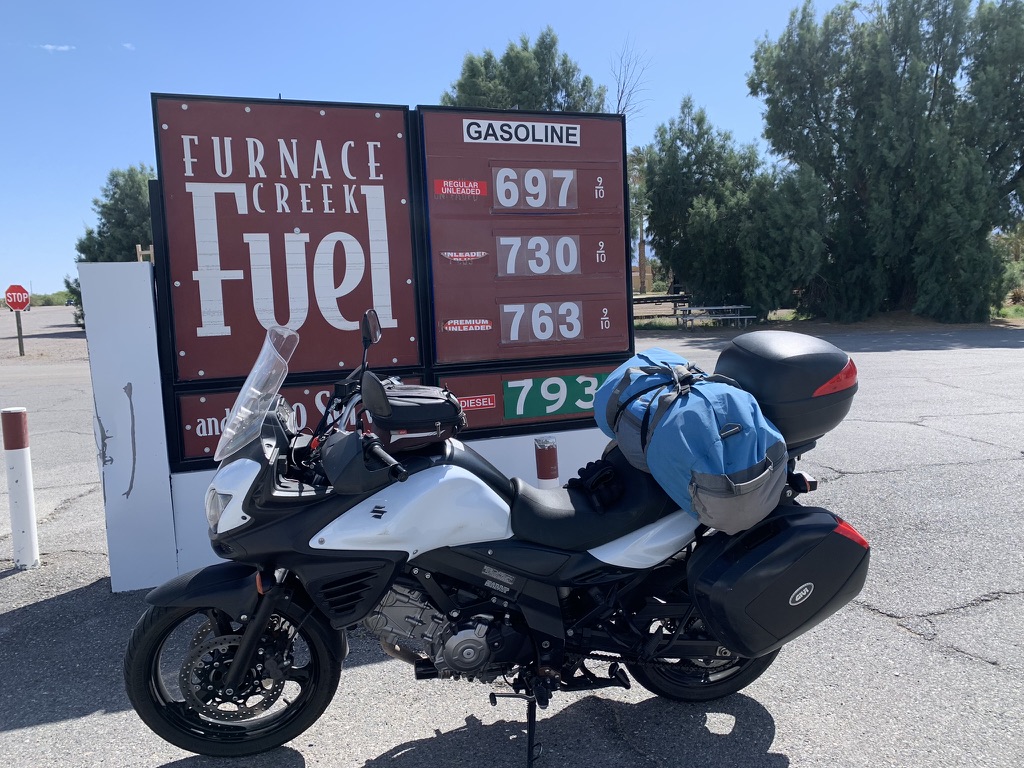
Death Valley was in the very pleasant mid-60’s when we arrived in Furnace Creek for a fuel stop.  Ill Mio Rosso likes expensive stuff.  Pete’s V-Strom uses the budget stuff.  

Yikes! The downside of supply and demand

We contemplated taking CA-190 to Death Valley Junction, then CA-127 south to Shoshone.  But, seeing an actual Lake Manley in Badwater was something worth the slightly added distance, heat, and traffic. 

Channeling Ansel Adams, Pete busied himself composing a photo of the Seldom Seen Lake Maley as we pealed away layers of insulation.

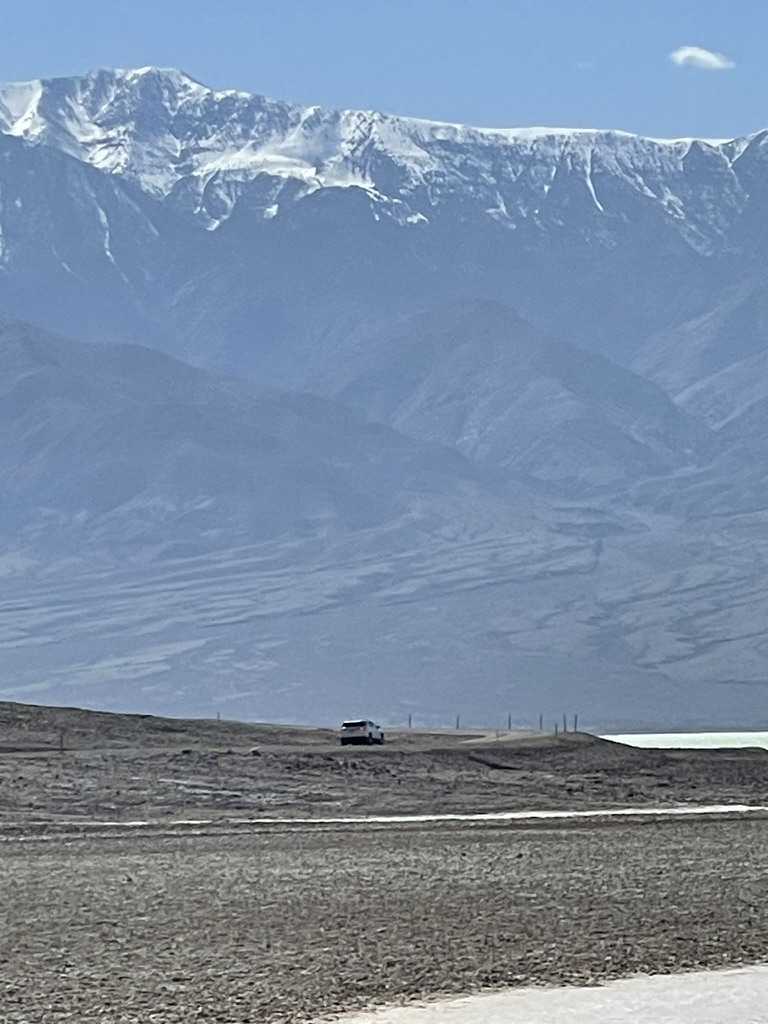
It’s sometimes hard to capture the scale of the vastness of terrain, especially that of Death Valley. Below is  Telescope Peak from the east at 11.049 feet taken from 282 feet below sea level at Badwater with Manley Lake in middle-ish ground.

The remains of Lake Manley’s source topping Telescope Peak in the Panamint Range

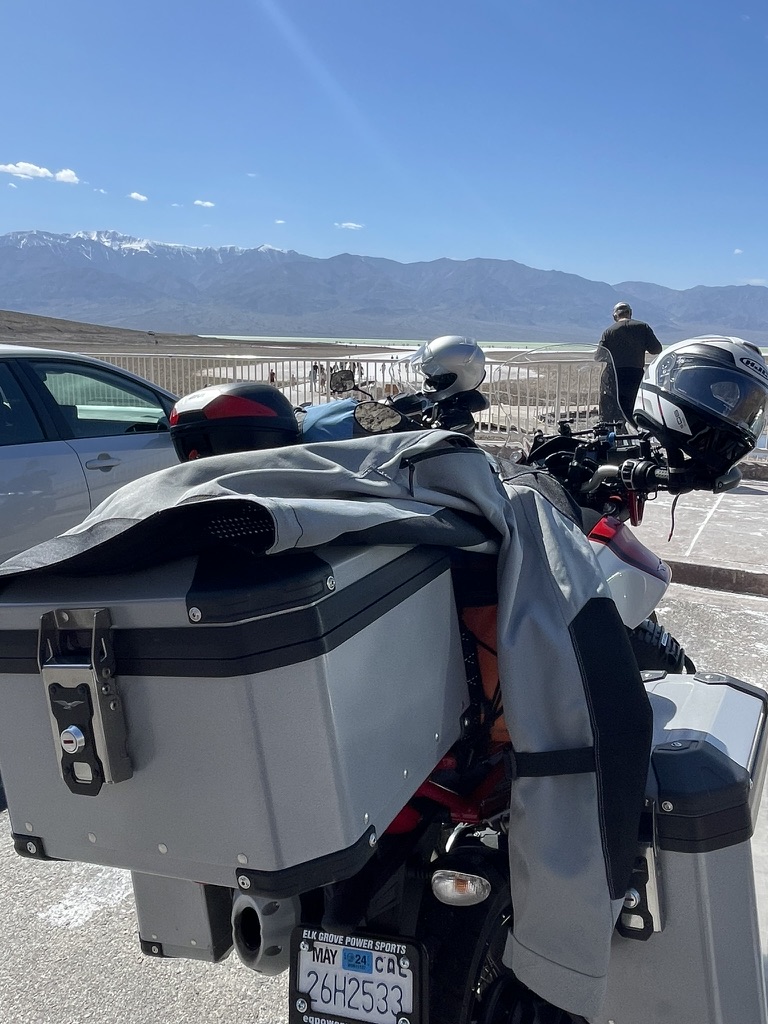
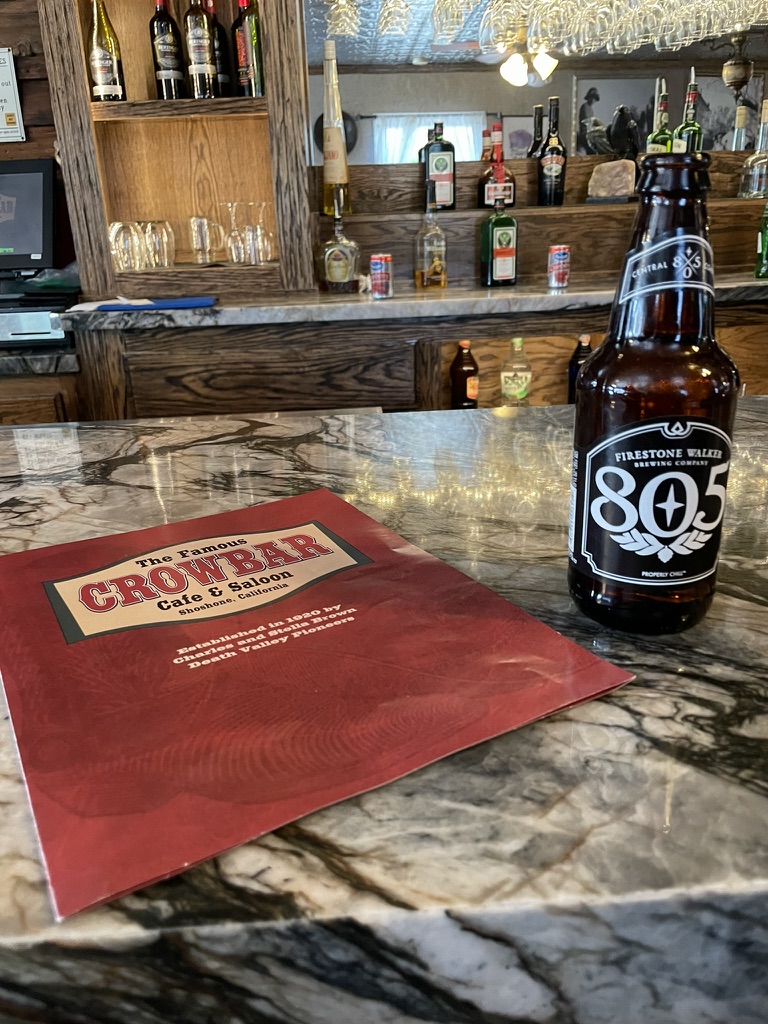
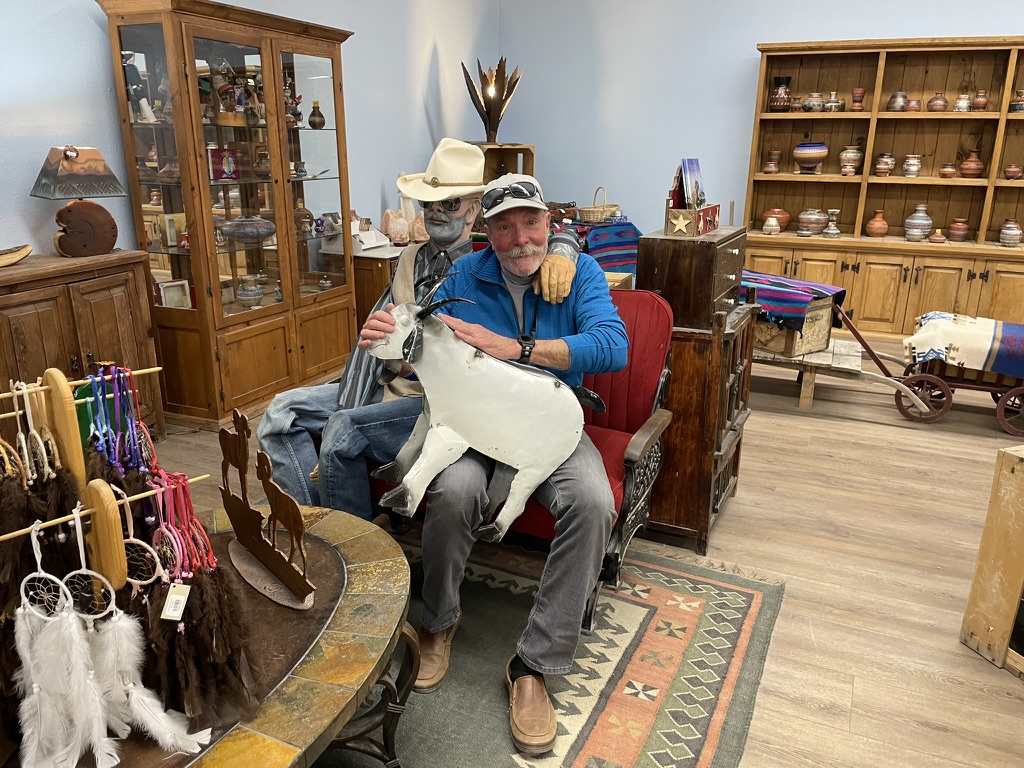
In no time we made our way on Badwater Rd to Jubilee Pass Rd, the continuation of CA-178 to CA-127 then south to The Shoshone Trailer RV Park.  I’ve noted that Shoshone is one of our favorite destinations.  The campground is perfect, the Crowbar has the best eats east of Trona and the Chas Brown Market can provide for all occasions including offering a geode for $2800.  If I had space for it on the Guzzi, well, maybe.  We settled on procuring beverages for the 3-R’s. I’ll ask my grandaughter how to take a selfie without looking at your trigger finger… The lens needs some attention.

Day 3, Shoshone to Red Rock Canyon National Conservation Area

Good Morning Shoshone!
Calico Hills trail (Thanks Wiki…)
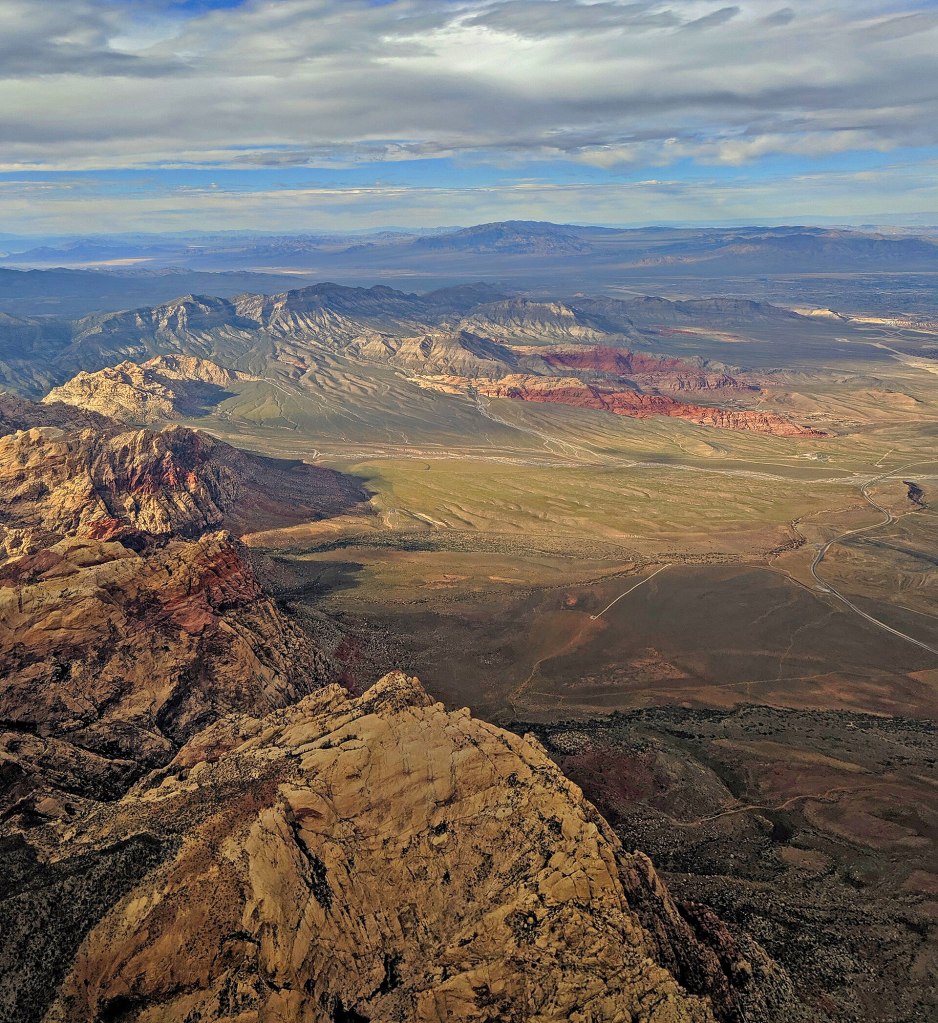
Aerial view of the Red Rock Canyon National Conservation Area near Las Vegas, Nevada, looking northeast (Thanks Wiki…)

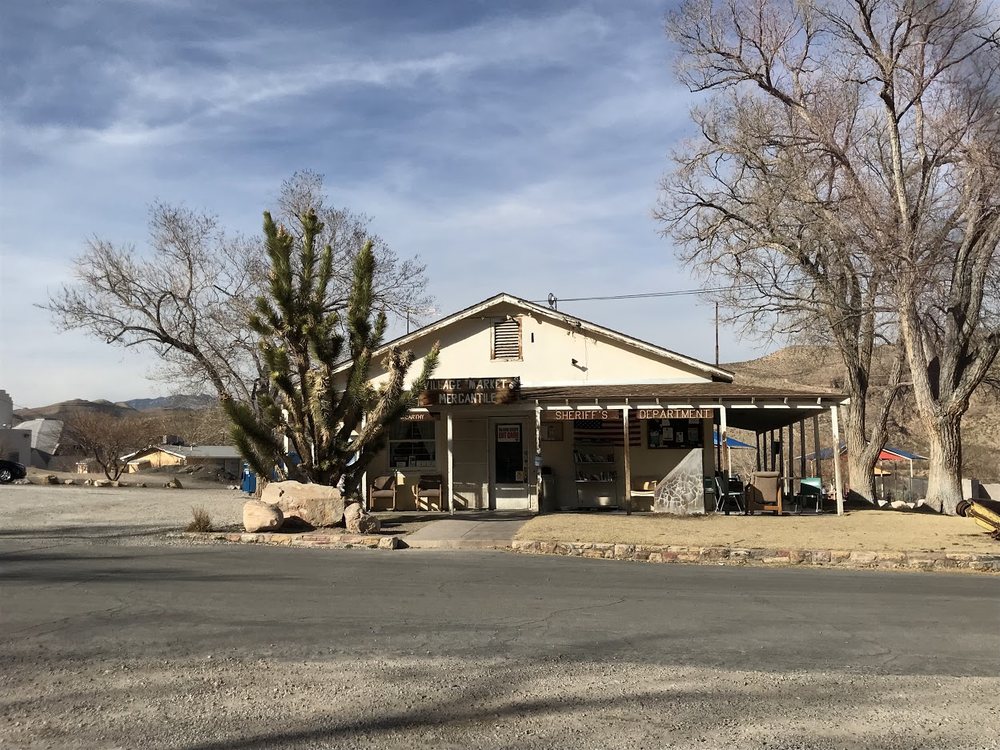
A short 86 miles to our next destination, the Nevada version of a Red Rock Canyon, commenced by heading east on the Old Spanish Trail Hwy.  We soon learned there was no breakfast to be found until we reached Blue Diamond the nearest community serving the National Conservation Area.  The community includes a park, private pool, library, elementary school, event hall, church, and a mercantile/gas station. The mercantile (general store) was built in 1942 and originally sold household staples and sundries to residents who were mostly miners at the Blue Diamond Mine. The store has maintained its original external look. Walls inside the store showcase many of the town’s historical photos, courtesy of the Blue Diamond Historical Society, an all-volunteer organization.  

Cottonwood Station is a local scenic eatery in the historic village of Blue Diamond, minutes from Las Vegas. Near Red Rock Canyon and Spring Mountain Ranch State Park, Blue Diamond attracts many hikers, mountain bike riders, road cyclists, and guys on motorcycles, like us.  There was, to our surprise, a large upscale Trek store next to the eatery.  Drop by the Cottonwood Station for a latte while waiting for the wrenchers to adjust your electronic shifters and hydraulic brakes I reckon…

The breakfast pizza was killer! Pete still searching for the eclipse…

From Blue Diamond it was just a few miles to our campsite in the Red Rock Canyon NCA.  After procuring a couple of whistle wetters at the Blue Diamond Market where the cashier shared that they would be closed by 5:00 because the owner didn’t want to pay her until 8:30, her preferred closing time, we strategized our dinner plans that would follow a tour of the Red Rock Canyon Loop.  But first, a couple of whistle-wetters.

Onward to the Campground… with Sheryl Crow

Didn’t make it to Las Vegas so we didn’t need to leave. But, life was so bright on a Tuesday afternoon…

Dropping off our gear and setting up our tents, we headed for the park.  We passed through an entrance station that boldly displayed a sign indicating reservations were required to enter the scenic loop through the canyon.  I noted to the attendant that we had a campground reservation to which she replied that wasn’t enough.  So, in my best, “You can’t possibly deny us entry into this fine geological feature of Nevada that would have to take second place to the okay geological feature of California that wasn’t even red if we cannot enter to determine its superiority” plea.   

She asked if I had a park pass.  I whipped out my National Parks and Federal Recreational Lands Senior Pass and with that she said, “That’s two dollars.” and waved me through.  

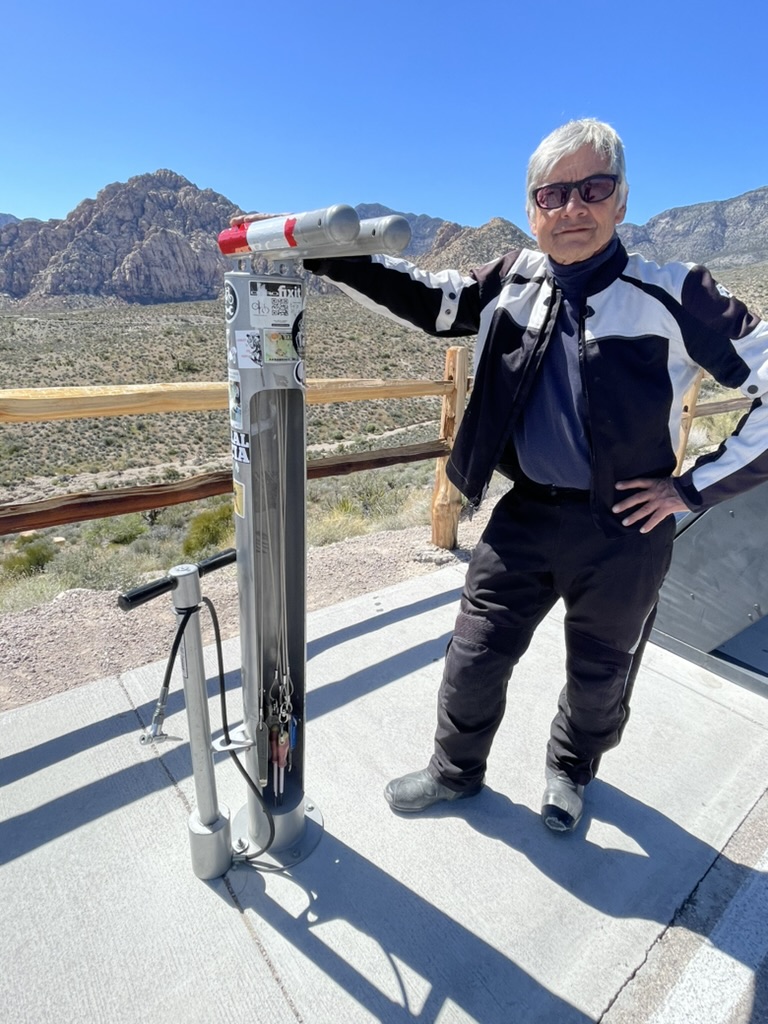
Nearly speechless, I thanked her, pressed once forward on my shift lever and moved to allow Pete to pass through.  When he pulled up next to me he said that he had just paid $10 to get into the park.  I later consoled him by acknowledging that his additional $8 contribution to the National Conservation Area helped to support the tricked out bicycle repair station that was installed in one of the turnouts.  I assured him it was less than the latte back in Blue Diamond that he was supporting the people’s repair stand.

Still smarting having been fleeced out of $8 by the Feds
Ah yes, as advertised, Red Rocks

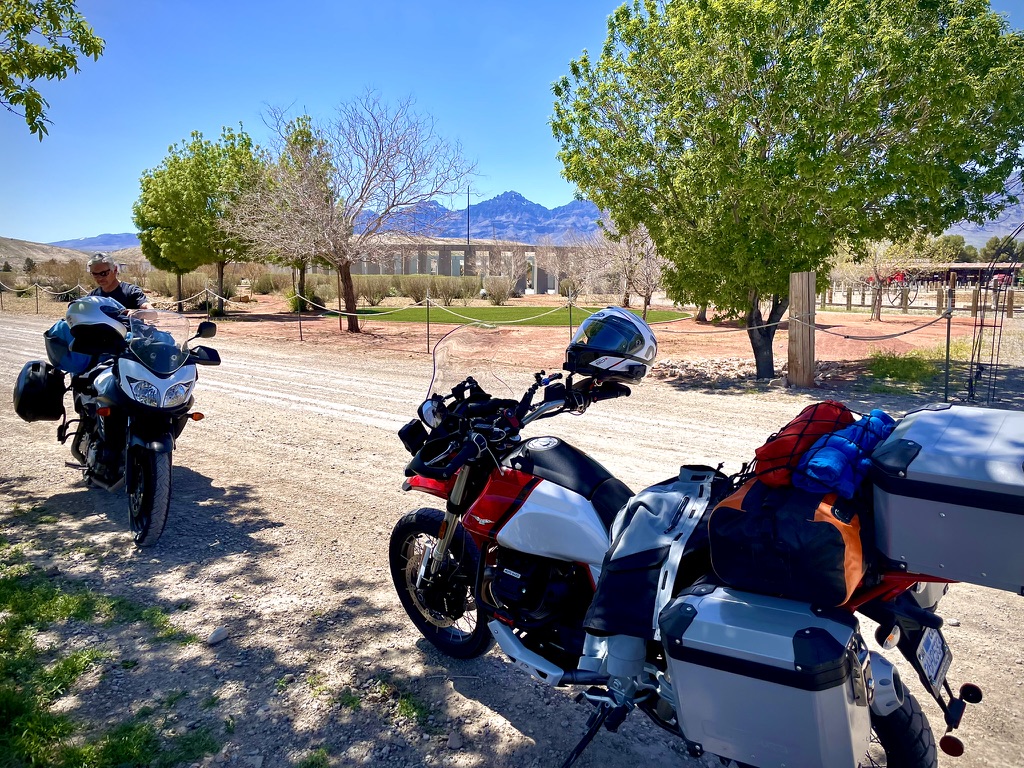
Always eager to make new acquaintances, I met Marlon Ma of Wu Tang Chinese Martial Arts Institute.  He approached us admiring Ill Mio Rosso Bela, which, by the way, gets noticed far more than Pete’s V-Strom these days.  When Pete first toured on his Triumph T120, my little Kawasexy Versys was hardly noticed despite its candy orange color scheme with matching panniers and drybags.  It seems that everyone we would meet would get all misty-eyed recalling their love affair with a Triumph from yesteryear.  No longer do we see misty-eyes but eyes of wonder and bewilderment as curiosity is voiced, “What’s a Moto Guzzi?”


Marlon was a sport bike guy who also owned a BMW and a Harley.  I wasn’t going to hold that against him after I requested and he obligingly shared his first stance and move when encountering a foe that was in every way, vintage Bruce Lee.  Marlon no longer lived in New York where he founded the Wu Tang Institute.  He now lives in Las Vegas where, coincidentally, the Wu-Tang Clan can be found in their historic, first-ever Las Vegas residency, at The Theater at Virgin Hotels Las Vega Rolling Stone Wu-Tang Residency.

Red Rock Canyon National Conservation Area Loop with Donald Fagin and Walter Becker

After moseying through the park loop, we made our way into Angel Park Ranch, a tony North Las Vegas zip code and found an Albertson’s to procure the evening victuals and, of course, the 3R beverages that would complement the grub as the relaxation, rehydration, and reflection hours awaiting.

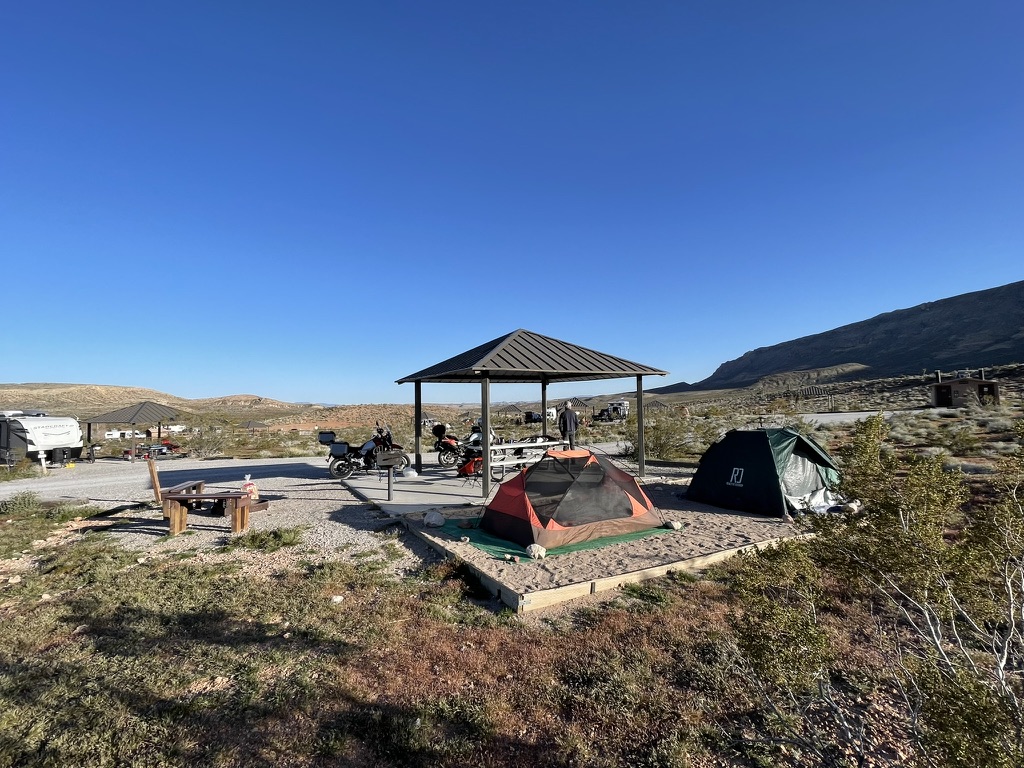
Red Rock Canyon National Conservation Area campground
Our evening stroll took us to new heights

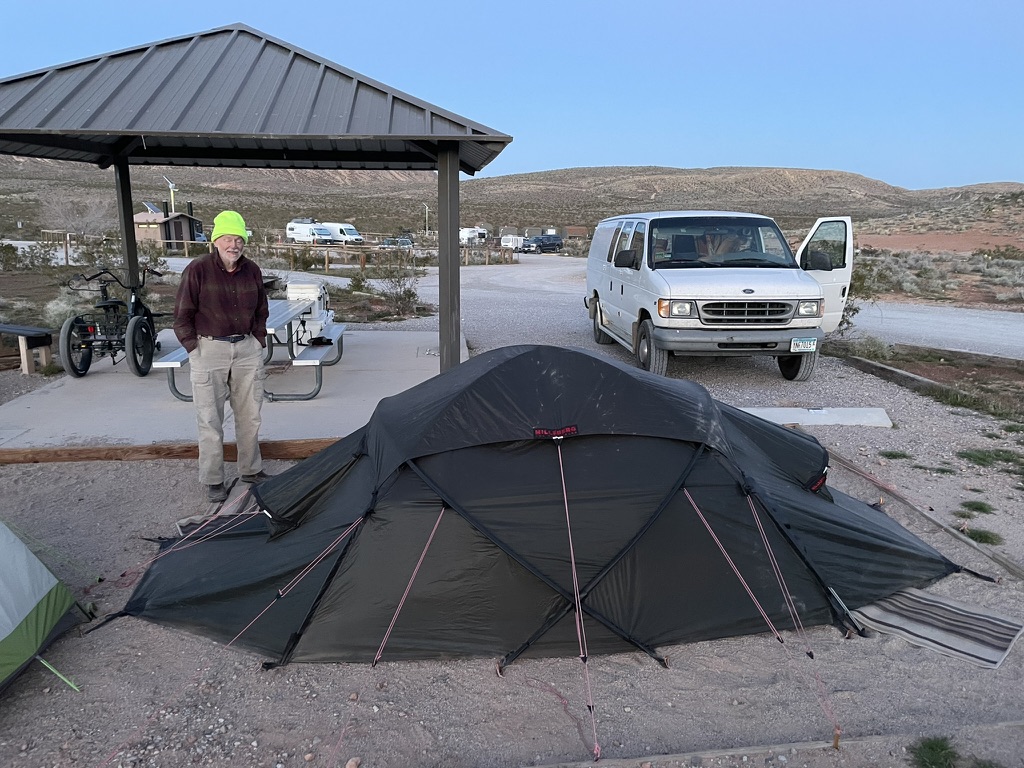
Descending the hillside, we ambled through the campground coming upon what appeared to be a tent worthy of gale force winds.  Indeed, the gentleman who excitedly shared his tupik said that since he often camped in windy deserts, he found this Swedish Expedition Tent to be ideal.  It was designed to withstand winds up to 70 mph.  Though it looked somewhat complicated, he said it was a snap to set up.  He had a luxurious mattress that covered the entire floor!  No blustery tent flapping, rocky floor night’s sleep for this fellow.  I guess he could have slept in his van, but if you’ve got a Hilleberg Tara why would you?

A man, a tent, not just any tent, a Hilleberg Tara, and pride…

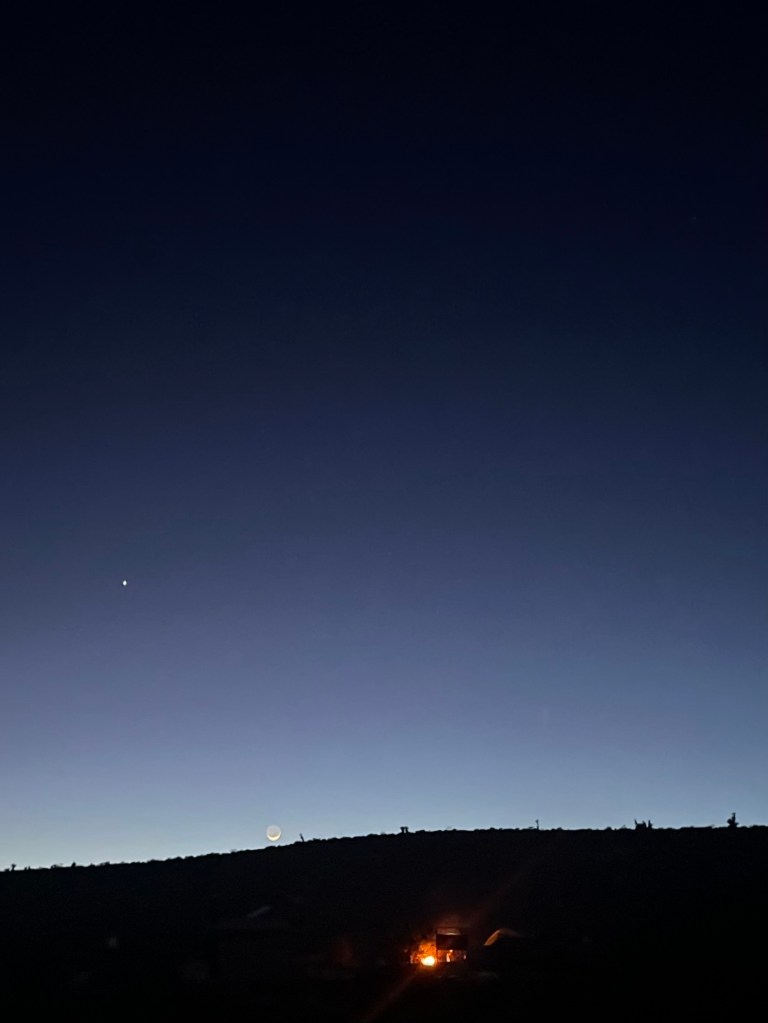
In the distance we could hear jet fighter aircraft, ostensibly from Nellis Air Force Base just a few miles to our east. As night fell, the maneuvering jets quieted having practiced their tactics, we kindled a fire and reflected as we relaxed and rehydrated viewing Jupiter and the waxing crescent moon.

On the western horizon, Jupiter and the waning crescent moon
To the east, the bright lights of Lost Wages

Good Morning Red Rock Canyon National Conservation Area!

Day 4, Red Rock Canyon to Caliente, NV

A fellow motorcyclist sharing stories over coffee. That lens needs attention again..

We’re accustomed to the sound of military aircraft doing tactical maneuvers as the former Castle Air Force Base is located near our hometown in Merced.  The one-time Atwater Air Force installation was home to the U.S. Strategic Air Command, a part of America’s Cold War nuclear triangle.  For a time a fighter squadron occupied the base too.  With the base closure in 1995 the Strategic Air Command picked up and flew the coop.  Nowadays there is a commercial pilot training facility, the Castle Air Museum, UC Merced facilities, the U.S. Penitentiary Atwater, along with other portions leased to Google for development of self-driving technologies (known as Waymo), the County Animal Shelter, and a few local businesses including a brewery, The Tarmac.  The fighter jet scream was familiar.

We made our way east through North Las Vegas on NV-604, avoiding I-15, skirting the Las Vegas Motor Speedway and Nellis Air Force Base, home of the USAF Thunderbirds.   As noted, all the previous afternoon into the night and the following morning we heard the distant thunder of aircraft, most likely fighter jets, perhaps even the Thunderbirds, working on maneuvers, tactical or otherwise…  

Satisfying our machine’s thirst for fuel, we decided to save time and look to the Loves Fueling Center store to select a “delightful” Loves Fueling Center breakfast that we ended up eating in a dog park.  Rushing through a fruit cup and blueberry yogurt, we then headed up US-93, the Great Basin Highway, to our next destination the Kershaw-Ryan State Park near Caliente, Nevada.  

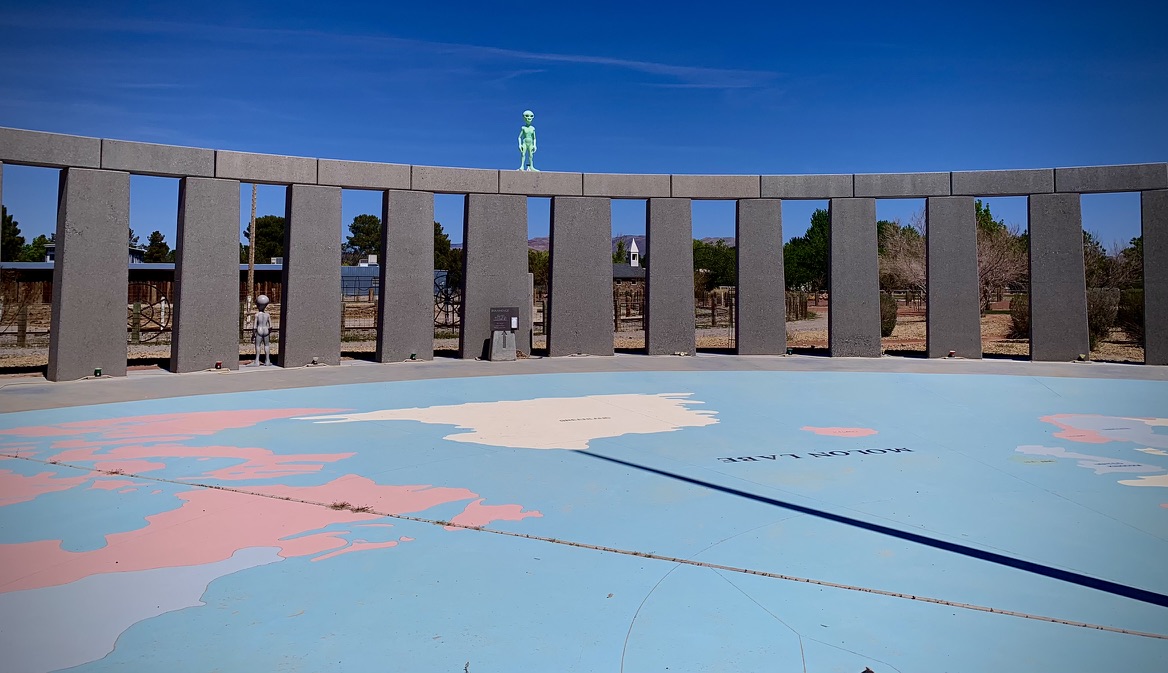
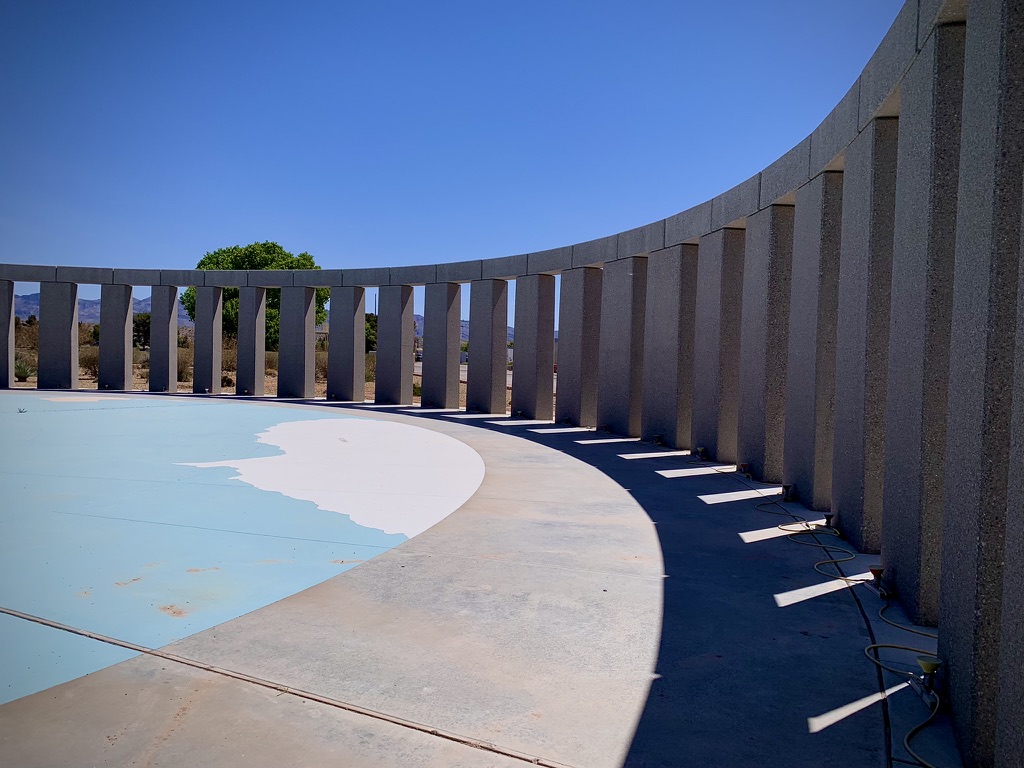
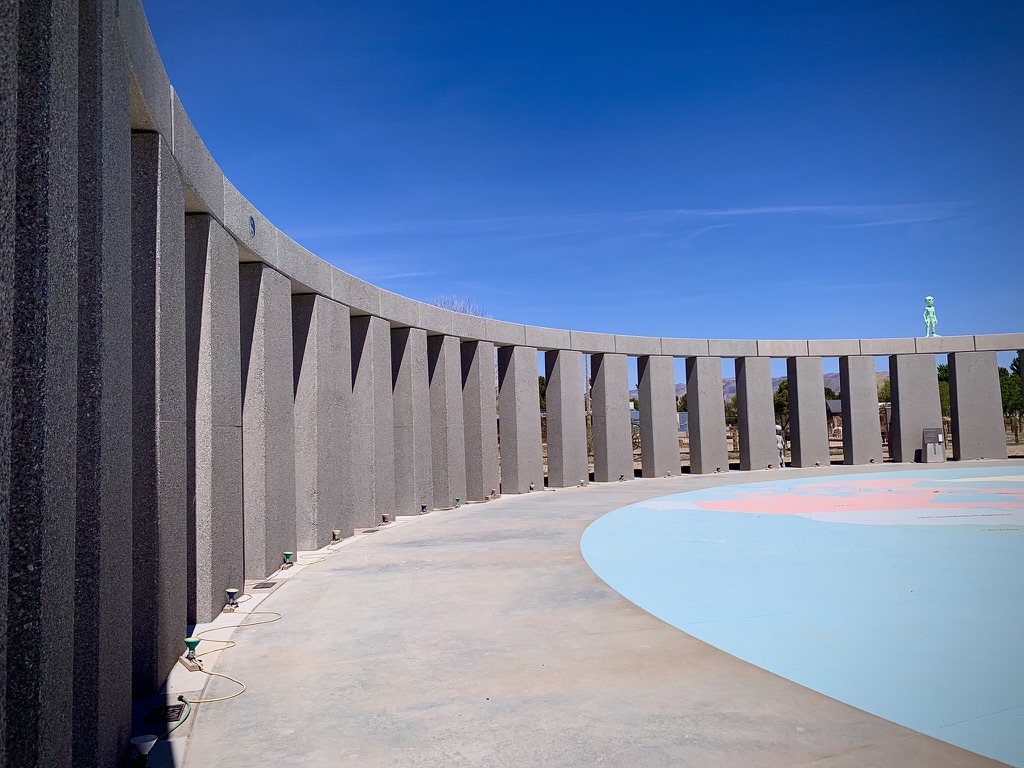
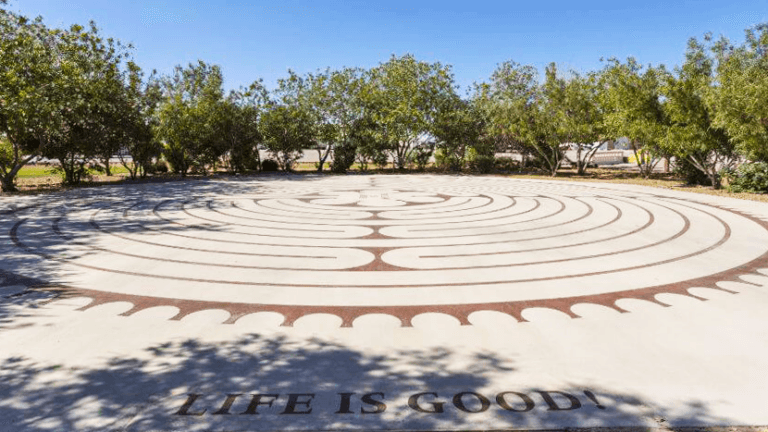
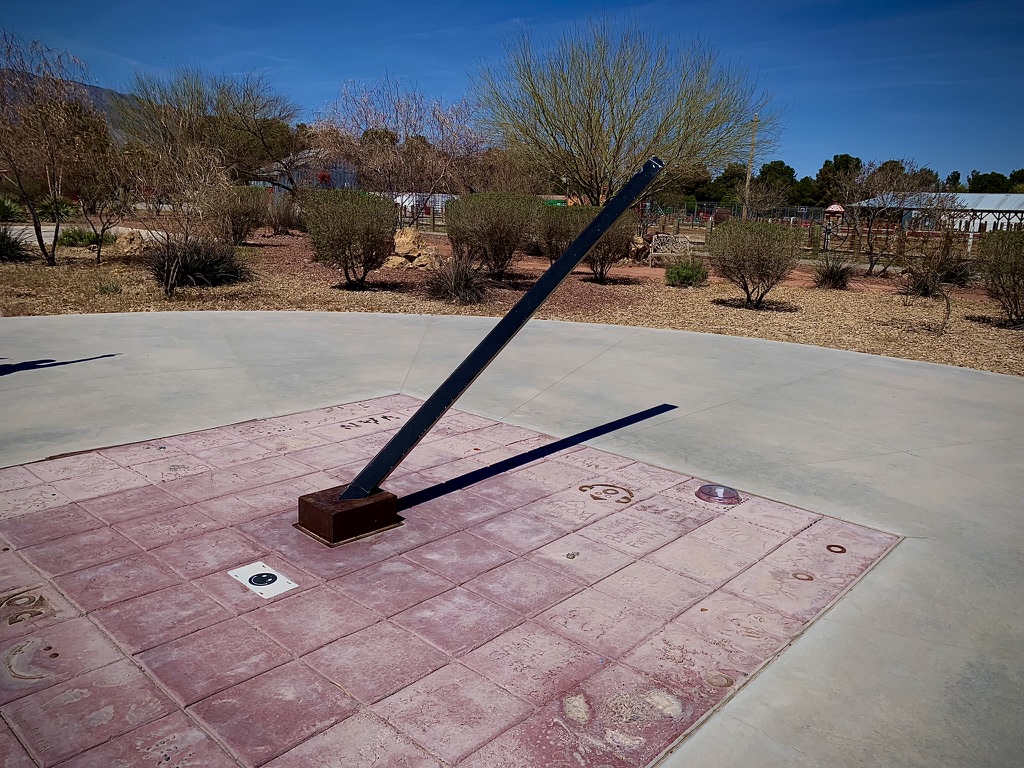
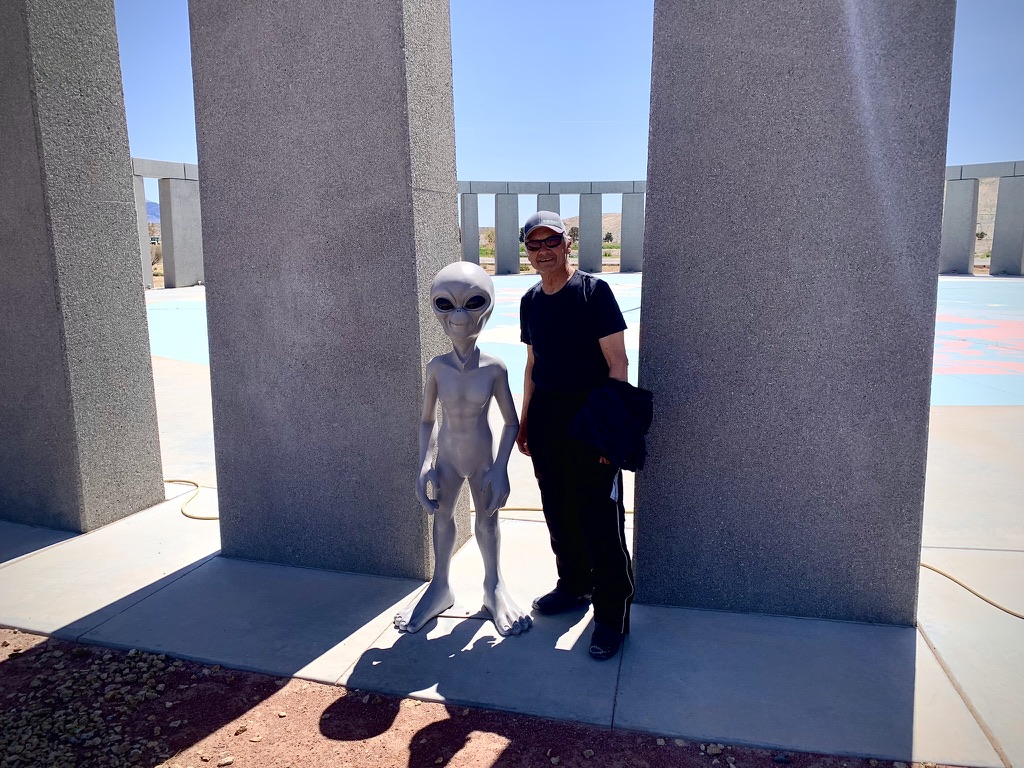
Back when considering the route, searching maps on the interwebs, taking those first steps on this journey of a thousand miles, I happened upon an Atlas Obscura Article about an interesting property next to the Western Elite Landfill that serves Las Vegas.  It’s known as RyanHenge.   This Stonehenge-inspired solar calendar stands alongside a landfill, in the middle of the Nevada desert.  Along with the replica of the ancient Neolithic henge monument in Wiltshire, England with a twist, can be found beautifully restored rail cars once used by Teddy Roosevelt, Annie Oakley, and Wild Bill Cody.  There are other vintage vehicles and an interesting collection of animals at the site, including a camel.  

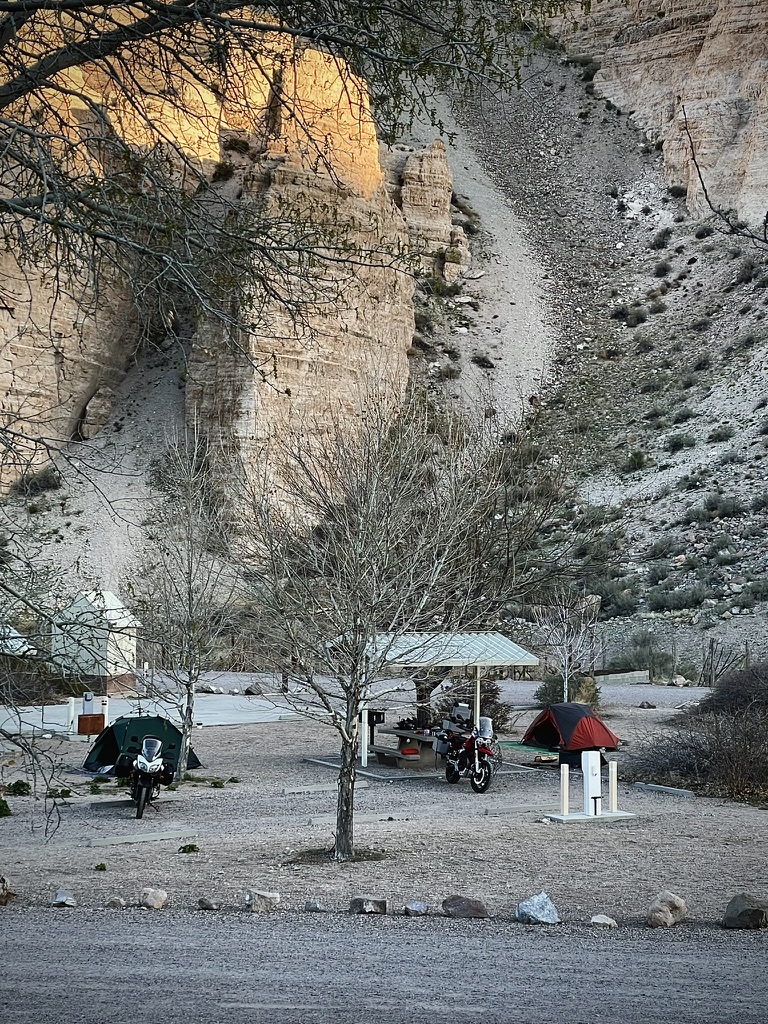
Arriving at our campground at the Kershaw-Ryan State Park, yet another novel feature of this ride of the familiar and the unique satisfied, we were disappointed to find our reserved campsite was occupied by a monster motorhome of the lumbering mastodon sort.  We knocked about trying to find a ranger and searched for an alternative site checking to see if any of the reservation tags indicated a vacancy for the night.  Finally, we did see that the Ranger’s vehicle was at the entrance and so it was fitting to tell him the tale of our misfortune.  It all began with a faulty 404 error on the Nevada State Parks Reservation system…

Situated in a colorful canyon, with towering walls up to 700 feet high and a long, verdant valley in between, Kershaw-Ryan State Park is an oasis in the desert, a sharp contrast to the rugged landscape that surrounds it. Natural springs grow a garden of wild grapevines, white oaks, fruit trees and willows, and a spring-fed pond provides a refreshing children’s wading pool. It is not unusual to see wild horses, deer, and other wildlife come to the water.  (From the KRSP website that worked…)

Back in early March I was unable to make the reservation on-line due to a glitch on the Nevada State Parks Reservation website.  So I called the Parks HQ in Carson City making the reservation over the phone.  The delightful parks employee I spoke with assured me that she would send a confirmation email for the site, post haste.  Two days later no such email had appeared.  I checked the spam folder:  nada.  I called back to get a different parks employee at the Carson City office who said that her computer was down (hmmm) but that she would check and resend the reservation confirmation by way of email.  Just in case, I requested the site and confirmation numbers from her.  A few moments later, she gave me the site number, 10.  I never received that promised confirmation but my credit card had been charged. I figured that was good enough.

I explained all of this to the very helpful Ranger Evan who was on a Zoom meeting but happily left the call to check his records.  I had arranged for one night at the campground.  He shared his paper reservation roster that indicated that I had reserved a primitive campsite for 6 days.  What-what?! He thought that unusual since they never reserved primitive sites, they were on a first-come first camp basis and besides the fee charged was $60 instead of the $10 single night fee. I was actually charged $25. What-what?!

The remedy was that he handed us the reservation list and said that several sites were available for the night that were reserved for the next couple of nights. He wink-wink, nod-nodded us commenting on the frequency of glitches on the Nevada State Parks Reservation system.  He was of the opinion that a cheaper, less robust system was purchased by the State and that was the cause of all of the errors.  Alas, a campsite would be found, tents would be pitched, and we would head into Caliente for dinner and 3-R’s provisions.

Take your pick of any of the empty campsites…
Found one next to the donation based fire wood shack…

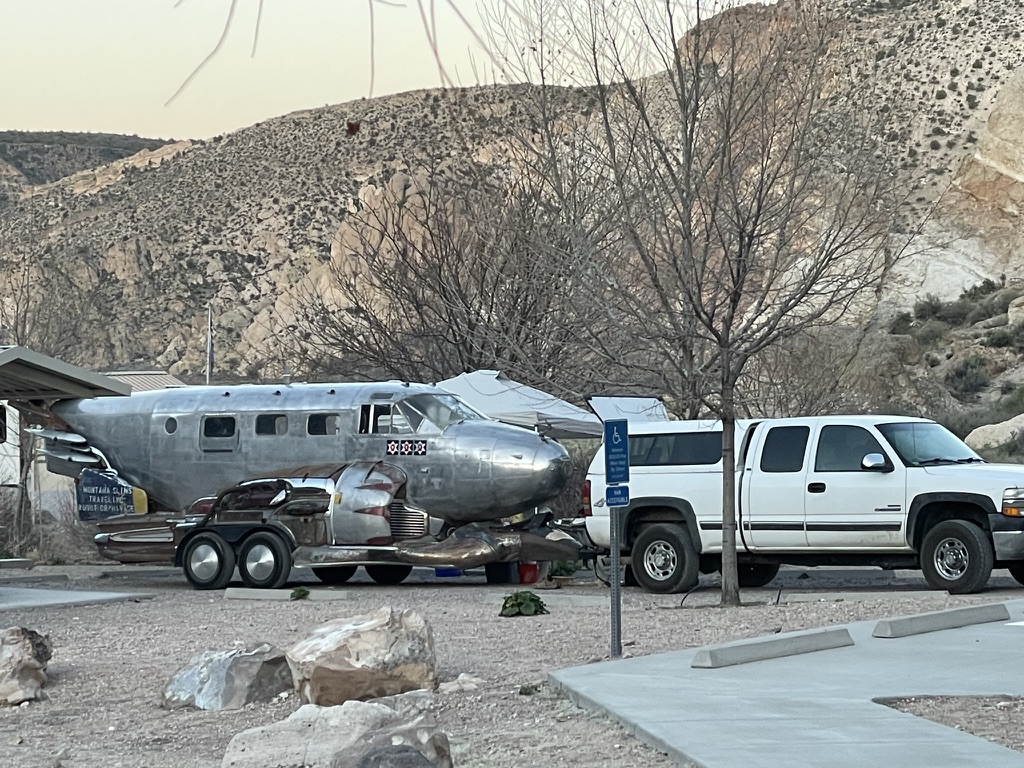
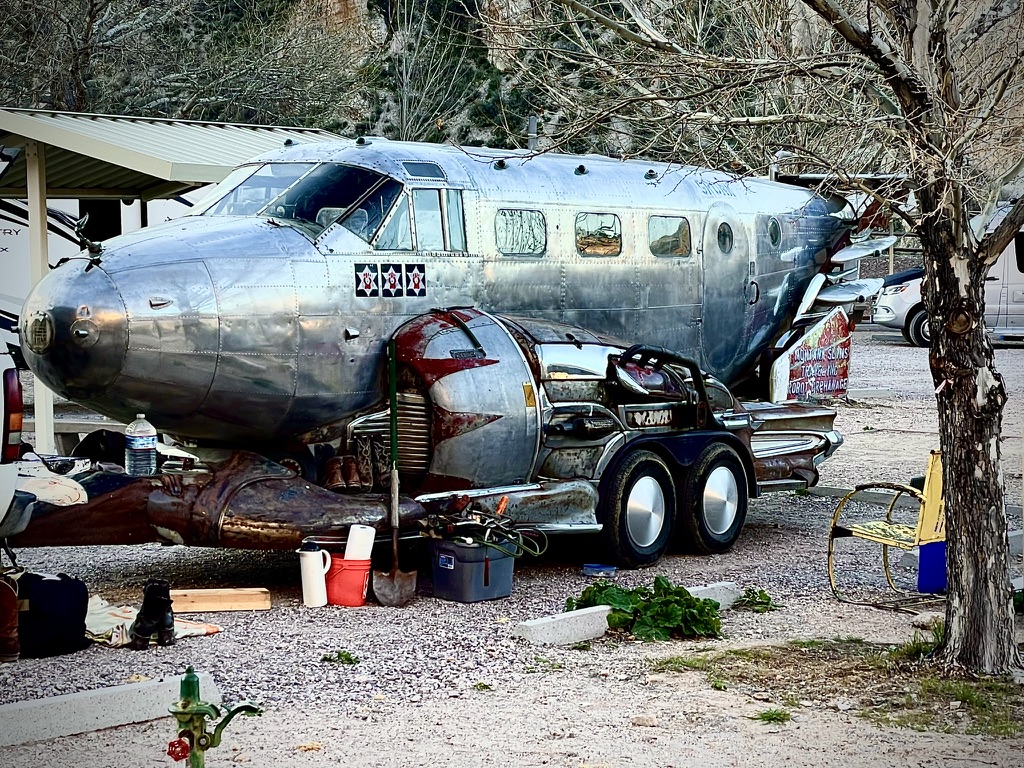
Just as we departed the entrance shack with roster in hand to select our homestead for the night, an interesting “conversation” piece rolled up, right out of the Black Rock Playa… When I stepped up to the pick-up towing this unique trailer, I inquired, “That’s quite the conversation piece ya have there,” to which a passenger replied, “So you wanna have a conversation?” with a British accent.

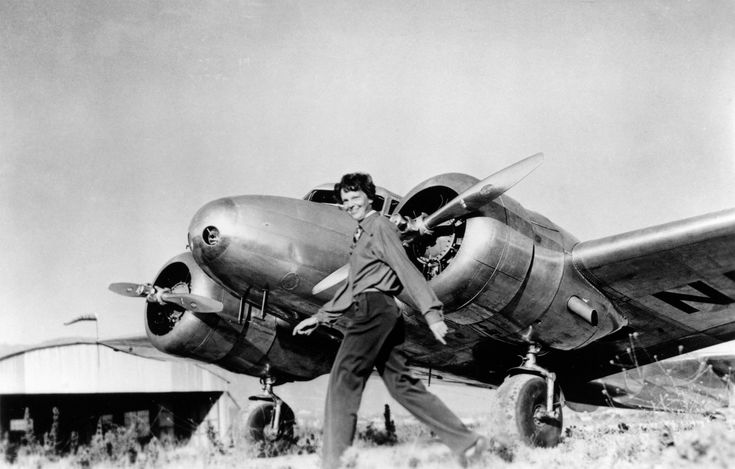
If there’s something that looks a little familiar about this aircraft converted into a Traveling Robot Orphanage by Montana Slim, well look no further…

Amelia Earhart

Amelia Earhart disappeared over the South Pacific in a Lockeed Model 10 Electra. Montana Slim’s plane is a Beechcraft Model 18. Though they look alike, there were only 149 Lockheed Model 10 Electras made primarily in the 1930’s. There were 9,000+ Beechcraft Model 18 manufactured from 1937 – 1970. (Thanks for the checked facts Wiki…)

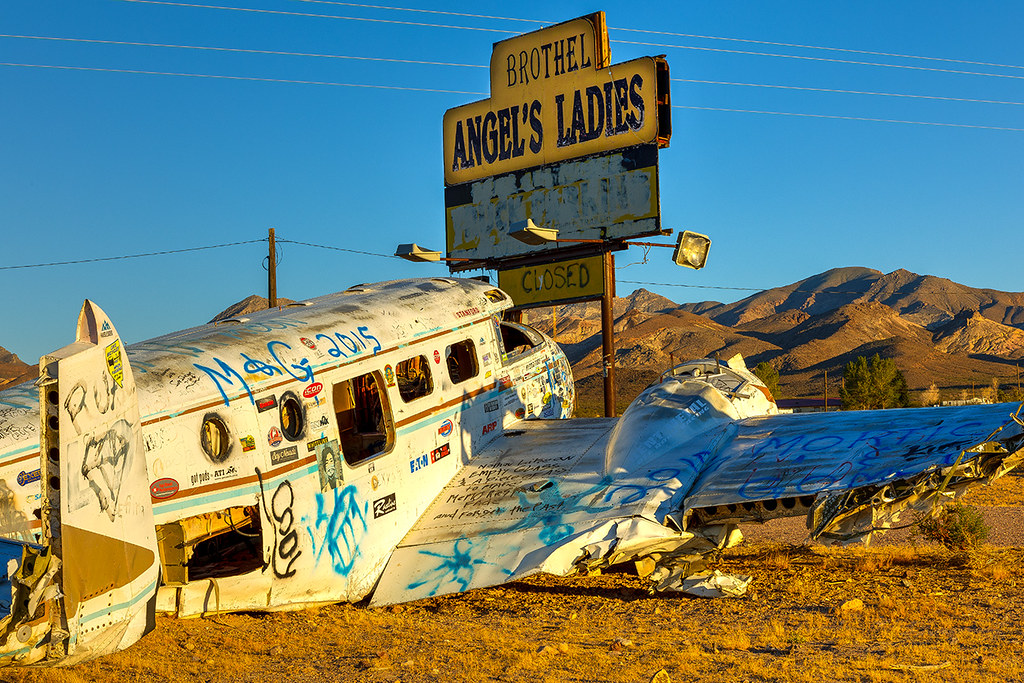
Montana Slims Traveling Robot Orphanage makes a stop at the Amargosa Hotel and the Angels Ladies brothel just north of the famous hotel.

The plane that’s full of graffiti at the brothel is the same plane as Montana Slim’s a.k.a. Sean Gurrero, a Beechcraft C-18. Check out artist Sean Gurrero’s work:


Montana Slim, aka Sean Gurrero or @seangurreroart Instagram

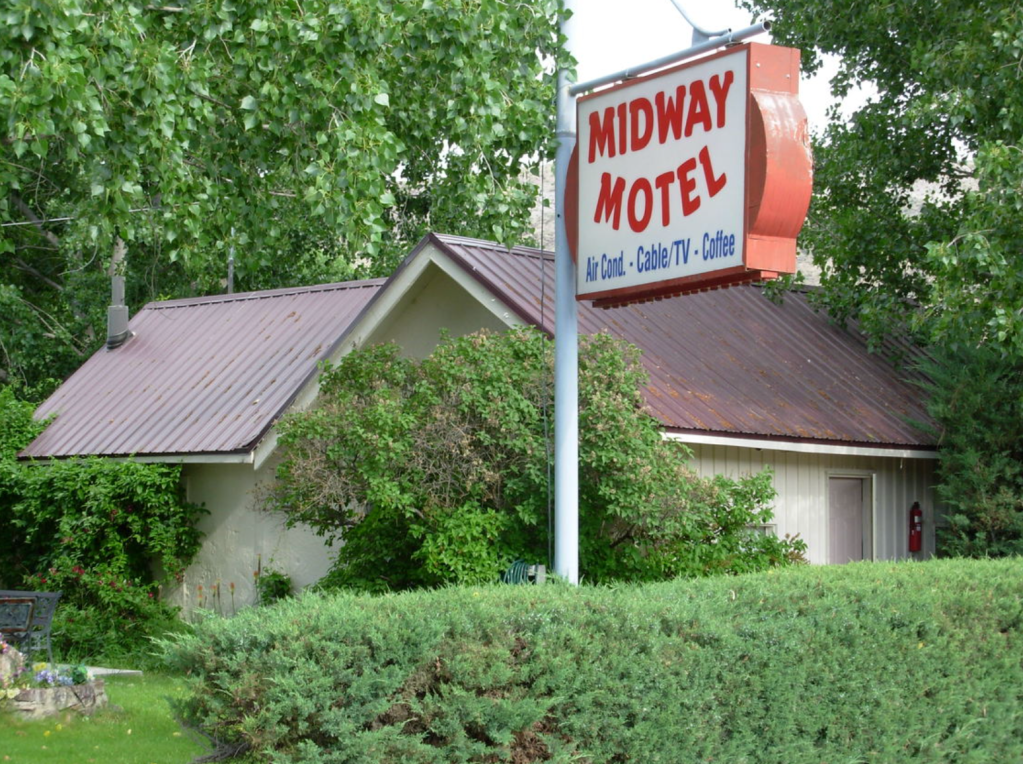
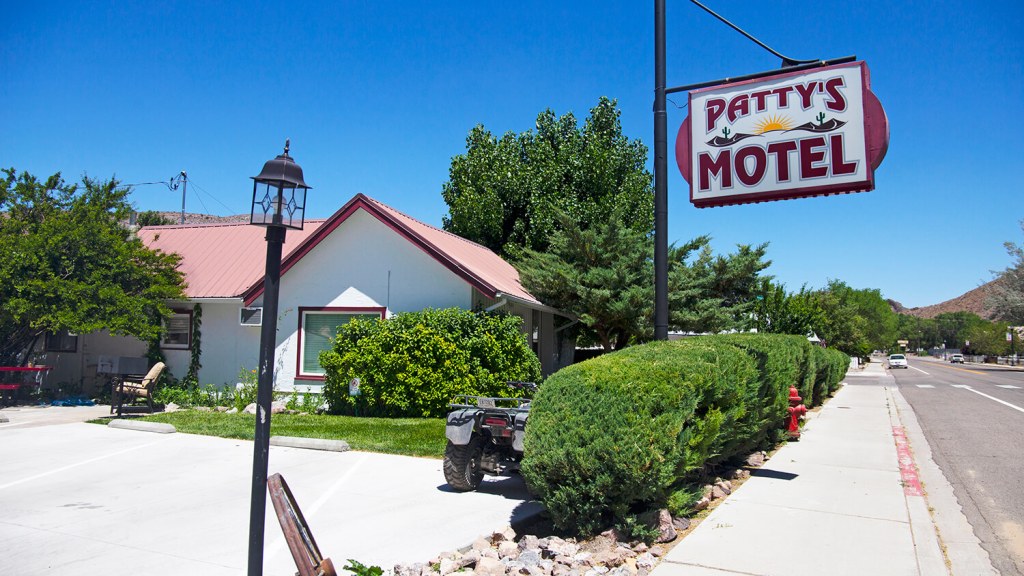
After a fine dinner at The Side Track Restaurant in the rail town of Caliente, Nevada, a charming and remote ciudad pequeña in the Great Basin of Nevada, we took a quick tour of the burgh as we made our way back to our campsite.  We came upon a restored/updated motel Pete had stayed in some decades ago, formerly the Midway Motel, now known as Patty’s Motel.  We met the proprietor, Patty, who seemed quite cordial inviting us to check out the venue. 

We declined Patty’s invitation to stay as we were camping, however, this property is on the checklist for our next Nevada ramble!  Mixing a little of the new with the familiar, I say…

Another evening around the campfire, relaxing, reflecting, rehydrating and knowing our skies are safe! True to the labyrinth in RyanHenge, Life is Good!

Day 5, Caliente to Panamint Springs

A corvid friend greeting the new day…

Another gas station fuel-up at Dino’s Sinclair for the bike and a breakfast of cranberry juice and a Kind Bar for the pilot began the long 350 miles across what would be increasingly warm, from the mild spring weather we had thus far enjoyed, speedfest across Nevada. 

I would love to have a Sinclair Dino for my grandkids to play on in our yard, in our front yard, and for all the kids in the neighborhood...

This was to have been our longest day, riding some 350 miles from Caliente on the Extraterrestrial Highway, NV-375, through Rachel dropping by the Little A’Le’Inn for a whistle wetting ginger ale and to drop off the morning rental coffee.

A new mural at the A’Le’Inn

From Rachel it was on to Warm Springs on US-6, then to Tonopah where at a stop at the Beans and Brews Coffee House for a turkey croissant samie and RedBull light, we met a fellow on a well traveled DR 650 Suzuki who had made it from Ushuaia, the capital of Tierra del Fuego in Argentina to Tonopah on an epic ramble.  Except for shipping his bike from Brazil to San Diego skipping the Darién Gap, he was on a circuitous route back to his home in Salt Lake City after months on the road.  He was by all accounts road weary, but given his youthfulness and efficient looking rig, I’m sure the final miles to Salt Lake City would be a fly by.

From Tonopah it was down US-95 through Goldfield, past the shuttered Angel’s Ladies Brothel outside of Beatty.

The Interesting Case Of The Abandoned Aircraft And The Brothel

Angel’s Ladies was a 5,000-square-foot legal brothel situated on a 70-acre ranch which was located three miles north of Beatty, Nevada. It was known as Fran’s Star Ranch until it was renamed Angel’s Ladies in 1997 after being purchased by Mack and Angel Moore. It has been closed since August 2014.  Prior to the 1970s, the brothel had been known variously as Circle C Ranch and Vickie’s Star Ranch.  On May 28, 1977, an accident during a promotional stunt on the property resulted in the crash of a twin-engined light aircraft. The wreck has been located next to the brothel’s billboard ever since, and used as a spectacle to attract customers from the road. Mack Moore attempted to sell Angel’s Ladies in 2007, but ended up taking it over again two years later as a result of foreclosure. He subsequently sold the business again in 2010, this time for $1.8 million, and continued to run it as a leaseholder.  On 10 August 2014 he retired and closed the business. (Thanks Wiki…)

I digress.  Then it was west through Rhyolite (see Sisyphus and Associates Tour Rhyolite) and Daylight Pass Road into Death Valley with a quick stop in Stovepipe Wells to shed some insulation and enjoy a RedBull Light and some conversation with the proud parents of an Australian Cattle Dog, like my very own, SoBe. The trio was traveling in Death Valley from their home near Huntington Lake.  I’ve written about rambles through all of the places in this segment of our ramble in previous postings in my Much Ado About Nada website, Sisyphus and Associates if you’d care to check them out.  Maybe someday I can bring SoBe along on one of these rambles as a most welcomed associate…

It seems we would be just in time for the hottest part of the day when crossing Death Valley.  If it weren’t for the heavy ATGATT (All The Gear All The Time) the mercury nearing the 90 degree mark when we descended into Stovepipe Wells wouldn’t have seemed fifteen degrees warmer.  Visions of a cool beverage took the place of the distortion of light by alternate layers of hot and cool air as wishfulness overtook an optical illusion induced mirage…

That ain’t no mirage… We just got a jumpstart on the 3-R’s

Since this trip of a thousand miles was a blending of new roads to ramble with some of our favorite, greatest hits destinations, you can’t travel through Death Valley and not stop at Panamint Springs, just outside of the park on CA-190. 

Panamint Springs Resort is a small, rustic, western-style, resort located in beautiful Panamint Valley in Death Valley National Park that provides lodging, camping and RV services, a restaurant and bar, and a gas station with a well stocked general store.  (Thanks PSR…) 

Just as the refreshing beverage was beginning to sate our thirst, a young mom, with a newborn strapped to her by way of a front sling, walked up the steps to the Panamint Store. I had to acknowledge how wonderful it was to see the little one getting exposed to a desert adventure. Only a few weeks old, the proud mom said that she had already been to three national parks! About the same time the woman’s mother walked up and lo and behold the conversation revealed that I began my career teaching with her mother who was at the end of hers. Furthermore, the young mom was the daughter of a rancher I knew back home. So, Kevin Bacon, beat that… two degrees of separation.

Now, I imagine for most people, when the word “resort” is used to describe a setting, this might not be what their imagination congers.  I, on the other hand, could not imagine a more fitting word, defined as: a place to which people frequently or generally go for relaxation or pleasure, especially one providing rest and recreation facilities for vacationers.  It ain’t the Furnace Creek Inn, but for my money, it’s every bit as satisfying!  There could be fewer rocks in the campground, but alas, it’s the desert and what would the desert be without rocks?  

Relaxation, reflection, and rehydration on the menu at the Panamint Springs Resort
It never gets old…

No braying burros or noisy Boy Scouts or laughing religious retreaters from our last stay at the resort keeping us up throughout the night: Panamint Spring 2023

Day 6, Panamint Springs back Home

What was to be either a route to Kernville or Three Rivers adding another night to a sixth day’s travel, was now subject to a brewing spring downpour in the forecast for the following Saturday.  So we decided to ride some 360 miles after a longish 350 mile day across Nevada from Panamint Springs back to our homes in Merced on our sixth of seven planned days, Friday.  

Another glorious Panamint Range/Valley sunrise

We decided to ride like the wind (except it was into the wind) retracing our route back on CA-190 south to Trona for a last breakfast at Esparza’s.

I’ve written in the past about how Pete’s metabolism is remarkable. Pete had eggs, bacon, sausage, hash browns, biscuits and gravy. My chili verde was superb! I gained weight on the trip. Pete lost weight…

There was no eclipse to regale this day but we did meet a local fellow who was a resident of Trona for some 20+ years.  When Pete asked what it was like living in Trona he replied that it was all right, that there wasn’t much to do, and he said that he had “caught cancer” and was in need of chemotherapy, which, not surprisingly, wasn’t available in Trona.  We assumed he worked in the mineral extraction business, but who knows, living in Trona on the shores of Searles Lake is perhaps carcinogenic itself.  We bid him blessings and the best of luck as we headed south to Ridgecrest.

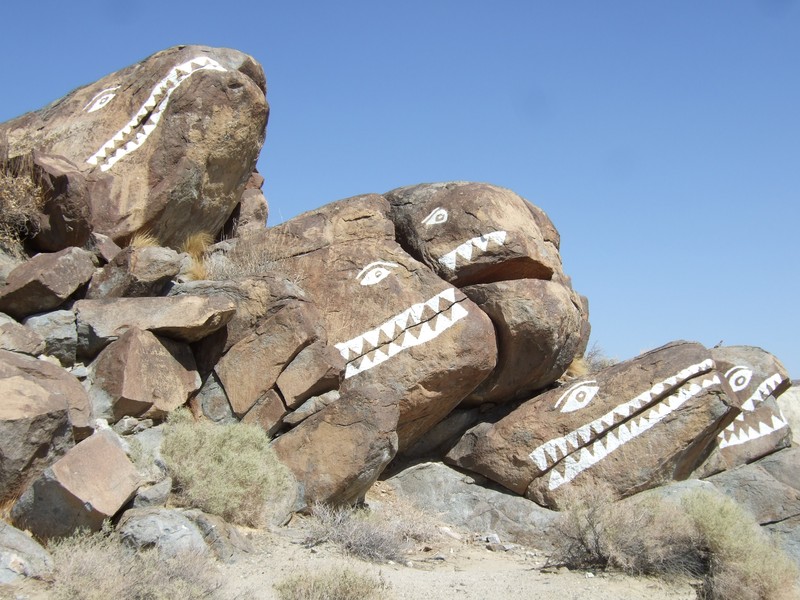
From Trona  not far south on the way to Ridgecrest on CA-178 you’ll find an interesting geological feature, The Fish Rocks.

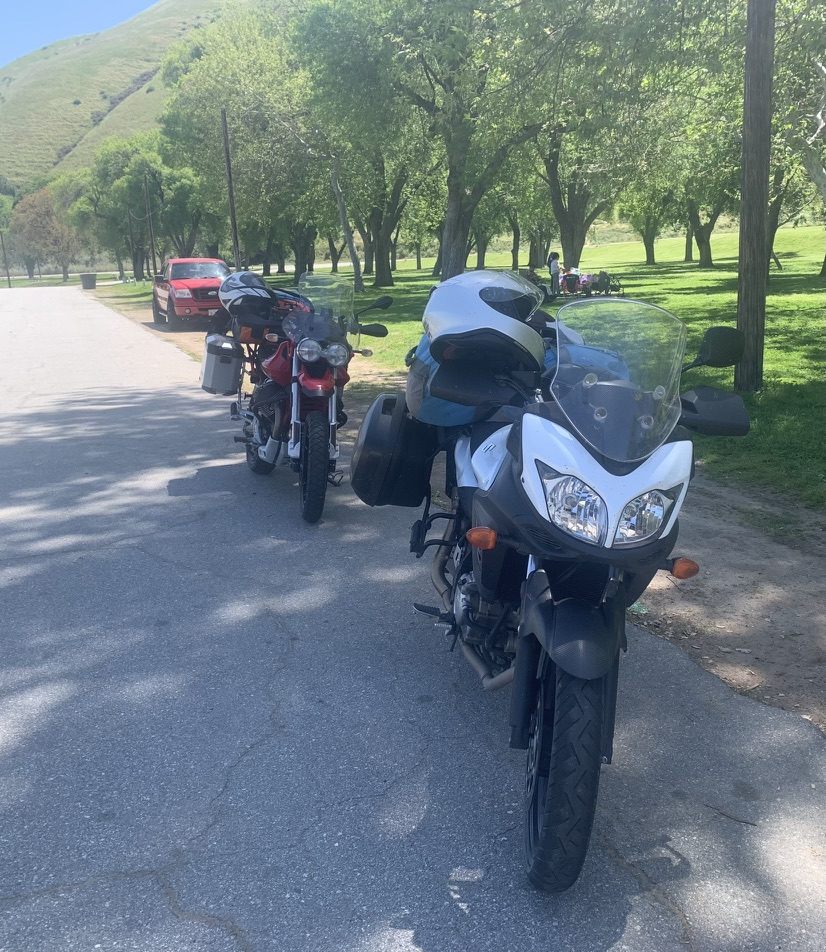
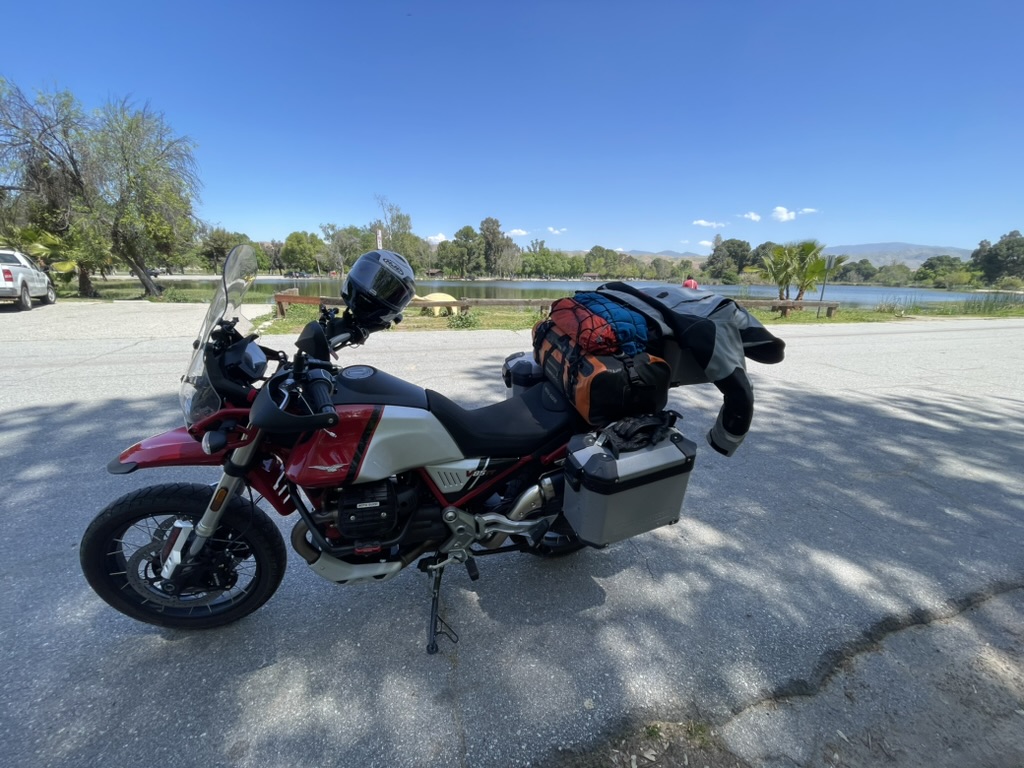
Passing through Ridgecrest, we hopped on to CA-14 south for a few miles before heading west CA-178 over Walker Pass, a reprisal of our first day’s route of this Red Rock Canyons Ramble.  Figuring the pass (el. 5,250 feet) would be a bit nippy, we insulated up.  It would be at Hart Lake Memorial Park just north of Bakersfield where we stopped for fuel and swallow a RedBull Light that we de-insulated as the valley temperatures were rising.

Saturday in the park, I think it was the Fourth of July… No, wait, it was Friday, April 12.  We were in a park though…

North through Oildale, east to Shafter, north on CA-43 through Myricks Corner, Wasco, Neufeld, Elmo, Pond, Kernell, Allensworth, Angiola, past the Tule River Viaduct, Corcoran, Hamblin/Hanford, zig-zagging by way of the GPS through Caruthers, Raisin City, Rolinda, Kerman, Ripperdan, Parkwood, to the Pilot Travel Center on Ave 181/2 where I pulled over for fuel, but was talked out of it by Pete who was tired of stop signs every couple of miles and traffic backed up due to road construction.  It had been slow going and was pretty warm, especially having to stop-and-go on several segments of the route.

I had just about enough fuel to make it home and so he compelled me to jump on CA-99, against my better judgment and where at the CA-152 and Hwy 99 exchange we were nearly run off the road by an indecisive cager who did a multi-lane change confused by the left lane exit to Los Banos and the through route north on CA-99, cutting us off and driving us to the shoulder of the road. 

At that point, Pete led us to the LeGrand exit where we once again zig-zagged merrily on county roads with little traffic the rest of the way to the security and comfort of our family, pets, and homes.

Epilogue

I began this post by acknowledging that a journey of a thousand (and 212±) miles starts with the first step.  For me the first step is in imagining how I might recreate the cheer and satisfaction achieved on all of the other rides I’ve chronicled while recognizing that the balance of the familiar with the unknown and how it brings the greatest ROI.  I guess that as a geezer, I enjoy seasoning travel with a sprinkle of sentiment being careful not to overdo it by marinating in nostalgia. 

At the same time, I reckon I’ve lost the desire to just hang it all out there and come what may, ride with abandon as I know it’s tougher to assemble a coherent narrative without taking the time to immerse in the adventure.  Since on most of these rides, despite being retired and relatively free to ramble, the calendar no longer waits for procrastination or indecision.  Hence, we return to the familiar to glean from the present what we overlooked in the past.  As for the unknown, there’s always satisfying our curiosity with the novel, offbeat, unique, or strange.  Take for instance RyanHenge or Montana Slim’s Traveling Robot Orphanage, not something you come across on a given day.  

And as the calendar waits for no hesitation to plan the next moto adventure or my increasingly fidgety travel lust only marginally deteriorating with the specter of another night in a rocky, blustery, and frigid campsite or a smoke filled, sweltering, torturous lonesome highway, I can’t wait to begin planning the next, and perhaps, most epic ride.  I think the next one will head north as spring meanders toward summer and where a volcano or two, some redwoods and rivers, and maybe a “popularly priced” motel populates the route.  Maybe the forest floor duff will erase the memory of a stoney desert floor and we’ll hybridize our accommodations on this next foray.  

As always, stay tuned for Sisyphus and his Associates next episode.   Hey, just drop a line if you’d like to join us…  

Cheers!