2025 Ruby Mountains Ramble

September 2025

What does a lost wallet, Coors Light, more cows than people, and Theodore Douglas Willer have to do with an epic adventure?
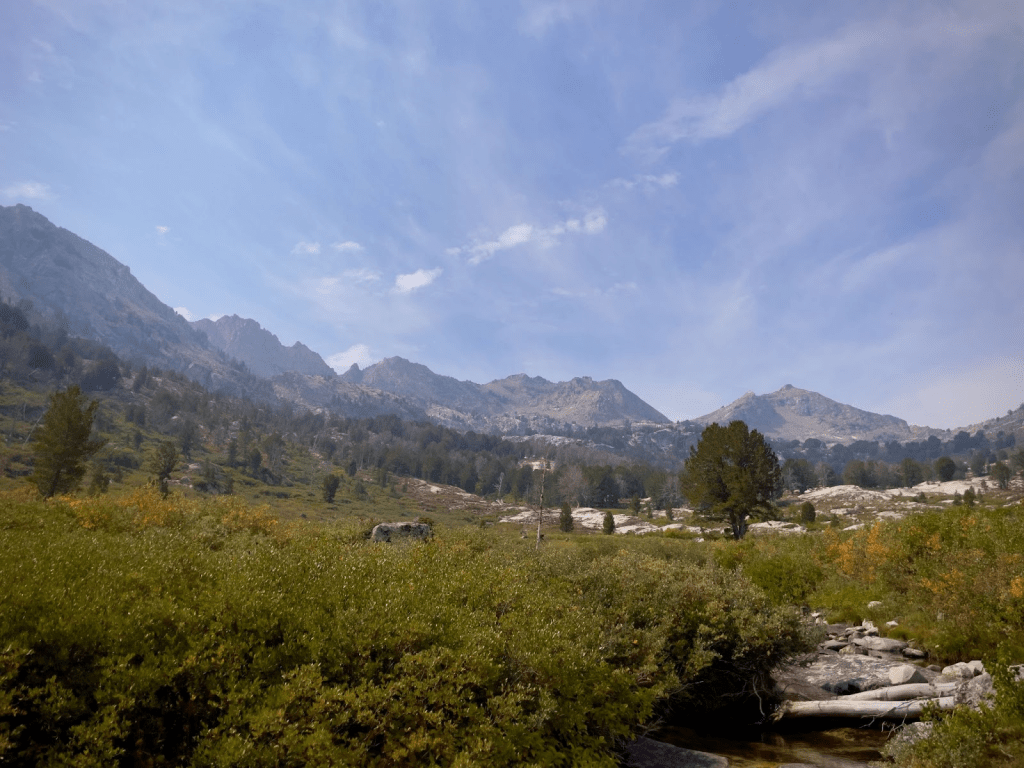
Lemoille Canyon

I, as SisyphusDW7 (my nom de plume), posted Chasing the Perseid’s; An August 2025 Ramble in the Sierra. The ride was a warmup for our fourth ramble of 2025 as we plotted a seven day, six night tour of the Ruby Mountains in Northeastern Nevada.  

With a taste of the billions of galaxies filled with billions of stars as viewed from the Sierra, I figured there was at least as much to view in northeastern Nevada, notwithstanding a full moon, and so the plan to ramble to the Ruby Mountains began to take shape.  

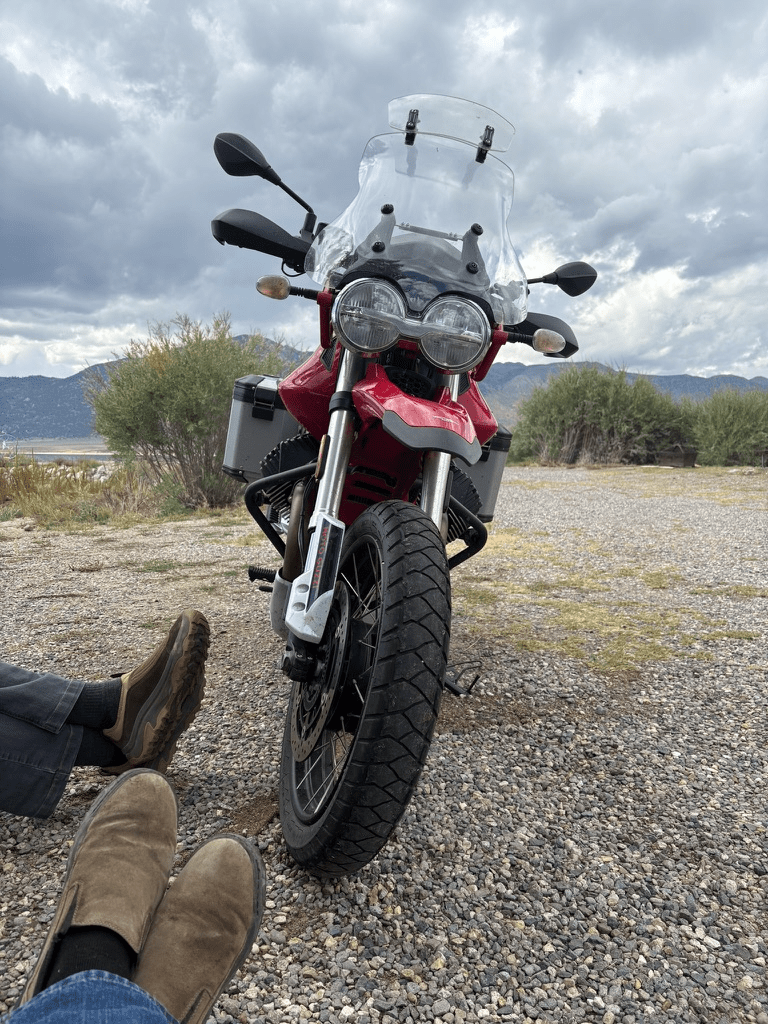
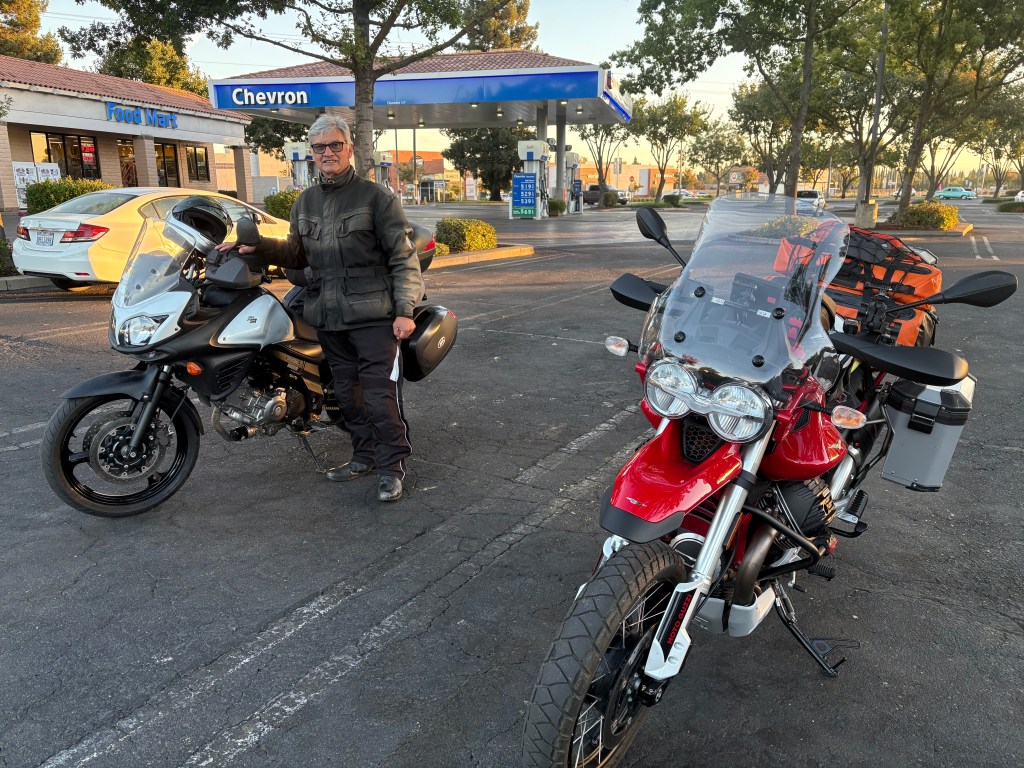
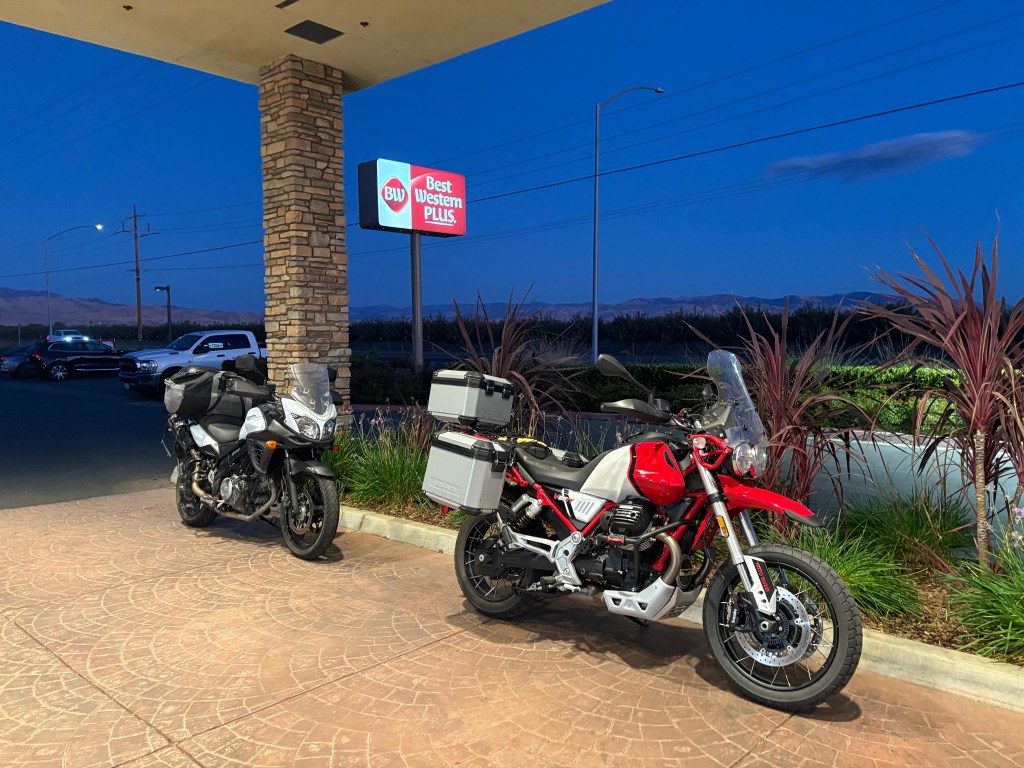
Sisyphus was aboard Bella Rossa, a Moto Guzzi V-85TT and his associate Pete was on his Suzuki V-Strom.  Pete’s not as romantic as Sisyphus and so his moto is nameless.  His imagination an appetite makes up for any other deficiencies.

We packed up and departed on September 7 venturing forth on CA-140/CA-120 bound for a Sierra crossing at Tioga Pass.  I’ll use excerpts from the itinerary to introduce the daily “chapters” of the ramble.

Day 1 / Sunday Sept 7 – Merced to Fallon, NV

Merced to Fallon, NV ~284 miles

  • From US-395 take CA-182 (Sweetwater Rd) in Bridgeport to NV-338 to junction with NV-208 near Smith Valley to the junction of NV-208/NV-339.
  • Continue on NV-339 through Yerington to the junction with US-95 to Silver Springs.  
  • From Silver Springs, ~26 miles to Fallon on US-50
  • Reservation at the Super8 by Wyndham  

Tioga Pass or CA-120 is a familiar Sierra crossing.  Along with Sonora Pass (CA-108), Sherman Pass (Forest Rte 22S05), and Walker Pass (CA-178) we have seasonal options.  In winter Tioga, Sonora, Sherman Passes are closed with the first winter storms.  Walker Pass in Kern County will occasionally close in winter due to snow and regardless of weather, it beats crossing the summit in Tehachapi (CA-58) which is a major commerce route from Bakersfield to the Mojave, US-395, and Interstates 15 to Las Vegas and and I-40, the offspring of Route 66, The Mother Road, all featured in previous rambles on my blog, sisyphusdw7.com .
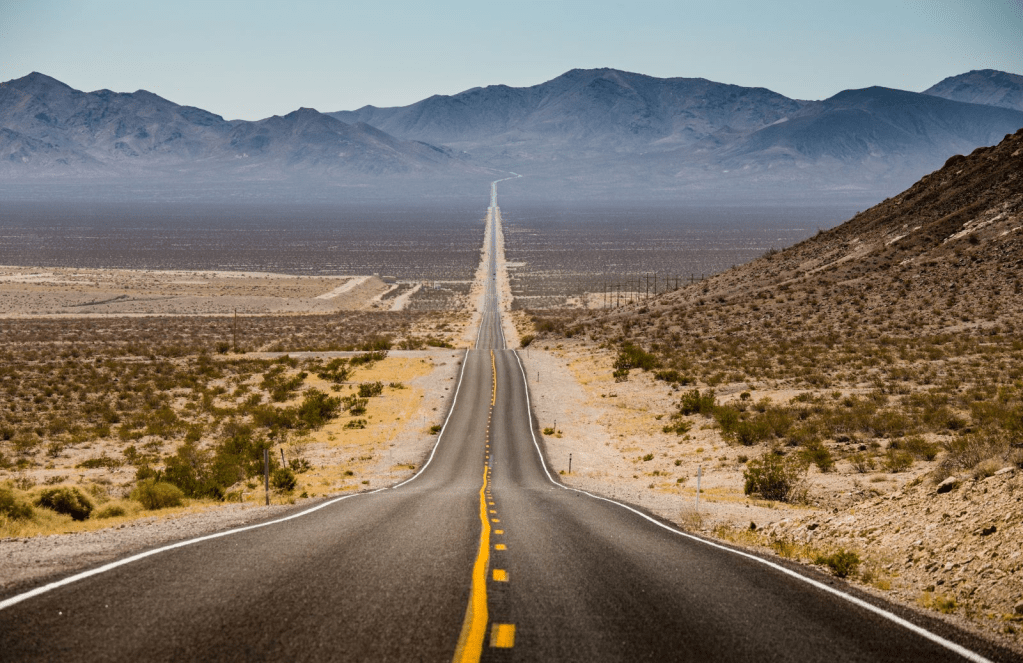
The Mother Road from a past ramble
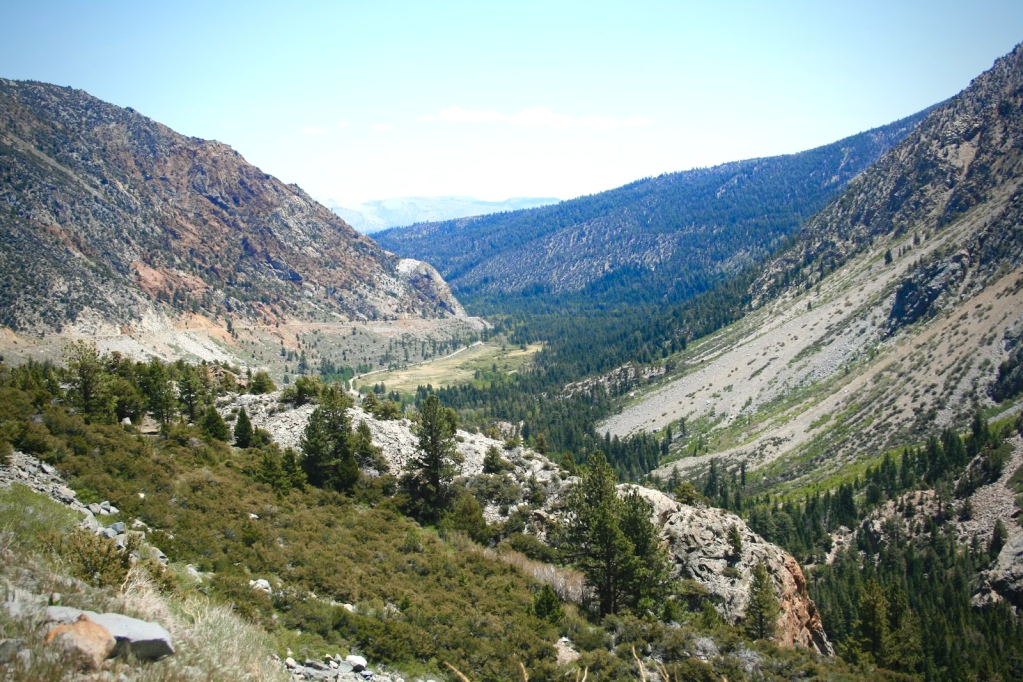
Tioga Pass and Lee Vining Canyon en route to the Ruby Mountains

The vistas up Tioga Pass were somewhat obscured by smoke from wildfires burning in the Western Sierra that resulted from recent monsoonal lightning strikes.  Since the fall colors were only beginning to show, there was no great disappointment on what nature had wrought by way of wildfires compromising the views.

We stopped at the Mono Basin Scenic Area Visitor’s Center on our route along CA-395 to Bridgeport to “de-layer” as the cooler temps at elevation gave way to the late summer heat on the East Side of the Sierra.  The smoke gave a muted hue to the otherwise clear skies. 

Muted skies from the parking lot at the Mono Basin Scenic Area Visitor Center
Un-Muted skies from the Mono Basin Scenic Area Visitors Center Overlook 
(How did they do that?)

Once in Bridgeport we took CA-182, Sweetwater Rd north, crossing the CA-NV border where the road became NV-338 following tributaries to the Walker River to Smith Valley then NV-208 & 339 to Yerington where we fueled up at my favorite petrol shop.  Loves me the Dino. 

Dino Love

Passing the Anaconda Open Pit Copper Mine on Alt US-95 from Yerington following tributaries of the Carson River through dairies and onion fields, we then headed east passing the Lahontan State Recreation Area on the Lincoln Highway, US-50.  Soon we reached our destination for Day 1, Fallon Nevada.  

Fallon is known for being home to Naval Air Station Fallon.  Built in 1942, is located southeast of the city center.  Since 1996, NAS Fallon has been home to the U.S. Navy’s Navy Fighter Weapons School (popularly known as TOPGUN), using several flight training areas and practice ranges in the area.  

In 1963 there was an underground nuclear test known as Project Shoal that took place ~30 miles from Fallon.

I’m no hydrologist, but it seems planting onions in soil irrigated from ground and surface water from a nearby Superfund open pit copper mine or detonating a nuclear bomb in the middle of the potentiometric ground water surface near Fallon was potentially, well, I’ll let you consider the implications*.  It’s kind of how Nevada does environmental things. Needless to say, we drank bottled water while in Nevada.  

*Did I mention I once submitted ten puns to a contest to see which one would win.  No pun in ten did… Well what did you expect?

I chose Fallon for our Day 1 destination, not because of fighter jets, or radioactive water but for the D = ST (distance = speed × time) calculus essential to motorcycles.  Its location on the Lincoln Highway, the first transcontinental thoroughfare,  passes through Fallon from east to west (and vice versa), following the original Pony Express trail.  Today it is designated U.S. Highway 50, and eastward from Fallon is popularly known as The Loneliest Road in America, as it passes through only two towns (Austin and Eureka) and one small city (Ely) between Fallon and the Utah state line, over 400 miles distant.  

Hence, lodging options between our destinations for Days 2-4 were limited.  
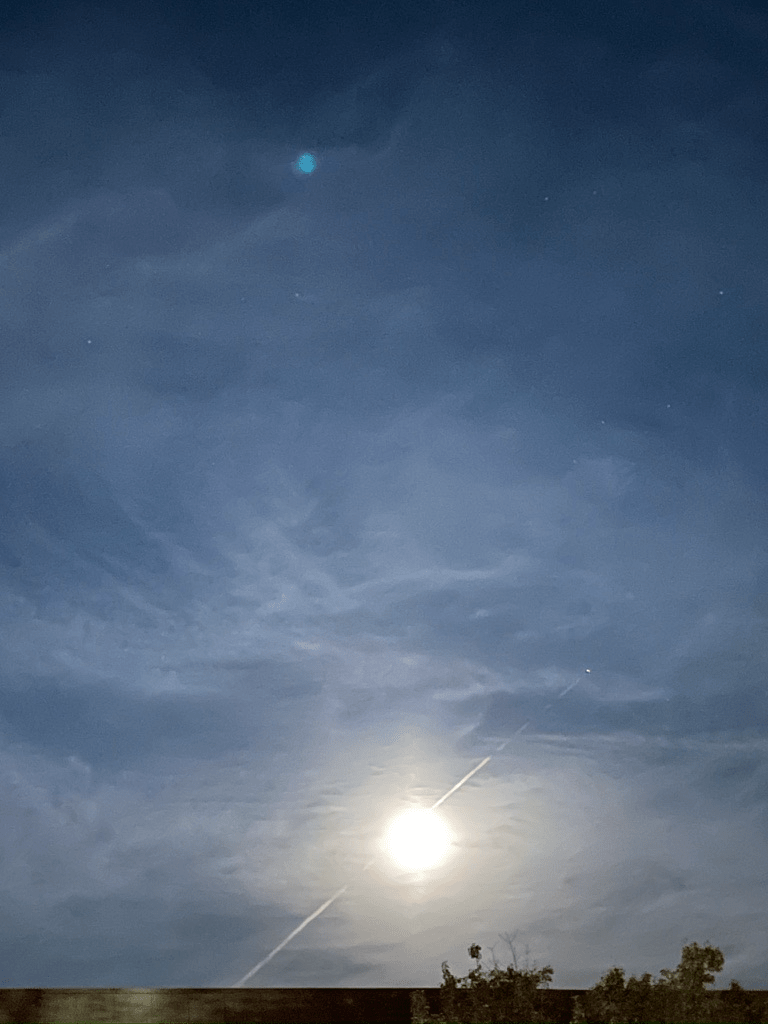
Moonrise over the Super 8 and Bonanza Casino by Wyndham Fallon 
Pete and I concluded the blue sphere above the moon was an alien mothership
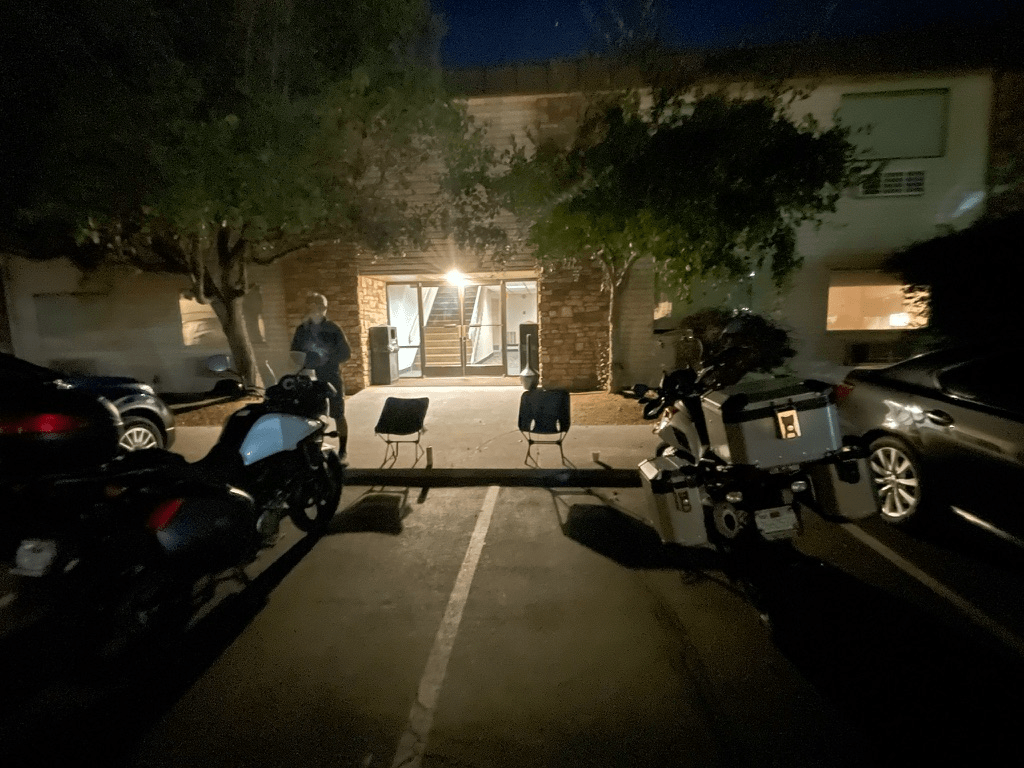
3 R’s smoke free Fallon Style

Day 2 / Monday, Sept 8  – Fallon, NV to Elko/Spring Creek, NV and the South Fork Recreation Area 

Fallon to Elko and South Fork Rec Area ~338 miles  

  • US-50 through Austin to NV-278 N to US-80 at Carlin to Elko (~24 miles).  
  • NV-227/NV-228 to the South Fork Recreation Area (~16 miles from Elko). 
  • Nevada State Parks South Fork State Recreation Area – East Campground – RV or Tent with E Utilities 
  • Confirmation Number: 1057754  Camp host, Theodore (Ted) Douglas Willer Arrive: Mon 09/08/2025 – Depart: Thu 09/11/2025 (3 nights Site 5 #1057754 reserved 9/8-9/11)
  •  Get Supplies in Elko or Spring Creek.

A long day in the saddle, we rode past the Saloon and Shoe Tree at Middlegate and turned off of US-50 on a route we discovered on a previous trip to Austin, (Austin Nevada that is…) on NV-722/2 that took us through the ghost town of Eastgate.  

US-50 art or artifice?
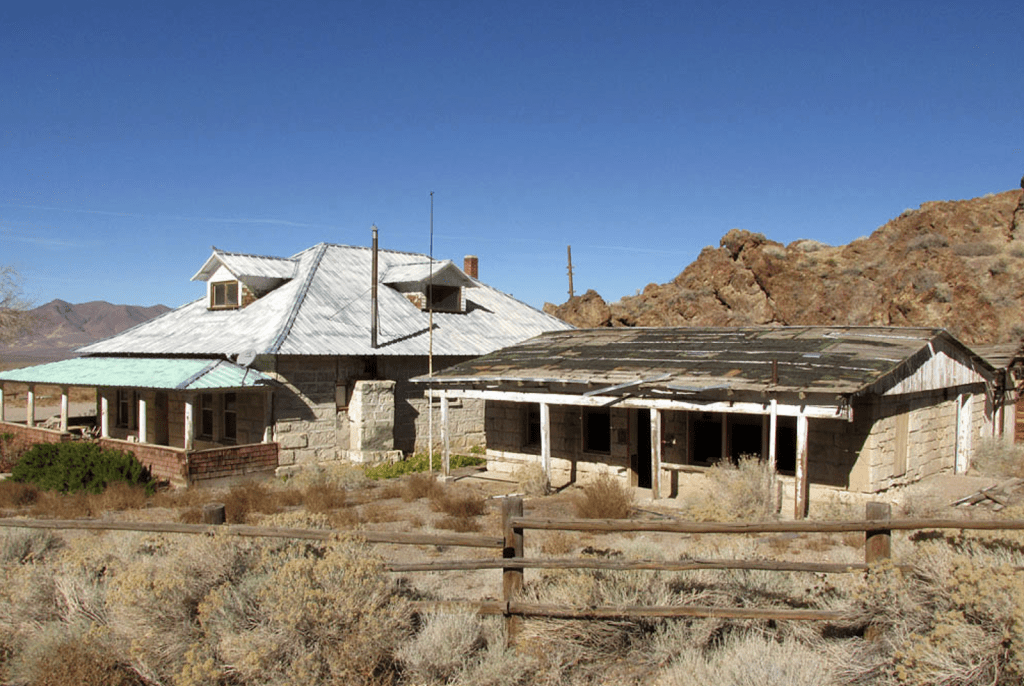
Looking west from East Gate Station aka Gibraltar Gate on NV-722
Eastgate Station, now
East Gate Station, then (image scrubbed from the interwebs)

From Nevada Expeditions: First called Gibraltar Gate, Eastgate was named by Captain James Simpson in the same manner as nearby Middlegate and Westgate. While it never served the Pony Express like the other two ‘gates’, a station and vegetable garden were located here by the Overland Stage and later sold to George S. Williams about 1876. A tufa-block home was built in 1879, leading to the place being known sometimes as “White Rock House”. In 1908, the current tufa-block home was erected. With the formation of the Lincoln Highway in 1913, Eastgate’s importance grew as a new store and gas station were established to service travelers. It probably lasted until around 1967 when the highway was rerouted, bypassing Eastgate completely.   And just like that, Eastgate’s fate, like those along the Mother Road, was determined by a highway realignment.

For a deeper dive into Eastgate and Carroll Summit Stations in Nevada, check out the YouTube video by Two Guys in the Middle of Nowhere The Ghost Town of Eastgate Nevada.

A fuel, nalgas relief, and snack stop in Austin found us eastbound to Eureka where we departed US-50 north on NV-278 enroute to Carlin through arid landscapes interrupted by alfalfa fields quenched by Pine Creek and the Humboldt River.  From Carlin, it was a short leg on I-80 to Elko through the Carlin Tunnel.
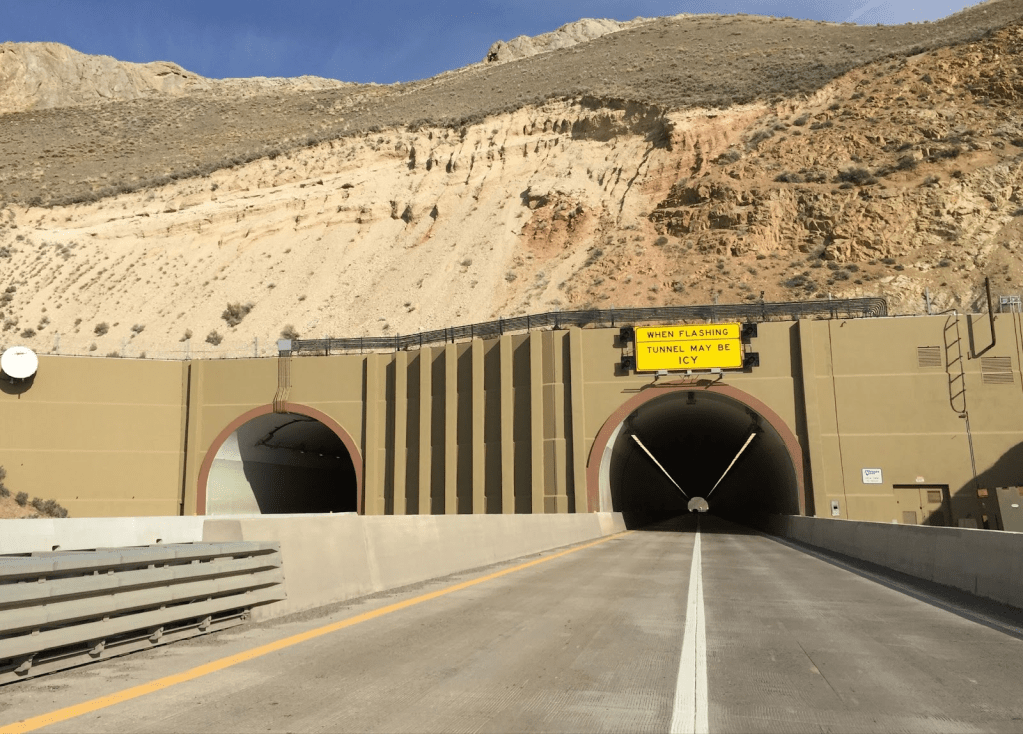
Interstate 80 and the shortest distance between two points

The Carlin Tunnel is a collective name for a set of four tunnel bores in the Humboldt River’s Carlin Canyon, east of Carlin in Elko County, Nevada, United States. Currently, two of the bores carry Interstate 80, while the other two bores carry Union Pacific Railroad’s Overland Route and Central Corridor.

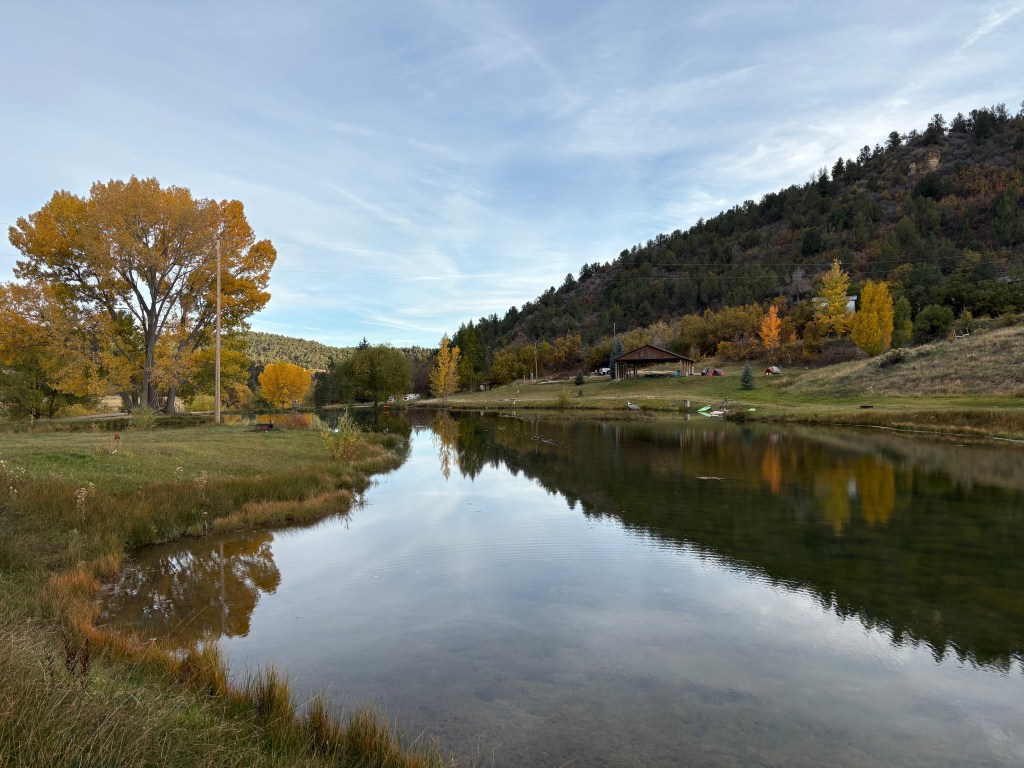
The South Fork State Recreation Area Campground

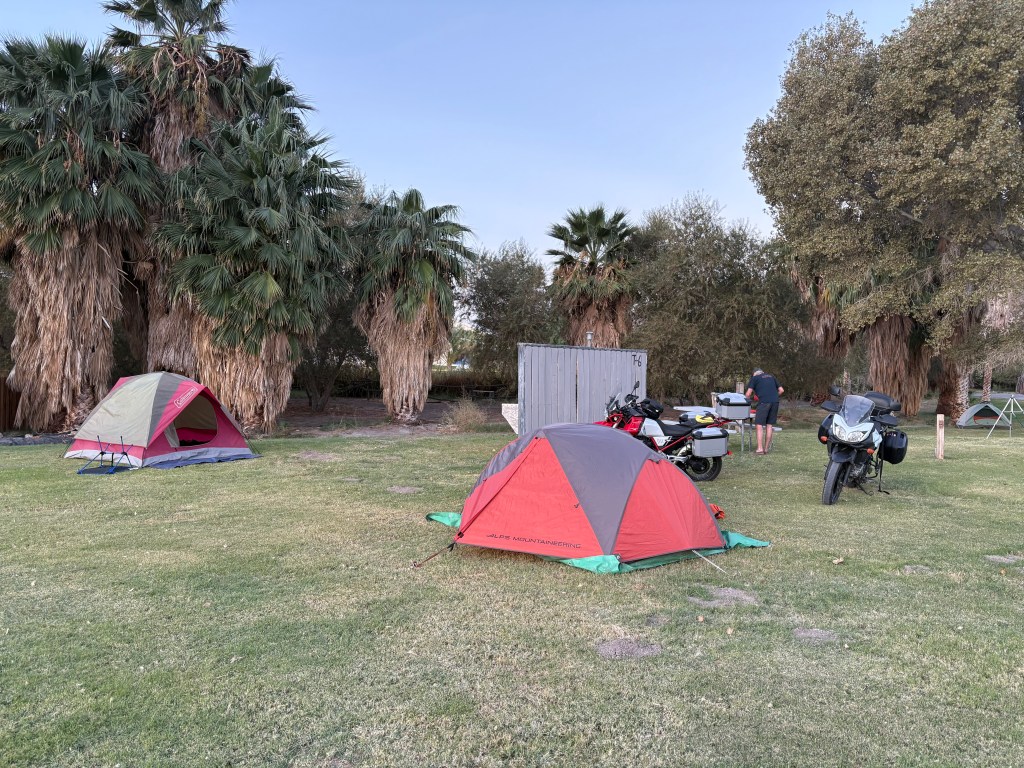
Zipping through Elko we made our way to Spring Creek and our home for the next three nights on the South Fork of the Humboldt River known as the South Fork State Recreation Area. 

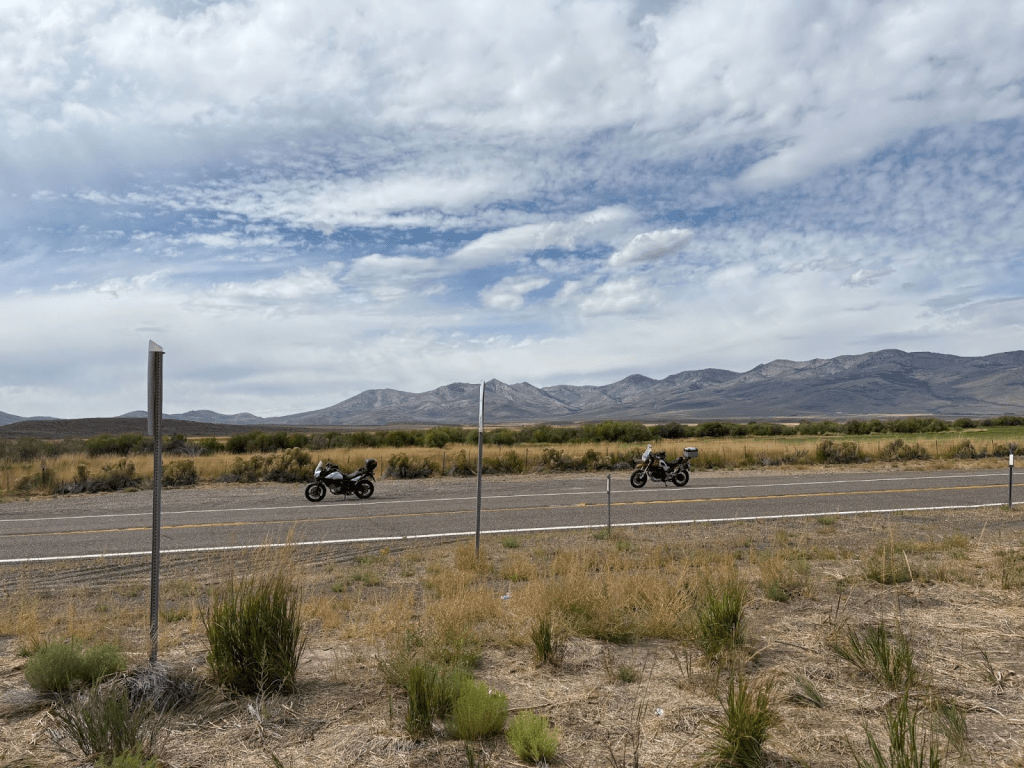
From there we would explore the Ruby Mountains, Secret Pass and the Hastings Cutoff on the historic California Trail, the Ruby Valley, Jiggs, and the Owyhee River, Wild Horse, Mountain City and Owyhee on the Nevada side of the border with Idaho.  

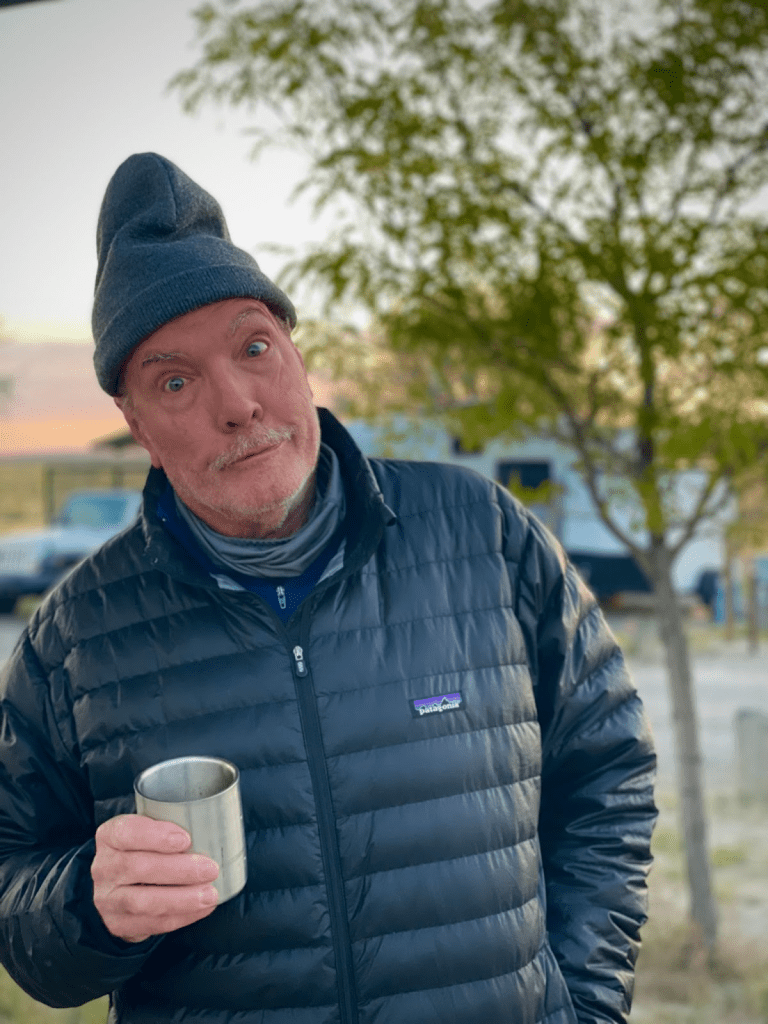
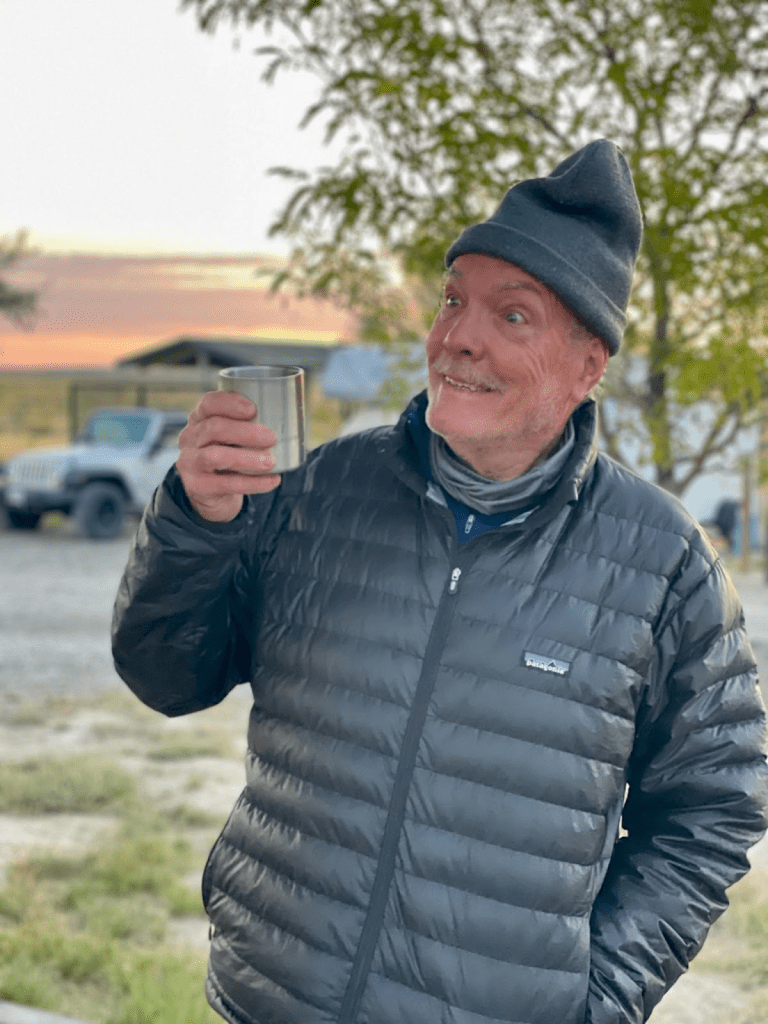
Upon our arrival, within minutes, the camp host, Ted (Theodore Douglas Willer), introduced himself.  When Pete asked where we could get a cold beer, Ted retreated to his mobile abode and produced a pair of Coors Lights.  He explained that he no longer drinks and some fellows on motorcycles had left him an unsolicited tip that he decided would purchase a twelve pack of beer for just this circumstance:  Two parched blokes having ridden hard to reach camp as the sun was setting.  

It only got better from there.  Ted also recommended we switch our campsite reserved on the interwebs for one that was more accommodating for two tents and two bikes.  

Ted was a fascinating character.  A native of Northern Nevada, he had spent his working years in mining, ending his career at the Jerritt Canyon Gold mine.  A true outdoorsman, Ted hunted, fished, backpacked, snow-mobiled, and dirtbiked all throughout the wilderness of Northern Nevada. As a reference for two “born to be mild” adventurers, his local knowledge was gold.  

After touring the facilities that included hot showers and flush toilets, we were quite impressed as Nevada continued regaling us with parks the likes of Kershaw-Ryan State Park in Caliente, and Red Rock Canyon near Lost Wages, NV, with modern, clean, and well maintained accommodations.  In addition to cold beers, we even had electricity at our site!

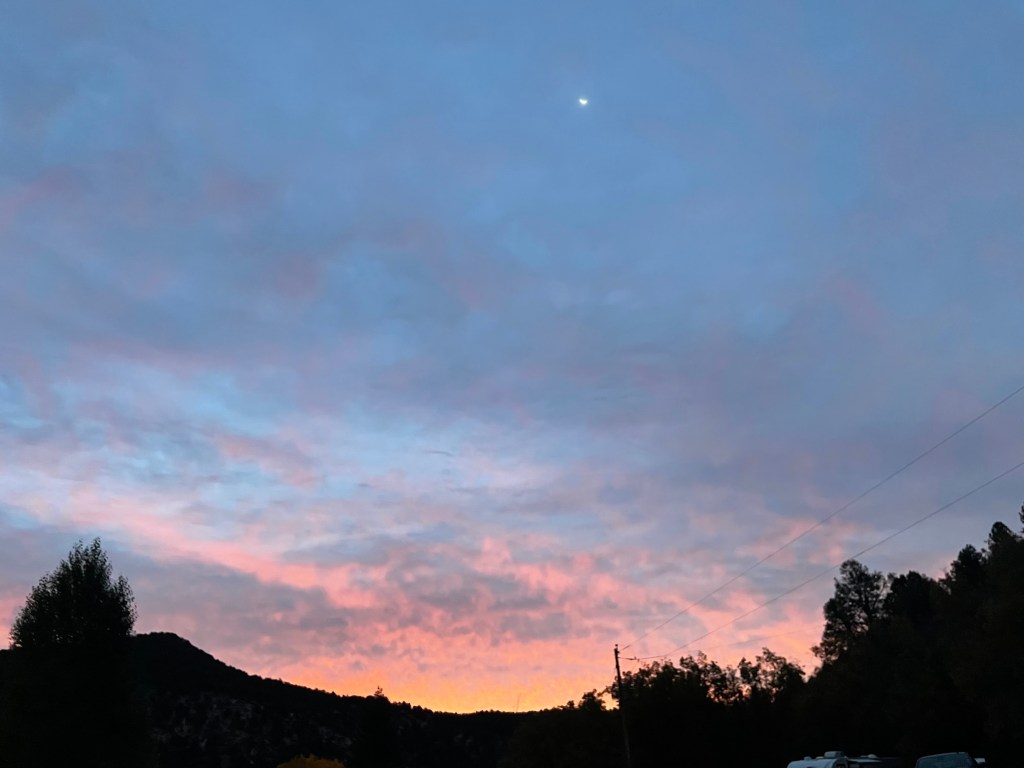
Sunset at the South Fork State Recreation Area
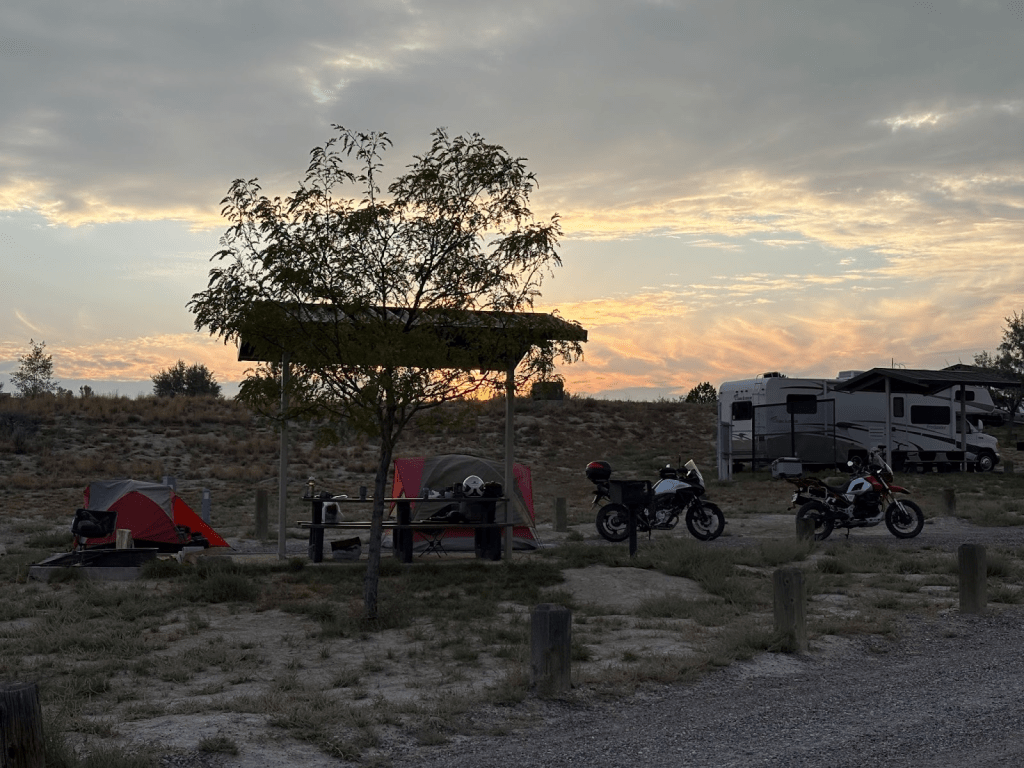
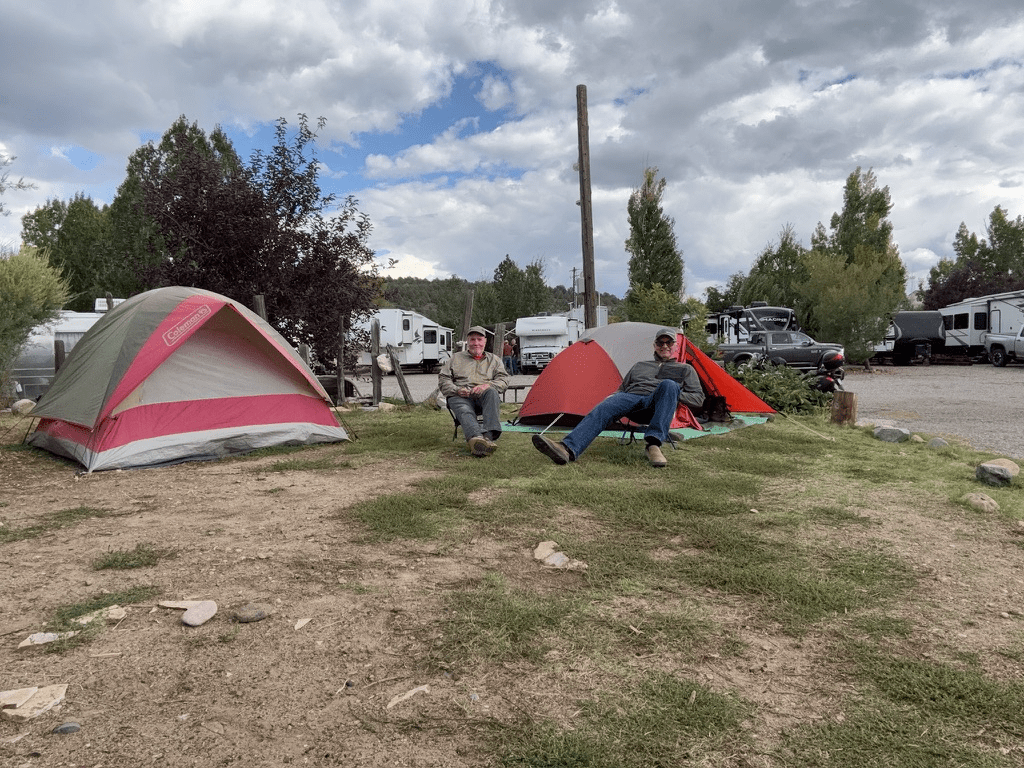
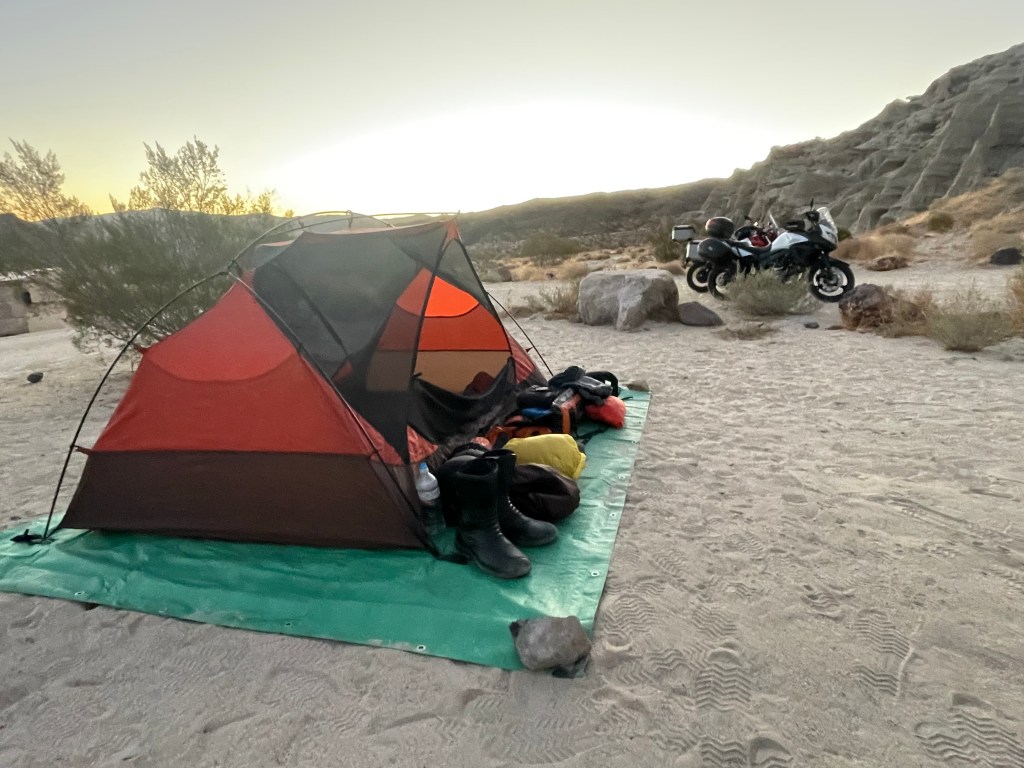
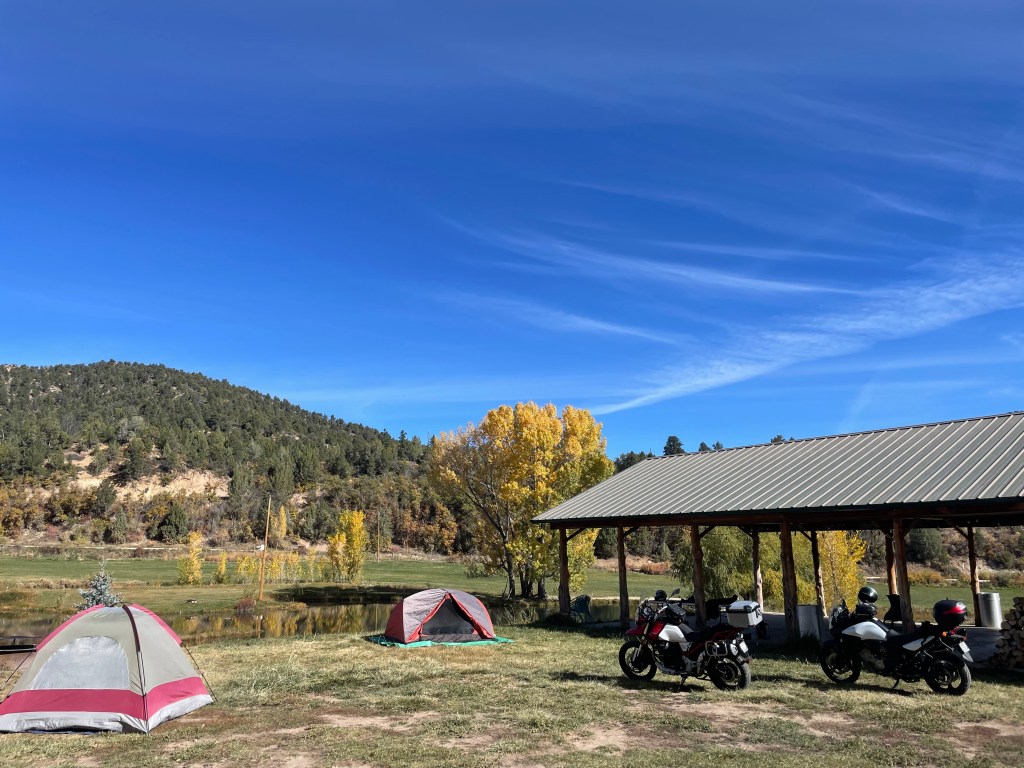
Camp Sisyphus and Associate

Day 3 / Tuesday, Sept 9 – South Fork Recreation Area to Lemoille Canyon Scenic Byway, Secret Pass, Arthur, Ruby Valley, & Jiggs Loop

Lamoille, Halleck, Arthur, Ruby Valley Loop ~132 miles

  • From the Lamoille Scenic Byway, return to Lemoille and take Crossroads and Clubine Rds to Ft. Halleck marker (dirt).  
  • Continue on dirt to paved NV-229 at Poverty Gulch.
  • At the junction of NV-229 dirt road, head south to Ruby Valley to the junction with NF-113/Old Harrison Pass Rd (dirt). 
  • West on NF-113 to the junction with NV-228 (paved) to Jiggs and NV-228 back to the South Fork Recreation Area campgrounds.
  • Get supplies in Spring Creek.

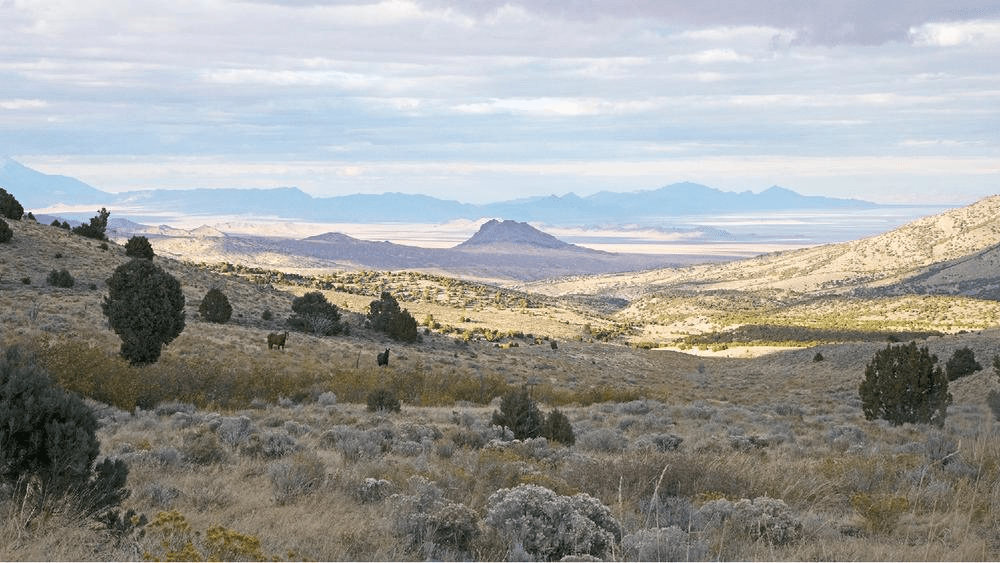
Our intent for the day’s ramble was to explore the Ruby Mountains.   The range reaches a maximum elevation of 11,387 feet on the summit of Ruby Dome. 

To the north is Secret Pass, part of the historic Hasting Cutoff, and the East Humboldt Range.  From there the Rubies run south-southwest for about 80 miles. To the east lies Ruby Valley, and to the west lie Huntington and Lamoille Valleys. It’s alleged that the mountain range was named after the garnets found by early explorers. 

The central core of the range shows extensive evidence of glaciation during recent ice ages, including U-shaped canyons, moraines, hanging valleys, and steeply carved granite mountains, cliffs, and cirques.

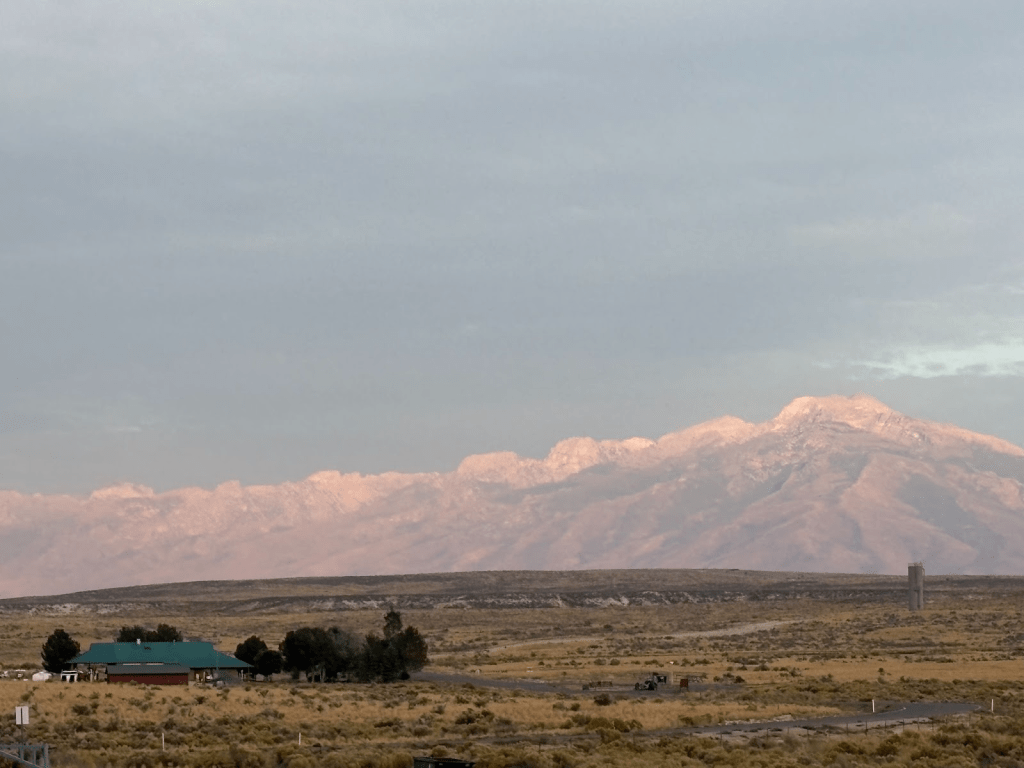
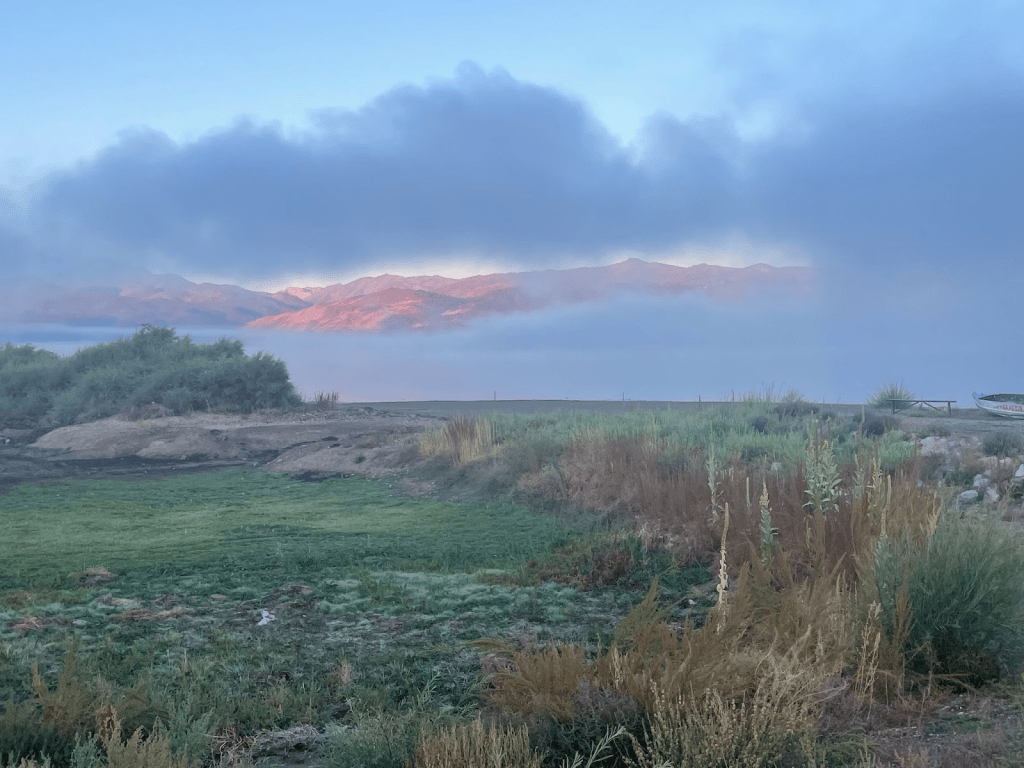
Pre-sunrise view of blossoming sage and the Ruby’s
The view east of the Ruby’s from our campsite with the park HQ in the foreground 
and Ruby Dome towering in the background
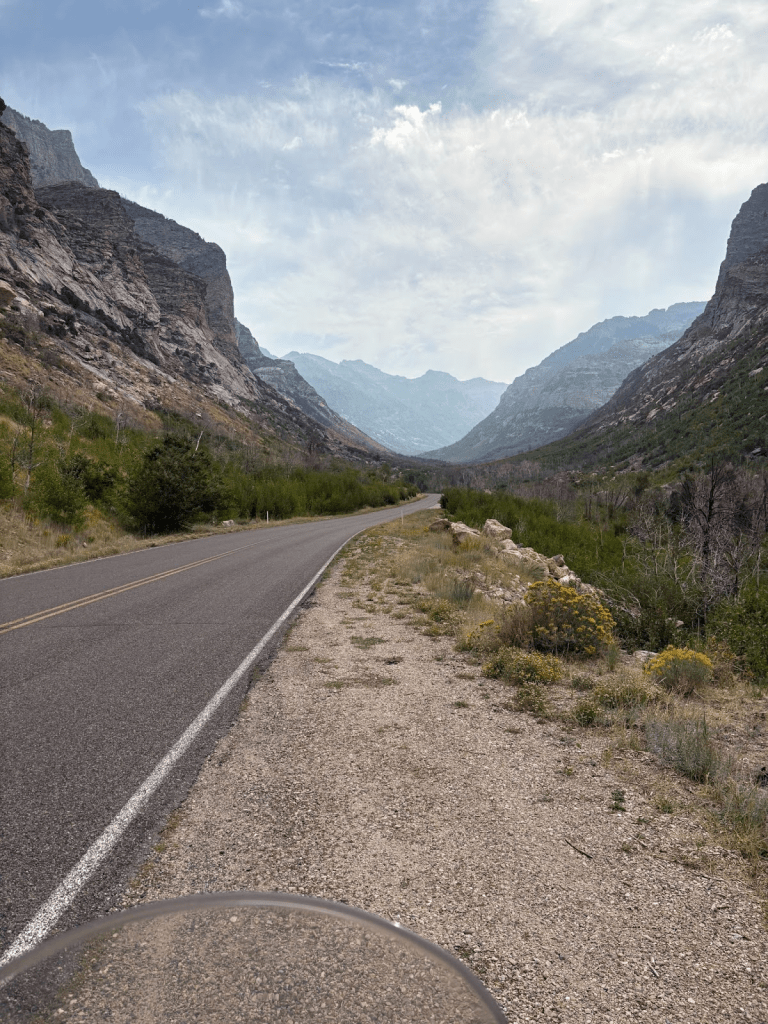
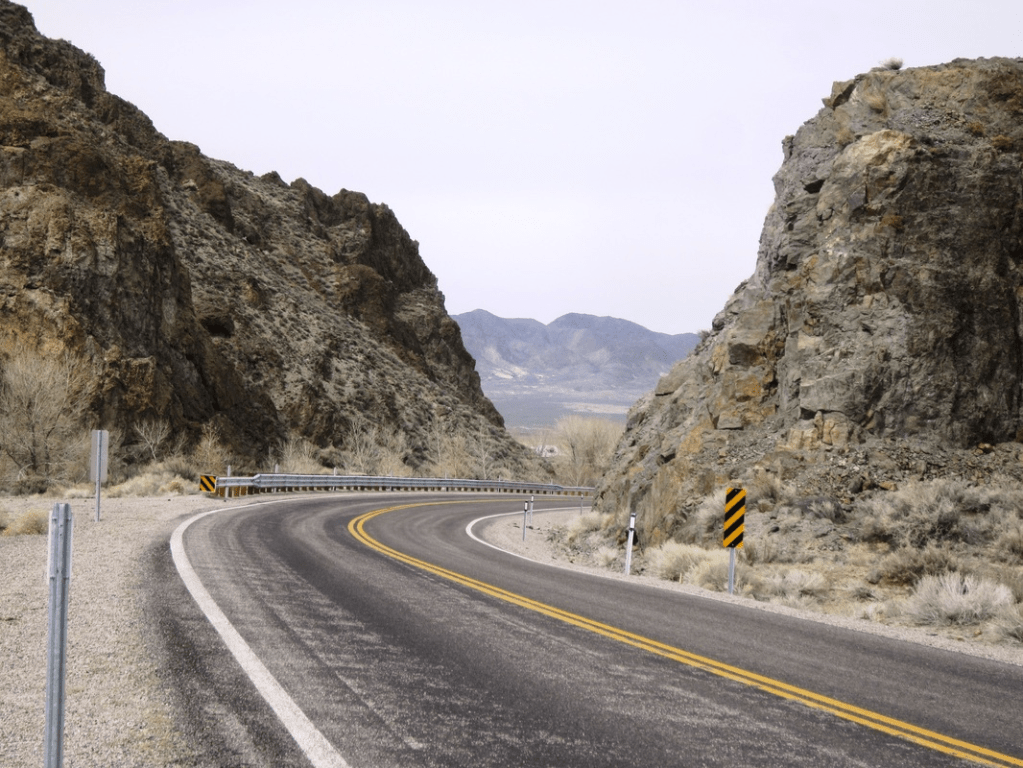
The Lemoille Canyon Scenic Byway, entering Lemoille Canyon
Classic glaciated amphitheater in Right Fork Canyon
Glacial cirques

Having gone over the route with Ted, our camp host, a virtual guide with extensive knowledge of the local terrain, we felt confident that what amounted to our longest stretch on gravel was doable.  The route took us into Lemoille Canyon following Lemoille Creek.  An out-and-back then took us through the village of Lemoille where we met the first 18 miles of gravel road leading to NV-229 and Secret Pass into Ruby Valley.  

The Donner Party passed through the southern end of the valley in 1846, heading for the Overland Pass route across the Ruby Mountains – part of the Hastings Cutoff.  A sentence in Hastings’ guidebook briefly describes the cutoff:

The most direct route, for the California emigrants, would be to leave the Oregon route, about two hundred miles east from Fort Hall; thence bearing West Southwest, to the Salt Lake; and thence continuing down to the bay of St. Francisco, by the route just described.

The cutoff left the Oregon Trail at Fort Bridger in Wyoming, passed through the Wasatch Range, across the Great Salt Lake Desert, an 80-mile nearly water-less drive, looped around the Ruby Mountains, and rejoined the California Trail about seven miles west of modern Elko (also Emigrant Pass).  
For a detailed account of the route, see Salt & Snow Lansford W. Hastings the Donner Party and the Haste to Blame by Eugene R. Hart, a friend and colleague, for a well researched history of the Donner Party’s ill-fated route on the California Trail.

What did Hastings cut off?

The next 50 miles of pavement on NV-229 took us through the small unincorporated community of Arthur to the junction with NV-767.  

Ranching is the main economic activity in Arthur and the Ruby Valley in general. Most of the ranches have remained in the same families for generations.  
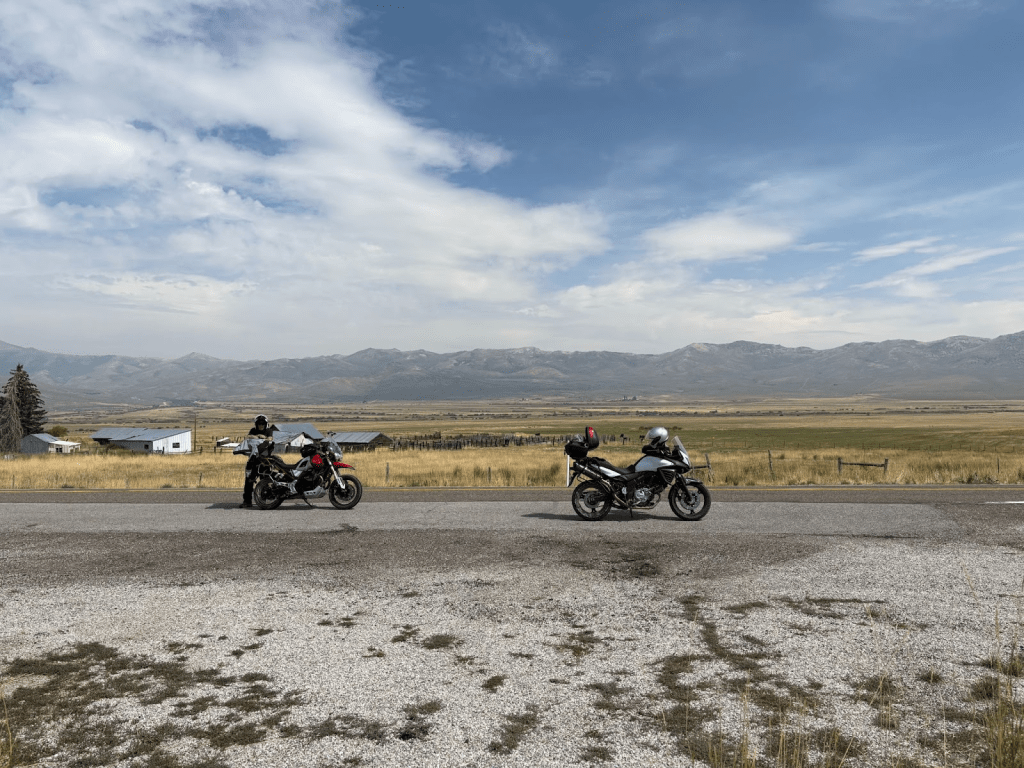
Cattle outnumbered humans by 10,000x 
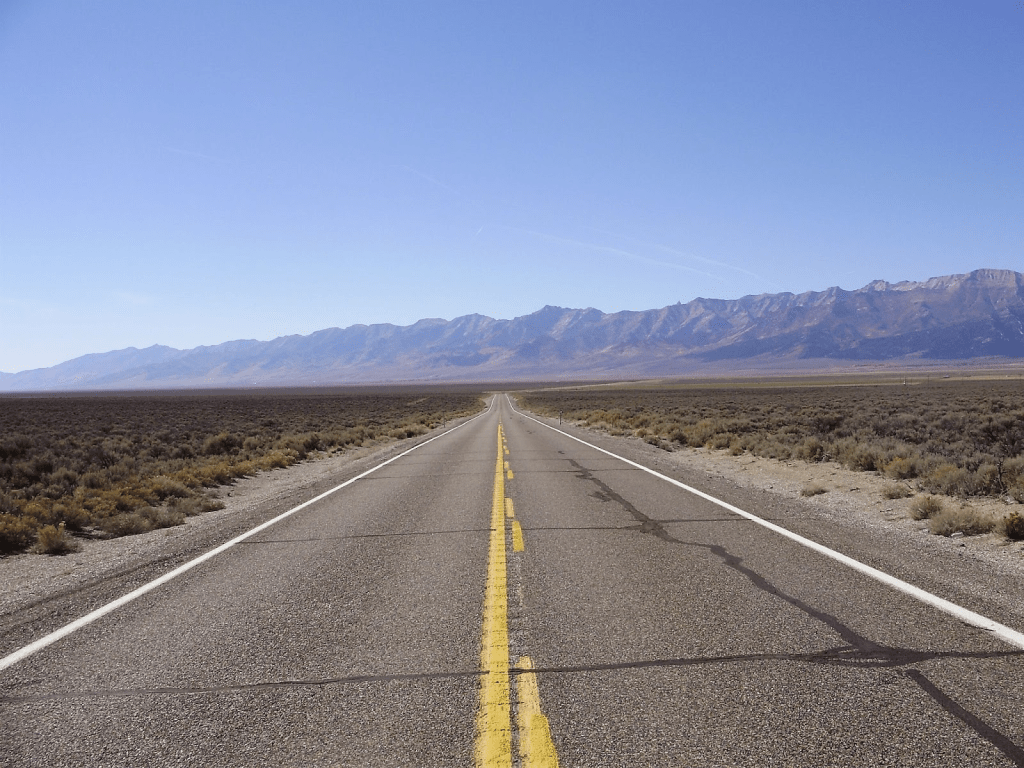
The Long Lonesome Ruby Valley Road

There weren’t may vehicles on the road, but there was infrastructure.

I don’t think Pete was doing what it looks like he was doing

At its south end lies the Ruby Lake National Wildlife Refuge. The valley includes a series of hot springs, known as Ruby Valley Hot Springs, with multiple pools reaching up to 30 feet in diameter and 100 degrees Fahrenheit in temperature.I

NV-229 passes along the northeast edge of the valley, and Ruby Valley Road (NV-767) runs along its western edge. 

Our next dirt section was Harrison Pass Road (CR-718) for 14 miles crossing the Ruby Mountains near the center of the valley at an elevation of 7,247 feet . Much of the floor of Ruby Valley lies at elevations near 6,000 feet. 

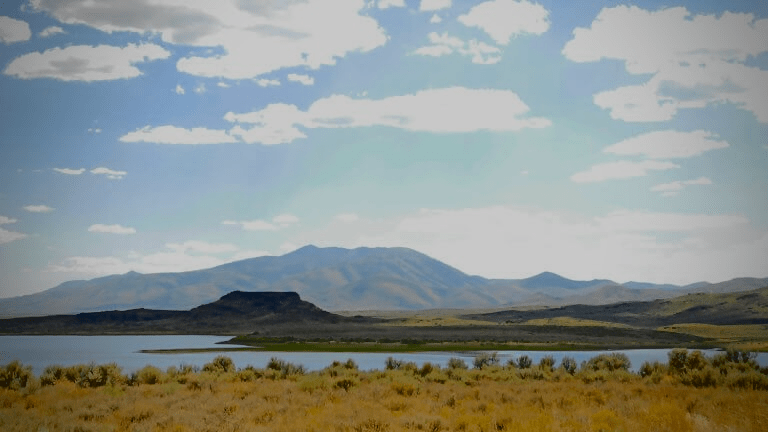
Franklin Lake looking Southeast (photo credit:  Wiki)

At the entry to Harrison Pass Rd we encountered a local rancher and his wife. Perhaps perceiving our born to be mild countenance, they cautioned us about being on point because Harrison Pass Rd is a popular 4-wheel drive road on which speeding vehicles and tight blind curves with sandy washes that can be treacherous.

Fortunately we didn’t encounter any speeding side-by-sides or other ATV’s but the sandy road conditions made for a squirrelly crossing.

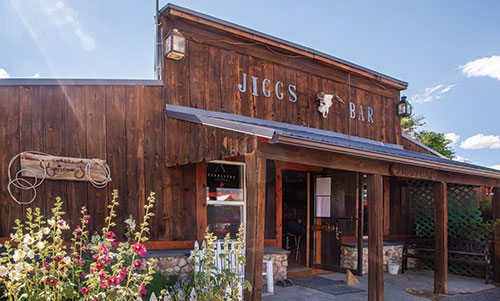
We reached pavement on NV-228 that took us through the small unincorporated community of Jiggs.  In addition to the Jiggs School and Skelton Hotel, two historic buildings from the early 1900’s, there’s the Jiggs Bar, which we regrettably didn’t stop to visit. 
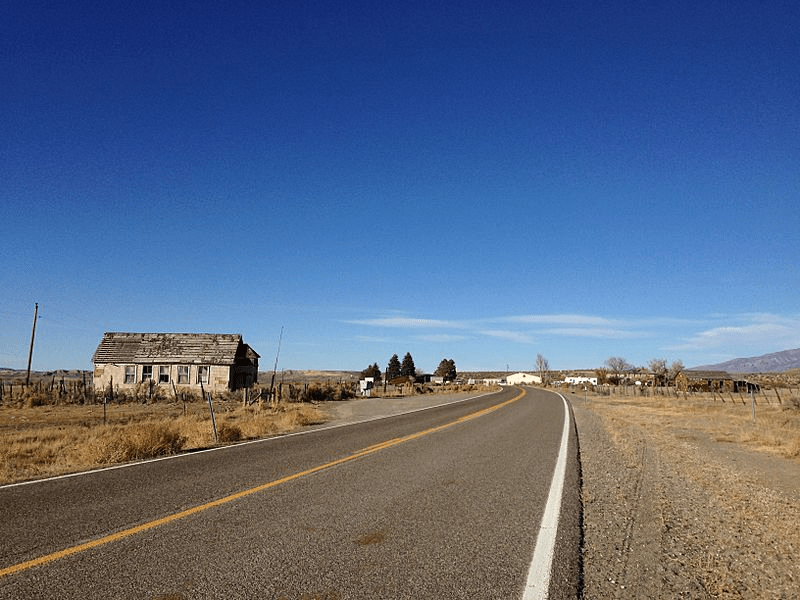
Jiggs schoolhouse on the left
The Skelton Hotel
It’ll just have to wait for our next trip to the Rubys.  Cheers!

The town was featured in a 1965 Volkswagen advertising campaign in which the entire population (5 adults, 4 children and a dog) was shown comfortably seated inside a VW Bus. 
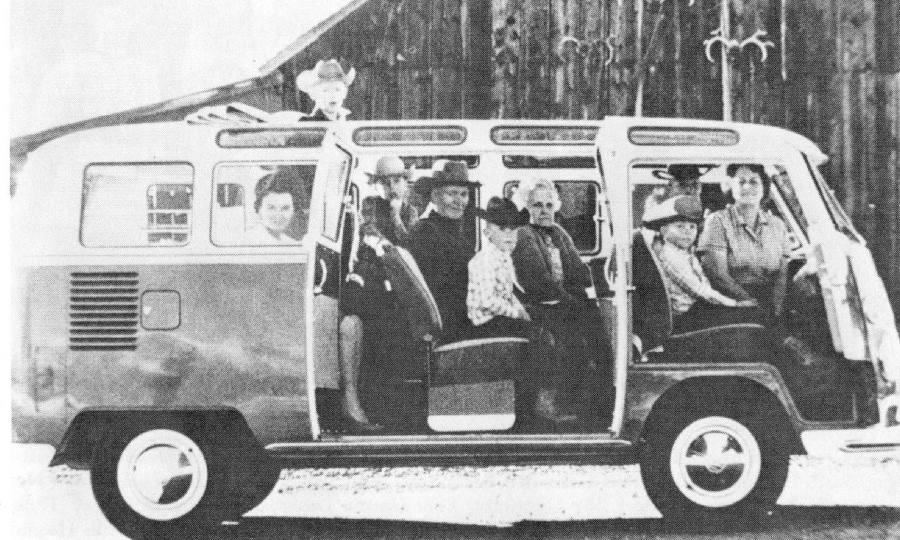
Grandma doesn’t look to be having much fun

Upon returning to the campground, Ted met us with two cold Coors Lights.  In exchange, we offered our enthusiastic reflections on the day’s ride that he had recommended before heading into Spring Creek for bites and beverages.

Another sublime sunset looking west

For a visual record (with soothing soundscapes) of our Ruby Mountain Ramble, check out the video from our day of cattle, canyons, passes, and dirt roads:

Lemoille Canyon and The Ruby Mountains Ramble

Followed by a sublime moonrise over the Ruby’s

Day 4 / Wednesday, Sept 10 – South Fork Recreation Area to Owyhee and back  

South Fork Rec Area to Owyhee Loop ~236 miles

  • From the campgrounds, NV-225 N to Owyhee through Wild Horse and Mountain City, then NV-226 S back to Elko 
  • Lunch at The Star Basque Restaurant and beverages in Spring Creek.  
  • Return to the South Fork Recreation Area campground 

Weather was our consideration for how to approach our ramble to Owyhee on this our fourth day of adventure.  Consulting with Ted we decided to forgo a dirt section that would take us through the Duck Valley Reservation on NV-226 that might be iffy in the rain that was forecast for the afternoon.  Remember, we were born to be mild, having outgrown the wild birth stage of our lives…

It’s perhaps a shame that I didn’t break out the GoPro for yet another view of the road from my handlebars.  I figured the Ruby Mountain Ramble video was enough of mile-after-mile of monotonous, but at times breathtaking, scenery.  And, if you’re not a music nerd, there probably aren’t enough of dramatic cinematic dopamine triggers keep you engaged. That and I don’t own a drone. So the few still photos we took will have to give you some perspective of the landscapes. 
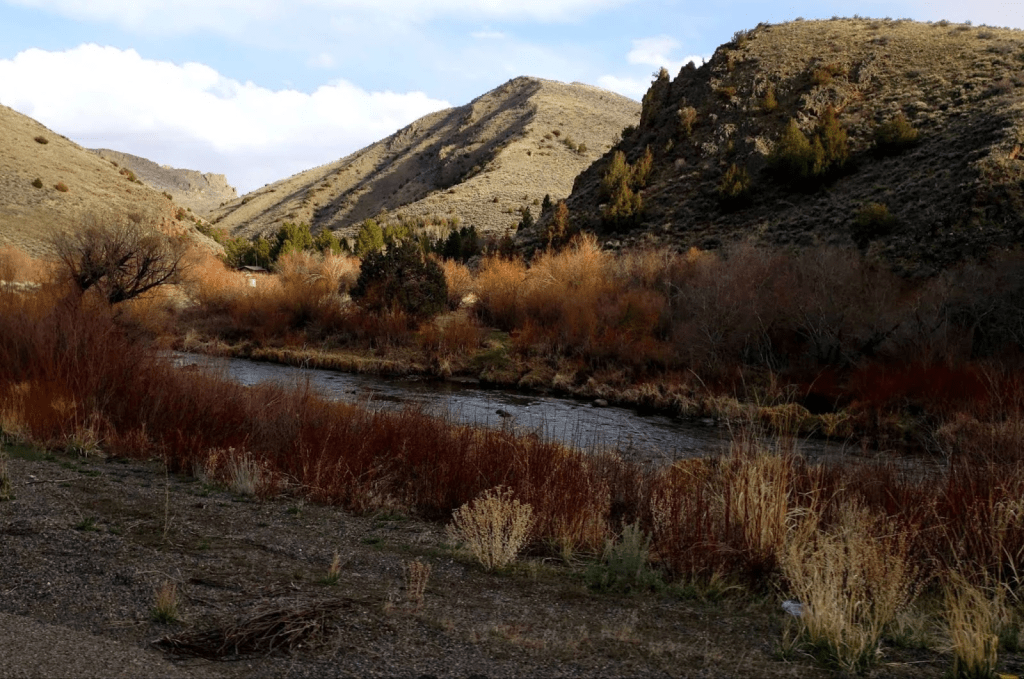
The Owyhee River near the Wild Horse Crossing campground
Volcanic remnant off of NV-225 looking northwest  
Yep, born to be wild horses
Wild Horse State Recreation Area

Not much to see in Owyhee, a small reservation town on the vast volcanic lava flow plain. After a stop for a snack and some nalgas relief, we turned tail to make our way back to the South Fork Recreation campground, but not before stopping for a water bottle leak in Pete’s top case, absorbed by the roll of Scott Shop Towels he always carries and a few interesting sites along the road.

A pioneer’s cabin across from Four Mile Creek, a tributary to
the North Fork of the Humboldt River, on NV-225
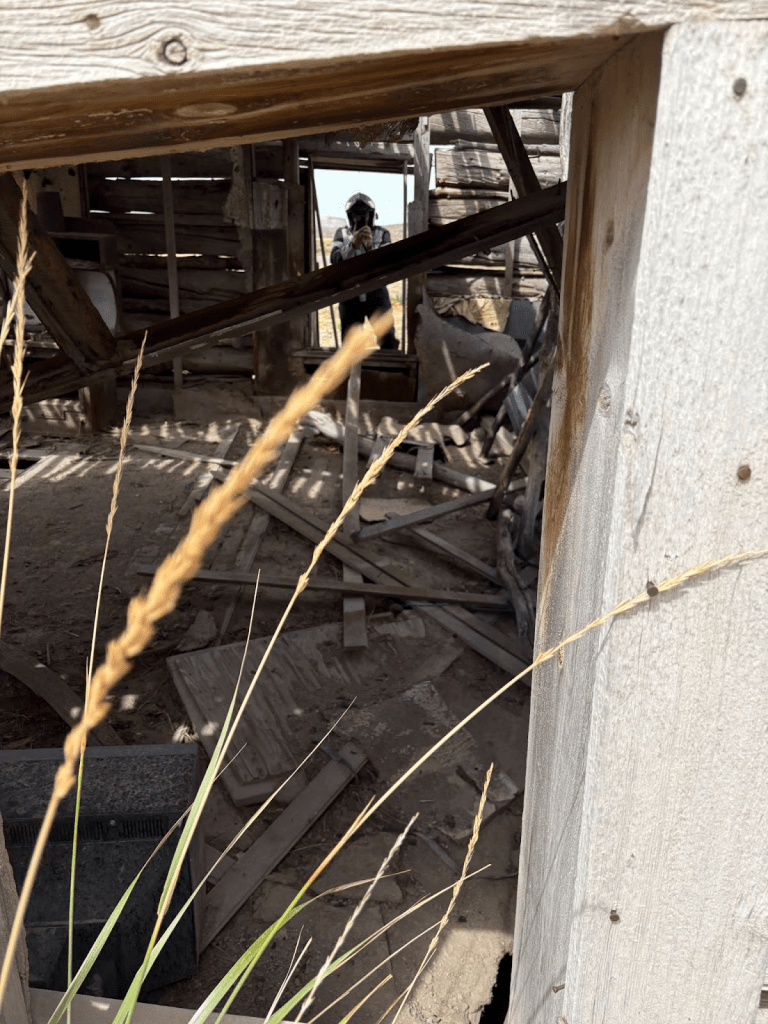
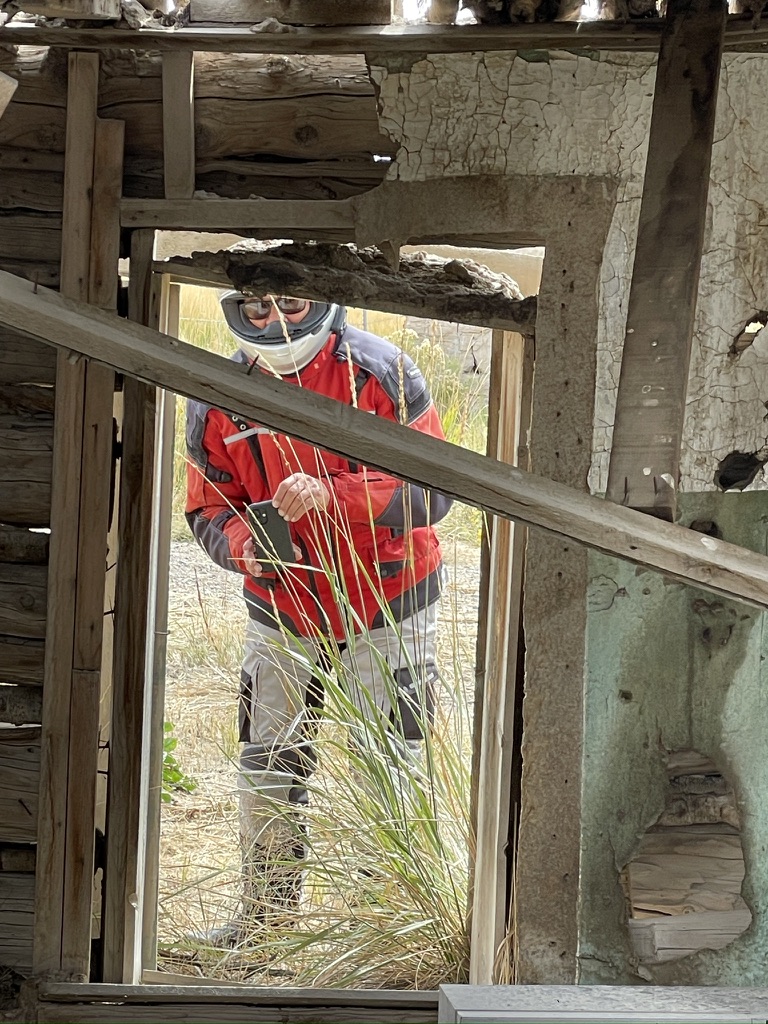
Peek-a-boo
Back at’cha
The Independence Range whose watershed irrigates the foreground pastures

I have mentioned in prior blogs my associate, Pete’s, heritage.  He’s Basque by way of his father.  Nevada is renowned for its Basque population, especially in the Elko area so naturally we sought out the best Basque restaurant in town, The Star.  

As with many Basque restaurants, there was usually lodging associated with the family dining area to accommodate migrant shepherds attending to herds of sheep and this was true of The Star.  We had a wonderful lunch including a Picon Punch I first learned about in Los Banos, near our home in Merced, at the Woolgrowers. According to 23andMe, I have just under 1% Basque heritage myself (that is likely attributed to my promiscuous Neanderthal ancestors).
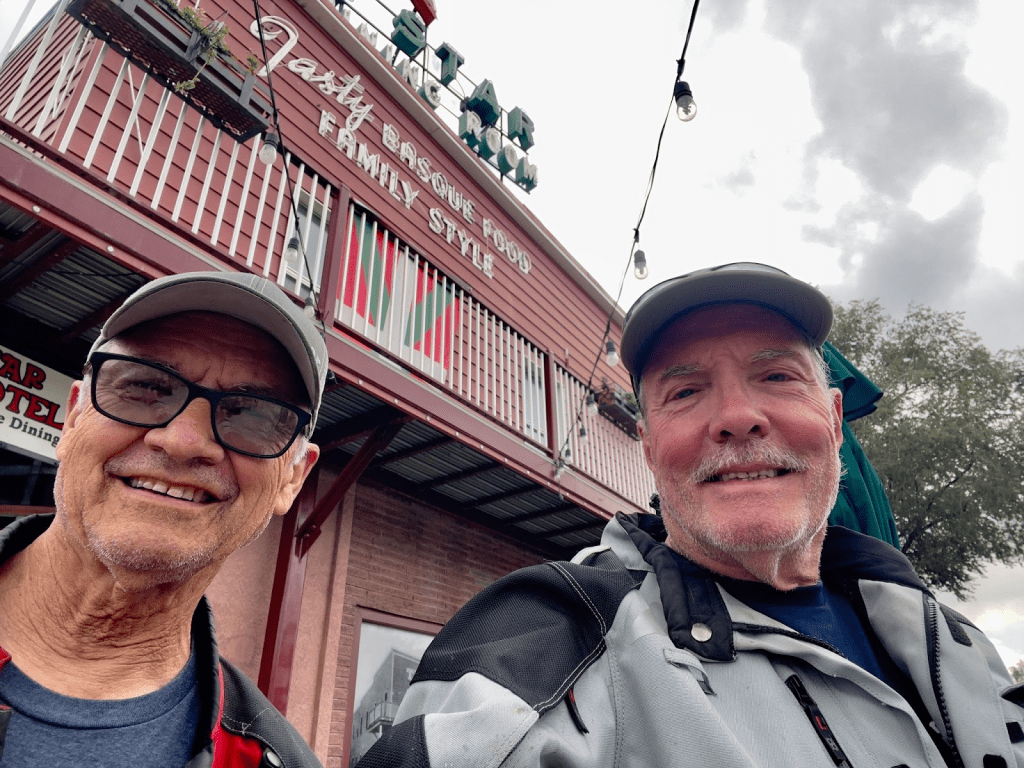
The of the scenes of what would become a frenzied search for a lost wallet…

Making our way to the campground south of Elko, we stopped for fuel in Spring Creek, a suburb of the growing Elko population and our commercial base of operations where fuel, both fossil and fermented, were acquired.  

As I pulled up to the pump and executed the fueling ritual of removing gloves, removing the tank bag, inserting the key into the cap, and reaching for my wallet, I realized it wasn’t nestled in its customary chest pocket.  

Needless to say, panic struck!  I’m on the road in the middle of a seven day ramble and have lost my wallet somewhere during the day. I last remember using my credit card to purchase fuel at the very same Sinclair gas station that morning. I naively thought to inquire at the station’s convenience store if anyone had turned in a wallet. 

The disinterested cashier yelled across the store to another employee who mumbled something and said there was nothing in a basket resembling a wallet.  

After I paid for the fuel with cash and was given $4 and change, I asked, “So you think I can make it back to California on four bucks?”

She replied, “You’re screwed.  Look around.  Do you think someone would turn in a wallet?”

I should have known better.  This is the only Sinclair station we had stopped at that didn’t have a Dino.  There was a pad for the Dino.  Apparently Dino had been abducted.   This did not ensure confidence.

I dialed the Star restaurant and a bit more reassuringly the attentive staff remembered us and stated that after a search there was no wallet near where we were seated.   

I had enough cash to make it home on our remaining three days but it was the drivers license, credit cards, insurance cards, and god forbid, my National Parks Senior Pass that would have to be cancelled and replaced.  I then called my wife after using the app on my phone to put a hold on my Citi credit card, which, as it turns out, I later hastily canceled.  Toni works for the local School Employees Credit Union.  She took care of my backup CU Visa and reminded me that I still had my Apple credit card in my phone’s wallet.  A small measure of relief. One of many fringe benefits to my marriage…

As we made our way back to the camp that afternoon, Ted with Coors Lights awaiting our arrival, I was somewhat crestfallen after what was otherwise a beautiful day on the moto rambling through exquisite terrain. Not much for celebration, I opted for a shower to wash away my woes. 

While stowing my armored jacket and pants, that I had by this time searched in every pocket multiple times, I felt the small rectangular form of my wallet that I had perhaps in haste earlier mistaken for CE armor.  A flood of relief overcame me.  I unzipped a vent on the front of the jacket, opposite the pocket in which I usually stored my wallet, and guess what?  Lost wallet frenzy extinguished!

Fortunately the mesh liner inside of the jacket held the wallet in place.  

Wallet firmly in grasp, we made our way back to town for dinner. After grabbing a bite to eat in Spring Creek at the counter service Mexican restaurant attached to the Casino, we returned to camp after an exhausting search for wine for my pompous palate, where I eventually enjoyed a glass or two of Pinot and Pete a cerveza o dos.  We then set about on a stroll about the campground, a warm campfire, some stargazing and our fourth day of adventure and misadventure was complete.
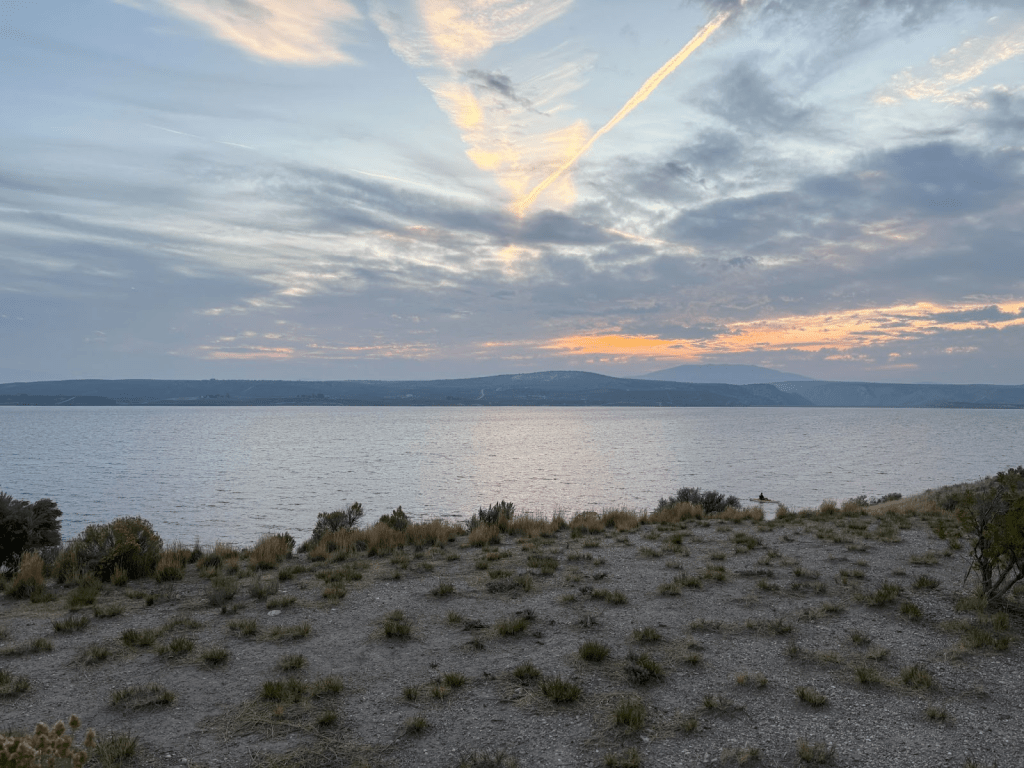
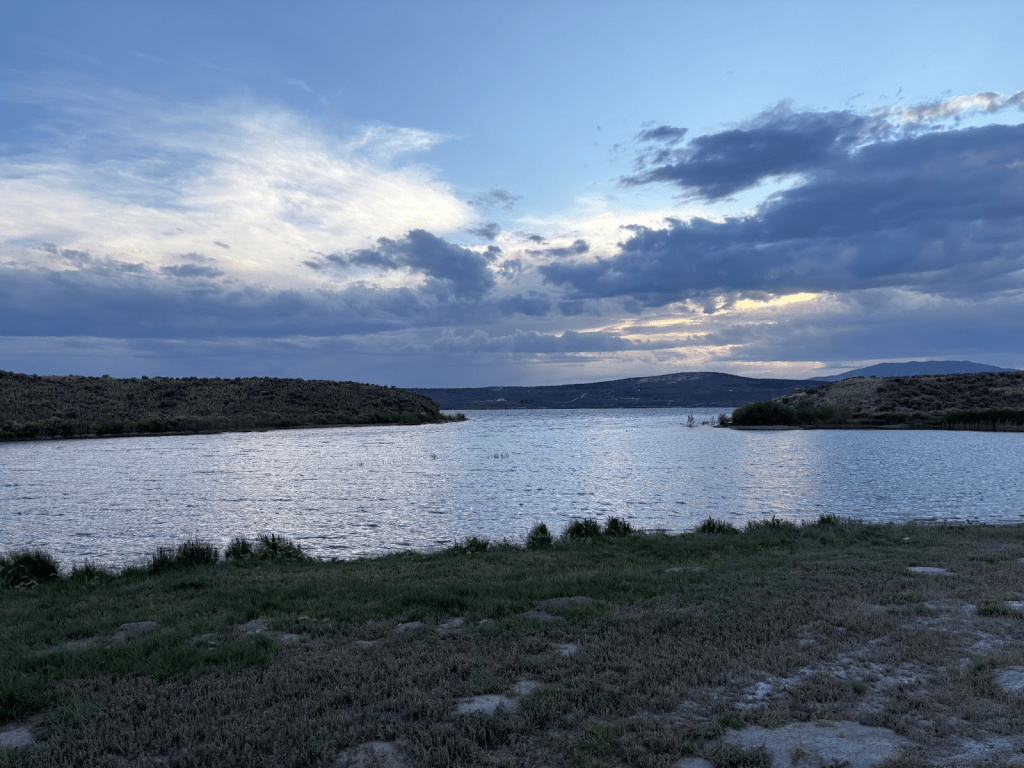
On our evening ritual of a walkabout the lake
A Ruby Mountain moonrise warmed by campfire

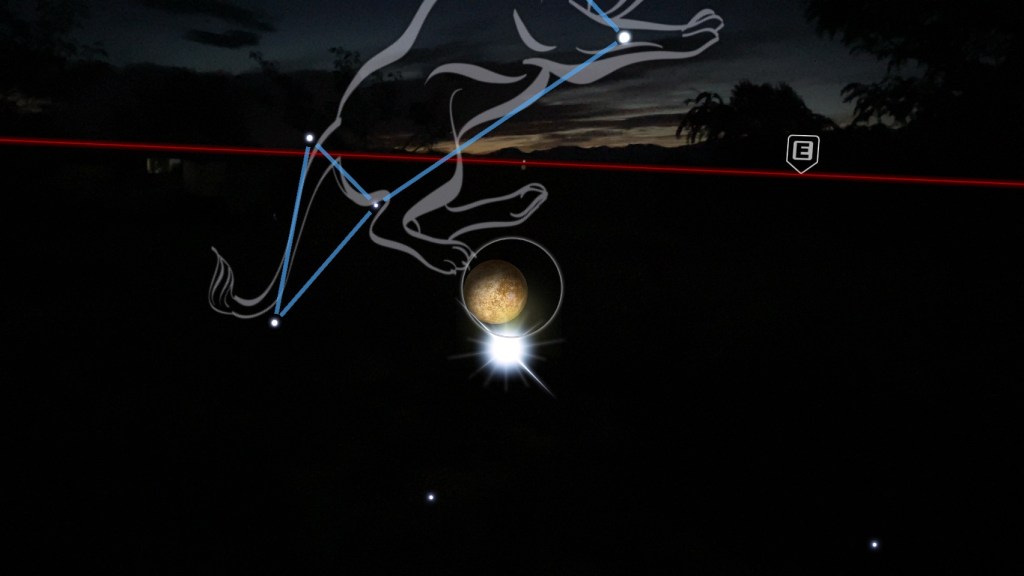
I have an app on my phone called Skyview that identifies constellations, planets and other objects in the night sky placing virtual images of those objects in the direction the phone’s camera is pointed relative to their position in space.  

As is a familiar ritual, well into the night I was up to see a man about a mule and it just so happened that Saturn, Uranus, Jupiter, Mars, the Moon, Venus and Mercury were all visible by way of the app, though not all without magnification to the naked eye throughout the night.  

Top left clockwise Skyview images: Saturn, Venus, the Hubble Space Telescope and International Space Station, Mars, and Mercury. Jupiter was visible too.

Often on our campouts, we see satellites, like Starlink and others. We jest about them being UAP’s. Earlier in the evening we saw the Hubble Space Telescope and the International Space Station streak across the sky just after sunset. They’re only briefly visible as the rotation of Earth and the angle of the setting sun reflects off of them in their transit about the planet.

Day 5 / Thursday, Sept 11 – South Fork Recreation Area to Tonopah, NV

South Fork Recreation Area to Tonopah NV ~294 miles

  • Retrace US-80 W from Elko to NV-278 S to Eureka.  US-50 to the junction with NV-376.  South on NV-376 to junction with US-6 W to Tonopah.
  • Get room at Best Western Hi-Desert Inn in Tonopah across the street from Tonopah Brewing
  • Tour the downtown and the Mizpah and Belvada Hotels

BTW, have I mentioned I never met a sunrise or sunset that wasn’t spectacular. 

Another stunning Ruby Mountains sunrise…

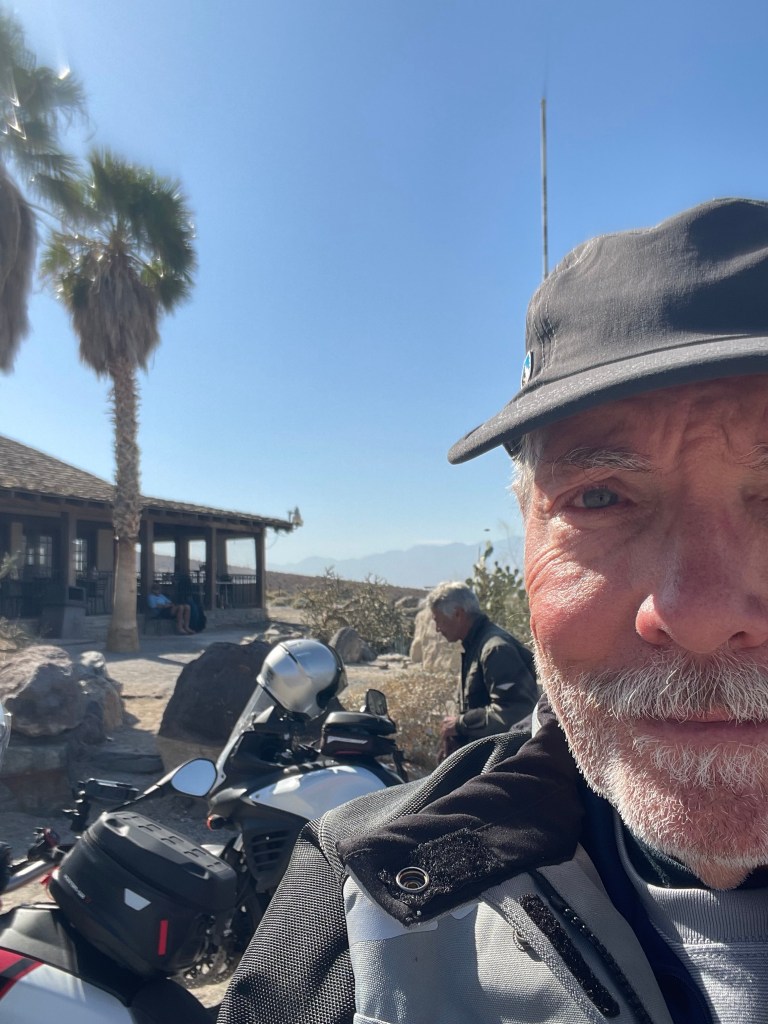
We enjoy documenting our rambles.  I with my monotonous videos and inspired landscapes. Pete too, works hard at photographically capturing the essence of our motocamping experience.  He composes each shot, carefully choosing the angle and composition, especially the backdrop for a photo, setting up and tweaking a tripod and fussing with the timer to express a pictorial narrative of epic adventure. 

Then I come along to tell another version of the tale.

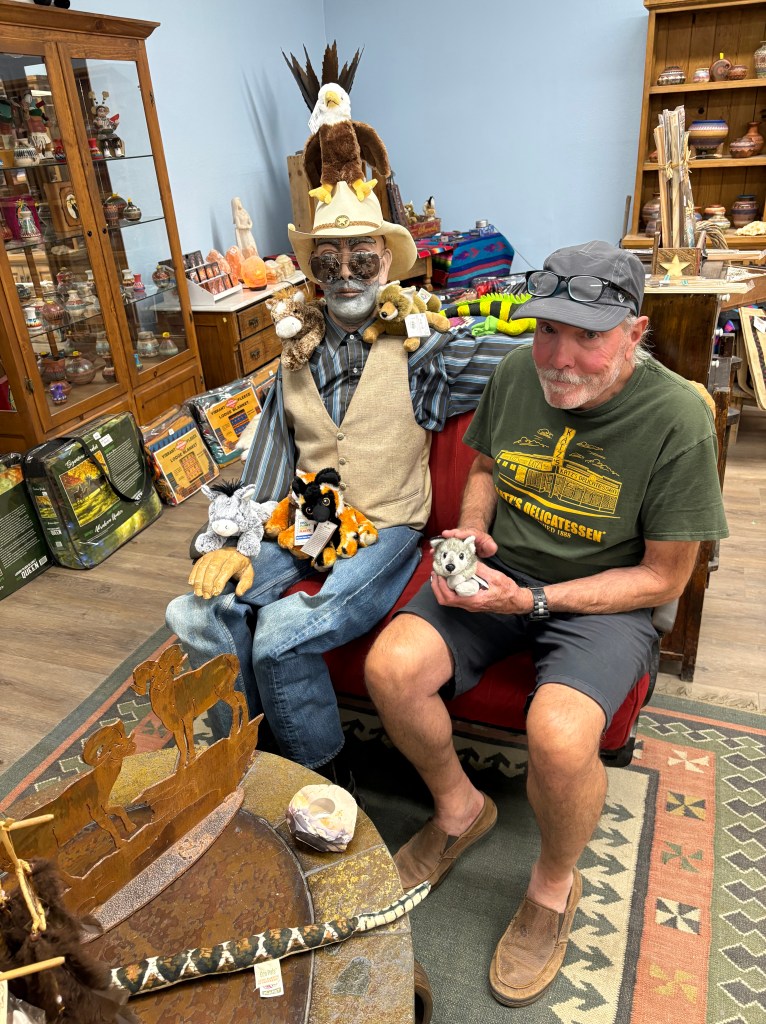
Okay, phone and glasses in hand
Wait, Do I have my wallet?
The feeling when you realize your wallet is safely in your pocket

Soon we would be leaving our outstanding experiences in northeastern Nevada. After exchanging pleasantries with Ted, whose excellent campground oversight and generosity will be the standard by which all future camp experiences are measured, along with my sharing contact information, we bid adieu to the South Fork State Recreation Area.


A shameless plug for the blog I leave at the first sign of interest… Actually, I don’t even wait for a sign before stuffing a card into the hand of an unwitting addition to my 82 fans!

It was on to Tonopah as our destination for day five via the Nevada Scenic Byways of NV-278, US-50, and NV-376.  All with great views, some with vistas reaching over 50 miles in this basin and range geography in Nevada that is second to none. 

 But first we needed to fuel up for those long lonely stretches of pavement awaiting us.  We stopped in Carlin for breakfast, passing a fuel stop we used earlier in the week happening upon a great retro looking cafe, The State Cafe, Bar, Casino

Carlin Nevada’s finest… No joke!

Though intriguing, it was too early for an eye-opener, with too many miles before us, or slots, so we opted for breakfast at the adjacent cafe.

Ahh, biscuits and gravy 
Almost as good as my wife’s, Toni’s

I’ve noted in past posts that Pete has an outsized appetite for his svelte appearance. I, on the other hand, given my hillbilly genetic predisposition of loading on excess caloric storage (fat) have to work hard to even maintain my semi-svelteness. Pete ate half of my breakfast in addition to his. Thanks Pete. I’m able to throw a leg over the motorcyle because of your help with my calorie restriction.

Back on the road again, we stopped briefly for nalgas relief and some hydration at the junction of US-50 and NV-376.  We could see the clouds forming above the Toiyabe Range that augured thunder showers. 
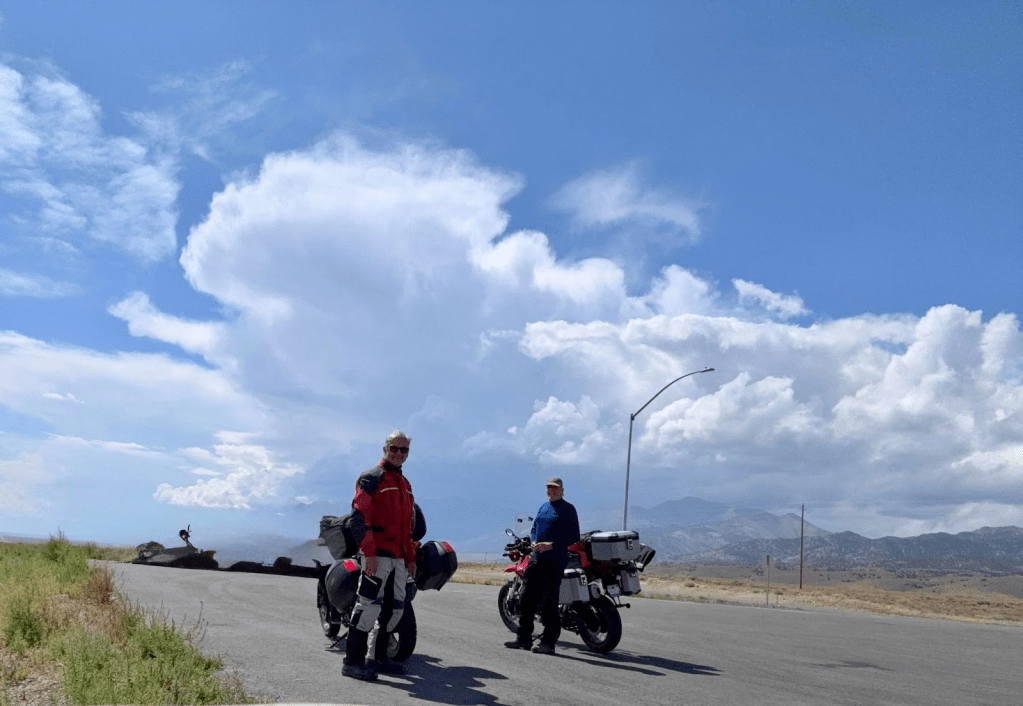
Cumulus Pete and cumulonimbus Sisyphus

Adorning rain gear, we encountered foretold showers and a little hail between Kingston and Carvers for maybe 20 or so miles.  It was all refreshing until we saw ground lightning strike at the base of the Toiyabes, not that far from the road.  

Once out of the thunderstorm we dried quickly in the warm afternoon temps.

Near Carver we passed the Round Mountain Gold Mine, operated by Kinross Gold, which produced approximately 324,277 ounces of gold in the financial year 2020.  Another example of the boom and bust cycles in Nevada.  The mine has a long history, having first opened in 1906 and transitioning from underground to open pit mining over the years.  Its projected annual production (2025): Approximately 2.0 million gold equivalent ounces (Wiki).  Consider this, the price of gold at $3,855.00 per ounce as of this writing x 2 million ounces would be worth $7,710,000,000.  Before expenses.  

Round Mountain Gold Mine (Image “scrubbed,” to use AI parlance, from the interwebs)

Interestingly, when I asked Ted, our camphost with the mostest, what he figured in his responsibility for overseeing gold extraction in his mining career, he had never thought about the value of his work in those terms.  In fact, he called an old mining buddy to discuss this unanticipated quandary. 

I hope to hear from him about what toiling underground for thirty six years for, “sixteen tons and what do I get, but another day older and deeper in debt…”   (For my younger readers:  Sixteen Tons by Tennessee Ernie Ford  Yeah, yeah, it’s about coal mining, but you get the point, right?)

Of course gold prices have fluctuated over time, but it seems that there is a reason the Discovery Channel still produces episodes of the reality show, Gold Rush and the half dozen spinoffs the show has generated.  A guilty pleasure for this environmentally conscious denizen. 
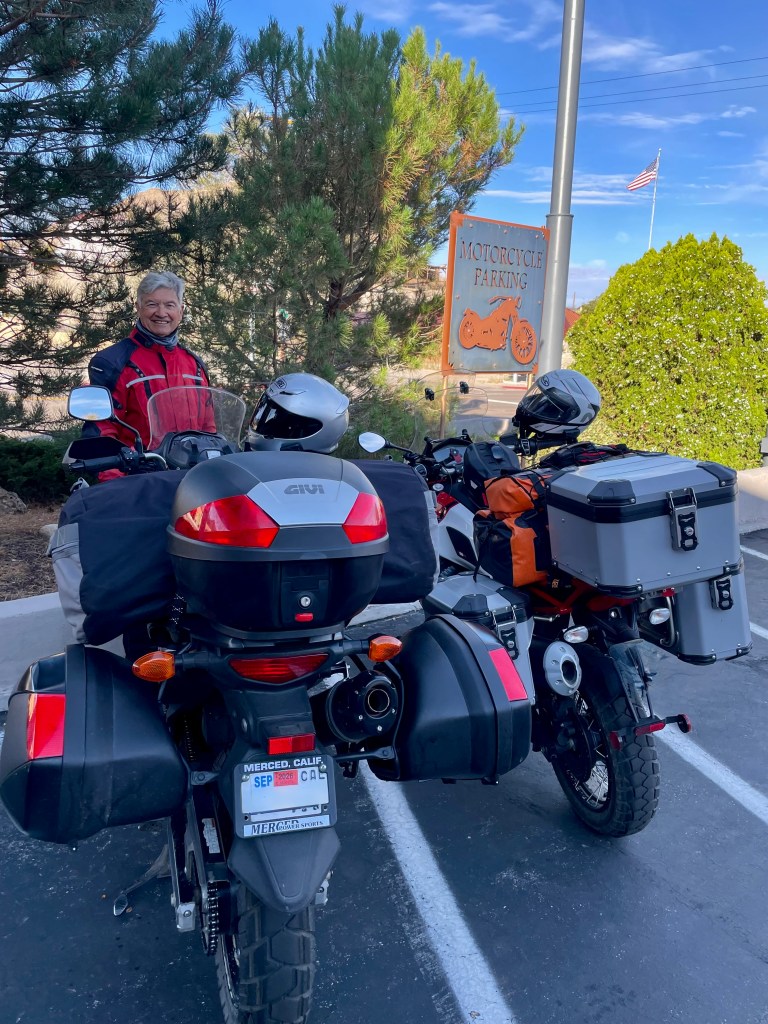
Happy campers anticipating a good night’s sleep on a soft mattress up off the ground

We arrived in Tonopah in mid afternoon.  After unpacking we embarked on a walk about downtown to shake off the miles in the saddle.  Upon entering one of the most acclaimed buildings in Tonopah, we discovered the role of the Cline family, Sonoma California vintners through their Cline Family Ventures, of the restoration of the Mizpah and Belvada Hotels built in the early 1900’s. The Family Ventures was responsible for the establishment of the Tonopah Brewing Company too.  You can read about the family in the article, Vintners breath new life in historic Nevada Town  by John M. Glionna, from the Las Vegas Review-Journal, February 7, 2016.  
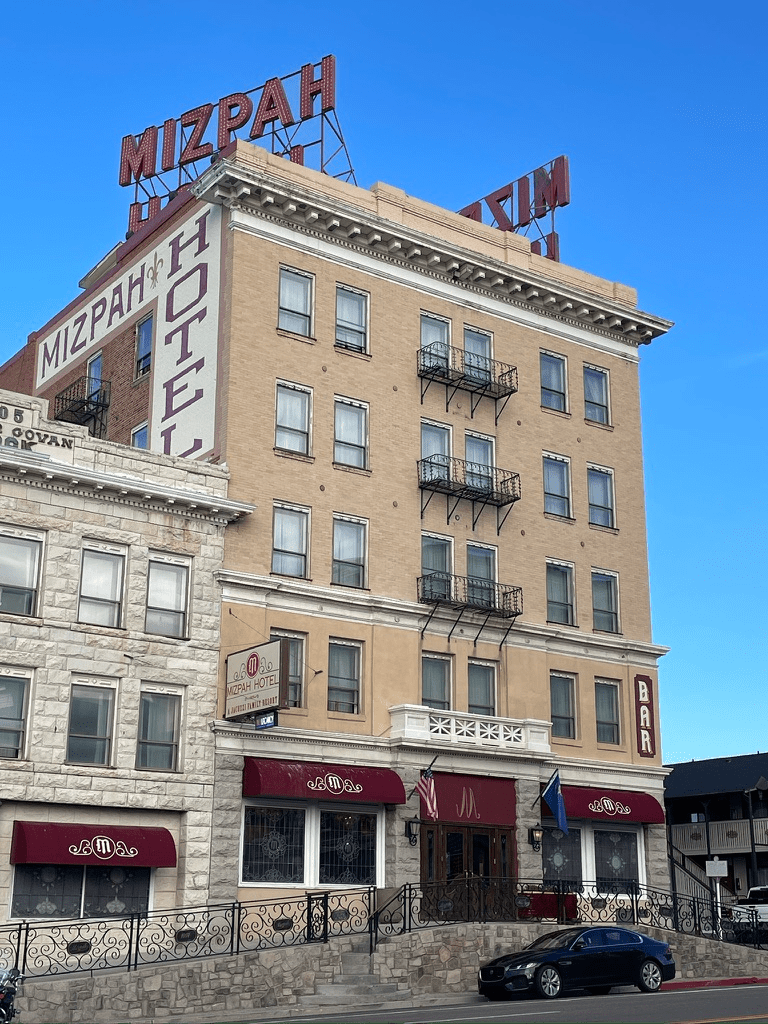
Booming majestically once again

At the time of its opening, the Mizpah was the tallest building in the state and featured modern luxuries such as an electric elevator, steam heat, and hot and cold running water. The hotel quickly became a social and business hub for miners, investors, and visitors. The Belvada originally opened as a bank in 1907 but shuttered four months later as yet another classic example of boom and bust mining economies.  After closing in 1999, the Mizpah and Belvada remained vacant until 2011 when Fred and Nancy Cline, with deep family ties to the region, purchased and carefully restored them.
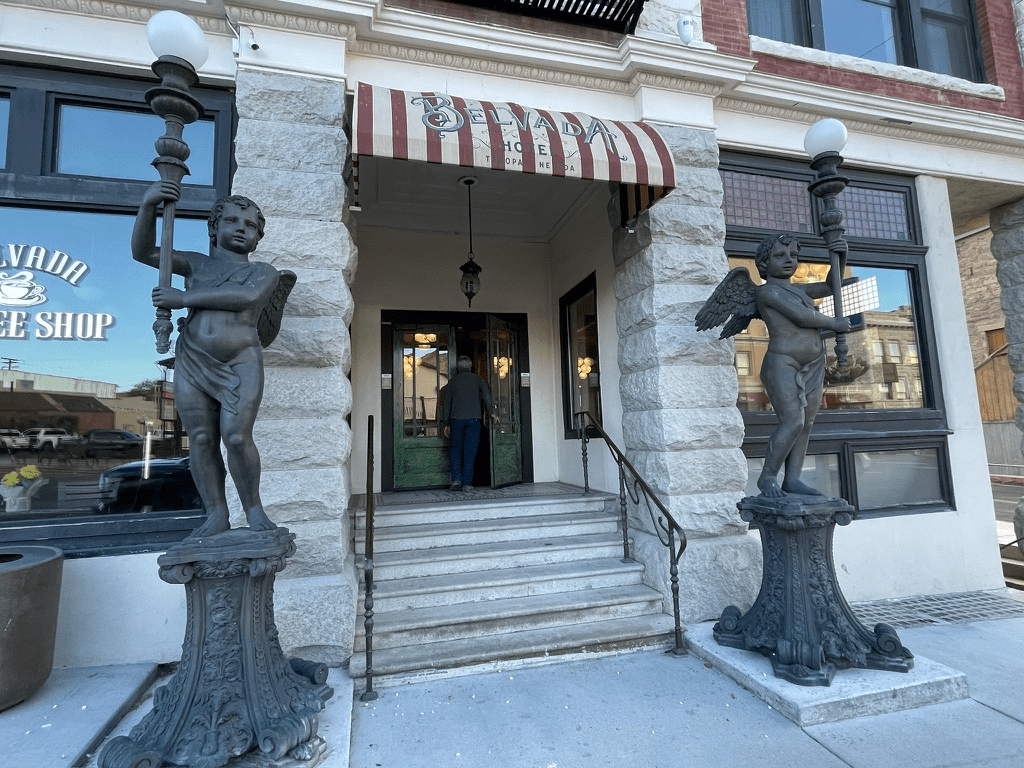
Why stop at restoring one historic property in Tonopah when you can add a pip
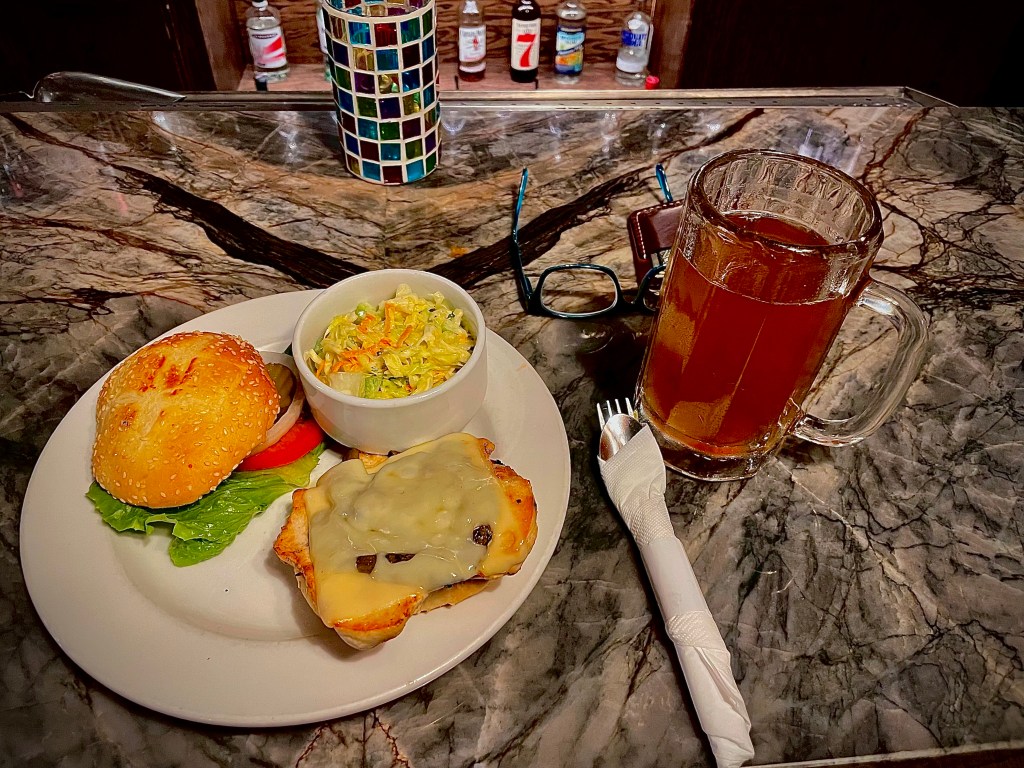
Pete with a burrrgherrr and fries and me with a grilled chicken bacon sammie with cole slaw
accompanied by well rounded, lightly hopped, Mucker Reds

The Cline Family venture added to their Tonopah trifecta by creating the Tonopah Brewing Company right across the street, US-6,  from our Best Western Great Basin Inn. After solid pub grub, we settled in for the evening relaxing, rehydrating, and reflecting on five days on the road.  Tomorrow, a short romp to Bridgeport and the Paradise Cove Campground.

Day 6 / Friday, Sept 12 – Tonopah to Bridgeport

Tonopah to Bridgeport ~160 miles

  • US-95 to US-6 to Benton and CA-120 to US-395 N to Bridgeport.

Our route for this day’s ride is well known.  We’ve collectively traveled over this portion of the basin and range a couple of dozen times, in fact I once rode over the very same road on a bicycle in 1993 (See:  The Tour de Life A Tribute to a Dear Friend, Larry Johnston).  A favorite stretch on the moto is the CA-120 leg from Benton Hot Springs to Lee Vining, something of a roller coaster with broad sweepers.
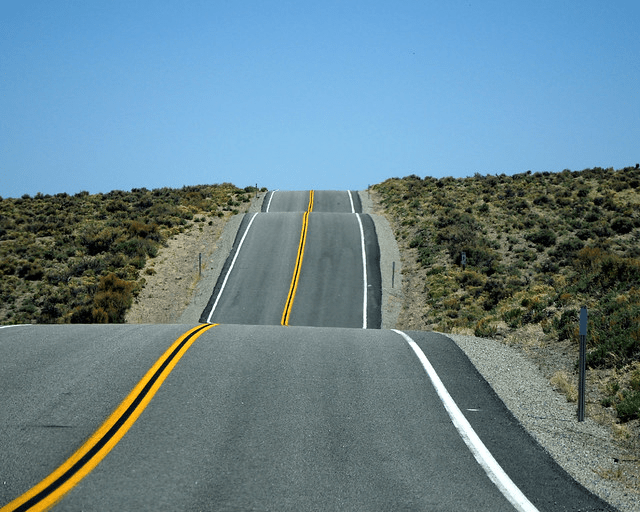
By noon we arrived in Bridgeport.  We set up our campsite and enjoyed a refreshing beverage as we contemplated the weather.
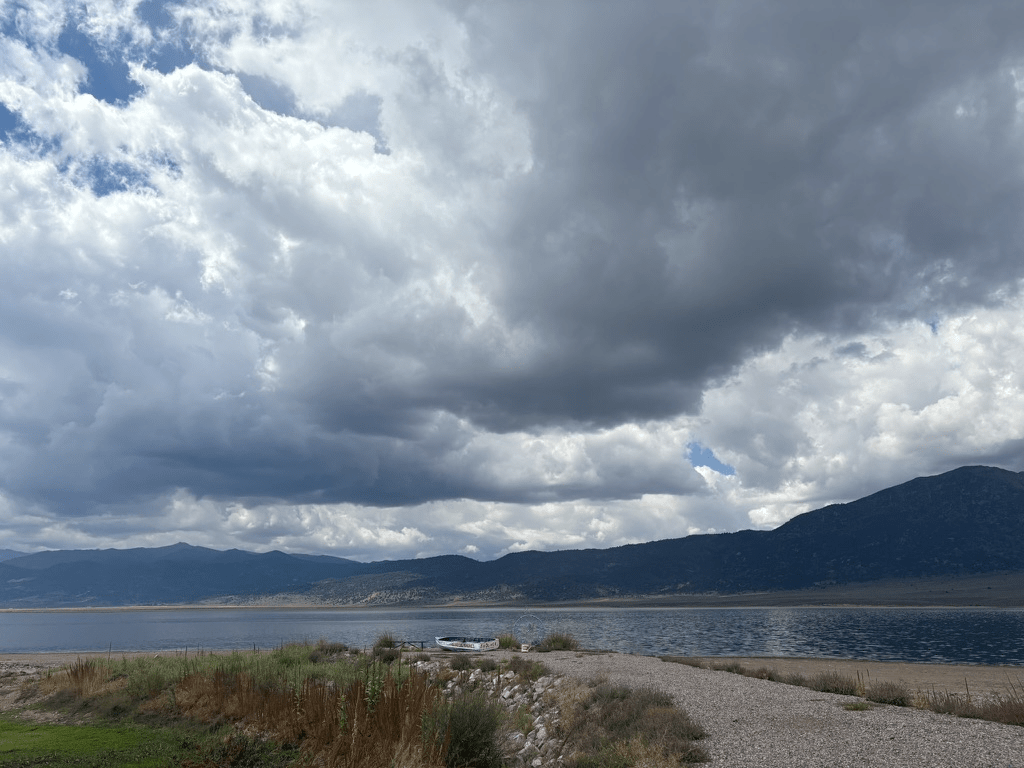
After briefly retreating to our respective ripstop abodes as a squall passed through, we emerged deciding when and where to have dinner and whether we needed to gear up for the weather

After a brief discussion, it was decided that we head into town and have dinner at the Bridgeport Inn.  Famished, as we hadn’t had breakfast sustained only by a cookie from the motel lobby in Tonopah as we left, it was comforting to see meatloaf on the menu.  I am a comfort food sorta guy as is my associate so we both ordered the meatloaf, mash, and a salad. 

It was a Friday night in Bridgeport and as we were dining the skies let loose.  That’s also when we noticed a large number of “Adventure Motorcycles” from that Bavarian manufacturer looming about.  It turns out that an informal group of ramblers from Southern California were on a weekender and were staying at the Inn. 

Perhaps it was because of fatigue or the weather that I didn’t snap a picture of the motorcycles that were parked near ours in front of the Inn.  Nor did I document our conversation with a member of the group who shared his ride up from SoCal.  That or I am guilty of making fun of those pictures of motorcycles taken in front of Starbucks.  The Bridgeport Inn is no Starbucks and so I’m modestly apologetic for making fun of gratuitous motorcycle shots in front of Starbucks and equating that to the Bridgeport Inn. Oh, and for not having a photo.
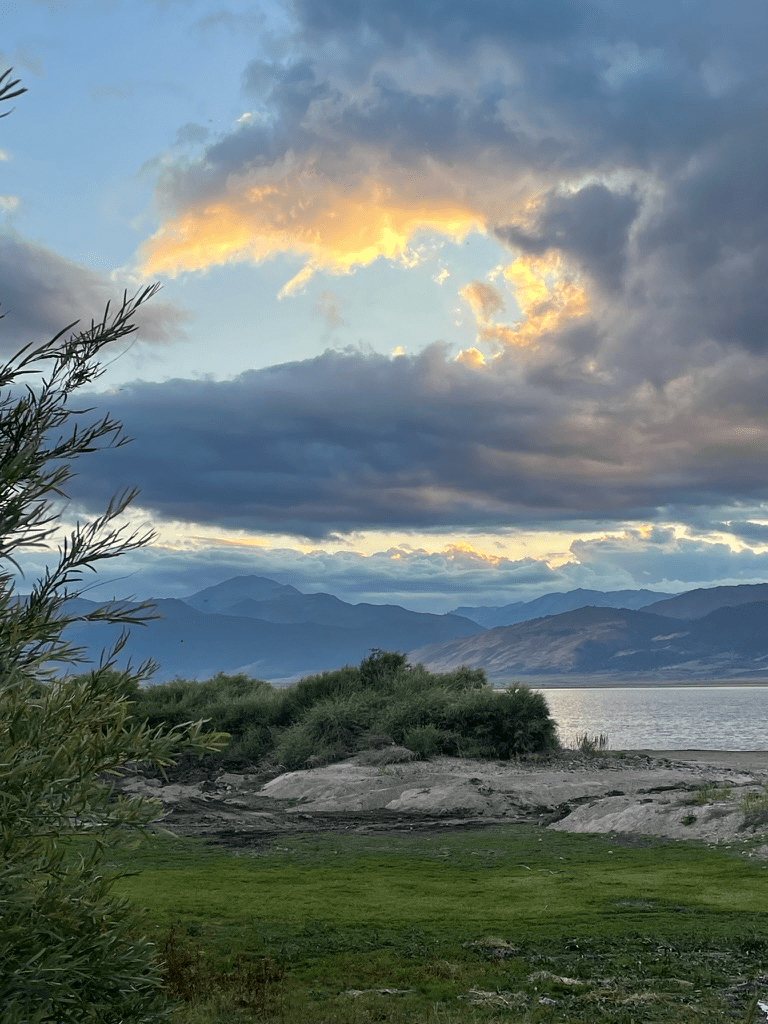
The campground host and hostess were a delightful couple who hailed from Ohio.  The camp was readying to close for the winter.   We decided to purchase two bundles of wood and were determined to hold out for some stars as we anticipated two of the three R’s over a campfire.  Recent storms had soaked the wood, even though wrapped in plastic film.  My associate and I had a real struggle to start a fire, at one point resorting to using my battery powered tire inflator to oxygenate the paltry flames.  I was frantically splitting kindling from the larger pieces as Pete knelt over the flames, blowing to bolster the single element necessary of the three to make fire.
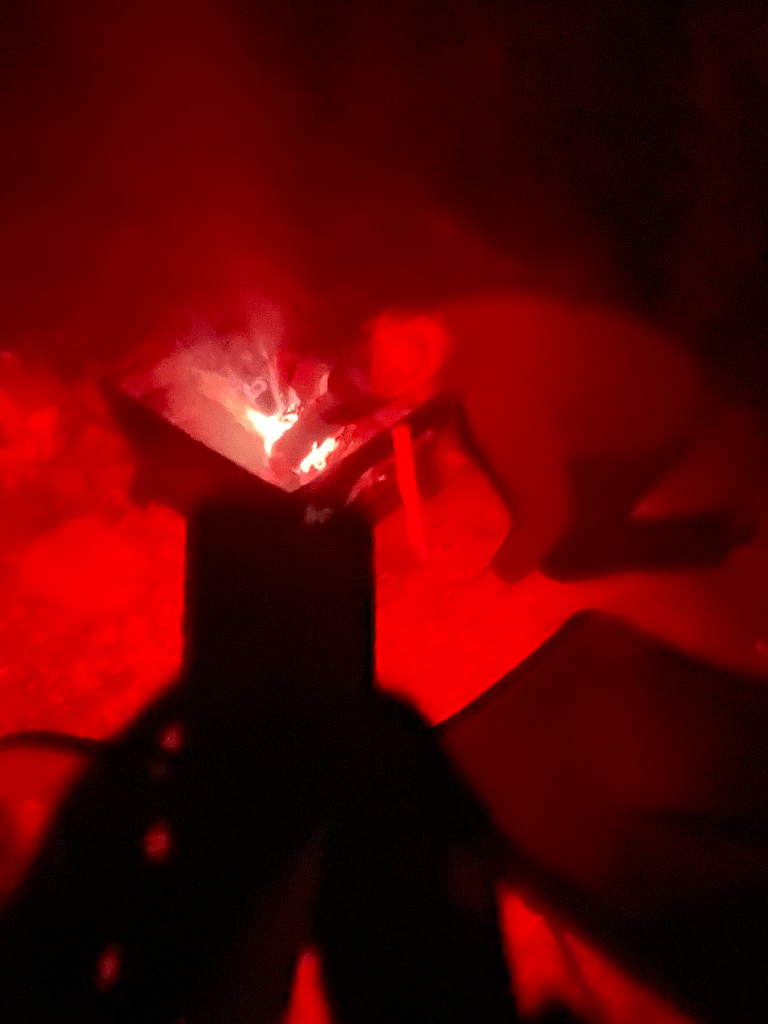
Though we are born to be mild, there was just enough of our neanderthal genome present such that our quest for fire finally generated enough heat to sustain a blaze. The red filter of my headlamp cast an eerily hue of Pete’s hyperventilation of the puny blaze.
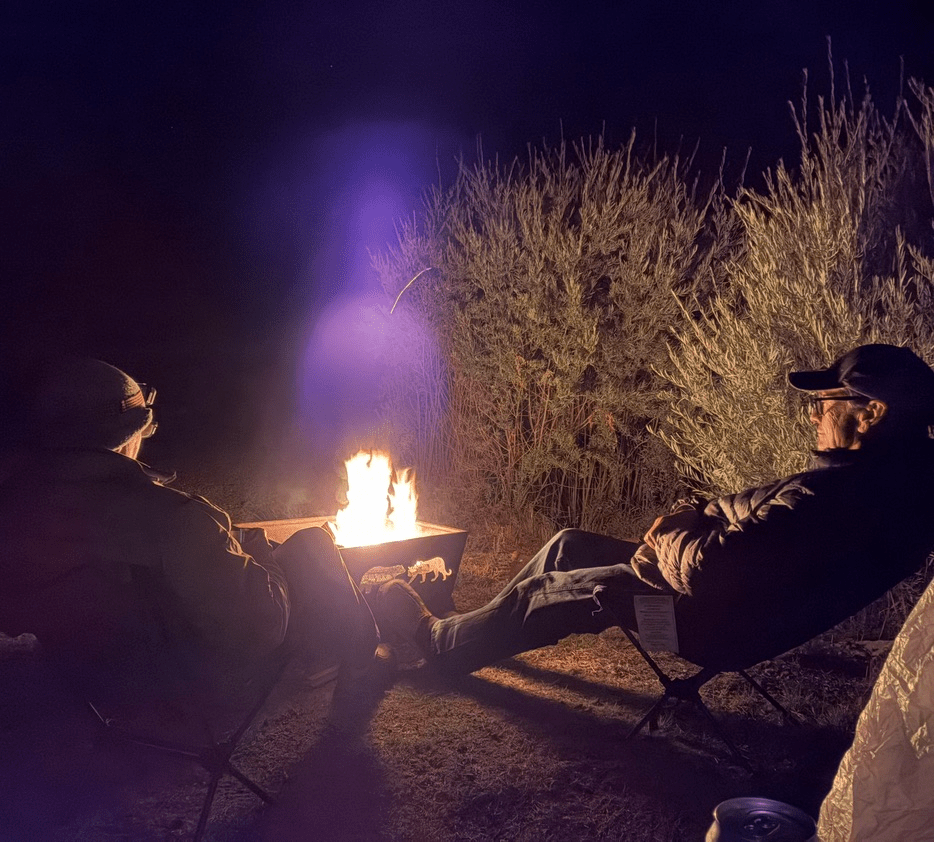
“Ughu,” translated from Neanderthal, “Victory!” We were intent to burn every last log before retreating to our tents. The skies cleared, somewhat, allowing for a spectacular star studded moonrise.  No ambiguity there…

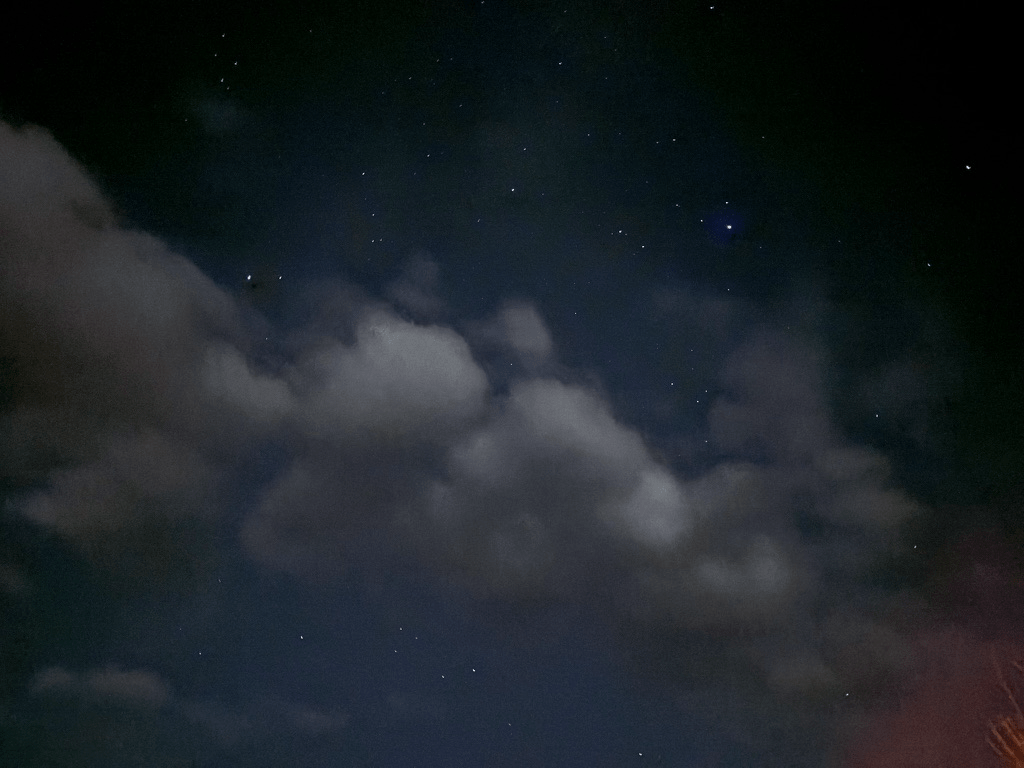
Billions of galaxies of billions of stars only slightly obscured by magnificent clouds…

By now you have noticed I try to bracket the beginning and ending of each day with a sunrise and sunset photo respectively. I would be remiss to not suggest a reasoned explanation of the cosmology to which I have such regard and awe.  This is not something I do just on these motorcycle rambles. It’s a bit of my “spirituality” I try to practice regularly having abandoned, And now I lay me down to sleep…

I offer you Dr. Sagan and invite you to enjoy a moment of respect to stand at the edge of forever… You must understand, I am forever an educator and though retired from the occupation, I continue to cultivate an enlightened understanding of the very phenomenon that produces my regard and awe to which I retire at the end of the day and embrace each new day.

CARL SAGAN COSMOS Episode 10 The Edge Of Forever

Day 7 / Saturday, Sept 13 – Bridgeport → Home

Bridgeport –> Home ~152 miles over Sonora Pass, 168 miles over Tioga Pass

There’s not much that’s complicated about our homeward leg of this seven day Ruby Mountain Ramble. We did need to wait for the sun to rise and dry things out.

Imagine awakening to a fog bank.  Crawling out of our tents, we were met with wetness from within (condensation) and wetness from without, (drizzle).  But the ever-ready JetBoil mochas took away the chill warming within as well as without.

Fortunately, though fall was in the air, the sunrise went to work drying out our gear as we packed for our last leg of the Ruby Mountains Ramble, homeward bound. 

As we were breaking camp, a conversation with a dad we’d briefly encountered the afternoon before, who had that faraway look in his eyes as we shared our journey, turned into what has become a frequent discussion of motorcycles past and present with new acquaintances.  He was with his family of five children, wife, and dog who late in the day before, expertly backed their gigantic 38 foot trailer behind his heavy duty pickup into a narrow RV space.  He saw that Pete and I watched intently, feeling pressure, but performing like Mac Jones in Brock Purdy’s absence in three divisional wins… (I’m composing this some three weeks after the actual ramble).  If that makes no sense, we awarded him straight 10’s.

He shared that he too had motorcycles, an enduro and a Harley, that were gathering dust as soccer, toddlers, and a soon to be high schooler preempted dirt and wind therapy sessions on two wheels.  For now it was 10 wheels and RV park therapy with his family.  We were both impressed and expressed our admiration for his familial commitment.

We bid adieu to our campground neighbors, Bob and Marge across from us who got into an argument the day before as Bob tried well in excess of the number of tries to back his truck and trailer into their site for his fragile pride.  There was the cigarette smoking veteran who shared his experience on baggers across the basin and range of Nevada, along with our committed dad and his tribe, as well as our camphosts who were very attentive to the Paradise Shores infrastructure during our brief stay.
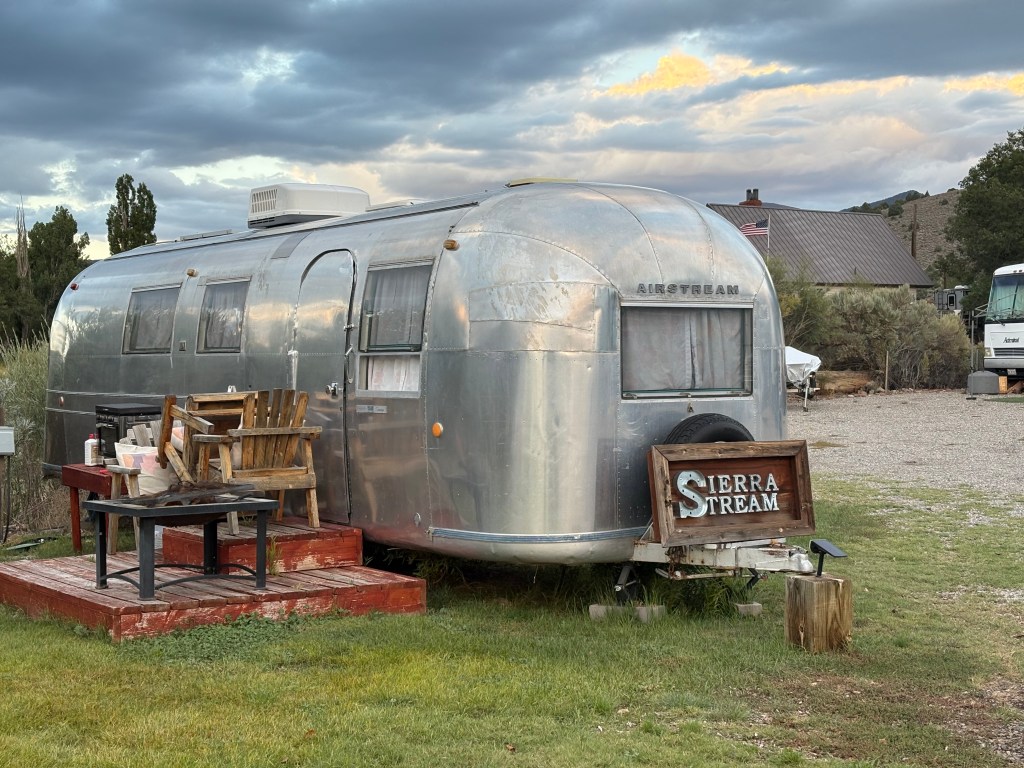

…and to the family of quail who resided along the shore of the Bridgeport Reservoir. Just how many quail qualify as a covey?

After a quick gas station refuel and breakfast of tomato juice for me and a cup of joe and deli sandwich for Pete, we decided to take CA-108 back over Sonora Pass.  Overdressed for the ride over the pass, we stopped briefly at Kennedy Meadows to de-layer before arriving back home a few hours later, all the better for our mild ride or epic adventure.  You can decide for yourself. 

Born to be mild…

Epilogue

1,444 miles on the trip meter.  Another ramble that I hope my sometimes rambling narrative provides inspiration to get out and do it because as Stephen Bruton sings in World’s Fading Man,

Has anybody here

can you find my shadow

Like a slow burning candle

I thought it would last

Seems like I’ve lost

What was too hard to handle

Now there’s less of my future and more of my past

Just ‘cause you can’t recall

don’t mean it didn’t happen

Just ‘cause you can remember

don’t mean that it did

And while you’re at it, Take it Easy

2025 Chasing the Perseids

Sisyphus and his Associate are on the road to the Ruby’s in NW Nevada

An August Ramble in the Sierra

Where, How Far, and When?

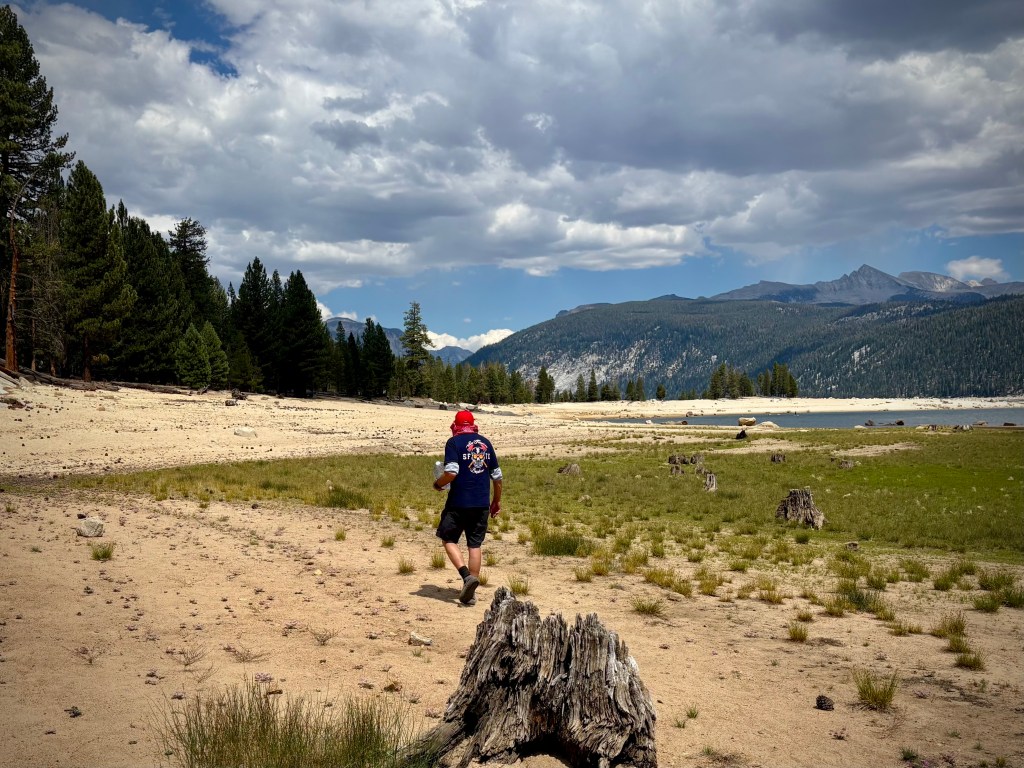
Lake Thomas A. Edison and the Mono Creek watershed

A recurring theme of Sisyphusdw7.com is place, distance, and time.  There’s meeting people, too. Concerning the long form of this blog, I’m no Peter Egan.  I admire Peter Egan as I admire John Steinbeck and Edward Abby.  There are many others, (Wallace Stegner, Gerald Haslam, John McPhee, Bill Bryson) all of whom write of their observations of place, in time, often in travel, some fictionalized, that inspires this modest fellow’s aspirations for travel observation in my time. 

While the clock and calendar cannot be denied, let’s see what Sisyphus is obsessed with these days now that there’s less of his future and more of his past.  

What Determines Where and When We Ride?

To move from one location to another, exposed as one is on a motorcycle, consideration of conditions within a region, the climate and the impact of geography determines where and when we ride.  Particularly over the reach of our explorations in the Western States, the majority of which involve camping on these exploits I have reported in Sisyphusdw7.com

Elements such as weather and climate, elevation and terrain, population and public and private land use, state boundaries and their individual laws and civic codes, and road surface conditions all combine to determine the routes we take.  We find ourselves rambling through regions as our best guess to where, how far, and when these elements will combine to yield the best results for a memorable ramble.  

How Far?

When considering how far we can travel, time is of course a huge determinant in the distance we can reasonably cover notwithstanding all of the other variables.  Using a somewhat knotty calculation, I arrive at an itinerary that is far from certain given any of those variables noted above that one might encounter.  Our motto:  Start slow and then taper…

Of the three rides planned for 2025, two are at present, complete.  The spring ride to Three State Parks, over five days in perfect weather along the central coast over good roads, with modest daily mileage, combined for a memorable ramble. 

The most recent summer jaunt, the August Ramble in the Sierra, three days in the Sierra over rough backroads was, despite a challenging sand crossing on Kaiser Pass Road, aces. 

More about that ride follows.  

A longer, seven day Ramble in the Ruby’s slated for early/mid September in Northeastern Nevada is too far out at at this time I’m writing to have reliable weather forecasts, but the unreliable 15 day forecasts are looking good.  So, it will be whether weather will determine where, how far, and because we’ve established when to roll, how this ramble in the Ruby’s will pan out.  

For the longest time, we wanted to head north and east to explore the basin and range of Northern Nevada, perhaps Oregon, Idaho, Montana and Wyoming.  

From your middle school math and science class, you may recall that Time = Distance / Speed. As the speed grows the time needed to travel a given distance will decrease and vice versa.  Come on Sisyphus, that’s intuitive, why all of the equation stuff? I taught middle school kids for 24 of my 37 years as a teacher.  I tried my best to impart the beauty of something that we take for granted, like time and motion, stripping it of the multitude of meanings to a simple formula that when applying a few data points, can lead to an irrefutable conclusion.  You know, like “there’s less of his future and more of his past”.  

 Remember, one of the variables listed above was individual state laws and civic codes and speed is governed in California and generally enforced.  In other words, enforced speed limits increase the time and reduce the speed and distance one can travel.  Not to mention the vagaries of weather, influences of terrain, road surfaces, and availability of food, fuel, and lodging whether camping or moteling

Whether the Weather

Long, lonesome, isolated desert roads are wonderful.  Unless it’s 100+ degrees or a state trooper decides you’ve exceeded the speed limit.  So, to travel at least near legal speeds, you really prefer cooler weather.

Crossing deserts is out at least until things cool down a bit.  Hopefully our September 7th departure for the Ruby’s will see a heat regime that’s settling in over Nevada and much of the southwest, abate, at least a bit. That’s about as far as we can allocate the time to make the distance with a nod to how weather variables get a bit more active as fall approaches.  Neither Sisyphus nor his associate are big fans of riding in hot, dry, and windy, or in cold, wet, and windy conditions.  

We also have a life off the motos and that life defines the elasticity of the calendar.  The week of September 7 through 13 works.  We can’t make Montana or Wyoming, but Northeastern Nevada ain’t bad.

From the itinerary I prepared the week before we departed on our most recent ramble to Lake Thomas A. Edison and the narrative describing the events:

Chasing the Perseids, An August 2025 Ramble in Sierra

Day 1 – Merced to Lake Thomas Edison

Merced to Lake Edison ~141 miles

  • CA-140 to Santa Fe Ave, Ave 26, and Rd 29.
  • Rd 603, Rd.400 to CA-145 E, and Rd 206 to Friant.
  • Millerton Rd, Auberry Rd to junction with CA-168 in Prather.
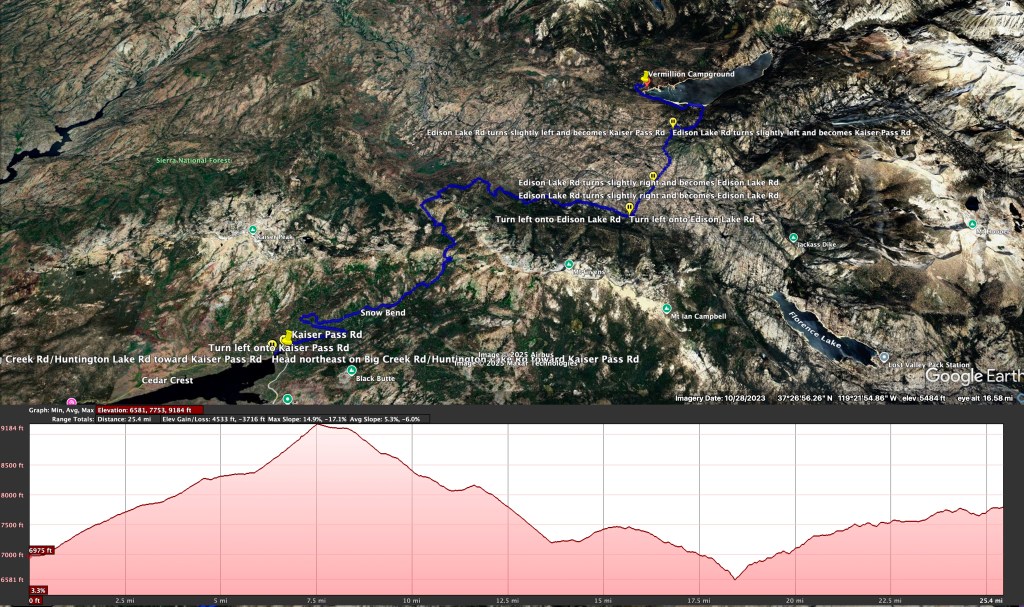
  • CA-168, Kaiser Pass Rd, Edison Lake Rd to Vermillion Campground
Elevation profile: Huntington Lake (left), Kaiser Pass, Mono Creek, Edison Lake

At 7:00 AM on Tuesday, August 12 we met at the Chevron station on Yosemite Ave. and G St. The temperature was a comfortable 60ish degrees.  In between the outset of the ramble and our destination the temps ranged from 65 to around 100 degrees. 

After a stop in Friant we enjoyed some cooling, in the shade. Exposed on CA-168, we reached some relief as elevation above Shaver Lake saw a twenty degree cooling.   At Huntington Lake (6,665 ft), it was in the mid 80’s in the sun, but shade provided another 15 degrees 0f relief. Once on the final leg to Edison Lake, intermittent shade from the forest canopy alongside the road made for comfortable, yet slow progress on what would be a goat path to Edison.  

By the time we reached even cooler temps, we had made it to Lake Thomas A. Edison, set up camp and began resting, rehydrating, and reflecting.  In other words, it was mid/late afternoon.  The breeze in the shade was delicious. The exposure to the sun, unrelenting until the sun began to set.

Remember T = D / S (Time equals Distance divided by Speed)?  Mostly obeying the speed limits along the route from our home that morning to Huntington Lake, where one encounters Edison Lake Rd, aka goat path, was a distance of approximately 116 miles taking roughly 2.5 hours, or 2.5 = 116 / x,  or an average speed of 46.4 mph (6th grade algebra). It seemed that there was a lot more rolling at 65 mph+, but speed limited zones and stopping to stretch and have a snack and some fluids will affect the average speed significantly.  Something Google Maps doesn’t take into account when calculating arrival times.

The road to Edison Lake took roughly (literally a rough road) 1 hr. and 45 minutes to travel approximately 23 miles or, 1.78 = 23 / x, an average speed of 8 mph.  Enough mathing already!

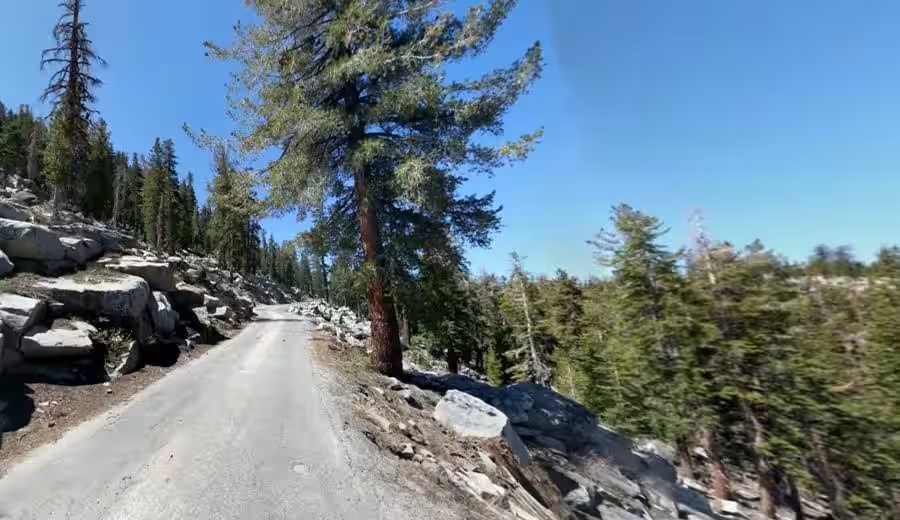
This is the 1½ sized lane

Kaiser Pass Rd is a single lane sometimes paved road to Edison Lake from Huntington Lake.  The road hits a steep 12% gradient and feels like a goat path for most of its length: 1½ lanes at its widest, winding, exposed, and riddled with potholes and large missing segments of pavement. The road was built in the early 1920’s as part of the Southern California Edison’s Big Creek Hydroelectric Project, and opened up access to the remote High Sierra. After two years of building, the road was completed in 1922, it enabled vehicles to reach deep into the mountains, connecting critical water resources and creating new recreational opportunities.

At the Pass

The first 5 miles are over a relatively smooth two-lane road, but the final 12 miles narrows to a curvy, paved single lane limited to as slow as is possible on the pegs to keep a motorcycle erect to a max of 20 MPH.

Three sections have dramatic cliff exposure. The decaying sections are pot-holed and to describe as rough is charitable.  There are sections where the road is covered by sand washed down from surrounding terrain.  There are other sections that have recently been repaved.  How the decision to repave was made is a mystery given the condition of the un-repaved sections.

Once past the Southern California Edison Portal Forebay and USFS High Sierra Ranger Station, the road narrows further and has many tight switchbacks with steep elevation gains; there are several blind curves carved out of the exposed granite with precipitous drop-offs opposite granite walls. 

One of the less perilous single lane stretches of Kaiser Pass Rd

We met several vehicles, head-on, coming down as we were going up.  Because we were a bit more nimble than the four wheeled vehicles, the majority of the cars and trucks we encountered were cautious and courteous, allowing us to pass safely. 

There were however several folks who seemed to have no concept of yielding to allow our bikes to proceed.  This, was you might imagine, stressful.  I took to laying on the horn as we approached the blind switchbacks hoping that the speed and windows of approaching vehicles were rolled down and sound systems were turned down listening to Metallica by spirited motorists in off-road behemoths.  

A First Encounter with the Gauntlett

Kaiser Pass Road is primarily paved, but there are some unpaved sections, especially as you approach the summit and beyond. The road can become rougher and narrower, particularly after the main summit area, where it transitions into a smaller track leading to Mono Hot Springs.

The bridge across Mono Creek just up from the Mono Hot Springs

After passing several sandy sections of road beyond Mono Hot Springs, there was a slight descent on a stretch of mysterious, recently repaved surface.  At the base of the descent, there was a section of about 30 feet of glacial sand washed over the road in what was likely deposited by a seasonal creek that flowed across the road.  Other sandy sections proceeding this one were easily negotiated as the depth of the sand was an inch or so atop the pavement.

In the lead,  I entered the sand cautiously, unaware of how deep it was.  It was not long before I lost the front end of the bike and nearly dropped it.  There were two tracks with berms in the middle and on either side. I heard Pete in the coms shouting, “I’m down,” behind me just as he entered the sand. 

Since I was supporting some 600+ pounds of motorcycle and gear with my left leg, the bike at a 45 degree tilt, after asking Pete if he was okay, I implored him to make his way as quickly as possible to assist me righting the Moto Guzzi as my boot was slipping in the unstable sand.  I didn’t want to drop the Guzzi. 

Pete climbed from beneath his V-Strom and rushed over to me. We were able to get the bike upright and I made my way out of the sand, carefully clutching and reeving the Guzzi with Pete pushing me to stable pavement.  I then threw down the kickstand to help Pete with his V-Strom that was lying on its side.  About that time a good samaritan who earlier had pulled over allowing us to pass, stopped his car and helped us push Pete’s bike as he cautiously throttled, however, spinning the rear wheel in the soft grit.  Grit that made its way to my face.

As usual, a malfunctioning GoPro I thought was capturing this leg of the ride wasn’t recording…

I found this short video on YouTube.  It will give you an idea of what a portion of the Kaiser Pass Road looks like.  Shout out to Alexander Avtanski for sharing.

Kaiser Pass Road by Alexander Avtanski

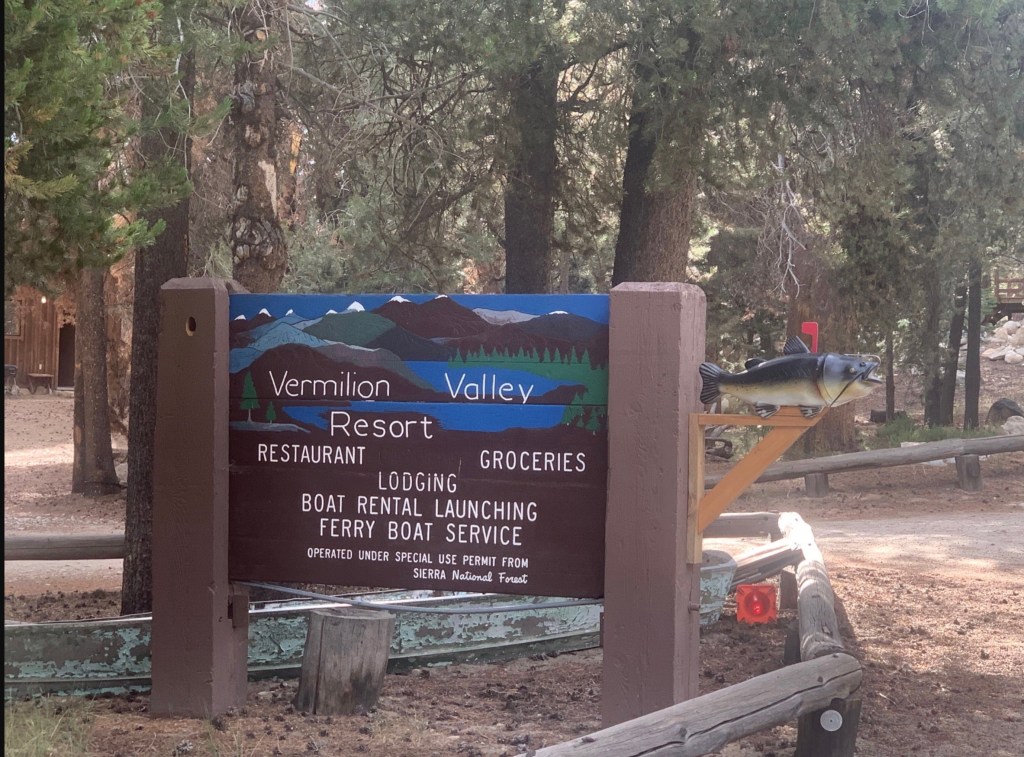
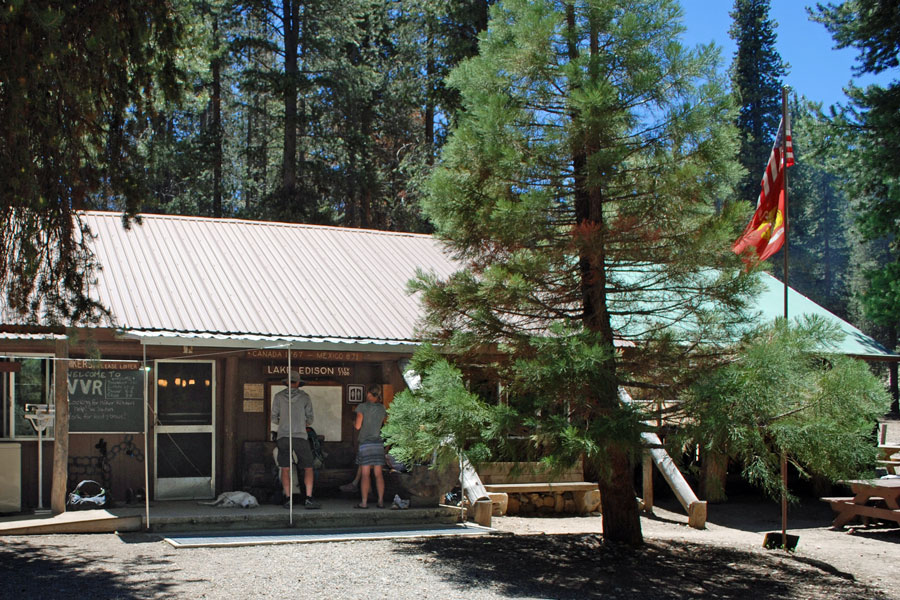
The Vermillion Valley Resort

Nice Mailbox

Arriving at the Vermillion Campground just above the VVR we found it was sparsely populated.  Our campsite, selected over the interwebs, was like all of the other campsites, except Site 25 was completely exposed to the afternoon sun.  Ideal for Perseid meteor watching, but a tad warm for setting up camp.

There was a small parking area, a table, a fire ring, a steel bear box, and a couple flat spots to pitch tents.   Despite few occupied sites throughout the campground, there were tags indicating reservations of up to a two week span including and following our two night reservation.  

Home Sweet Homelessness

We thought about poaching a shady campsite that was reserved for a period after we would be leaving.  So we hiked back to the Camp Host, who was nowhere to be found, to share our intent.  Deciding to not cause any confusion for the host as we would vacate our site spending the next day riding back to Mono Hot Springs then to Florence Lake to explore, we kept Site 25.  

The Beasts What Got Us There

Since we were hunkered down for the afternoon we decided to stroll back to the Vermillion Resort to rehydrate, relax, and reflect on the day’s ups-and-downs and check out the dinner menu and beverage cooler.

SysiphusDW7 strolling along the shore of Lake Thomas A. Edison

From the  National Geographic Sierra Nevada Geotourism page:

For those hungry hikers and campers, we [Vermillion Valley Resort] offer fresh baked pies and wholesome hearty meals at the restaurant which is open to both guests and the general public. The VVR Camp Store offers basic grocery supplies, hiker resupply foods and supplies, ice and fishing gear, t-shirts, maps & books. And, most importantly, we offer one of the largest selections of micro-brews and locally-brewed beers in the Sierra Nevada.

They had us on “largest selections.”

Dinner that night was a choice of spaghetti with a meat marinara or a tofu salad. There were micro and locally-brewed beers in this decidedly remote spot in the Sierra National Forest, miles from the equally limited services at Mono Hot Springs. Though the “largest selections” part was a bit of an exaggeration. We opted for the bisguetti.

Huntington Lake or Shaver Lake would have a greater variety of choices for mangia and beve, but the laws of supply and demand provided food and beverage at 7,600 feet at a cost one might associate with a Giant’s game at Oracle Park. The quality of the dinner was surprisingly satisfying.

The Vermillion Valley Store

The free backpacker’s campground in front of the store was chock full of hikers who were preparing to hike out, those who dropped off of the Muir or Pacific Crest trails to resupply, or posers pretending to be hikers for the free camp space, many of whom shared this night’s fare.

Lake Thomas A. Edison

View into the Mono /recesses

The Vermillion Valley Resort (VVR) is at the trailhead to the Mono Recesses and is a resupply site for hikers on the Pacific Crest Trail.  Lake Thomas A Edison (also known as Edison Lake) is a reservoir in the Sierra National Forest and in Fresno County, California.

The reservoir’s waters are impounded by Vermilion Valley Dam, which was completed in 1954, 71 years ago, (No need to subtract, I know this as I was born in 1954).

The reservoir and dam are part of the Big Creek Hydroelectric Project. The project is operated by Southern California Edison.  The reservoir discharges into Mono Creek, a tributary of the South Fork San Joaquin River. However, some of its water is diverted to Huntington Lake by means of the Ward Tunnel that follows a section of the Edison Lake Road. 

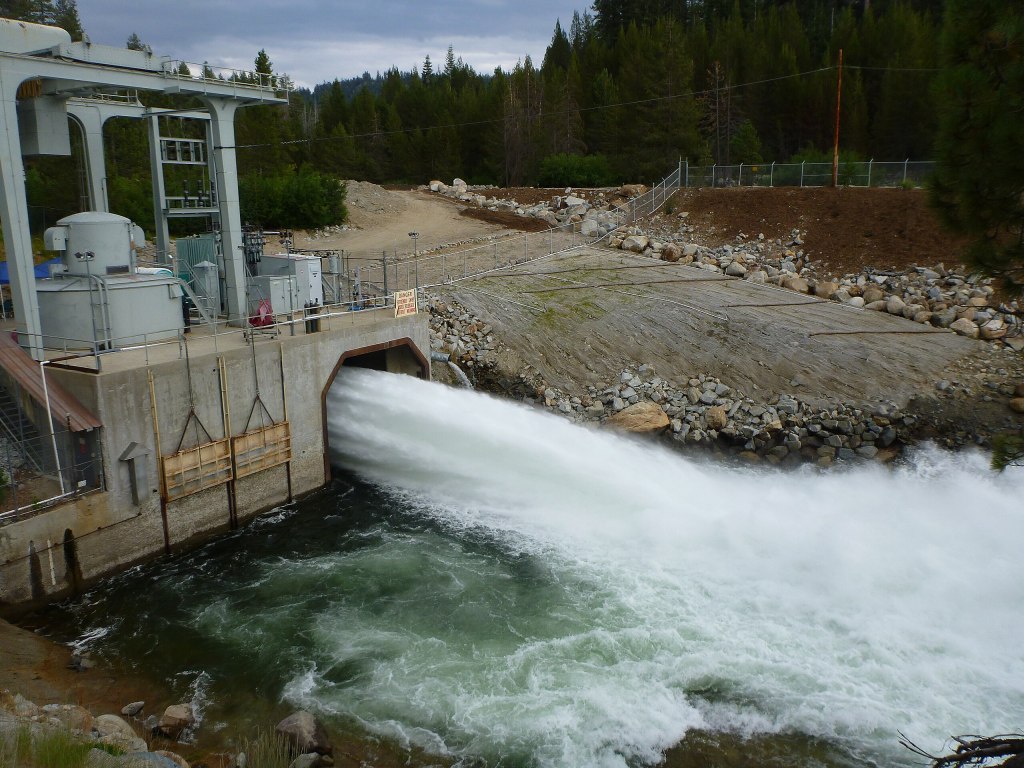
The Ward Tunnel power plant discharging into Huntington Lake

Today, these facilities include 27 dams, miles of tunnels, and 24 generating units in nine powerhouses with a total installed capacity of more than 1,000 megawatts. Its six major reservoirs have a combined storage capacity of more than 560,000 acre-feet (690,000 dam3).  The waters of the San Joaquin River eventually find their way to the Central Valley to irrigate crops after providing recreation on those six major reservoirs.

Edison Lake from the dam

The lake is three hours away by car from Fresno.  Five hours away by motorcycle from Merced. The road in, CA-168, crosses Kaiser Pass (elevation 9,175 feet) and closes during the winter months.

A separate road off Kaiser Pass Rd forks off to Florence Lake.  The United States Forest Service does not recommend Kaiser Pass Road for buses, large motor homes, or vehicles towing trailers.  We were amazed at how the Mono Hot Springs and Edison Lake infrastructure was hauled up the hill on that narrow path the feds now recommend to avoid.  I guess the railroad that was built into the area and since abandoned made for hauling the really big stuff.

A ferry crosses Lakes Edison and Florence twice a day that may be inactive due to extreme low levels of water providing travel service to/from the trailheads and can be arranged through Vermillion Valley Resort or the Florence Lake Resort when open. 

Florence Lake

Hikers may follow a trail along the north side of the lake for trail access, linking Vermilion Valley Resort with the John Muir Wilderness trailhead and providing access to and from the John Muir Trail and Pacific Crest Trail. I’ve used the ferry service at both lakes on a couple of backpacks.  It was worth it, especially on the return leg.

Chasing the Perseids

Since we were in the high Sierra during the annual peak Perseid meteor shower (See 2024 Perseid Meteor Shower last year’s trip to Bridgeport) we were prepared for a feast of streaking meteors as the skies darkened, at least until the waning crescent moon rose.  It was a comfortable 60ish degrees as the sun began to set.  Clouds that had been building since morning were now reflecting the light filtered by the atmosphere giving everything the alpenglow that is characteristic of sunrises and sunsets in the Sierra.  We were pretty sure it wouldn’t rain and that the clouds would dissipate before prime viewing time.

Clouds but no rain

As temps dipped into the fifties, we did see a few meteors along with many UAP’s (satellites and aircraft as usual) crossing the night sky against the backdrop of the Milky Way.  Since we didn’t have a fire permit, there was no campfire to mesmerize us and after downing the last of our $12/can beverages, we retired with the intent of visiting Florence Lake after breakfast the next day at the Mono Hot Springs

Day 2 –  More Sand and a Change in Plans


We did a quick calculation of our fuel levels as we got underway Wednesday morning given that the closest gas, we assumed, was at Huntington Lake. We assumed, since on the previous day we saw vehicles refueling.  To get to Florence Lake we had to travel 19 miles back up and down the goat path.  To get back to Huntington Lake was another 28 miles of goat path.  Fuel consumption at 10 mph over the undulating terrain was much less than the 45+ mpg we would normally get on flatter terrain.  

Our plan was to have breakfast at the Mono Hot Springs Resort then head down to Huntington Lake for gas, just to be on the safe side.  The restaurant wasn’t open, however, the cook was making breakfast burritos that were available at the Mono Hot Springs Store filled with a modest inventory of snacks, camping, hiking, and fishing supplies and T/sweatshirts.  The store, not the burritos. Oh, and beer.  

I asked the cashier what they did with all of the inventory in the store when winter closed the road and the resorts were emptied.  She said they put non-food items in bins on the highest shelves and any perishable food items were taken down the hill.  Non-perishable items were stored in a metal shipping container.  Apparently flooding and bears are active during the winter months.  Also there is no caretaker who stays for the winter.  The store and restaurant are routinely broken into by hungry bears, like Yogi, in search of pick-e-nick baskets.  

Onward to conquer the Gauntlet!

After a hearty breakfast burrito we began the descent to Huntington for gas.  Once again we were faced with what Pete referred to as “The Gauntlet”, that sandy section of Kaiser Pass Rd we unsuccessfully encountered the day before. 

We decided the best strategy was to slow down to a pace where we would “waddle” through the sand, keeping our feet down, essentially walking the bikes through the sand keeping handlebars straight and with a steady throttle.  

Pete went first successfully making his way across.  I entered and about two thirds of the way through, I crossed from the left wheel track left by four-wheeled vehicles, hitting the center berm and dropped the Guzzi, my right arm tucked into my ribs, as the weight of the bike pressed me into the right wheel track berm.  Though the bike was lighter since I ditched the two side cans, it was nevertheless, OUCH!  

I was immediately reminded of A Moment’s Inattention where in 2022 I broke my right ankle, three ribs, and injured my right shoulder missing the apex of a tight hairpin low speed curve.  Fortunately the sand was much more forgiving than the roadside near Lake Nacimiento and my speed was essentially zero. 

I did feel pain in my ribs, but the adrenaline was flowing and after righting the bike, we made our way to Huntington Lake only to find that the gas pump that was operational the day before when we stopped at the China Peak Landing was shut down.  Our only option was to ride some 26 more miles down to Shaver Lake for gas.  Bummer Batman!

Since it was noonish by the time we made it to Shaver Lake, we topped-off our tanks.  What?  I had two gallons left in my 5.5+ gallon tank even though the fuel indicator on the TFT said I had less than 60 miles left in the tank…  Pete decided to grab slightly less expensive beverages for the evening rest, rehydration, and reflection meteor sighting session to make amends.  

Upon our return to camp the Gauntlet was approached for a third, with even greater caution, time.  I led waddling my bike, step-by-step, straight as an arrow in the right side wheel track, successfully crossing as did Pete who followed.  Too bad it took two failed efforts to figure out the key to deep sand crossings.  

Dinner back at the VVR was chicken parm or a tofu wrap.  The carnivores opted for the parm.  The way dinner worked was when a bell was rung, you scurried to the register to give your name and dinner selection.  Then, after maybe a 20 or so minute wait, the chef would shout your name from the kitchen.  We enjoyed modestly priced Miller High Lifes (Lives?) at $5 each as we patiently waited enjoying the rhythms of the VVR. 

There is an internet hub at the resort with several charging towers and for a fee, starting at $10 dollars for two hours of service.  Needless to say there was nothing on Netflix that either Pete nor I wished not to miss.  Nothing, nor, not?  A triple negative?

After witnessing a finger-into-the-chest, ass-chewing by one of the VVR staff ostensibly over an alleged graffitiing of the rest/shower room by one of the blokes in the interned shed, who needed the contrived drama of a Netflix flick?  We saved $10 staying off-grid, enough for two more Millers, but opted for two Arrogant Bastards.  That put us $12 in the red.  But mom, the magic beans were at least equivalent in value to the cow if not more valuable.

Random sights along the shore of Lake Thomas A. Edison

The meteors and UAP’s were pretty much the same as the night before.  A mom and three-year-old daughter on a Strider bike whose family arrived after dark the night before to an adjacent campsite, were enjoying a little romp around the campground road.

The three year old was fearless as she descended a gentle slope back to their campsite. Mom commented that her fearlessness was likely the result of their neighbor’s young boys who had built a modest BMX course in there front yard back home. Apparently the little girl joins them on her strider attacking the jumps with gusto. I speculated to mom that a moto may be in her little one’s future. Mom cringed…

At around the time the generator at the VVR shut down at 10:00 pm, we decided to retire since tomorrow we would break camp and return home with the prospect of one more crossing of the Gauntlet to shape our dreams. 

Nite-nite

Day 3 – The Myth of the Gauntlet

Florence Lake Home ~156 miles

  • Via Ca-168 to Auberry and Powerhouse Rd., Rd-222, to Northfork Rd., to Rd-221, to Teafords Saddle Rd., to Crane Valley Rd., to Rd-226 to Oakhurst.
  • CA-4-/49 to Mariposa, CA-140 home.

After a decent night’s sleep except for some rib irritation, breaking camp proceeded, fueled by JetBoiled cafe mochas;  Roughing it as it’s known in the post Mark Twain West.  

We toyed with the idea of going to Florence Lake (El 7,300 ft) but the Florence Lake Resort, even more spartan than the VVR, was closed.  We figured that the road to Florence Lake was likely less maintained than the road to Edison Lake and decided to skip the trip, opting to make our way down the hill before the afternoon heat would make the final 95 mile slog home unbearable.  

When we arrived in Shaver Lake, we had a bite to eat at The Hungry Hut.  A buuuurger for Pete and a BLT for me.  Tasty.  

The ride from Shaver on CA-168 was thrilling since riding at or near the speed limit was different, in fact exhilarating, from the limit to speed imposed by the goat paths we’d been on for a couple of days.

 After a quick stop in Friant to enjoy a beverage and soak our evaporative cooling vests, we tackled the dry and dusty foothills and flats of the valley.  The thing about a cooling vest is that while it does serve to provide the sensation of cooling, it is much like the swamp coolers of my youth.  The cooling is tempered by the clammy humidity the vest generates under the mesh jacket.  But it beats the feeling of being in an air-fryer.  

When I arrived home and pulled into my driveway, the temperature gauge on the Guzzi indicated 99 degrees.  And just like that, a warm greeting from SoBe and a cool shower buttoned-up another memorable ramble by SisyphusDW7 and his Associate, Pete.

Cheers!

Coming up on Sisyphusdw7.com, The Ramble in the Ruby’s

2024 Seeking Refuge on a Fall Ramble to Utah

The journey details motorcycle travel in California and the Southwest, highlighting seasonal weather patterns, cultural observations, and personal reflections on commercialization versus natural beauty during a scenic adventure to Zion National Park.

Reconciling expectations with reality

With Abbey’s admonition to seek refuge in the desert, it seems to me that best time to travel by motorcycle on secondary “Butler G1-3” or “Lost Highway” roads in arid California and the Western US depends on the direction you’re heading. We live in California’s Central Valley in Merced which has a fairly predictable climate – hot summers, temperate and windy springs, warm dusty falls, and cold, sometimes foggy, wet winters. Though the weather can be unpredictable, weather forecasts are quite accurate, with NOAA reporting a 7-day forecast is 80% accurate and a 5-day forecast is 90% accurate.

If you’re traveling south towards the Mojave Desert, the winter, early spring, or late fall weather is generally more appealing keeping in mind that this region experienced record-breaking 100+ degree days during the summer of 2024.

Heading east across the central Sierra Nevada passes like Sherman, Tioga, Monitor, Ebbetts, and Carson, are typically closed by the first snows as early as late October and don’t reopen until around Memorial Day in May. That leaves the summer months of June through September as the prime window for snow-free roadways in these areas. However, crossing the western foothills to get to those passes can still be quite hot during the summer months, and once you cross over into the high desert and Basin and Range regions of Nevada, the heat can be uncomfortable as well. Fortunately, the southern Sierra Tehachapi and Walker passes provide access to the Mojave year round whether the weather is hot or cold.

Map of the West and Southwest

Traveling north presents similar weather uncertainties. The summer monsoons that have brought more frequent and severe downpours to the Southwest and Pacific Western states in recent years can impact northern routes as well.
While winter weather is generally cooler the farther inland and north you go, the smaller state highway mountain are more likely to close as resources are prioritized for keeping major interstates open. Mustn’t we forget wintertime atmospheric rivers that can inundate parts of the Pacific Coast and far inland. For northern trips, the best bet is generally to travel in the early summer, before the peak heat of July and August sets in across the region.

Sierra Mountain Passes Map

Regardless of the time of year, it can be tricky to pick the “perfect” 10-day or longer window to ramble the region on a motorcycle. But with confidence in the 7-day forecasts, you can plan accordingly. That’s how you chose your 2024 Seeking Refuge on a Fall Ramble to Utah, – trusting the weather predictions to guide your route and timing.

Off to Mukuntuweap 

Photo: NPS/Jason Burton sort of looks like the Paiute shrine of the half peace sign 
with the ectopic middle digit just to the right

After finalizing our travel plans for a late October ramble, Pete, Sisyphus’s Chief Associate, and I settled on a south-easterly route – heading over Tioga Pass, down the Eastern Sierra, across the Mojave to southwestern Arizona, then north to southern Utah and back west through Death Valley. Our destination for this trip: Zion National Park.

Zion, as it’s known today, was originally called “Mukuntuweap” by the local Paiute people, meaning “straight canyon.” This name was later co-opted by Mormon pioneers who settled the area, just as the Mariposa Battalion had appropriated the name “Yosemite” a century earlier based on the original name given the valley by its Southern Miwok inhabitants. While “Yosemite” at least bears some resemblance to the native “Yos.s.e’meti,” the transition from “Mukuntuweap” to “Zion” feels like a blatant act of cultural erasure. It’s a sobering reminder of how Manifest Destiny has stamped its mark across the western landscape.

For Pete and I, seeking “sanctuary” or “refuge” in Utah seemed a reasonable goal, unlike and with respect to, the preceding generations of indigenous peoples who were displaced from these lands. With confidence in the 7-day weather forecasts, we felt we could time our journey to maximize the chances of favorable conditions. Despite the troubling origins of the name “Zion,” the park remains a place of spectacular natural beauty that has drawn visitors for generations, and we looked forward to experiencing its grandeur and serenity once again. 

 Well, as we found the grandeur, grand, serenity was a bit more problematic.

Day 1, October 22, 2024 – Merced to Red Rock Canyon State Park

Ready to roll with the awkwardly obligatory send-off photos

Merced to Red Rock Canyon State Park

No longer requiring a reservation to cross the Sierra Nevada via Tioga Pass (CA-120), we set off from our usual starting point, the Chevron station on G St. and Yosemite Pkwy in Merced. The commuters heading west on CA-140 left the eastbound lanes clear until we descended into the Merced River canyon, where Yosemite-bound commuters flew past us on the brief broken yellow straightaways to which they’ve grown accustomed to passing the more leisurely traveler.

Once we entered Yosemite National Park, making our way up to Tuolumne Meadows was a generally tranquil, unhurried experience. Crossing Tioga Pass itself was pleasant, though a bit chilly. Fortunately, the traffic was not as bad as it can be, reduced to a post-Labor Day crawl that made the descent into Lee Vining a civil affair under multiple layers of warmth and heated grips.

The rip down US-395 at 75ish mph was brisk but not so fast that the landscape became a blur. We stopped in Lone Pine for a late lunch (or “linner”) at the Bonanza Mexican Restaurant, then procured our “3-R” beverages (rehydration, recovery, and refreshment) across the street at the Lone Pine Market, since our intended campsite for the night was rather remote.  A 353 mile day and we were home for the night.

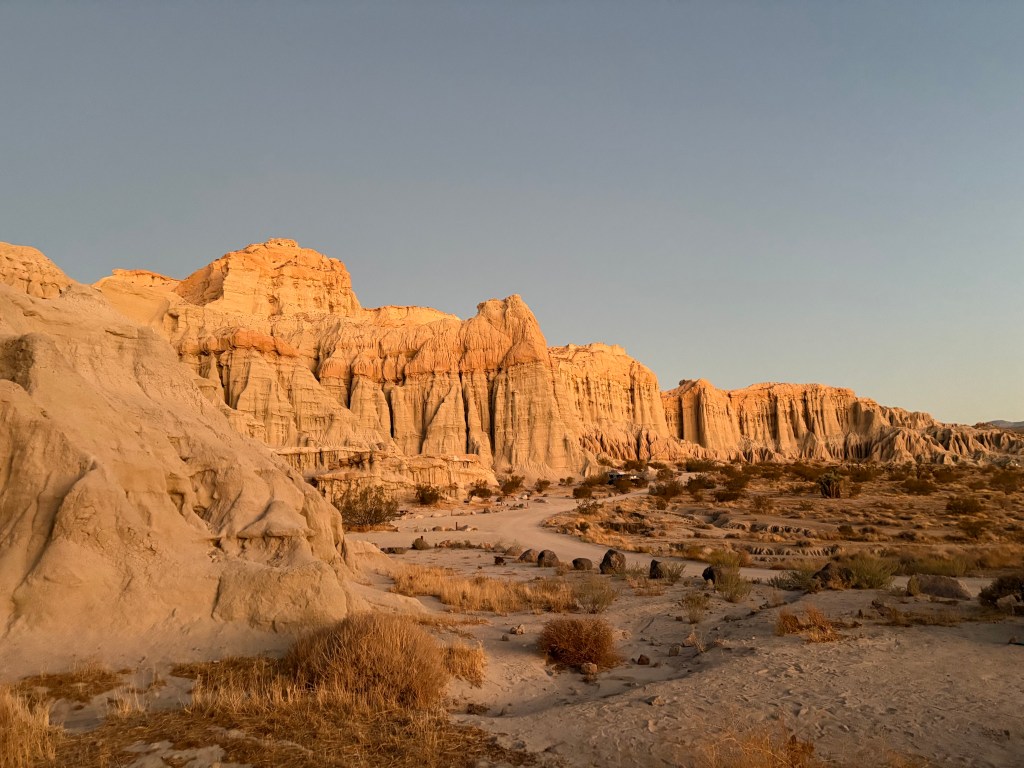
Tuesday afternoon…

Tuesday evening…

Ghostly hoodoos and the summer triangle vertices of Altair, Deneb, and Vega, each of which is the brightest star of its constellation (Aquila, Cygnus, and Lyra, respectively)

Wednesday morning…

Day 2, October 23, 2024 – Red Rock Canyon State Park to Parker, Arizona

Red Rock Canyon State Park to Parker

When planning our route, there’s always room for a bit of improvisation (hint: foreshadowing). Given that my riding partner Pete had traveled through the area earlier in the spring, we opted to avoid the slog down US-395 through the ever expanding exurb of Adelanto and instead made our way to Joshua Tree, by way of Barstow and CA-247 through Lucerne and Yucca Valleys, for lunch. Though longer than the more customary route on US-395, the Old Woman Springs Rd, proved to be a wise decision as it set us up for what would be our warmest day yet, crossing the Mojave on CA-62 and entering the sagebrush and saguaro of the Sonoran Desert en route to Parker, Arizona on a 298 mile day.

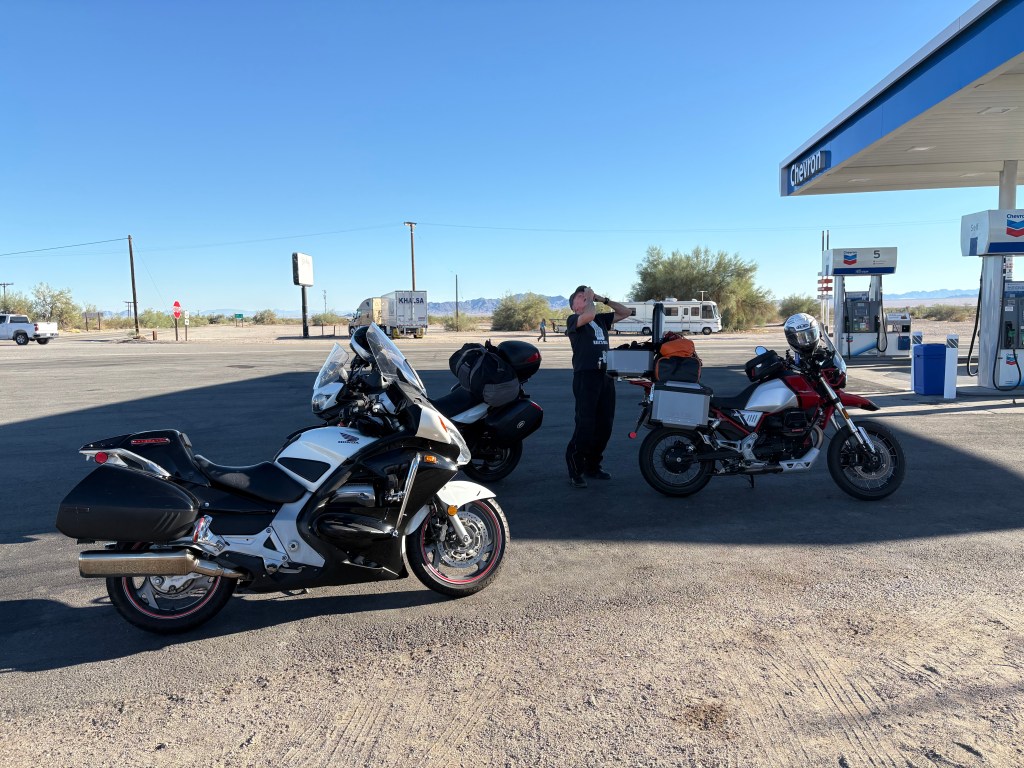
East of Twentynine Palms, we found ourselves on what is best described as a lonesome desert road. At the intersection of CA-62 and US-95 at Vidal Junction, we stopped for some “nalgas relief” (Spanish for “ass relief”) and a refreshing agua fria. There, we met a friendly woman trucker hauling produce from Fresno eastward who commented, having witnessed our pained expressions as we dismounted our motos, that our sore backsides were likely just as weary as hers. I imagine her air-conditioned cab compensated of any nalgas disorders…

Dry eyes and weary nalgas, at least there was shade

The remainder of the CA-62 stretch from Vidal Junction to Parker, Arizona, in 95-degree heat, did little to relieve our “nalgas,” now feeling worse for wear. But as soon as we crossed the Colorado River, we knew we had entered at least a new time zone – both literally and figuratively.

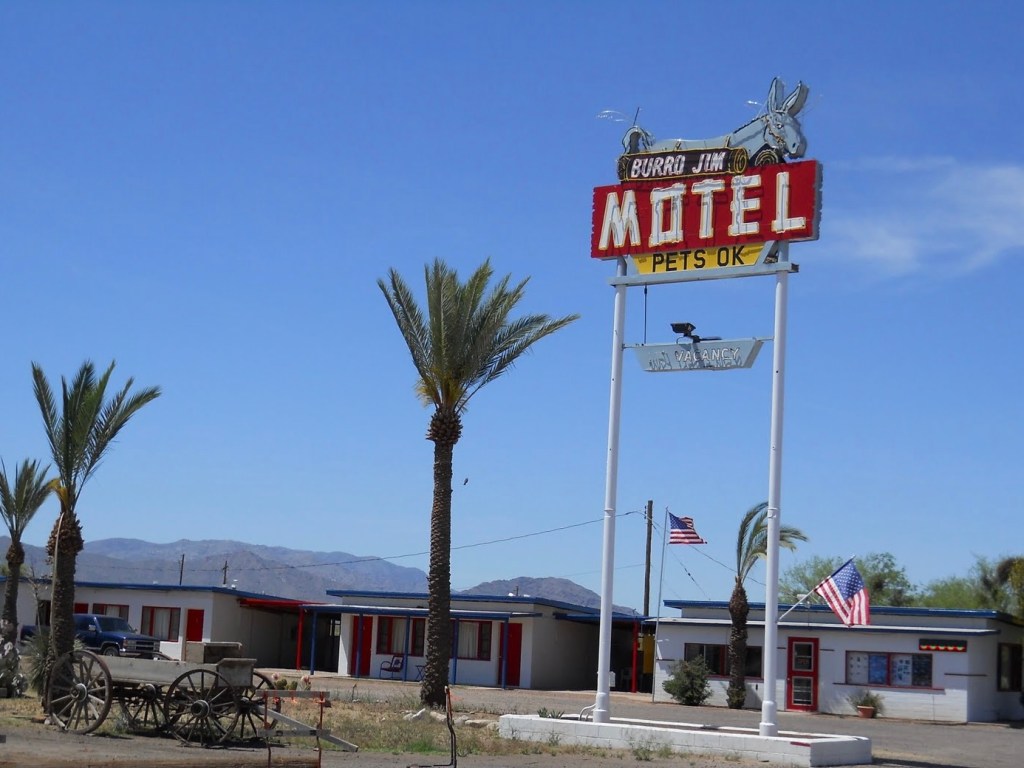
Finding the right accommodations is always an adventure on our moto tours. While I had previously stayed at the venerable Burro Jim Motel back in 1996. Burro Jim was another 84 miles down the road and so since it’s generally not advisable to ride a motorcycle through the desert in near 100 degree heat for nearly 400 miles, instead, we opted for the Budget Inn in the heart of Parker. In hindsight, I should have checked my old bicycle trip itinerary, as the Kofa Inn may have been the better choice. Alas, the Budget Inn, while functional, definitely lacked the neon “colorful funkiness” of the Kofa, it has fared better than the Burro Jim.

After a recommendation by our friendly host we enjoyed another satisfying meal at the Tierra Caliente Meat Market followed by an excursion to the Terrible Herbst Convenience Store

Our camera shy host and Pete, resting motos, and poolside relaxation, rehydrattion, and reflection in Parker, AZ

We exchanged pleasantries with a fellow who had his ski boat engine apart in the motel parking lot who assured us the boat would be ready for the weekend on the Colorado River.  We then retreated poolside, as close to the Colorado we would get that evening, at the motel for some much-needed relaxation, rehydration, and reflection on the day’s journey.

Day 3, October 24, 2024 – Parker to Aguila and Camp Verde, AZ

Parker to Camp Verde

As noted, back in 1996 I was part of a group that rode bicycles across Arizona. The first day of that journey took us from Parker to Aguila, with a planned stay at the aforementioned Burro Jim Motel. The riding itinerary described the terrain as “flat and fast with some gentle rolling sections – a scorching paceline.” “Scorching” as the average high temperature in Parker that August of the ride was a blistering 106.7°F.

Wanting to avoid that same searing heat, Pete and I departed Parker early on this October morning. Our first stop was in Aguila, AZ for breakfast. As I reminisced, our 1996 ride had coincided with the famous Race Across America (RAAM) ultra-cycling event. Upon awakening early, before sunrise to beat the August heat, we heard music blaring from afar.  We witnessed a slow moving RV approach the motel, its headlights augmented to brilliantly illuminate the road for some distance ahead.  Lo and behold, a solitary cyclist was riding on AZ-60, the RV in support for a competitor riding the RAAM.  None of our crew were aware of the RAAM taking place.In fact, we later managed to “photobomb” the RAAM coverage as we climbed the “extreme” grades on Highways 71 and 89 near Prescott.

The Coyote Cafe and the Burro Jim; It doesn’t look like “all new interiors” are due any time soon…

Fueled by another fine Mexican meal at the Coyote Cafe, we set out for Camp Verde, a journey of some 221 miles. The AZ-72 to US-60 route sliced through the Sonoran Desert, the flat, arid landscape seemingly disappearing into the distant horizon. But as we approached Yarnell, mountains appeared to leap from the otherwise flat terrain. Alas, a few miles north of Congress, AZ we entered the Granite Mountains near where on June 30, 2013, nineteen of the 20 members of the Granite Mountain Hotshots, an elite crew trained to fight wilderness fires, died as they battled a fire outside of Yarnell. The nearby Granite Mountain Hotshots Memorial State Park is dedicated to their sacrifice.  My awareness of this tragedy is in part the result of my two sons who are firefighters.  

To bypass the final “extreme” grades, we took Kirkland Valley and Iron Springs Roads at Kirkland Junction, before rejoining AZ-89A later north of Prescott. This stretch provided some enjoyable twisties, with two, two-up rented Harleys mounted by two couples from Indiana leading the way to a scenic overlook just outside of Jerome.

There’s the Mogollan Rimin the distance just over my left shoulder defining the western edge of the Colorado Plateau

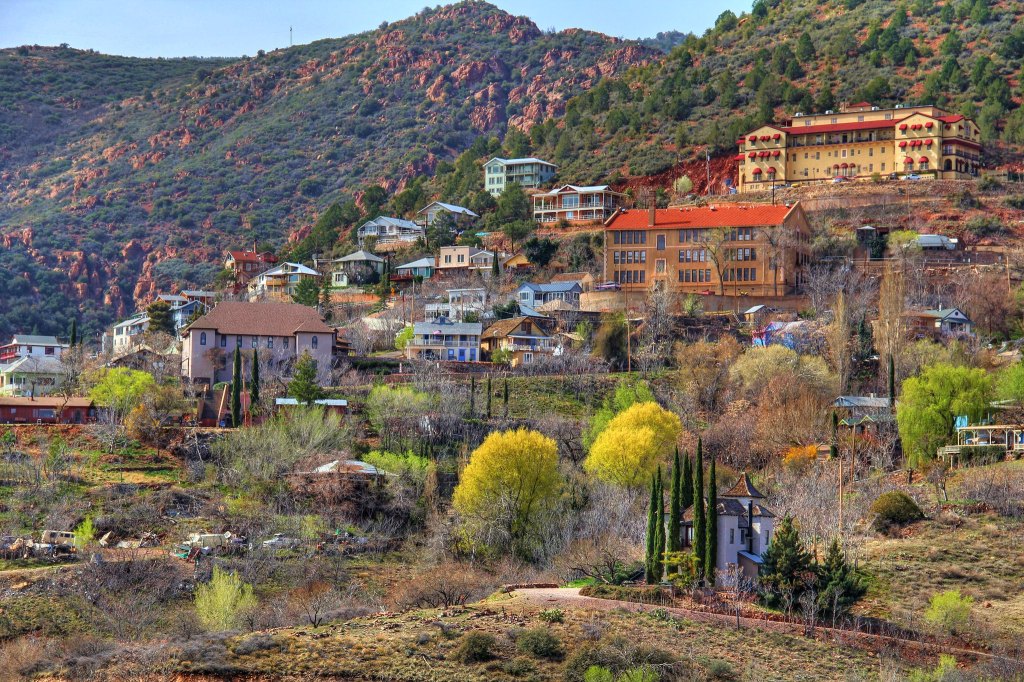
This former mountain mining community of Jerome had earned the nickname “The Wickedest Town in the West” during its heyday, when rich copper ore deposits attracted miners, merchants, madams and more to Yavapai County. Jerome’s colorful history is too rich to chronicle here, but a quick link to the Wikipedia page (Jerome, Arizona) provides interesting insight into how this town evolved from a mineral extraction hub to a modern tourist destination.

With the day’s riding behind us, we rolled into Camp Verde, ready to unwind and recharge for the next leg of our adventure. Our first stop was to scout the USFS Clear Creek Campground – a grassy, flat site with shade provided by tall cottonwoods. Perfect. Despite the slightly creepy gravel road leading in, our gracious campground host recommended we set up right across from his site, next to the clear creek for which the campground was named.

After getting camp established, Pete and I headed into town for provisions and refreshments, returning to enjoy a pleasant evening under the stars, transfixed by a crackling campfire as we relaxed, rehydrated, and reflected on the day’s journey.

Day 4, October 25, Camp Verde to Fredonia, AZ

Camp Verde to Fredonia

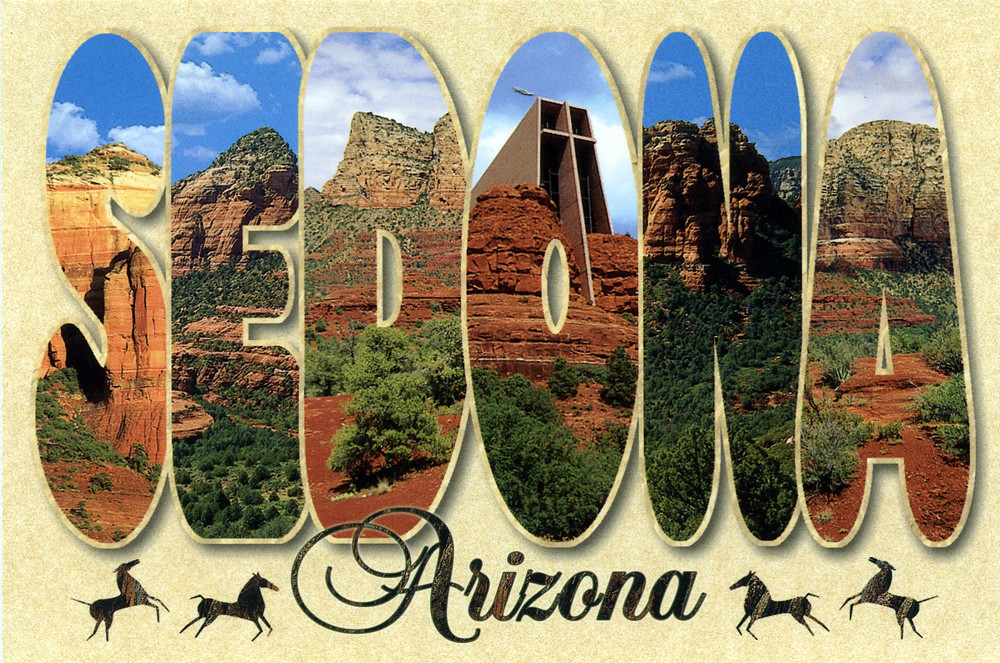
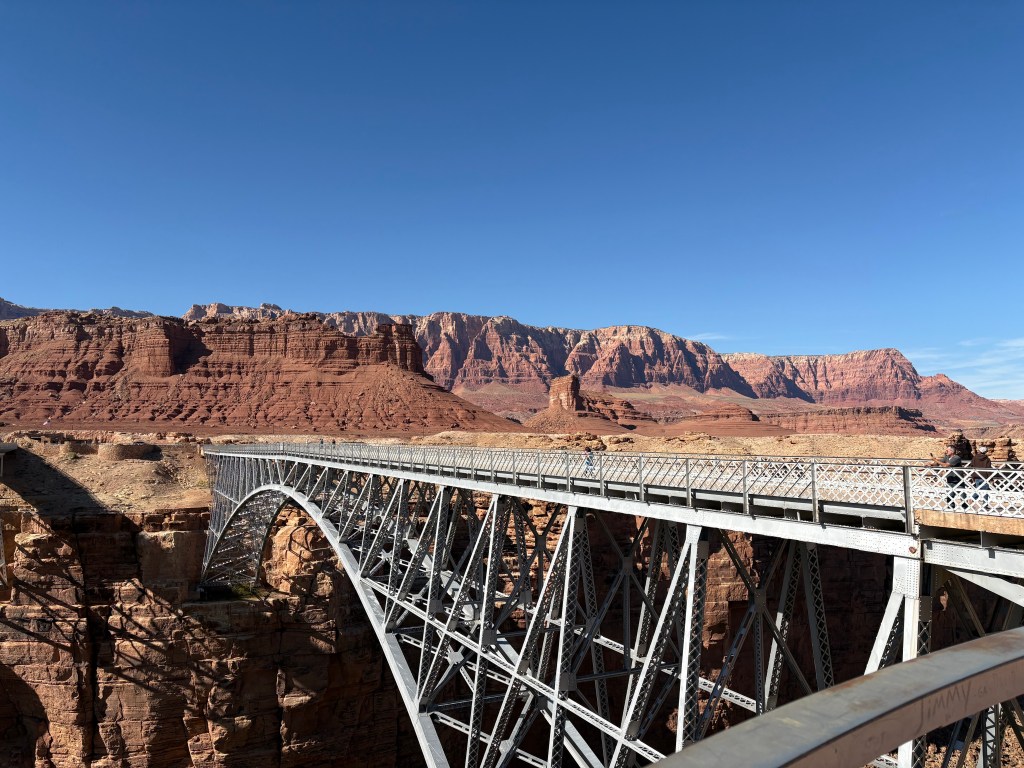
This was to be a modest days ride, a mere 257 miles on US-89 through Sedona and Flagstaff, across the Colorado River for the second time at Marble Canyon, then US-89A past the Vermillion Cliffs, past Jacob Lake, the entrance to the North Rim of the Grand Canyon (see 2021 Fall Moto: Abbey’s Other, On-the-Road Trip, Part 2), to the Grand Canyon Motel in Fredonia, AZ.  

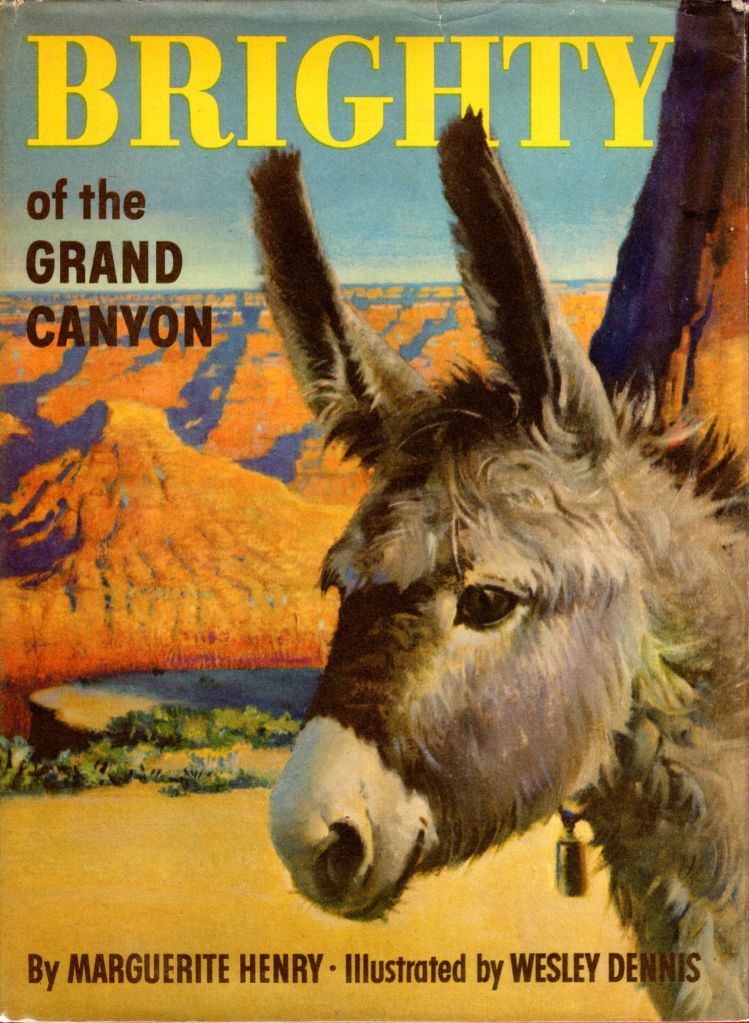
My affinity to this place is lodged in my fond regard for Marguerite Henry’s children’s book, Brighty of the Grand Canyon, that I loved reading aloud to my elementary students. Brighty is a tale about a “lone little burro that roamed the high cliffs of the Grand Canyon and touched the hearts of all who knew him: a grizzled old miner, a big-game hunter, even President Teddy Roosevelt. Named Brighty by the prospector who befriended him, he remained a free spirit at heart. But when a ruthless claim-jumper murdered the prospector, loyal Brighty risked everything to bring the killer to justice.” 

Fredonia was where Uncle Jim retreated for the winter in the story of Brighty’s adventures as the little burro that has become the symbol of a joyous way of life. Some people say that you can even see his spirit roving the canyon on moonlit nights—forever wild, forever free.  

 The Life and Times of Brighty of the Grand Canyon

The landscapes of the Southwest that we traversed undoubtedly possess a grand, serene beauty all their own, yet the relentless exploitation of these places by commerce can sometimes overwhelm and diminish that natural splendor. In our quest for “sanctuary” and “refuge,” we’ve found that the very things we seek – the grandeur and serenity of the untamed wilderness – are often sullied by blatant attempts to “augment the experience” through tourist traps, roadside attractions, and other concessions to consumerism.

No matter how breathtaking the vistas, it’s difficult to fully immerse oneself in the natural wonder when the view is punctuated by kitschy souvenir shops, gaudy neon signs, or other intrusive commercial development. The very objective of our ride – to find solace and escape in the majesty of the southwestern landscapes – was undermined by the pervasive influence of those who would seek to profit from, rather than preserve, these precious resources.

It’s a delicate balance – honoring the needs of the modern traveler while safeguarding the integrity of the land. But in our experience, the scales have tipped too far in favor of exploitation, robbing these landscapes of the very qualities that drew us here in the first place. Navigating this tension, and finding those rare pockets of unspoiled beauty, had become a central challenge of our journey.

Jerome, while historically fascinating and successful in reinventing itself as an artsy tourist destination, suffered from the very thing that keeps it alive – tourism. The narrow streets, choked with “experience seeking” souls, detracted from any authentic experience immersing oneself in the rich history of Jerome one might hope to find.

Sedona proved even more jarring, with its commercialization dialed up to eleven through “vortex tours” and spiritual marketing. The official Visit Sedona website promises an idyllic autumn experience: “Sedona, with its vibrant red rocks and golden hues of autumn, offers a season of renewal and adventure… From hiking trails bathed in rich autumnal light to spiritual vortex tours that connect you to the land’s energy, the opportunities for exploration and personal discovery are endless.” Like dozens of bloggers and influencers promoting the Ultimate E-bike Tour of Sedona, or the VIP Sedona Vortex Spiritual and Scientific Tour, or The Original 4 Winery Tour with Charcuterie, et. al. each promotional image showing pristine, uncluttered landscapes – conspicuously absent are the traffic jams and crowds of “vortex seekers” on their personal discovery journeys, seeking the best spas and best UFO tours. Can there even be a “best” UFO tour? Apparently yes, in Sedona.

One might call our own quest for “sanctuary” hypocritical given these observations, but that’s precisely the point. Seeking an imagined sanctuary becomes impossible in landscapes exploited for mass consumption. What we’re sold is a cheapened, commercialized version of what the original inhabitants revered as genuinely spiritual places of unspoiled beauty.

The contrast became stark once we cleared Flagstaff. Until reaching Marble Canyon, commercial enterprise virtually disappeared. Along the route, Navajo Nation vendors sold jewelry and goods from simple roadside stands – no hype, no hard sell. These basic transactions between maker (or agent) and buyer provided local inhabitants with income while maintaining dignity. Their alluring tables displayed exquisite native craftsmanship without promising spiritual enlightenment or personal discovery merely through purchase. Though one might wonder about authenticity versus foreign counterfeits… 

“Here the earth, as if to prove its immensity, empties itself. Gertrude Stein said: ‘In the United States there is more space where nobody is than where anybody is. That is what makes America what it is.’ The uncluttered stretches of the American West and the deserted miles of roads force a lone traveler to pay attention to them by leaving him isolated in them. This squander of land substitutes a sense of self with a sense of place by giving him days of himself until, tiring of his own small compass, he looks for relief to the bigness outside — a grandness that demands attention not just for its scope, but for its age, its diversity, its continual change. The isolating immensity reveals what lies covered in places noisier, busier, more filled up. For me, what I saw revealed was this (only this): a man nearly desperate because his significance had come to lie within his own narrow ambit.”
― William Least Heat-Moon, Blue Highways

The Navajo Bridge over the Colorado at Marble Canyon

We eventually reached Fredonia, Arizona’s northernmost outpost, situated on Kanab Creek’s eastern bank. The town sits just four miles shy of the Utah-Arizona border in what’s known as the Arizona Strip – that peculiar portion of Arizona lying north of the Colorado River, wedged between the Grand Canyon and Utah. Thanks to the Grand Canyon serving as a natural barrier, this region has largely escaped the tide of urbanization that’s swept through other parts of the state.

The town’s origins tell a particularly ironic story of American settlement. Founded in 1865 by Mormon pioneers fleeing Utah to evade federal anti-polygamy laws, Fredonia’s name allegedly means “land of free women” – a bit of Mormon pioneer wordplay that requires no further comment. While tourism and agriculture keep the town alive today, that original history of seeking “freedom” from federal oversight adds another layer to our ongoing meditation on sanctuary and refuge.

Beyond campgrounds, we chase the ghosts of road trip Americana – the Supai in Seligman, the Clown Motel in Tonopah, the Y in Chama. The Grand Canyon Motel in Fredonia is another pearl on this string of fading roadside gems.” 

the Grand Canyon Motel, a treasure, to be sure

Chuck, the property manager, shared an unexpected piece of history while admiring our motorcycles. The motel’s story intertwines with Theodore Roosevelt’s bold move in January 1908, when he declared over 800,000 acres of the Grand Canyon a national monument. ‘Let this great wonder of nature remain as it now is,’ Roosevelt proclaimed. ‘You cannot improve on it. But what you can do is keep it for your children, your children’s children, and all who come after you, as the one great sight which every American should see.” (History.com)

Chuck claimed that Teddy Roosevelt stayed in one of the cabins.  Roosevelt died in 1919.  The cabins were built in the 1920’s as hunter cabins.  The mathing doesn’t work…  Nevertheless, his recommendation for dinner at Escobar’s Mexican Restaurant in Kanab was honest.  Even though it was our fourth Mexican meal in as many days, and though we were in a rather ethnically homogenous community, the chili relleno was one of the best I’ve ever had!  Me quito el sombrero ante los Escobar!

Following our fine meal, we made a quick stop at a gas station convenience store, the 3-R’s procured, and it was back to Fredonia to watch Freddie Freeman hit the 1st walk-off slam in World Series history as Dodgers topped the Yankees 6-3 in the classic opener.  As an avid Giants fan, it was a tough pill to swallow.  Hey, no irony in watching the World Series in the land of Brighty of the Grand Canyon…

Day 5, October 26, 2024 Fredonia to Glendale and the Zion Family Ranch

Fredonia to Zion Family Ranch

Zion Family Ranch to Zion and Back

There were two legs on this ramble to Zion National Park.  The first leg was from Fredonia on US-89A & 89 to Glendale, the nearest town to the campground.  It was a lovely fall morning and the roads were open and traffic was sparse. 

The Moqui Cave, in the 60’s (left), and a more recent photo (right)

We passed the Moqui Cave, yet another example of the crass exploitation of what was otherwise an interesting archeological site.  Moqui Cave was once used by Anasazi people as a shelter or food store, according to archaeological digs in the area.  It was rediscovered by white settlers in the 19th century, and served as a speakeasy in the 1920s during Prohibition.  Where the land of free women meets a speakeasy.  Speaking of irony, no irony there, eh?

We passed the Kanab Dinosaur Tracks and the Sand Caves road side attractions. Past Mt. Carmel we headed north up the tranquil Madison Canyon to Glendale near where our campsite at the Zion Family Ranch, one of seven “dispersed” (first come, first served) costing $49, was located.  In the internet era booking a campsite is like booking any lodging.  You put in your dates and supply a credit card number.  There was no camp host, no gate code, or any other acknowledgment of our arrival. The site looked unsupervised.  I guess that’s what “dispersed” means.  I guess that’s how the “Zion Family” ranchers distance themselves from commercial exploitation. I am grateful that they provided “sanctuary” on what was a family’s legacy property.  Sorry Paiutes.

Our plan was to set up camp at the Family Ranch, then head into Zion National Park for the day. It was a stunning morning – cool but not cold, with the poplars and aspens bursting with vibrant fall foliage. 

Since it was a Saturday, we tried to get an early start to beat the crowds.

Through Orderville east of the park, all was orderly.

However, by the time we made the 26-mile ride to the Zion-Mt. Carmel Tunnel entrance on the east side of the park, the number of cars, trucks, trailers, and RVs had multiplied exponentially. Most of these visitors had entered the park from the western entrance near the town of Springdale.  Virtually every turnout was choked with people waiting for a parking space to open.

Zion National Park is undoubtedly one of the most unique and concentrated geological wonders outside of iconic places like Yosemite Valley. Yet, like Yosemite, it seems to be loved – if not quite to death – then at least to near non-existence. The sheer clutter of humanity obscures and detracts from the natural wonder of the landscape. I guess I have adopted a little Edward Abbey attitude about development on our nation’s national treasures.

Despite our best efforts to get an early start and keep our expectations checked, the overwhelming crowds at the park entrance on this busy Saturday dampened our excitement.  When you have to busy yourself with watching out for inattentive drivers in stop-and-go traffic or selfie-taking pedestrians who would blindly step into the crawl for that perfect Instagram post was a vivid reminder of the delicate balance between visitation and preservation that national parks must continually grapple with.
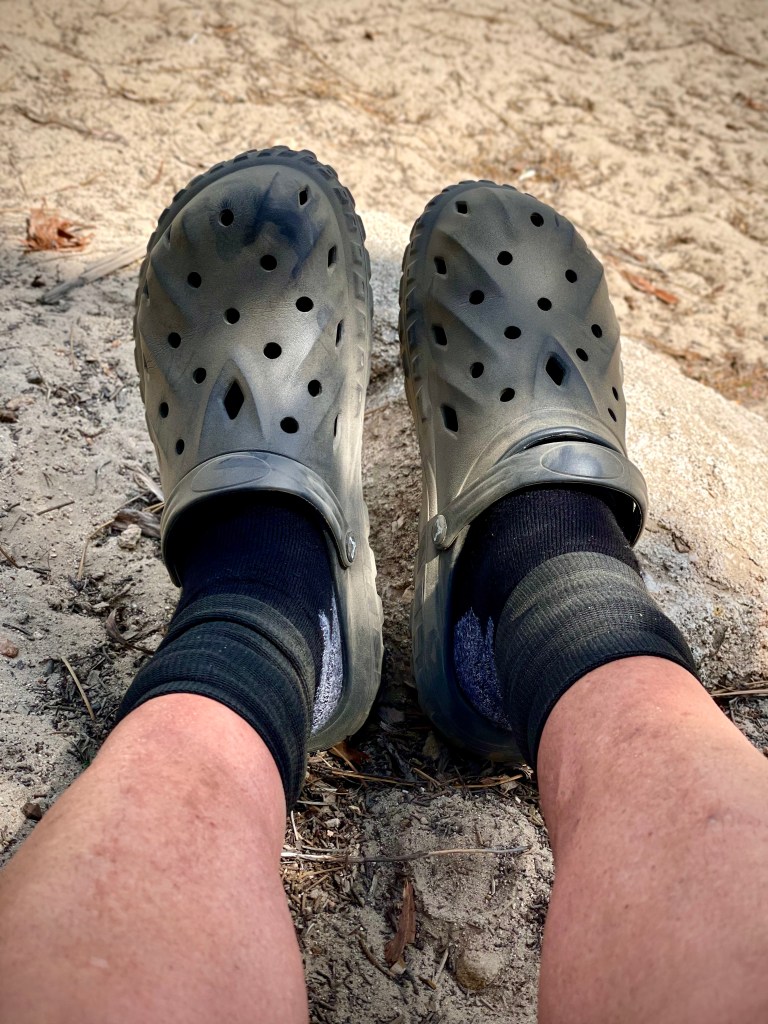
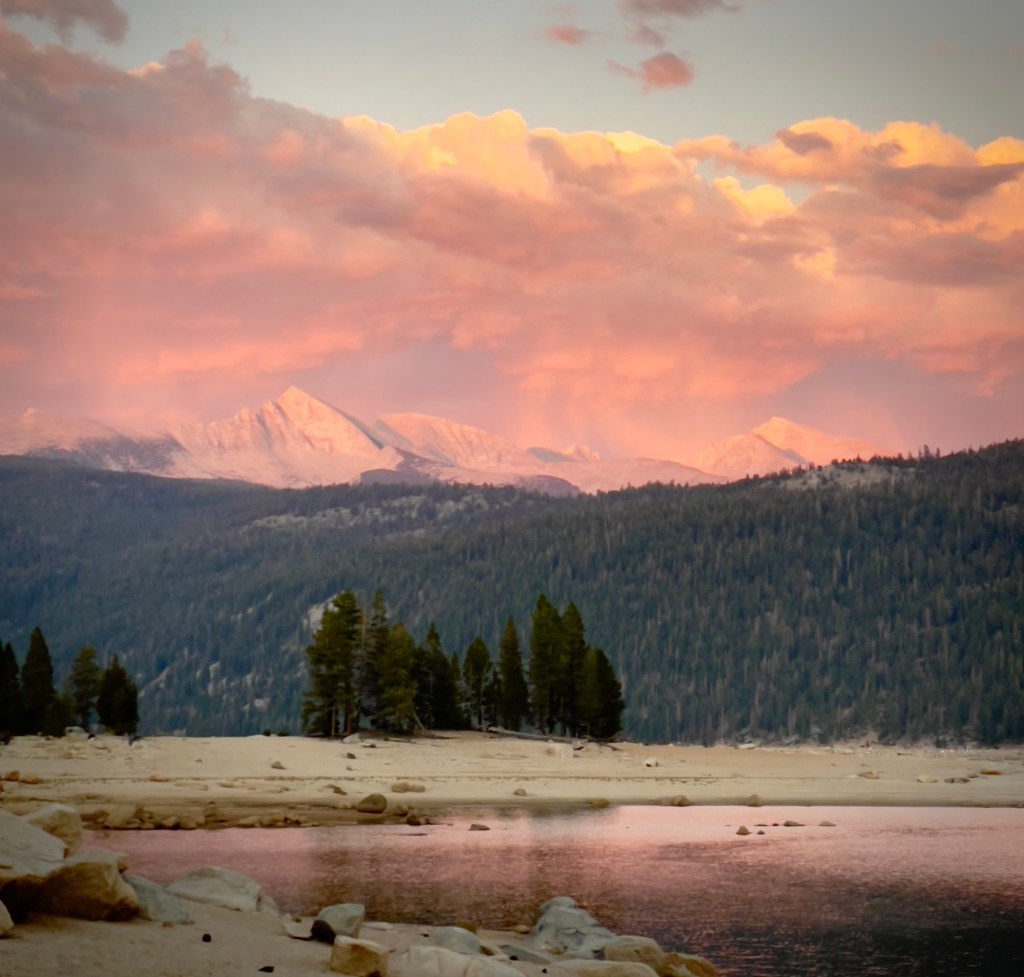
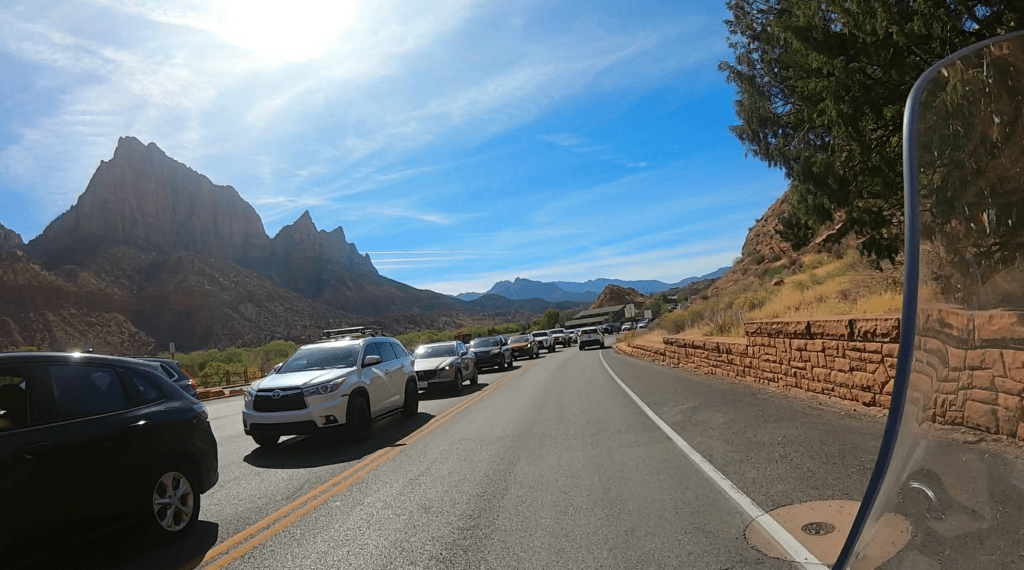
The following map of the topography of the region, while no substitute for the real thing, is worth a look:

Interactive USGS map of Utah

After a harried 2+ hour “tour” of the park (that you can enjoy in 34 minutes at https://youtu.be/_9hdx9c4SfY), we pulled over in Springdale to assess the situation. Pete and I decided to continue on to Hurricane for lunch and then return to our campsite by taking the longer route on AZ-389 through Colorado City to Fredonia and US-89 back to Mt. Carmel Junction.  It was 26 miles back through the park to our campsite.  It was 112 miles on our chosen route back.  Both could be done in the same amount of time according to the predictive Google maps, ~2.5 hours.  

After lunch in Hurricane, we returned to our campsite grabbing gas station sammies in Mt. Carmel junction for dinner along with our 3-R’s beverages.  The Zion Family Ranch facilities were quite nice including a heated bathroom with showers.  Firewood was available, payment made possible by Venmo.  The only human interaction we had was the following morning with a group of off-roaders who arrived after dark that evening as their dogs paid us a visit.  Location, location, location… We were in a secluded, natural setting near a very popular, crowded, National Park.  It was difficult for me to reconcile the incongruity of the events of the day.  Cheers to the 3-R’s!

Day 6, October 27, 2024 Zion, UT to Shoshone, CA

Zion Family Ranch to Shoshone

A longish day before us, some 344 miles, found us on US-89A back to Fredonia to avoid having to navigate the Zion stop-and-go.  Rolling past Colorado City, AZ, another controversial Mormon enclave with a “colorful” history, we soon reentered Utah and the Hurricane-St. George metropolitan area, a sprawling urban area in the midst of the intersection of the Colorado Plateau, Great Basin, and Sonoran deserts.  After a small navigation error (shoulda turned right instead of left) we found W Old Highway 9, avoiding the more scenic I-15 – if you can overlook tractor trailer rigs – that follows the route of the Old Spanish Trail into Arizona.  We were never too far from the Virgin River that is the great spirit of Mukuntuweap as we zoomed across the northwestern corner of Arizona to Mesquite, NV.  NV-169/167 took us past the bath-tub ringed, Lake Mead National Recreation Area, skirting Las Vegas through Henderson on NV-564/160.  With a tip of the helmet to Blue Diamond and the Red Rock Canyon National Conservation area (see our spring 2024 ride on sisyphusdw7.com:  Red Rock Canyons Ramble), we abruptly made a left turn off of NV-160 west on the Tecopa Rd that eventually took us to the Cal-Neva border and CA-127 to Shoshone, CA.

What was at least our sixth stay at the Shoshone RV Park and Campground, sixth meal at the Crowbar Cafe and Saloon, and sixth procurement of 3-R beverages at the Chas Brown General Store, we were set for what has become a favorite night under the stars (and a few sprinkles and some noisy coyotes) in a village that manages the whole preservation vibe, uncorrupted by crass commercialization, we have come to highly regard.  There’s also the issue of the lack of water sustaining a population of 22, modulating the delicate balance between local habitation and the visitation of Death Valley bound tourists with preservation.

Day 7, October 28, 2024 Shoshone to ?

Shoshone to Coalinga, Huh?

Our plan was to camp at Taboose Creek, midway between Independence and Big Pine along the Eastern Sierra, then make our way to Kernville overnight before returning home.  At a stop for lunch in Panamint Springs, another of our favorite “balanced” destinations, we overheard a conversation by a couple of locals of 50 mph winds stirring up that afternoon. Thus confirmed our concern that a rapidly developing frontal system would likely close Tioga Pass and would require changing those plans.  New plans:  We would bomb to Kernville for the night, some 288 miles, and get a roof over our heads.  

Setting out, the predicted winds materialized and our ride down Panamint Valley and Wildrose-Trona Rds eventually to CA-14 and CA-178 over Walker Pass was like riding a bucking bronc through drifting sands obscuring the road with fine dust breaching the seals of our helmet’s visors.  I’ve ridden in rain in the Rockies, fog in the Central Valley, searing heat across the Mojave, and snow flurries on the Paunsaugunt Plateau.  I’ve pedaled across the Big Horn in Wyoming in a thunder shower with hail pelting me on a bicycle, exposed to lightning.  I’ve weathered a Sierra thunderstorm and cross country skied in a whiteout.  Maybe because I survived all of those, my fear of calamity was only slightly moderated.  I was scared s*#tless.  But, as of this writing, I survived!  

I was in the lead and when we arrived in Lake Isabella where a right turn onto CA-155 would have taken us to Kernville. The wind, menacing dark skies, and light precip compelled me to forge ahead our next stop, Hart Lake, just north of Bakersfield to fuel up and make a plan for the night.  We had made 276 miles and the afternoon shadows were lengthening.  Our three options were to slab back to Merced on CA-99, the Bloody Highway, to zig and zag through the foothills ensuring a well after dark arrival home with the specter of a collision with Bambi, or shoot across the Tulare Lake basin to Coaling to stay at the Best Western Plus, where we stayed on the infamous, A Moment’s Inattention ramble.  

North on CA-65, west on CA-46 and north at Blackwells Corner, the last place James Dean was seen alive, an on to CA-33 where we arrived at the Best Western just as the sun set, 391 miles later.

We arranged for a room and after unloading the bikes we headed into Coalinga for our ritual of finding nourishment and refreshments.  It had been a long day of “riding hard” as Pete would snarl, and I was completely exhausted making decisions.  Taking the lead, rather than hitting the State Foods Supermarket or any of the fast food joints or taquerias, Pete pulled into the Coalinga Valley Market on Polk St. 

Entering this store, after such a long day and our decision making capacity compromised, we wandered around in circles through the floor to ceiling canyons of packaged food items.  The market was well stocked, but the only thing fresh in this store was at the carniceria.  

Such a colorful desert…

We found the beverage selection limited, but that didn’t stop us from landing a couple of 24’s.  As for food, I ended up getting a tin of smoked oysters and Lays Kettle Jalapeno chips, striking a nutritional balance between proteins, fats, and carbs.  Pete got a can of low sodium Spam, preferring a balanced saturated fat, protein, and even at 25% less sodium, salty fare.  The rest of the evening is a blur…

No wind, crickets, ravens, or coyotes at the Best Western Plus in Coaling Station A

Day 8 October 29, 2024 Coalinga Homeward

Homeward Bound

Approximately 91 miles north on CA-33 to Hudson Rd, a zig and a zag to CA-152 & 59 and presto, home from an 8 day odyssey that may seem from this narrative that at times wallowed in disappointment about the vibe, but, was by any definition an adventure:  an exciting ✔ or very unusual experience ✔; a bold, usually risky undertaking ✔; hazardous action of uncertain outcome ✔; filled with peril ✔, danger ✔, risk ✔, chance ✔, fortune ✔ and luck ✔.  All the boxes checked!

I harken back to a conversation during the relaxation, rehydration, reflection hour(s) around a campfire in Three Rivers a few years ago where we met Chris Baer, a white water adventurer who was running the Kern during a massive spring runoff, who when asked, “So, what’s the favorite river you’ve paddled?”  His reply, without hesitation, “The next one…”

I’m looking forward to a winter of bicycle riding and maybe I’ll hit the slopes, mended ankle permitting.  Until then I’ll be searching my AAA maps, Butler Maps, Google Maps, and fellow moto-touring YouTubers for what will invariably be my favorite, next ramble.  Until then, thanks once again to Pete for indulging me as a brother rambler, only slightly overwrought .

All the Best,

Sisyphus

sisyphusdw7.com Sisyphus and Associates, Much Ado About Nada 

@tjdw7 on Instagram

TjDW7 on YouTube