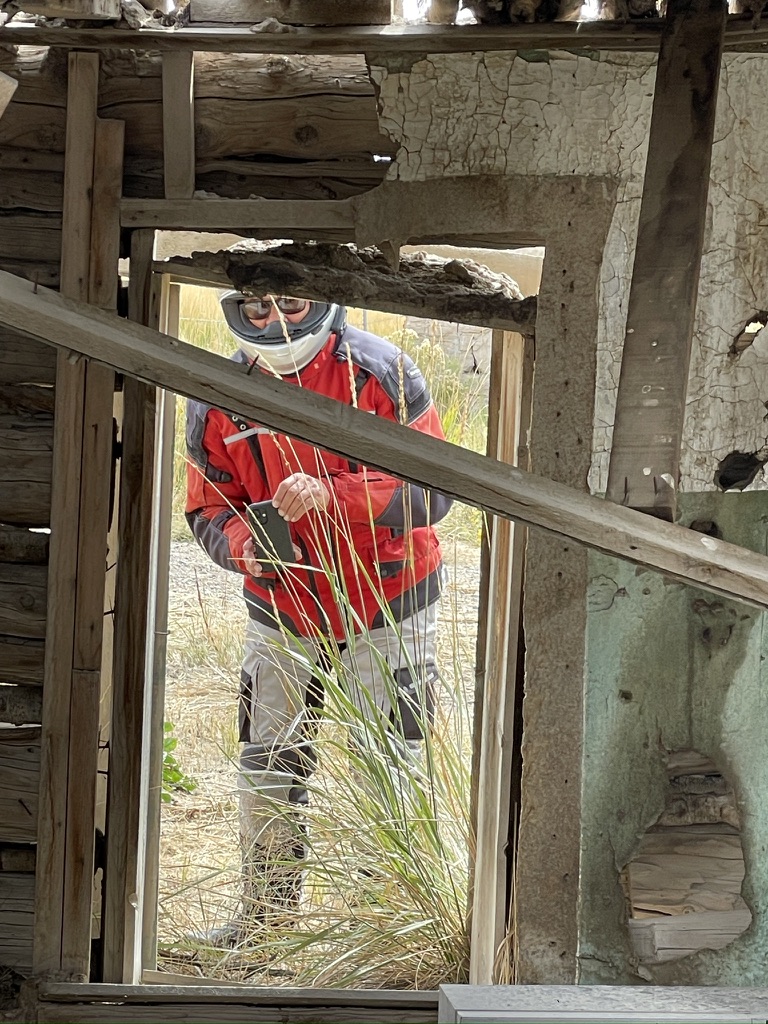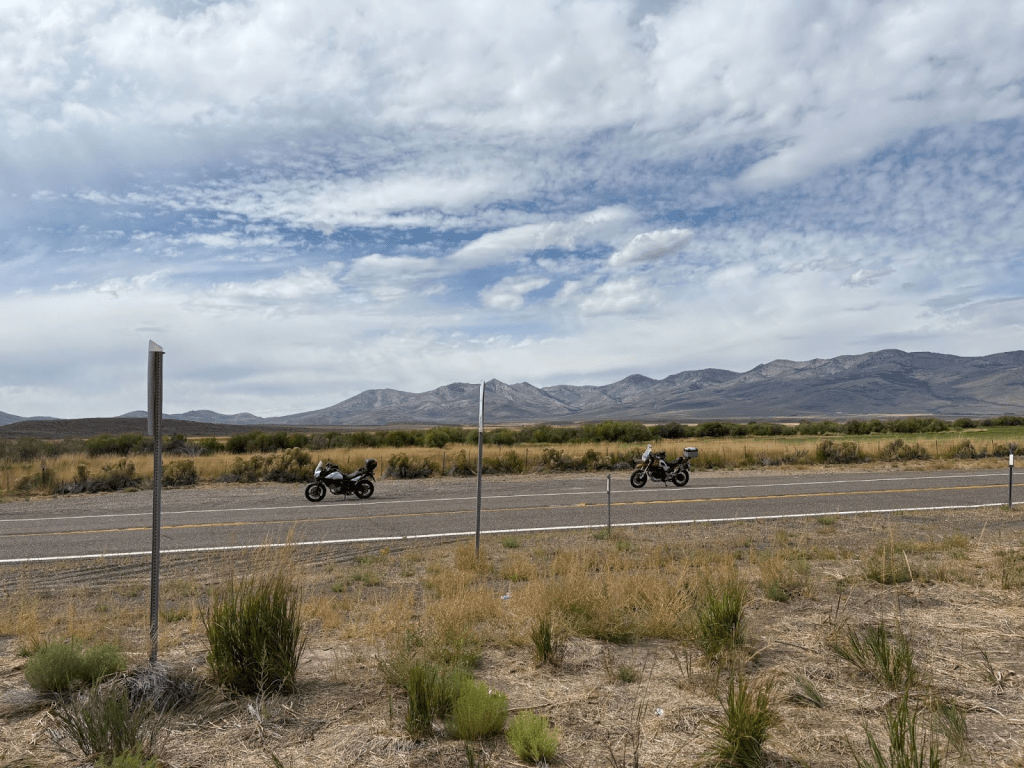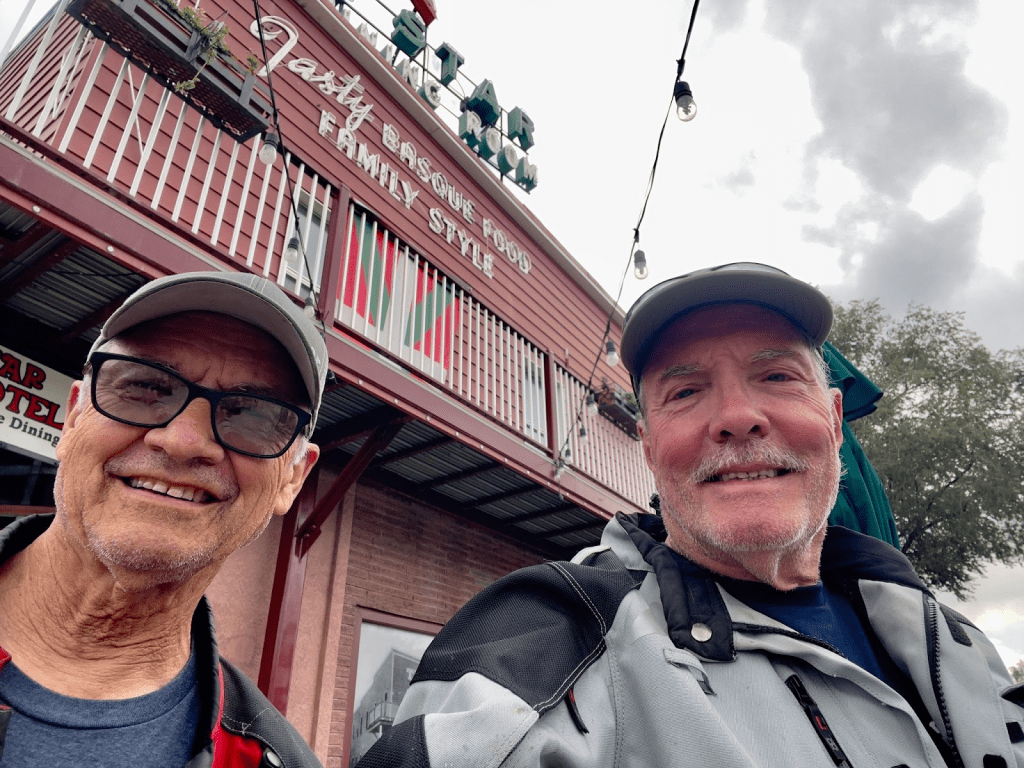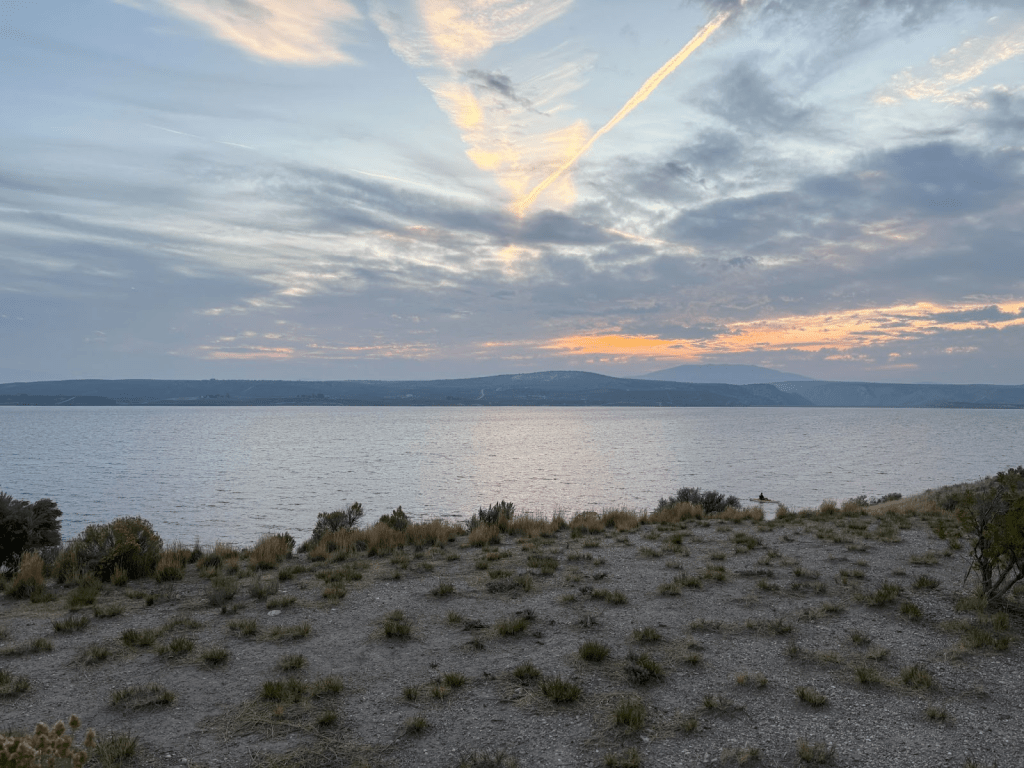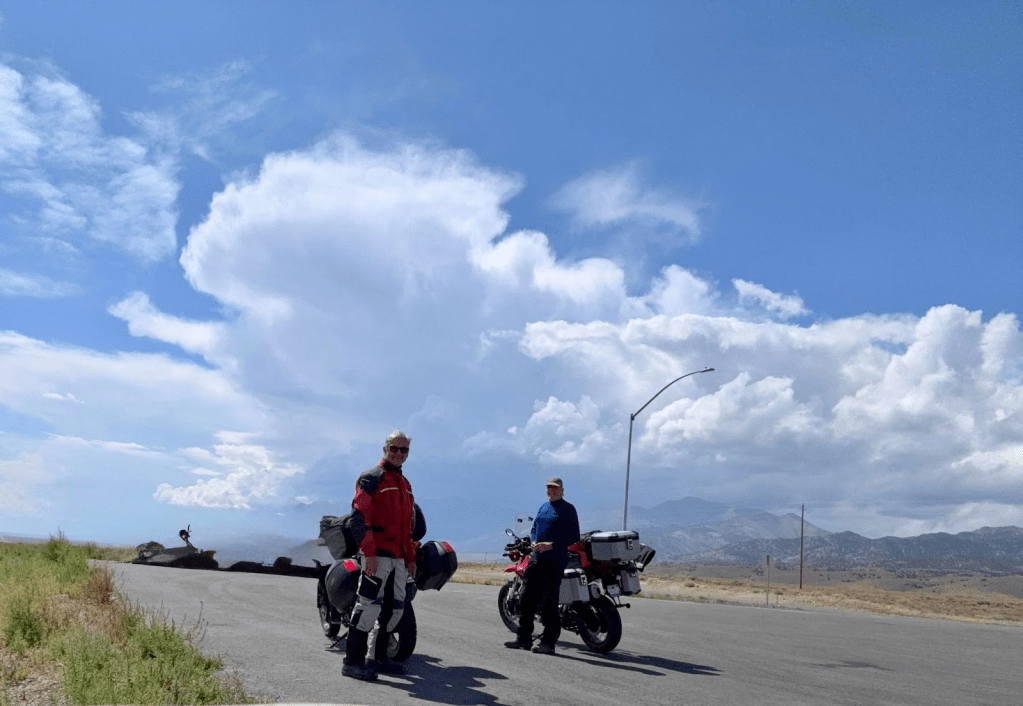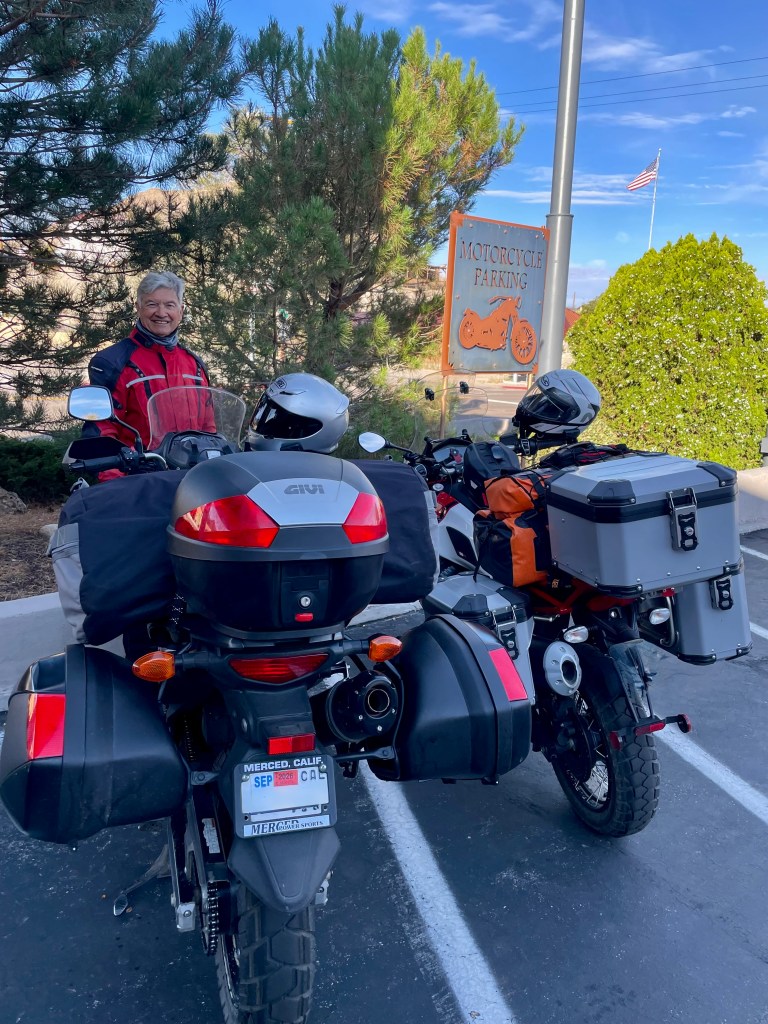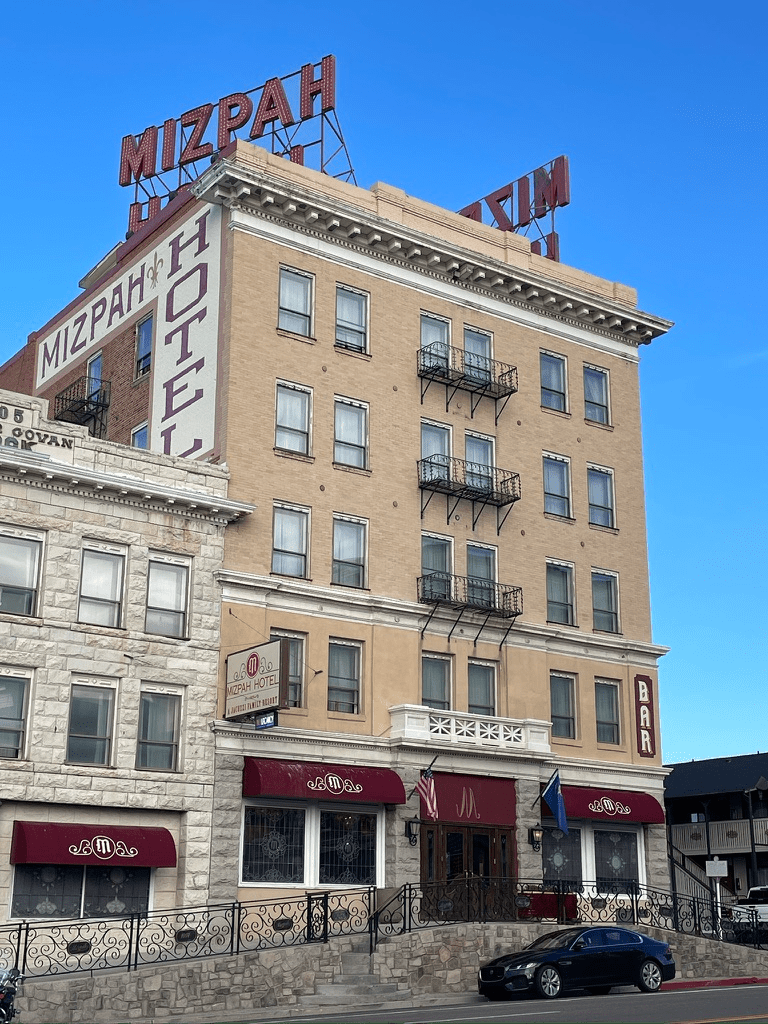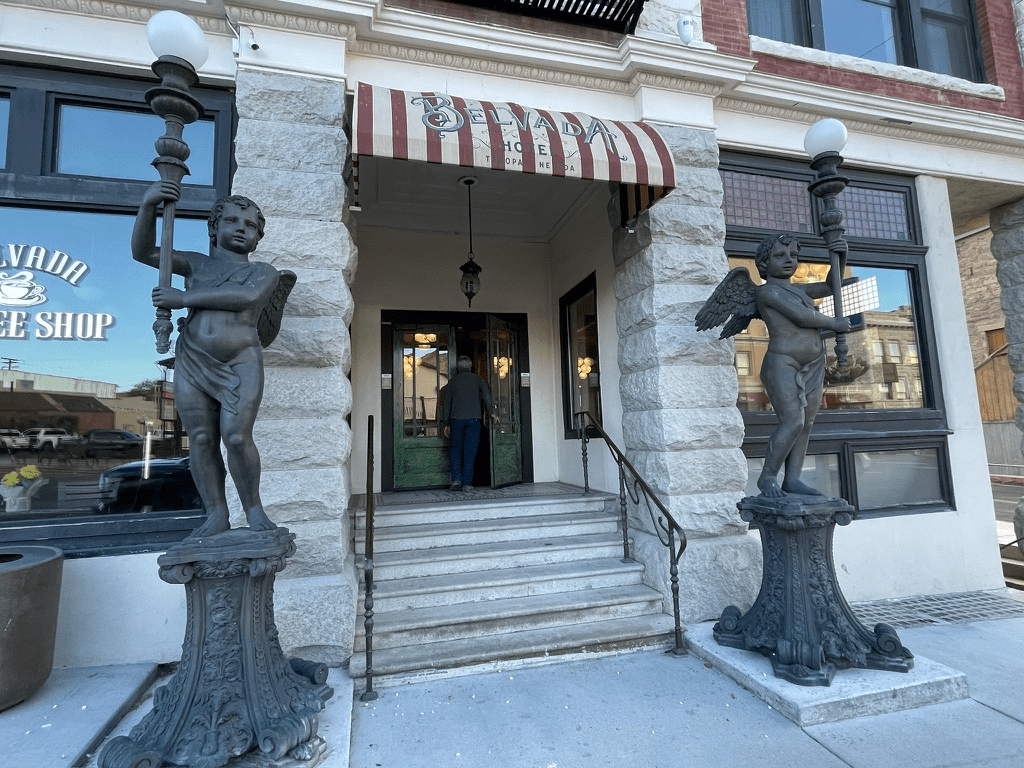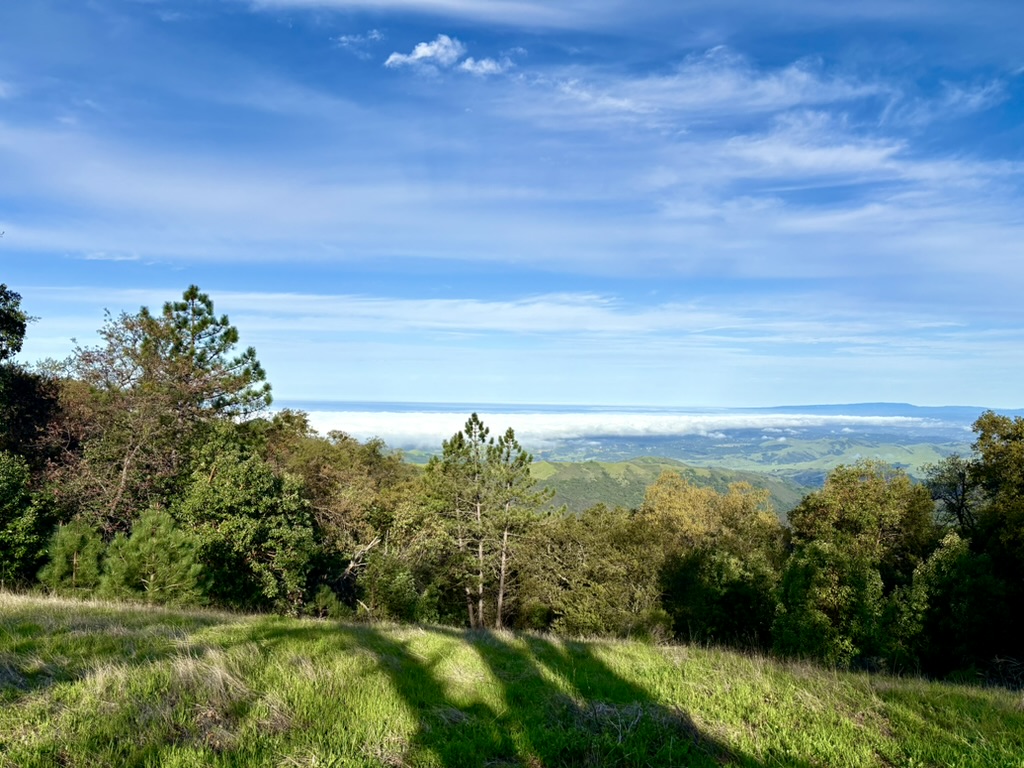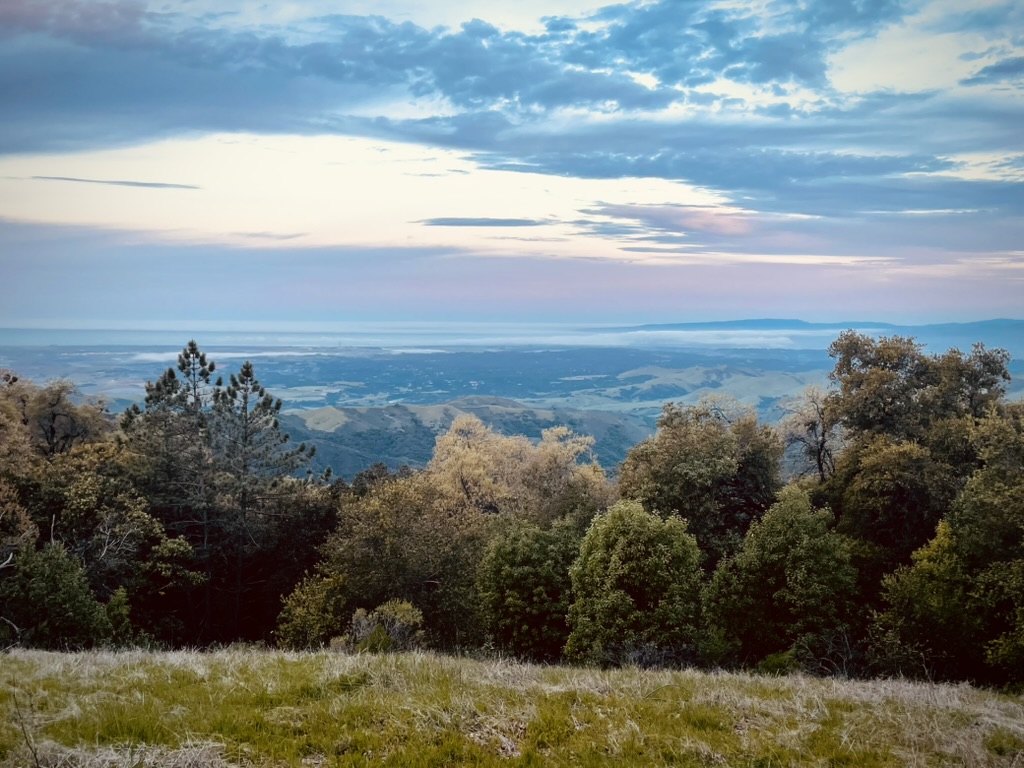
2025 Three State Campgrounds in Five Days

April 7 – 11, 2025

Preface

The only intelligence used in creating this post was mine as Sisyphus, my pseudonym. Well, the final photograph was a mashup of two of my photos I tasked ChatGPT to make. Any artificial intelligence that might have been used in editing for clarity and brevity was roundly rejected. Set-up is the key to landing the punch line. My inspiration is the work of Jean Shepard and Bill Bryson with a nod to Peter Egan. If you’re not patient enough to read what I’ve written, then switch to TicToc and watch some hipster posing at a Starbucks.

Introduction

Itching to get on the Guzzi for a spring getaway, I pitched SMAP (Sisyphus’s Moto Associate Pete) a pre-emptive ride as we were considering a longer ride north for late spring/early summer.  

Our late October 2024 ride to Zion seemed like an eternity ago and the only thing prohibiting a winter ride was procrastinating getting the Guzzi serviced and slapping on a new rear tire.  Oh, and unsettled winter weather that fellow Minnisotan Motoists would dismiss as “much ado about nada.” 

The nearest Moto Guzzi dealer is in Elk Grove. Servicing the air cooled 853 cc engine and a tire install would require leaving the bike overnight according to Harry the service writer.  As for the weather…

It’s a nice dealership, with the common Moto Guzzi complaint as too distant from home… The weather looks good though

It seems that Elk Grove mechanics apparently aren’t partial to dealing with an engine heated by rolling over 110 miles of California backroads, the distance to get to the dealership from my home in Merced.  So, a trip to and fro the dealership is complicated as can be the weather–not to mention expensive. 

Such a trip involves having someone follow me to Elk Grove who would then give me a ride home (there and back in SMAP’s vehicle @220 miles + 1 my moto’s mileage to drop off, 110 miles = 330 miles). Then turn around the next day* to get a ride back to the dealership (there and back in my wife’s vehicle @ 220 + bringing the Guzzi home 110 miles = 330 miles). Had it all worked out that would be approximately 660 miles (@ $5.11/gal x 37.5 avg mpg for all vehicles = ~$132.14 in fuel cost). I told you it was complicated. Look at all the mathing.

Or, I could stay overnight at the Sky River Casino across CA-99 from Elk Grove Powersports. Besides risking my life crossing the 99 as a pedestrian, given my luck*, the casino would lighten my wallet even further. Room service isn’t cheap.

(*probability, more math)

Or I could rent a trailer and tow a cold bike and wait for 6-8 hours at the dealership or casino (see above) for the service to be performed as I did in 2023 with the initial service. Or like the next trip to the dealership for the installation of various accessories (BTW that took 2 months to arrive due to “supply chain issues” from their Italian suppliers).   

*There’s always a backstory.  Fortunately this one ended well, well, even more expensive anyway.  Pete of SMAP fame gave me a ride home from dropping off the Guzzi on Friday.  The next day my wife agreed to drive me to pick up the bike.

I got a call from the dealership when we were about 10 miles from Elk Grove from Harry the Service Writer. Harry explained that the bike was not ready because when the mechanic removed the rear tire to mount the new tire, “the screw that mounts the speed sensor on the rear wheel broke.”

I asked how it broke since no subject for the predicate in the sentence was identified unless the screw was the subject and broke was the predicate. Harry replied something about that there was Loctite on the screw that broke when the rear tire was removed.

Thinking I needed to be a little more direct, I asked, “So the mechanic (subject) broke (predicate) the screw (object) removing it to mount the tire, is that correct.”

Harry was good, he said, “That’s correct, the screw was broken.” He went on to say that to get the OEM screw, it would take a week longer. Apparently Loctite shouldn’t be used to secure the speed sensor on the rear wheel assembly on a Moto Guzzi V85TT. Not sure how the Loctite got there unless it was because the local garage that removed the tire to plug it after running over a nail so that I could get the bike to Elk Grove to mount the new tire… was a whole other drama. At that point, somewhat discouraged, my wife and I returned home.

A week later, I called to ask about the status of the bike. Harry was all, “Oh yes, we have replaced the screw and the bike is ready.” Harry assured me that he would call when the bike was ready. Needless to say, my review of this service experience was unfavorable.

By the numbers (I’m a retired middle school math teacher so forgive me) the hourly shop rate of $198/hr x 3.4 hrs = $673.00. Add $200.73 for parts, and BTW,  I supplied the tire and the dealership charged me $127 to mount the Michelin Anakee tire, check the brake pads, balance the wheel, lube the chain–What? It’s a shaft drive?–so the subtotal is now =  $1,000.73. Add the tire cost of tire itself $316.74 + fuel for seven trips, too and fro = $130.63 , it cost $1,448.10 to prep for a 5 day ramble.  Oh, add the cost of the speed sensor screw, $2.91 and toss in SMAP’s lunch for a grand total if $1476.01. Yikes, I hope my wife doesn’t read this!

I need to watch more Cubby Sue Moto Guzzi maintenance YouTube videos. My only victory in any of this is that the dealership didn’t charge me a storage fee for leaving the bike pending getting [the] screw(ed) for the week…

Thanks to my lovely wife (in case she does read this) for the lift to pick up the Guzzi and only modestly complaining about the invoice. What a woman. She didn’t even get lunch out of the deal. We did drop in on the grandkids on the way home.

That only took about two weeks out of the calendar. The real wrench in the ramble was that the remaining spring calendar was not quite open.  If you’ve followed Sisyphus and Associates (www.sisyphusdw7.com)  you know that even though Sisyphus and his Associate (Sisyphus’s Moto Associate Pete henceforth, SMAP) are retired, the most challenging aspect of any of our rambling is capturing the necessary number of days between the two of us and our modestly complicated lives during which time a desired ride can take place.  Birthdays, visiting guests, medical and dental appointments, holidays, vacations, house setting, graduations, moto servicing, and concerts are the usual culprits.

Three day rides are fairly simple to arrange.  Five day rambles increase in difficulty arithmetically.  Seven to ten days on the road increase in difficulty geometrically.  Eleven or more day tours are logarithmically more difficult since neither Sisyphus nor SMAP know how to calculate logarithms. 

So, in lieu of calculating the number of days to head north and to the east, considering weather was kind of still a factor in April, I pitched five days and four nights on some familiar roads along the Central Coast of California.  As for the weather, a non-factor… The weather cooperated beautifully. Take that Minnesota!

Day 1, Arroyo Seco State Park
Merced to Arroyo Seco State Park

Our first day on April 7 would be a reasonable ~175 mile ride from Merced in the Central Valley to west of Greenfield and King City in the Salinas Valley of California’s Central Coast. 

We rambled over our preferred route on CA-59 south to CA-152 east to Indiana, Brannon, and Merrill Rds, south to Shain Ave and 7th St in South Dos Palos to N Russell Ave continuing south through westside ag lands to West Shields Ave.  Continuing west we crossed the Little Panoche Valley passing the Mercy Hot Springs Resort on Little Panoche Rd.  Once a stage line and since having been originally paved is now amended by patched potholes rivaling the pavé of the Spring Classics in Europe or 85% of the roads in our community.  Check out the  Mercy Hot Springs Wiki page. 

Summeting Panoche Pass in the Diablo Range found us sweeping our way downhill with comfortable spring temps over reasonably surfaced tarmac to our favorite market in Paicines for chile verde and carne asada breakfast burritos.  Rambling south over CA-25, the Airline Hwy, would be the envy of any Minnesotan Motoist; little traffic, verdant vistas, clear skies, and incomparable spring temperatures…

One of the more tame passes in California

In attempting to arranging the Arroyo Seco campsite online, I learned there was no water available for showers and toilets at the campground. I couldn’t reserve a campsite either. Porta-Johnnys solved the latter problem while stopping in Greenfield for supplies before heading to the nearly deserted campsite would solve the former.

Simple enough, right? That is, after we stopped for directions to a “supermarket” in Greenfield. At first, SMAP pulled over to ask three strolling farmworkers appearing to be in search of a “day ender.” In Spanish, SMAP asked if they knew the location of a Safeway or SaveMart. After rephrasing of our request several times in Spanish trying to explain what a Safeway or Save Mart was, his attempt for directions failed as their insistence that they were merely humble workers, unfamiliar with the community and not cartographers with knowledge of an “una forma segura” (Safeway) or “salvar el mercado” (SaveMart) . Surely Mr. their ignorance was “comprensible.”

We bailed and pulled into a nearby “poco mercado”, the Mendoza Market, thinking this might just have to do for securing the night’s provisions.

A humble Marcado in Greenfield

Upon purchasing a gallon of water as fair compensation for directions (el mercado’s “pequeño las 3R’s selección de bebidas, fue decepcionante”) we asked the cashier about the location of a supermarket and were given something of a route to Rancho San Miguel Market, a super mercado in Greenfield.

Apparently left and right are sometimes confused in Greenfield, perhaps the result of using the wrong vernacular. Izquierda o derecha may have been more prudent. Which brings up how I feel about left and right as directional indicators as opposed to using the cardinal north, south, east or west (Norte, Sur, Este u Oeste). Just ask SMAP. Cardinal directions are true no matter which way you’re facing. Left and right, not so much.

The cashier insisted that we head toward the Chase Bank and turn left, pointing in several conflicting directions. After following her directions that clearly led us out of town into the hinterlands, a kindly police officer who was presumably conducting official business with lights ablaze, noting our confusion, paused his official business and corrected our heading in the opposite direction, derecha (este) not izquierda (oeste).

Unlike our last experience shopping at a small mercado in Coalinga, our Rancho San Miguel Market meal was a considerable improvement over SPAM (the questionable tinned food–not to be confused with SMAP–Pete’s pseudonym), smoked oysters, and Fritos from the Coalinga Market last fall. In fact at the Rancho San Miguel Market, I was able to purchase two pounds of dried pinquito beans that are only grown on the Central Coast for our upcoming Santa Maria Tri Tip BBQ themed Easter back home 👊!

Heading west on Elm Ave that becomes Arroyo Seco Rd crossing the Arroyo Seco River Bridge we entered the gorge en route to our home for the night.

No problem for our low clearance vehicles
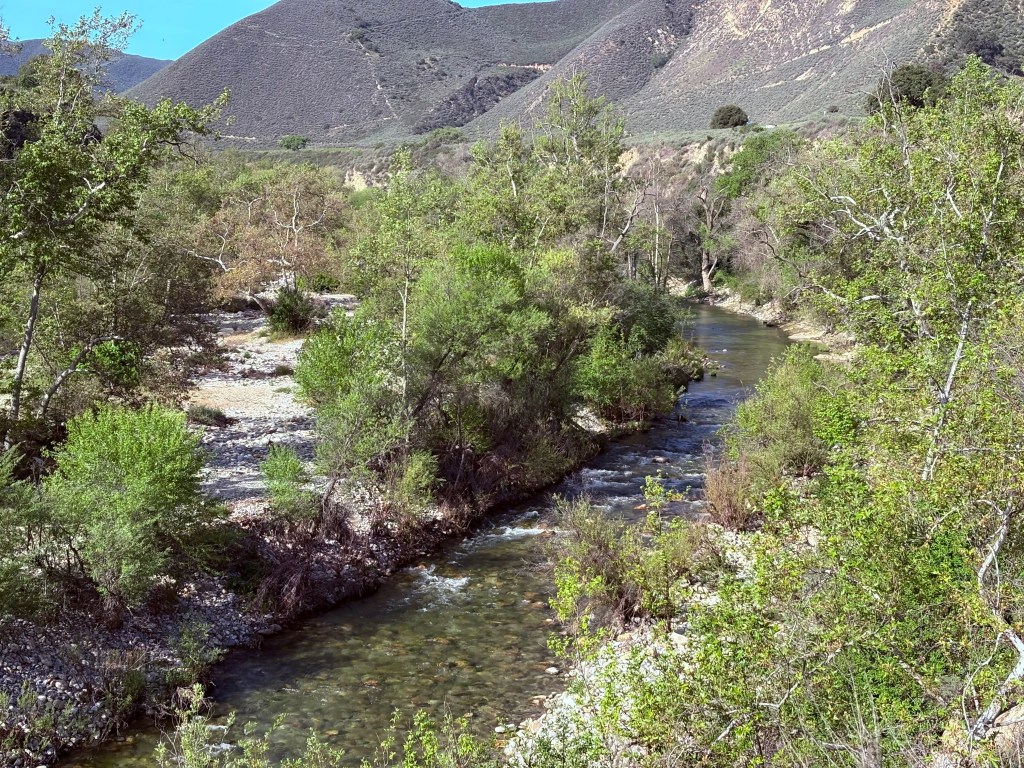
Arroyo Seco River
Let’s see, derecha? No, oeste!

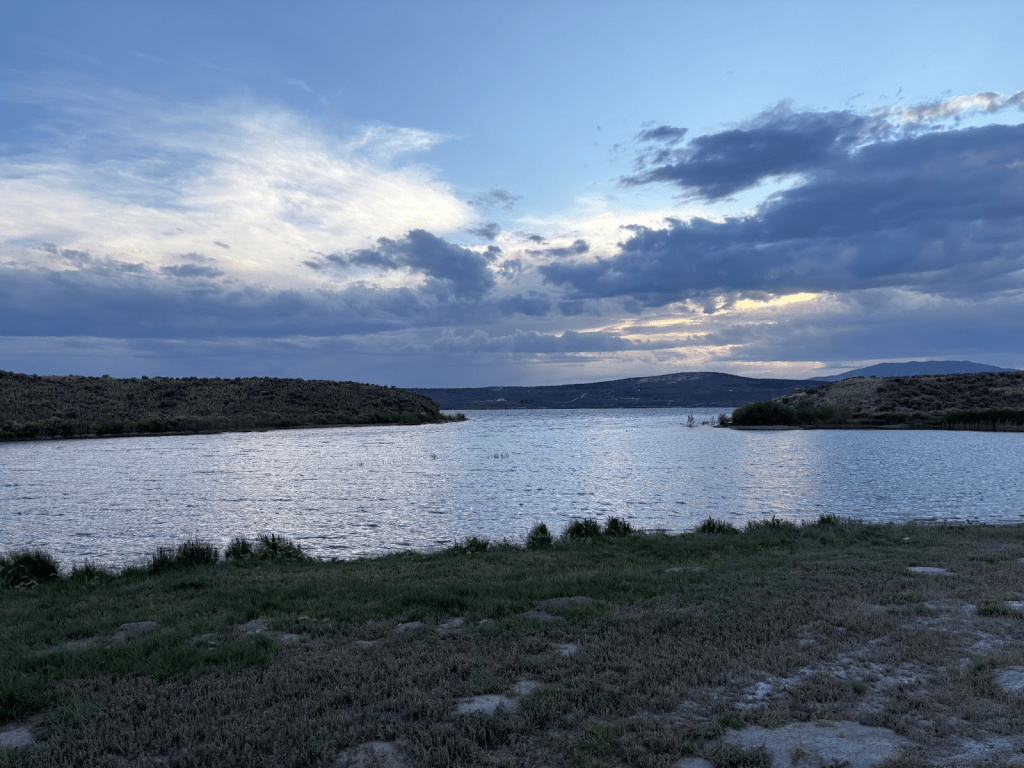
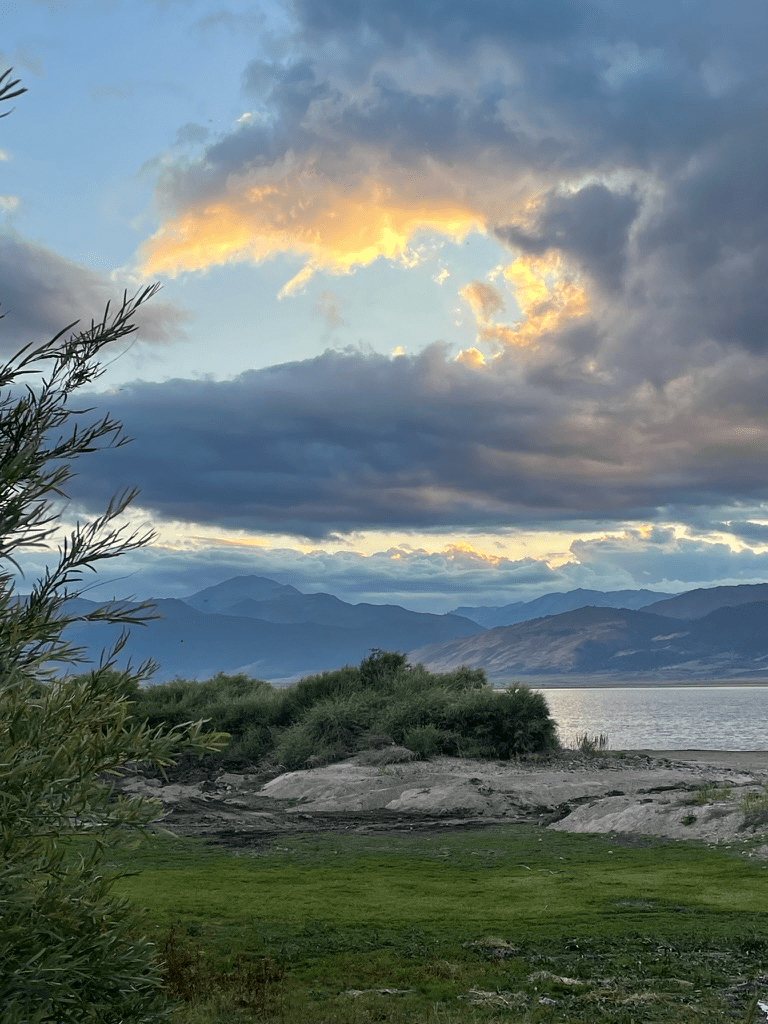
The Arroyo Seco State Park Campground situated next to the Arroyo Seco River, also known as the gorge at an elevation of about 1,200 feet, offers views of the Ventana Wilderness mountain peaks and one small lake water levels depend on the season*. It is nestled into the hillside, surrounded by abundant shrubbery and large oak and madrone trees. A variety of birds and wildlife make their home in the area.

The Arroyo Seco Gorge

Upon arriving at the park entrance, we met Orlando the campground maintenance guy. There was also a fellow who lived nearby in the gorge that was home of several small-scale wineries in spite of the above signage pointing out wineries in the opposite (derecha o este) direction towards Soledad. He had a ranch, presumably a winery, along the Arroyo Seco River and had a residence in Soledad where he was apparently the owner of a Chevrolet dealership as well.

The campground was nearly deserted on this magnificent spring day

An affable fellow, Mr. Chevrolet shared that the gorge was subject to flooding during atmospheric river events and that his home was nearly flooded in 2023. I guess that leaves the fine alluvial soils for the new vineyards that blanketed the floodplain. We would later find out that the sinking of wells to irrigate these vineyards below the campground was likely the cause of the water issues at the campground upstream*.

Noting an ice vending machine at the entrance, we asked to purchase a bag, along with campfire wood, to keep our 3R beverages and salads cold for the evening Relaxation, Rehydration, and Reflection, 3R’s campfire ritual.  After convincing the camp hostess (What was her name… Yarrow, Aspyn, or Willow?) with coaching from Mr. Chevrolet and Orlando, she threw in a bag of ice and firewood in lieu of not giving us the senior discount for the campsite.  A much better deal that that I got at Elk Grove Powersports.

Apparently the ice machine was malfunctioning and the ice was partially melted and she didn’t want to hassle with dissatisfied customers.  Needless to say, we had a most satisfying stay at the Arroyo Seco State Park Campground, partially melted ice notwithstanding!  

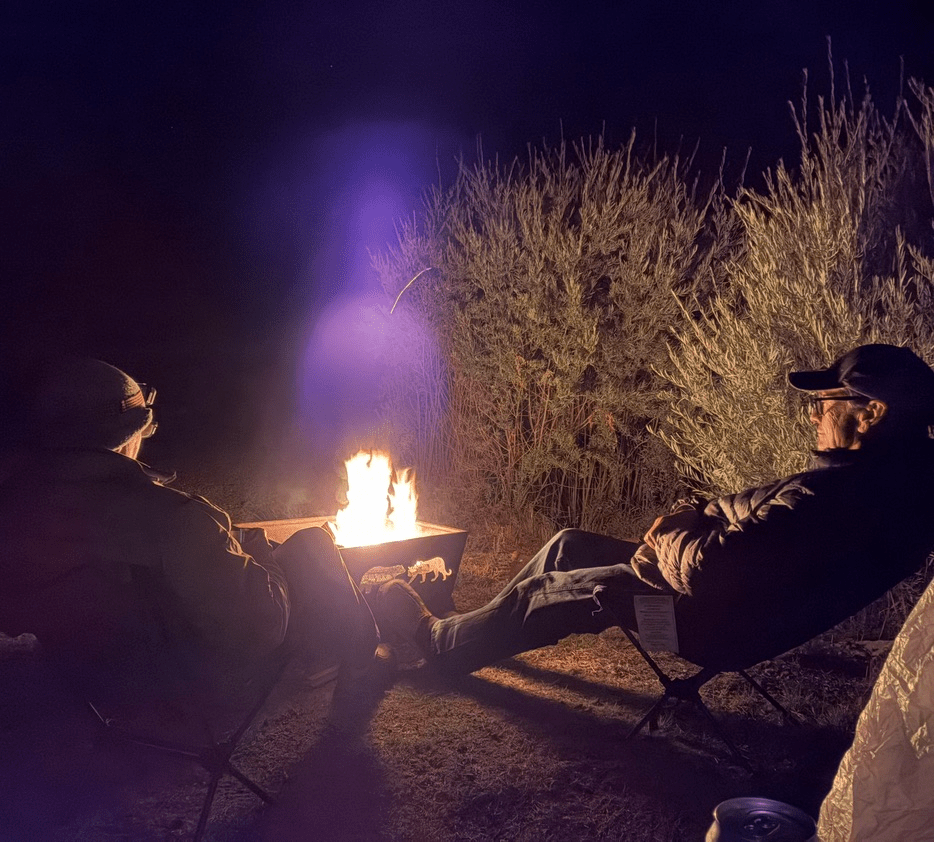
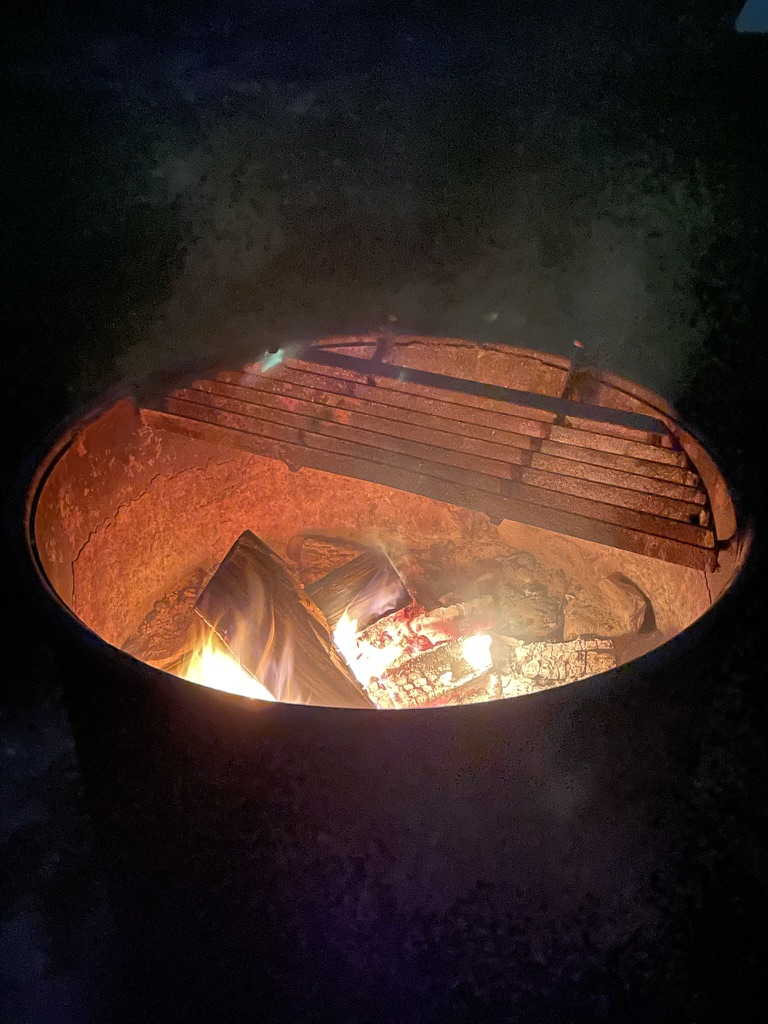
Perfect 3R ending to the day

The salad with sliced chicken paired well with the Sierra Nevada Atomic Torpedo and the side of Fritos from Rancho San Miguel Market. A pleasant night of hooty-owls voicing their contentment and the sound of scurrying littles about the Arroyo Seco campsite avoiding those hooty-owls, our sunrise Jet-Boiled mochas set the tone for the day.

Day two would be along the infamous route to the San Simeon State Park through Lake Nacimiento where an unfortunate event, once upon a time, spoiled a ride… 

Day 2, San Simeon State Beach Arroyo Seco to San Simeon State Campground

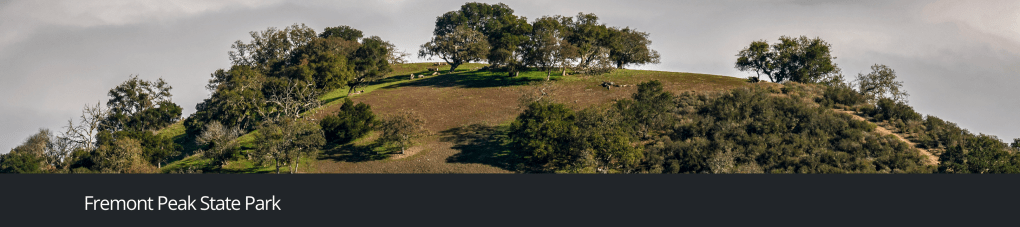
The San Simeon State Park official web photo top was taken at the pier at San Simeon, not the unofficial photo taken at the campground…

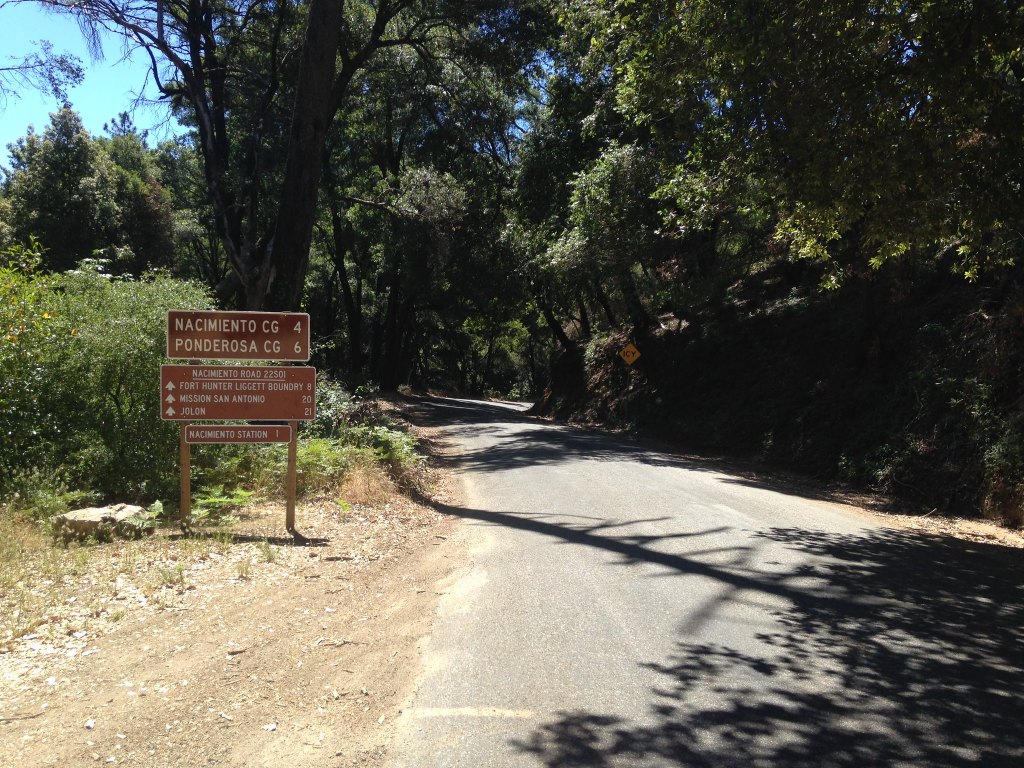
Our ~125 mile route to our Day 2 destination, San Simeon State Park, backtracked down Arroyo Seco/Elm Rds to Central Ave.  From there a short run on US-101 to Jolon Rd.  Jolon Rd past Fort Hunter Leggett to Interlake Rd and Nacimiento Lake Rd to Godfrey Rd, all on G-14.


Screen shots of the course of A Moments Inattention

Passing the scene of the incident right where the G14 marker is on the hairpin (Blue) above and the unfortunate route I took (red), I neither felt anxiety nor trepidation.  Unlike that fateful day in April three years earlier, I was fresh and on a Moto Guzzi V85 TT. 

Spring, sprang, sprung… A Moments Inattention

Hairpin?  No problem on this day with the low-end torque of the Guzzi on the compound curve similar to the same compound curve on CA-4 that a sudden stall of the Kawasexy Versys resolved without incident a few years before.  I think I now have a sound approach to hairpins on a bike less twitchy than the Kawasexy. 

 We wound through the west Paso Robles wine country on Chimney Rock Rd to Adelaida Rd then south to Vineyard Dr and Jack Creek Rd west.  We passed Sirena, DAOU, Tablas Creek, Thatcher, Brecon Estates, Oso Libre, Paix Sur Terre, Willow Creek,  Opolo, Jada, Justin, Niner, and Denner wineries enroute to CA-46/Green Valley Rd. We had intended to take Santa Rosa Rd, a backdoor into Cambria, but alas it was CA-46 to US-1 due to the Santa Rosa Rd closure. As detours go, that’s not a bad one.

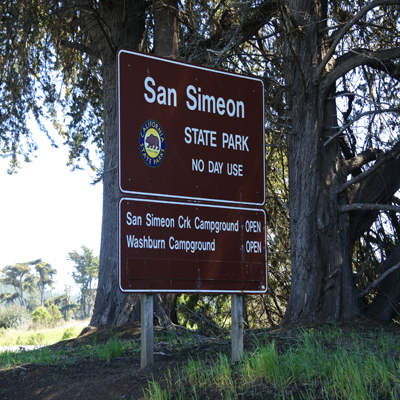
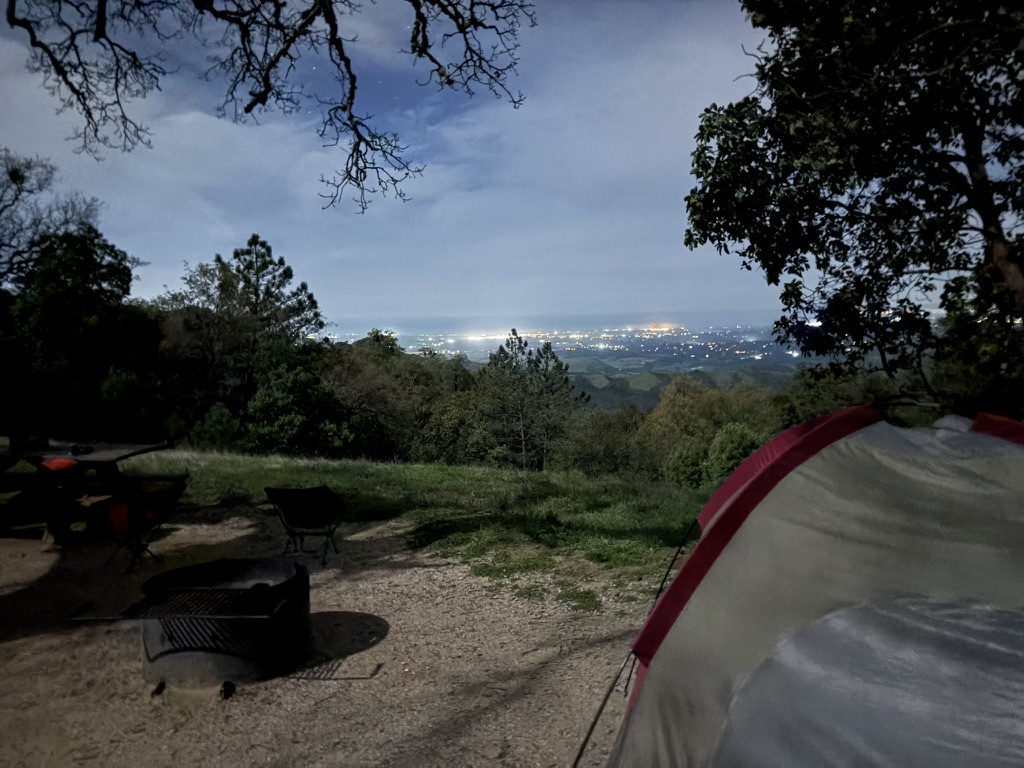
The San Simeon State Campground situated on the Pacific oceanfront just north of Cambria is one of Sisyphus and Associates’ favorite places to camp.  Running water, showers, and clean operable commodes in an orderly setting with affable camp hosts and a variety of interesting Spring Break campers made for an enjoyable two-night stay.   Our plan for our first night was to relax around camp, shower and run into Cambria for dinner and 3R beverages. 

Establishing domesticity
Shaft drive (Go Dubs!)
Preparing to lube the chain

Since we had made our way through wine country I thought that rather than a pilsner or IPA for the 3R’s I’d opt for a bottle of red.  After chicken mole enchiladas at Las Cambritas, we traipsed across the street to Bob and Jan’s Bottle Shop where I selected a Niner Bootjack Red

After borrowing a corkscrew from our neighbors who were heading home the next day to Boise with their adorable Golden Retrievers,  I was able to enjoy this full-flavored red blend of Cabernet Sauvignon, Malbec, Cabernet Franc and six other grapes.  It paired wonderfully with the campfire.  Goldies and forgotten corkscrews are the universal spark to introductions and making new friends…

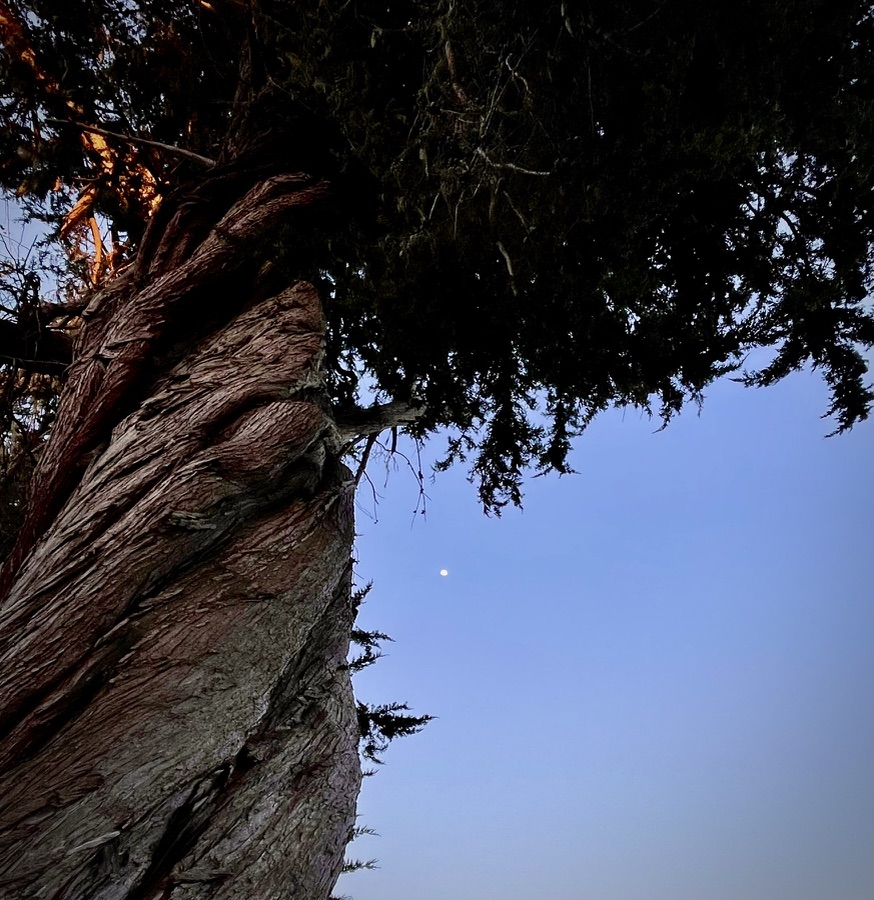
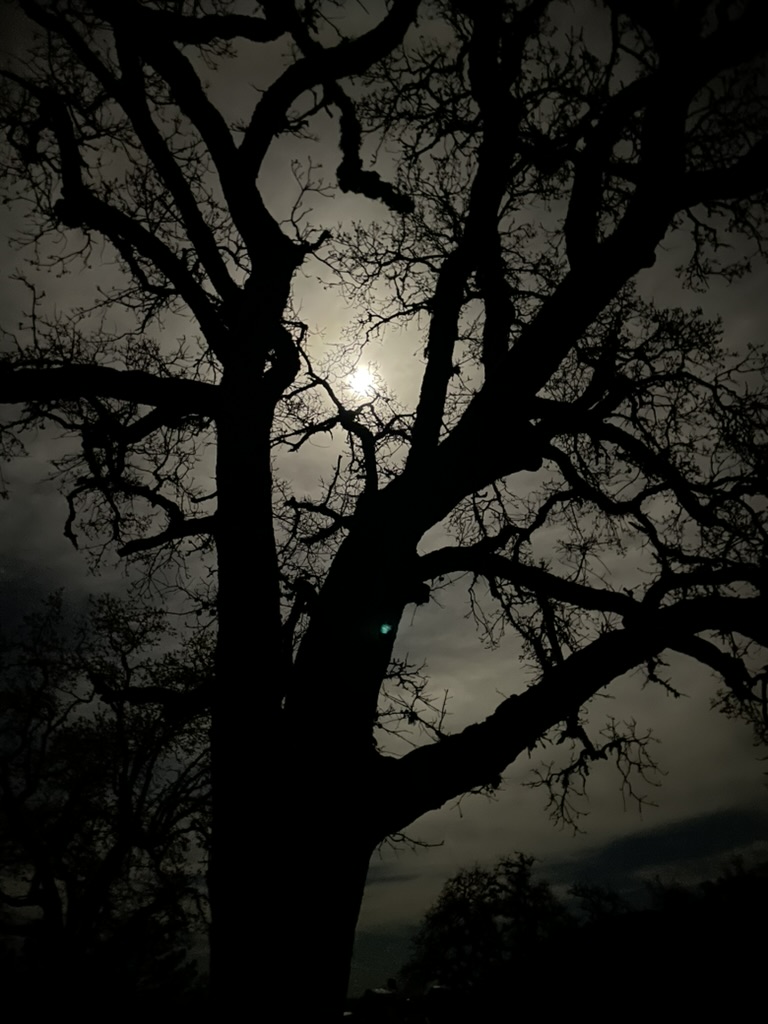
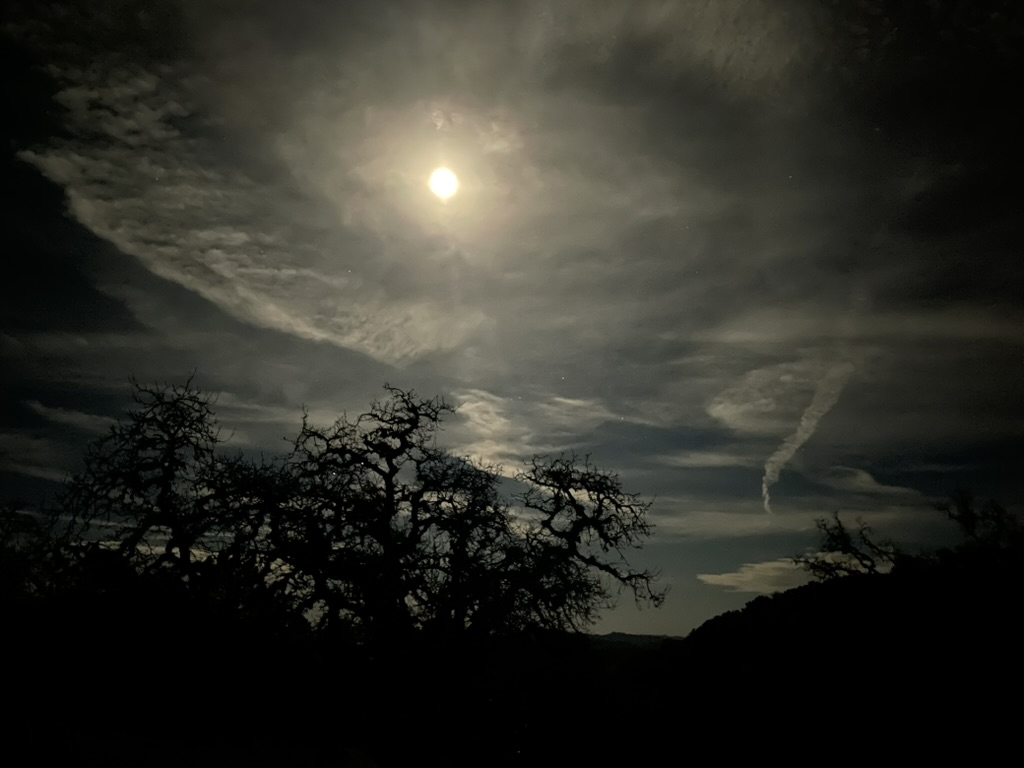
Veteran Monterey pine and a nearly full moon
No, not the landscape ablaze but the setting sun over the Pacific

A walk around the campground at sunset tipping hats as we greeted fellow campers, a cozy campfire made possible by wood delivered by our camp hosts, SMAP and his preferred 24 oz Coors and my Bootjack Red capped off what is at least 40% of what is most satisfying about rambling on a motorcycle; the 3R’s.

Day 3, Romp on the “Nasty Fergie”    Big Sur Nacimiento-Fergusson Rd Loop 

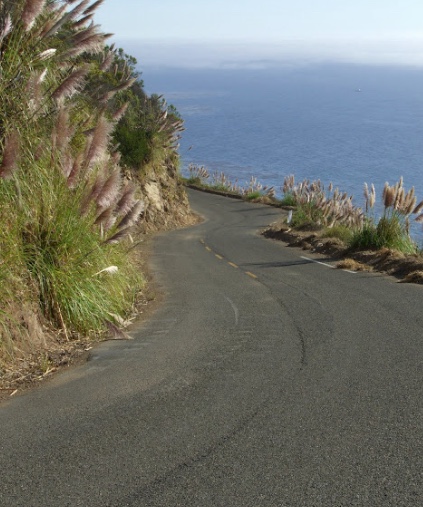
The next morning we set off north on US-1 on a 145 mile ramble over the acclaimed Nacimiento-Fergusson Road.  When we last tried to take this famed motorcycle road a fairly frequent winter washout forced its closure until Monterey County could make repairs.

No guardrails makes for unobstructed views or tumbles

Along the way we saw several slumbering elephant seals on the beach. 

Napping between mating
Poor bloke perhaps the victim of a predator or propeller…

It was open throttle past Hearst’s Castle at San Simeon on an open, but truncated leg of US-1 due to another highway closing slide above Lucia. The weather was perfect, calm breezes, cool and clear. En route to the Nacimiento-Fergusson Road, we continued north on the Cabrillo Hwy past Gorda (Spanish for “Fat”) a hamlet in Monterey County, California. Along with Plasket, it’s one of the three small settlements of gas stations, restaurants, and motels located along State Route 1 on the Big Sur coast.

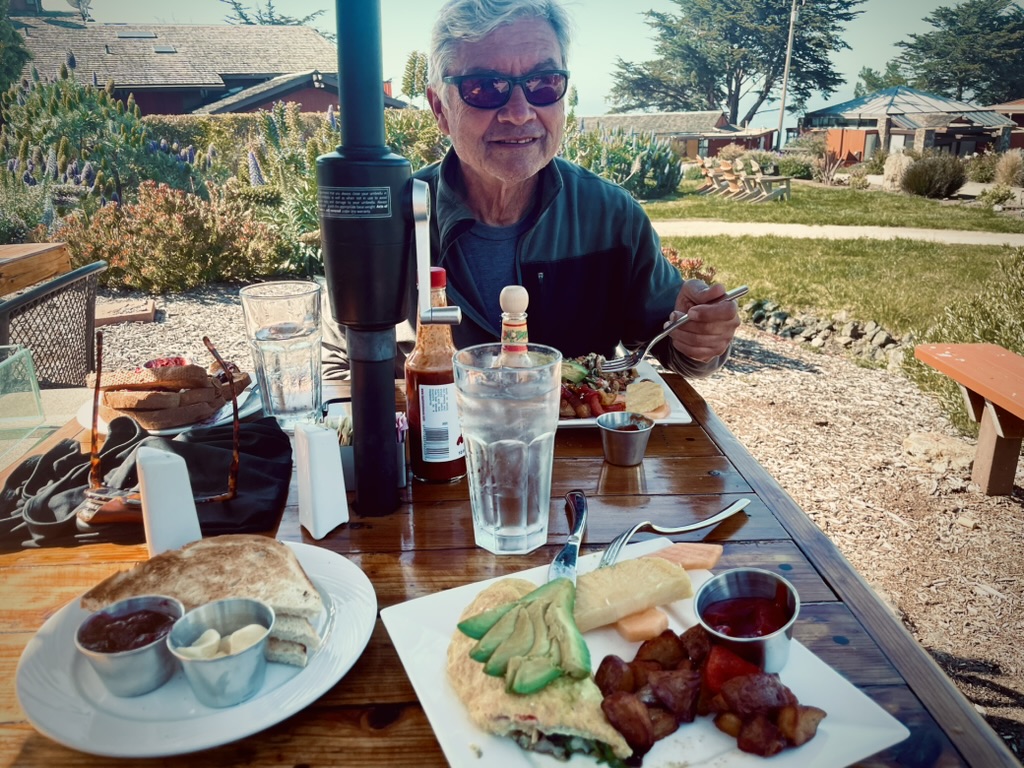
We stopped at Ragged Point for breakfast on the recommendation of our camp hosts. We dined alfresco perched on a rocky headland that marks the southern end of the small bay where San Carpoforo Creek empties into the Pacific Ocean. The Ragged Creek Inn Resort was built by Wiley and Mildred Ramey starting in the late 1950s on property that was formerly part of the Hearst Ranch. Our breakfast was only exceeded by the view from the rugged cliffs above the Pacific.

SMAP was impressed by the presentation and authentic preserves.
No Smuckers at Ragged Point Inn…
Ragged Point

After breakfast we met a fellow rider on a newish Kawasaki Versys 1000 who had stopped at the inn. It was a handsome bike, the bigger sibling to my Kawasexy Versys 650. It was equipped for touring and the gentleman was up from his home near Los Angeles for a couple of days-getaway.

SMAP engaged the Kawi rider in motorcycle banter for several minutes as we got the lowdown on the Versys and the Nasty Fergie. The gent noted that he spent most of the ascent in second gear and cautioned us about some sand in the hairpins. I suspect the Versys 1000 cc motor lacks the Guzzi’s low end grunt. Sand in a hairpin corner doesn’t acknowledge low end grunt.

Crossing the Mill Creek Bridge we turned east on the Nacimiento-Fergusson Road, aka, the Nasty Fergie…

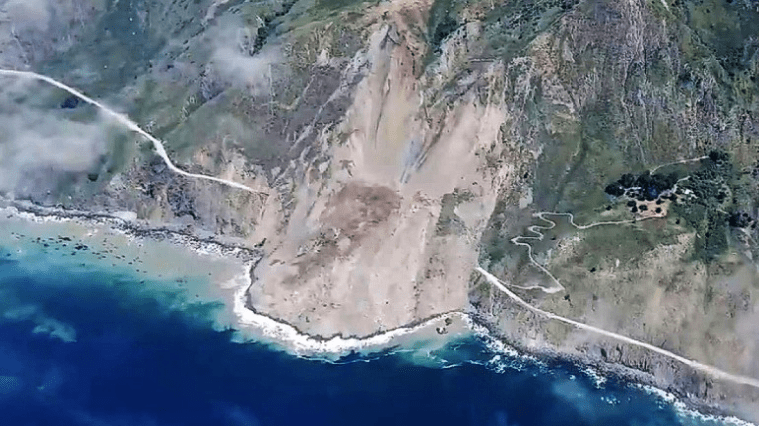
On May 20, 2017, the largest slide in the Big Sur Coast Highway’s history at Mud Creek buried more than a quarter-mile of Highway 1 1 mile (1.6 km) southeast of Gorda. The highway was closed for more than a year. This had a considerable negative economic impact for tourism between Monterey and Morro Bay. A CalTrans study concluded that rerouting the highway around the slide was preferred over other alternatives. The only route in and out of Gorda beginning in the south was via a lengthy detour over the narrow, winding Nacimiento-Fergusson Road. (Wiki)

2017 slide

On August 2, 2017, CalTrans decided to rebuild the highway over the slide instead of clearing it. It was reopened on July 18, 2018, at a cost of $54 million (Wiki).

View to the Pacific from the Nasty Fergie

The Nacimiento-Fergusson Road is the only road across the Santa Lucia Range on the Central Coast of California, connecting CA-1 and the Big Sur coast to US-101 and the Salinas Valley.  The road is well-paved and maintained over its length, subject to seasonal closures, and is winding and has precipitous drops at times narrowing to a single lane. It is widely regarded as one of the best motorcycling roads in central California due to its ocean views and forest setting.  

I admit that my skills as a videographer are limited.  Most likely because of presbyopia,  a common age-related condition that affects the ability to see close objects clearly, typically starting around age 40.  Given that I’m 30 years into blurry-close-up vision, tasks like starting the video recording on my Hero 7 with a screen and buttons designed for eyesight and dexterity under the age of 40 is challenging.  Though I stopped at the base of the road to start recording, I apparently didn’t press the record button sufficiently.  Maybe it’s time for an Osmo DJI or an Insta360 voice command enabled to back-up the Hero…

Climbing up the steep flanks of the mountains, the western part of the road near the coast has more than 100 turns before it reaches the summit 7 miles from the coast at an altitude of 2,780 feet, where it crosses the unpaved Coast Ridge Road.  I was able to keep Bella Rosa in third gear most of the time, even through the sandy corners.

Third gear? Maybe second…

Another motorcyclist we met described his recent ride up the Nacimiento-Fergusson Rd along the Coast Ridge Road at night… Balls bigger than cantaloupes or a brain smaller than a pea says I.

The ridge route at night?

From the summit, the road descends through hillside chaparral and dense oak groves on the eastern side of the ridge, which offers a few views, and passes through the U.S. Army’s Fort Hunter Liggett.  And like the ascent, the descending road is steep, winding, sometimes only wide enough for one vehicle, and has precipitous drops at almost every turn unprotected by guard rails.

One of the few views of Ft. Hunter Liggett
No one there to check our credentials…

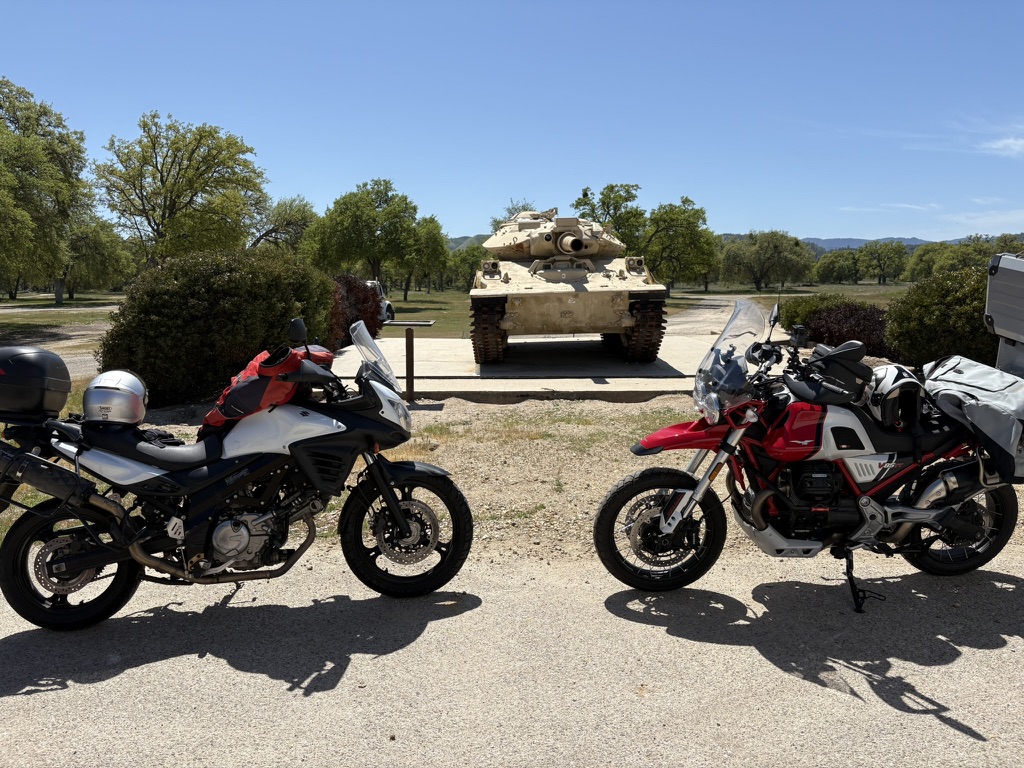
As the temperatures on the lee side of the Santa Lucia’s were nearing the 90’s, we stopped at the Fort Hunter Liggett entrance to shed layers. 

No guards just a tank

A tractor trailer rig pulled up and its operator, Gary, began inquiring about our bikes, noting my eagle badged Guzzi V85TT.  Of course anytime this happens, SMAP, whose encyclopedic knowledge of all things motorcycle (PeteMotoWiki), can dig deeply into the weeds of motorcycle ownership and appreciation.  Gary was describing his bikes,  one a Moto Guzzi V100 and we exchanged stories of common bikes, past, present, and future… 

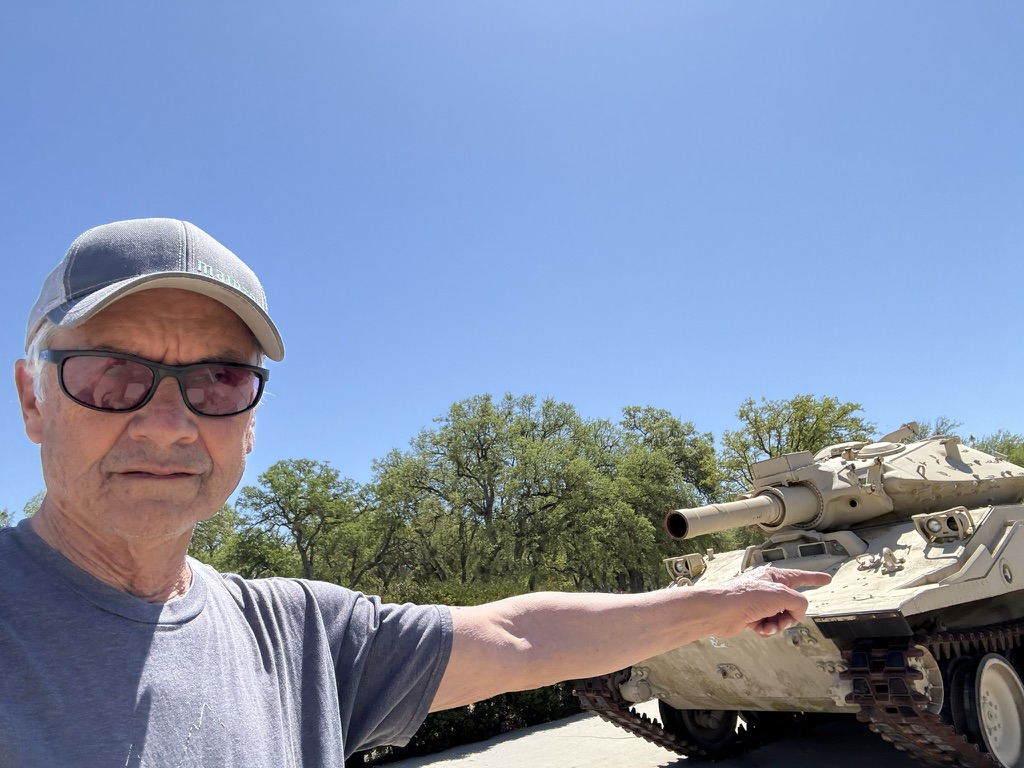
Oh yes, the old lets plug the barrel of the M55 1A1 with an index finger gag. It never gets old…

Meanwhile, I was sweating, anxious to make our way back into Lake Nacimiento, excited to confront the Moments Inattention hairpin on G-14, the Lake Nacimiento Rd for the second time in two days. I was also parched wanting to purchase an energy drink for the trip through the vineyards to CA-46 and US-1 to Cambria back to our campsite.

We returned to the campground, showered and prepared to run into town for dinner and supplies.  We’ve dined several times at the West End Pub, a laid back place with as many locals as tourists enjoying the simple pub fare and selection of beverages.  

Après dinner at the West End, we returned to Bob & Jan’s Bottle Shop for the 3R beverages and discovered Lombardi’s Pasta and Pizza Restaurant across the street.  Deciding that our next trip to Cambria would include Lombardi’s on the itinerary, we returned to camp now equipped with a corkscrew to open a Castoro Whale Rock pinot noir, recommended by Michael the cashier.  SMAP opted for a couple of domestic 24’s.

“If anyone orders Merlot, I’m leaving. I am not drinking any fucking Merlot!”

“Only somebody who really takes the time to understand Pinot’s potential can then coax it into its fullest expression. Then, I mean, oh its flavors, they’re just the most haunting and brilliant and thrilling and subtle and… ancient on the planet.” Paul Giamatti – Miles from Sideways.

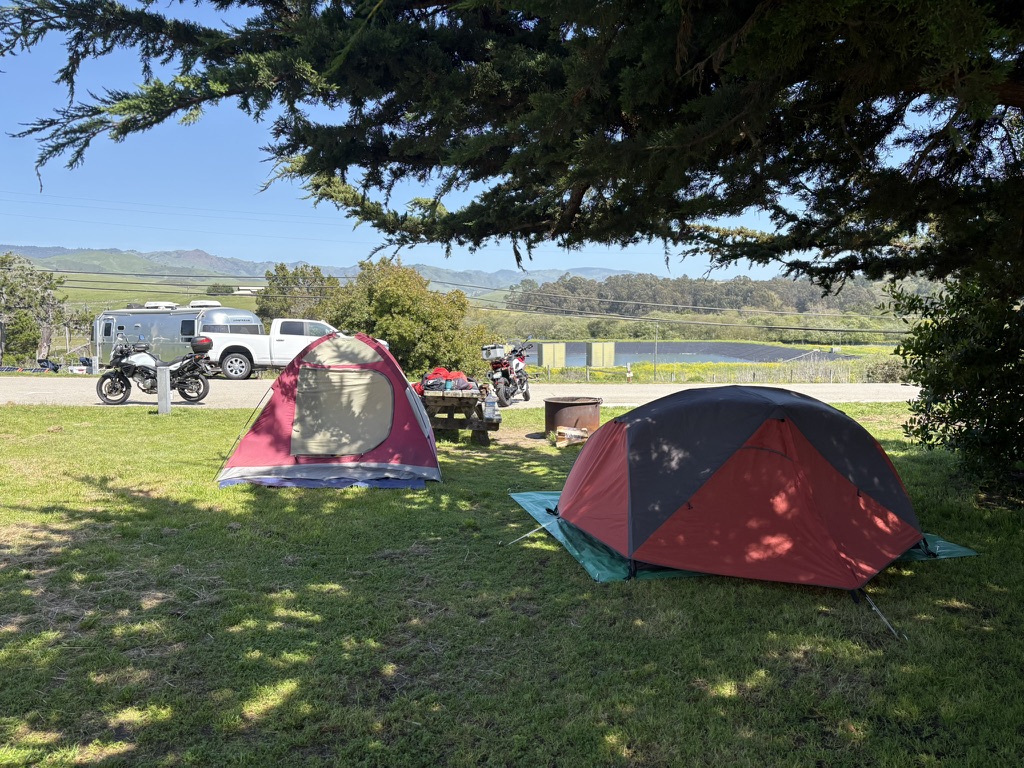
Campground conversations with neighboring dads on Spring Break with their families gave rise to more motorcycle inspired camaraderie.  It must be that seeing two fellows of a certain age “roughing it” in tents and sleeping bags on motorcycles renders us a harmless curiosity to probe and understand by the millennial and gen X & Z’ers whose idea of roughing it is in a $150,000 overland Sprinter or a $200,000 heavy duty pickup and Airstream.  We managed to muster that envious faraway look as the dads would shift their glances to and fro their accommodations and ours.  Even the geezers in those ritzy retirement rigs would become misty-eyed as they remembered youthful rambles on Bonnevilles, Goldwings, or Harley dressers…

Note the Airstream in the background

The myriad camping dogs found us worthy of tail wags in yet another invitation to exchange stories with their humans.  From the Belgian Google engineer married to the Spanish educator and their two delightful children with impeccable manners and their dog Gordo, a friendly Bulldog,  to the two women wrangling a half dozen feral children in the making of smores, presumably their respective broods, to the not-so-nearing retirement special ed teacher (and family) whose classroom experience remained relatable to this grizzled veteran, all contributed to the camping community of San Simeon State Park Campground on those two spring days. (I think I just set the record for the longest most rambling sentence in the history of Sisyphus and Associates!)

Sunset over the VStrom
Sunrise over the Guzzi

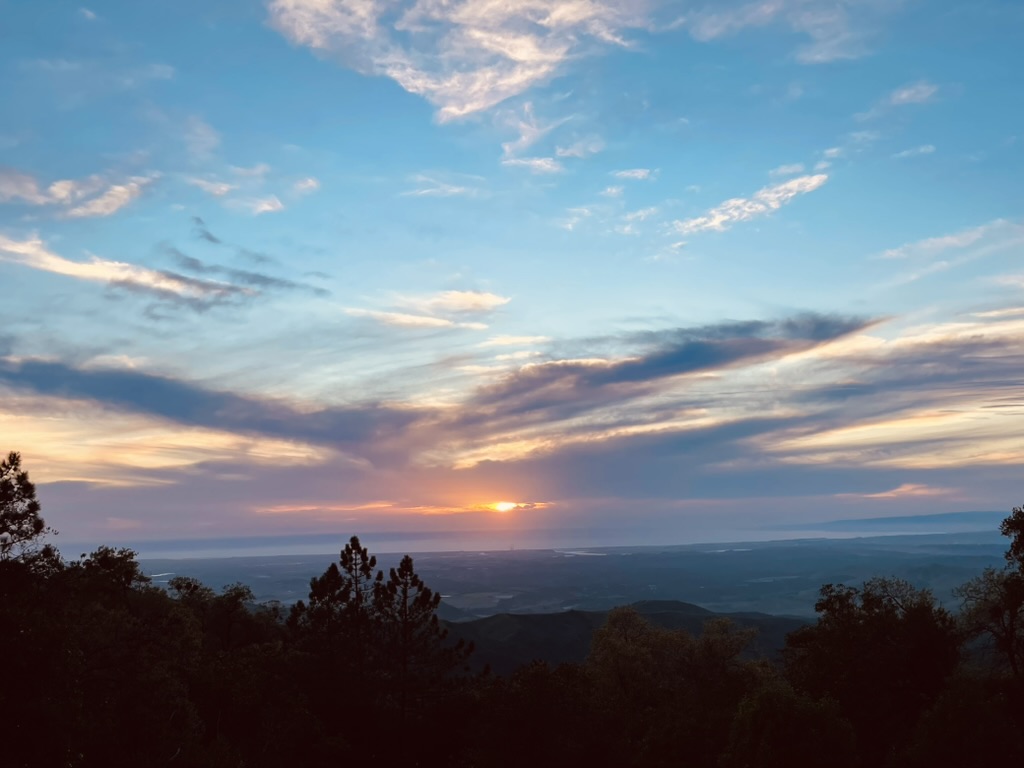
Day four began with a glorious sunrise as did days one, two, and three. Mochas fuelled breaking camp as we prepared for the ~161 mi ramble north to the Fremont State Park Campground.

Day 4, Fremont Peak State Park  San Simeon to Fremont Peak

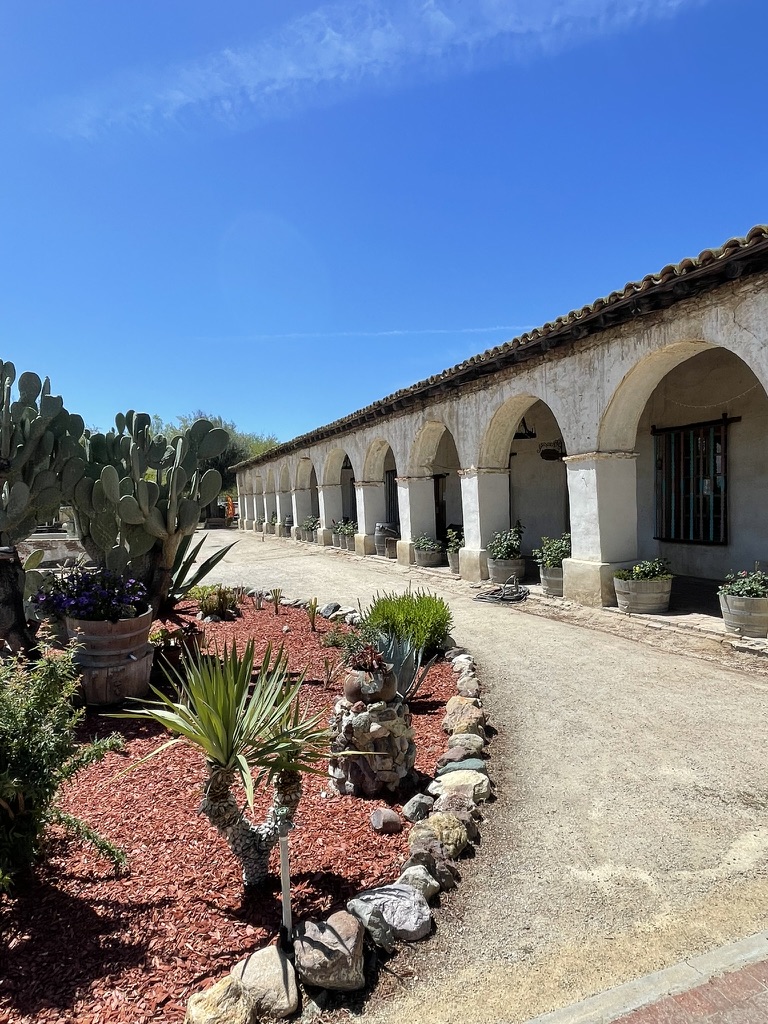
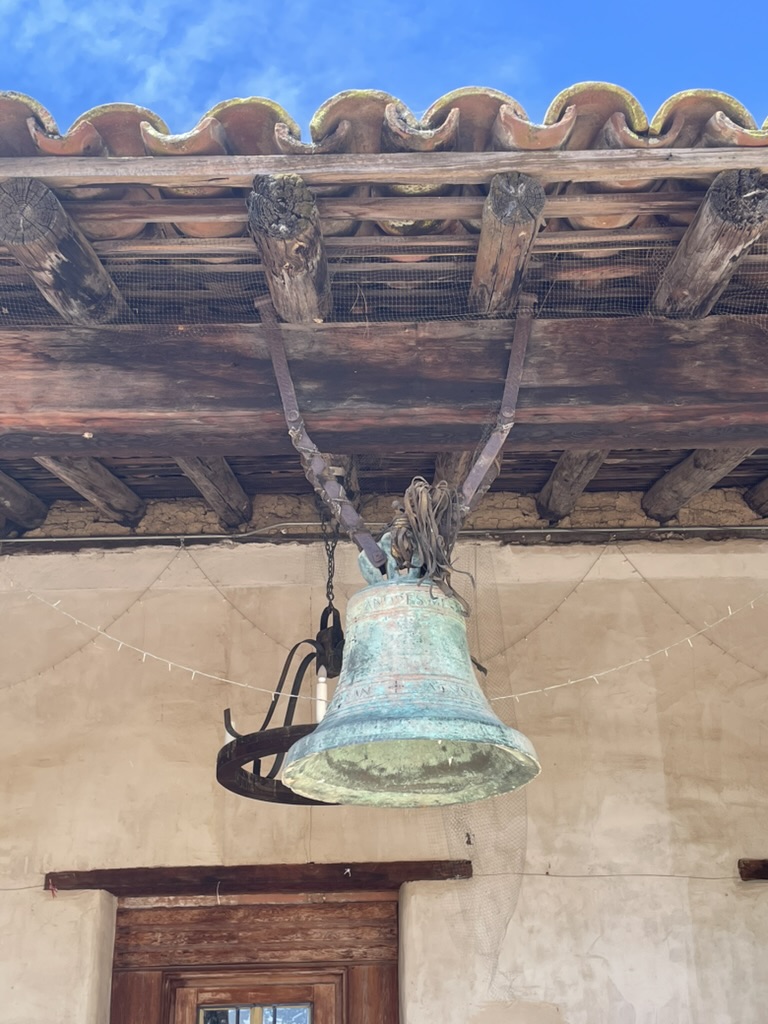
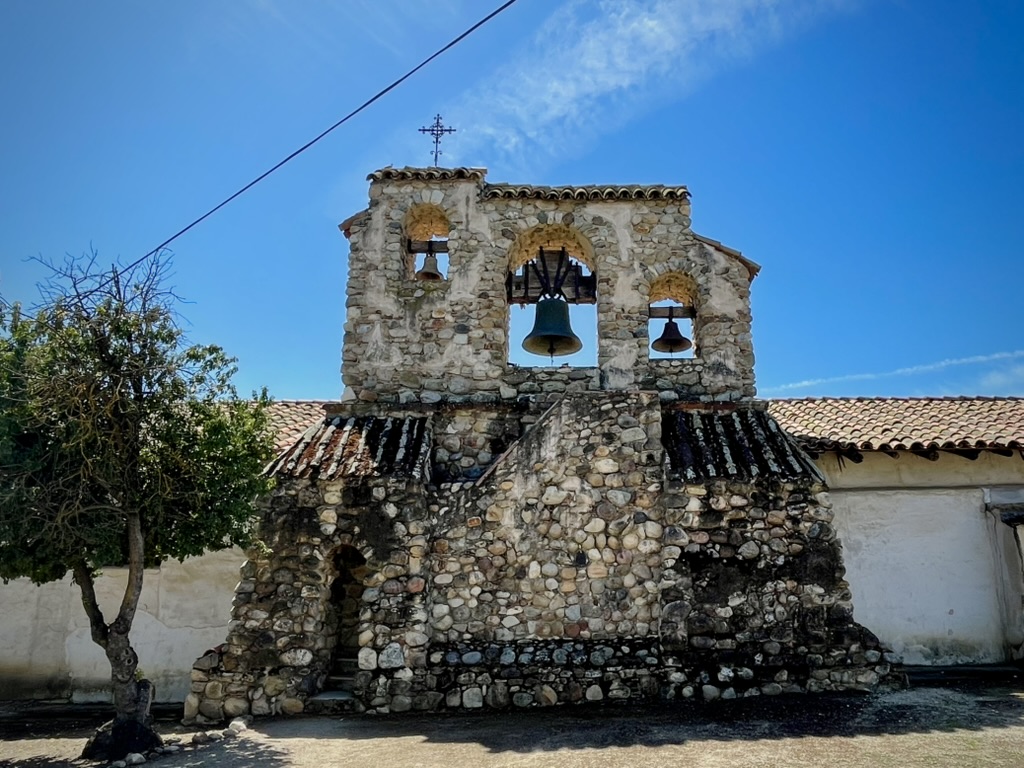
Passing through San Miguel on Mission Rd we stopped to visit Mission San Miguel.

Mission San Miguel Arcángel is a Spanish mission that was established in 1797 by the Franciscan order on a site chosen specifically due to the large number of Salinan Indians that inhabited the area, whom the Spanish priests wanted to evangelize. 

At one time, San Miguel Arcángel Mission controlled lands up and down the Salinas River for 50 miles and operated a rancho at San Simeon on the coast. 

Eventually, Mexican settlers first took over all mission valuables, followed later by American immigrants. The last Padre left San Miguel in 1840, and mission buildings were sold shortly thereafter. The monastery became a shopping center, including the most popular saloon on El Camino Real. 

Cheah! 

Today the mission remains in use as a parish church of the Diocese of Monterey. After being closed to the public for six years due to the 2003 San Simeon earthquake, the church reopened on September 29, 2009.

Mission San Miguel is what it’s cracked up to be… A former saloon!

For a perspective of the cultural impact of the Mission San Miguel Arcángel, check out: California Missions Native History

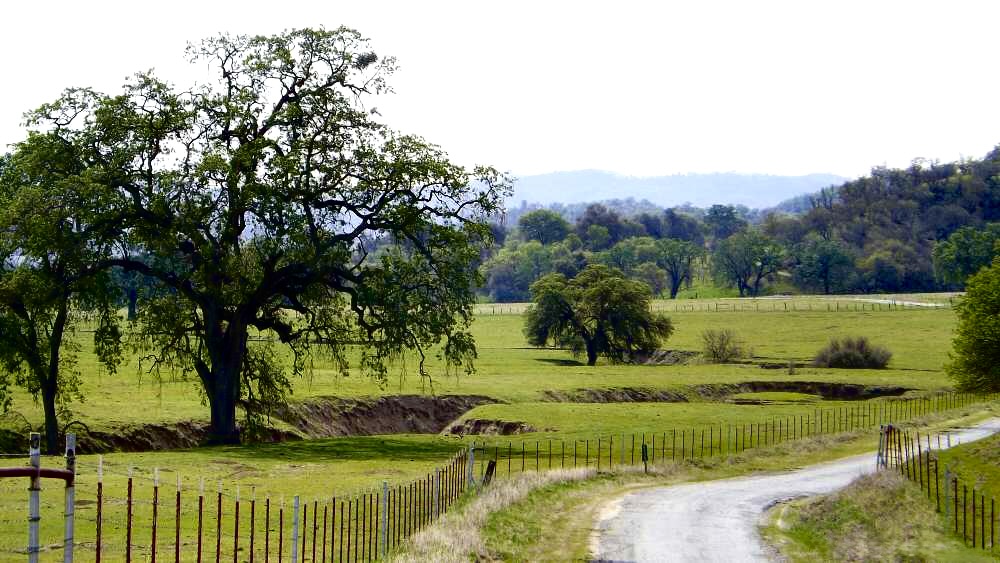
From the Mission we headed north on North River Rd to the “two lane” Indian Valley Road below.  This remote oak savanna ranchland featured live oaks and was carpeted by lush grasses.  Because of the past winter’s scant rainfall, there was only a modest display of wildflowers.

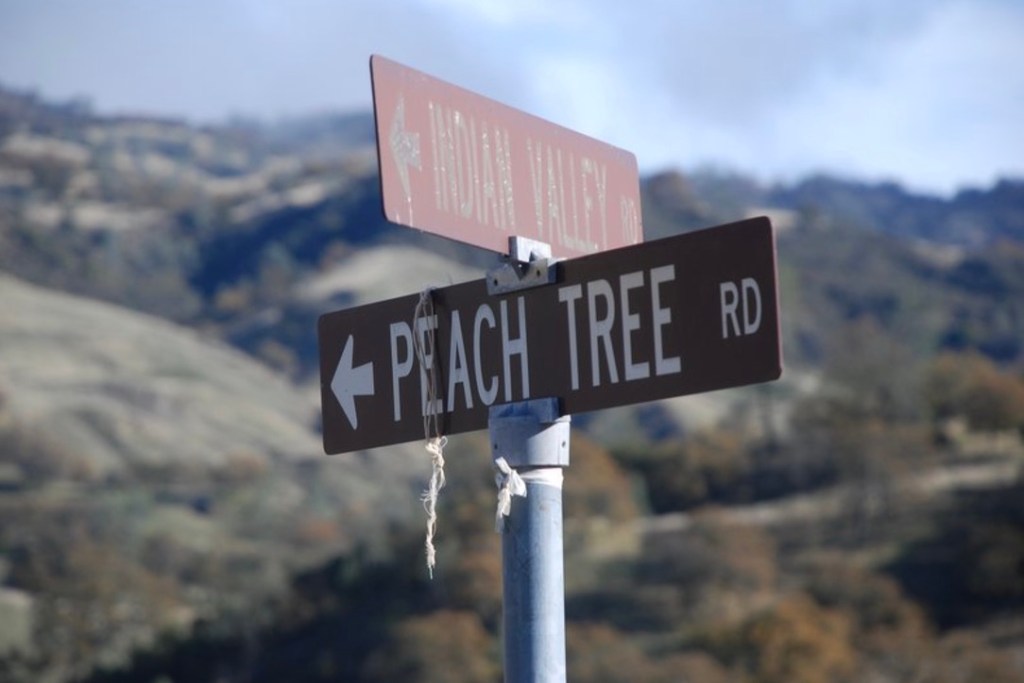
Indian Valley Rd intersects Peach Tree Road and at Bitterwater joins CA-25 all adjacent to the San Andreas Fault. 

Tough to get lost in Indian Valley

Rejoining CA-25 we passed the Pinnacles National Park.  Around 23 million years ago, a series of volcanic eruptions shaped the landscape that is now Pinnacles National Park. The remnants of these ancient eruptions have formed a striking terrain of rocky spires and deep canyons. The campground is virtually reserved through the spring into summer.

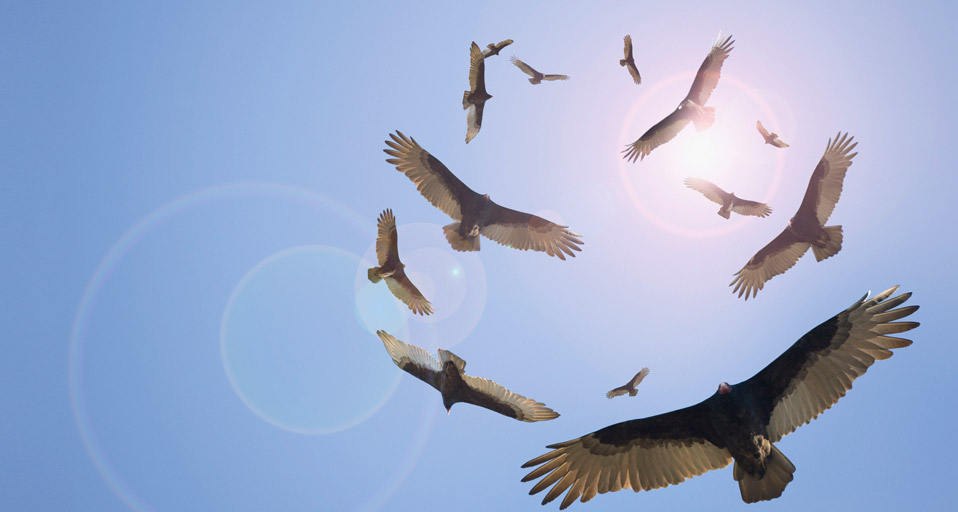
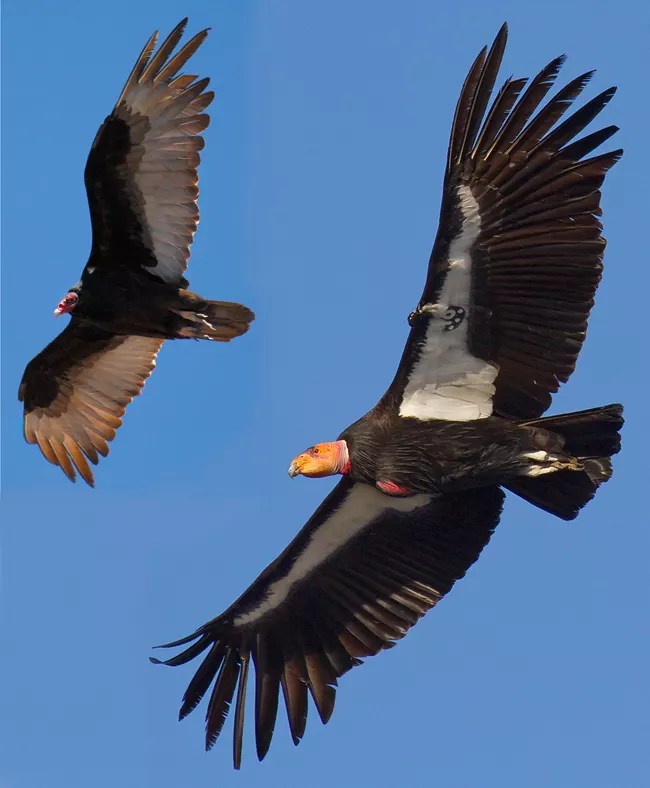
The Park’s landscape provides excellent habitat for the California Condor, the largest bird in North America.  SMAP and yours truly enjoy sighting Condors just as we enjoy UFO/UAP’s sightings.  In other words, any large bird from a crow to a turkey vulture, even a roadside chicken, will be identified as a Condor just as any moving object in the night sky is a visitor from outer space.  It simplifies trusting one’s vision in a less distressing way than acknowledging one’s age and declining mental acuity.

Which one is the imposter?

Condor Viewing Tips

The link to the National Park Service’s condor ID page should demystify any confusion about our propensity for exaggeration.  One of these two birds is a Condor.  The other is an imposter.

Passing Paicines and Tres Pinos we encountered traffic headaches due to the realignment of CA-156 from north and west of Hollister to San Juan Bautista.  Our plan was to head up to Fremont Peak, set up camp, head back down to San Juan Bautista and Doña Esther’s for dinner.  We would stop briefly at the Windmill Market in SJB for a road soda to whet our whistles while setting up camp.  But we had burned a bit of daylight getting to our destination so we debated just having an early dinner then head up the hill to set up. 

Much to my chagrin we learned that Doña Esther’s had permanently closed, likely the victim of the covid shutdown, changing demographics in the area, and post-covid highway construction prevented the local support the restaurant depended upon for survival.  So a sami and burrito from the Windmill’s exceptional deli and the requisite 3R’s beverages would have to tide us over.  Victuals loaded on the bikes we headed 12 miles up San Juan Canyon Rd to the Fremont State Park Oak Point Campground.  

Upon arriving at the campground, in another chagrin producing episode, we encountered a family ensconced in the epic view site, C-25, that I had reserved online.  

When I noted that we had reserved the space, the multi-generational family hesitated, claiming that there was no reserved tag on the site kiosk.  About that time a California State Parks pickup came down the road from the sites above where an employee stepped out of the vehicle and clipped a tag with, “Reserved: Jones.”  The family accommodatingly begin moving their gear to an adjacent site.  Territorial dispute resolved, we set up camp and enjoyed our sami and burrito with a spectacular view of Monterey Bay.

The view of Monterey Bay from Fremont Peak is astonishing!

Even more sublime is the sunset from atop Fremont Peak

As the sun was setting a State Park Ranger pulled up and had a lengthy conversation with the adult daughter of our neighbors who was apparently responsible for securing their site and the “trespass” we encountered. Apparently others were joining them and while the campground didn’t look full, there were no additional open sites available near theirs to accommodate the late-comers. The even-tempered ranger resolved all issues to everyone’s satisfaction.

He strolled over to check in with us and we had an unanticipated conversation about his son attending the University of California in our hometown, Merced. He mentioned that he and his wife had bought a house for their son to live in while attending the UC and, pending his retirement from the State Parks System, Ranger Dave and his wife would occupy the home.

He noted that he and his wife found our community to be warm and welcoming with just the right blending of rural and suburban living that differed greatly from their residence at the Henry W. Coe State Park HQ, a nearly 60 mile commute over some pretty windy roads just east of Morgan Hill where real estate values doubled, tripled, even quadrupled those of Merced.

It’s always nice to have an outsider find aspects of your hometown to be worthy that as a resident one might take for granted. All of those nice features sometimes get overlooked by contending with a growing population, sprawling development, and declining infrastructure, not to mention an increasingly aporetic populace convinced that the very thing that preserves the best of our community, like thoughtful planning with a nod to a changing climate, is perceived as somehow an infringement of one’s personal freedom… I digress.

Day 5, Homeward Bound    Our Intended Route Back Home Our Actual Route Back Home

Another miraculous sunrise and our last mocha-eye-openers and it was time to pack up on Day 5 of a splendid ramble along California’s Central Coast. 

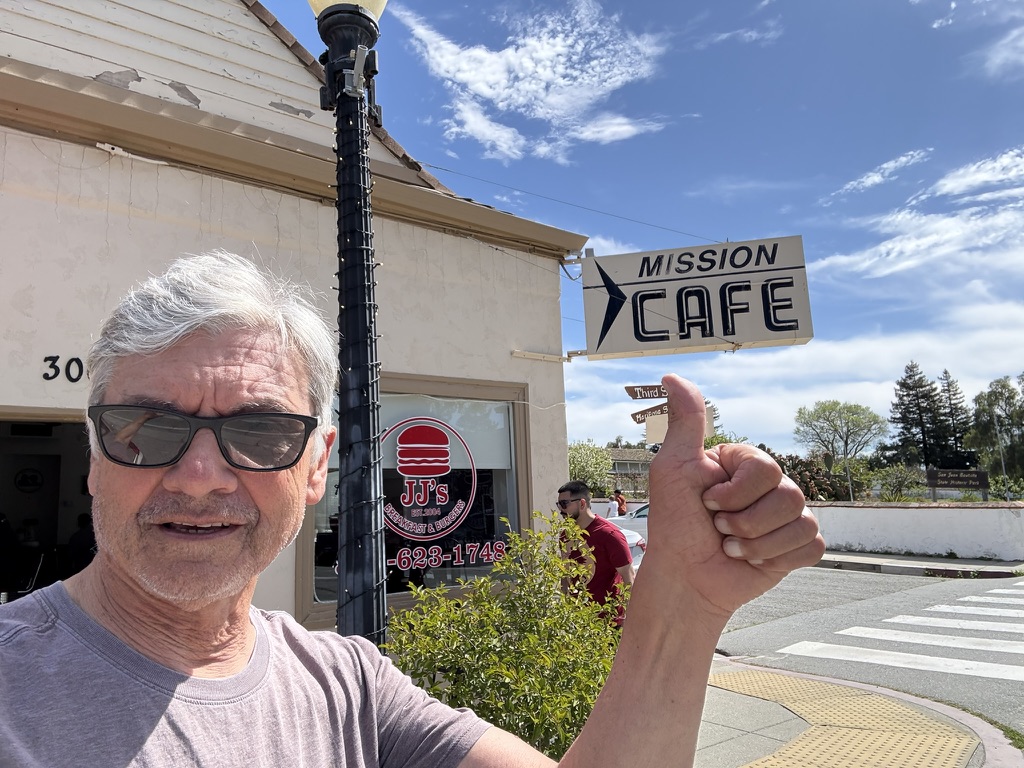
We made our way down to San Juan Bautista for breakfast at the Mission Cafe, now known as JJ’s Breakfast and Burgers.  Our waitress was quite delightful as she sprightly and single-handedly handled the morning breakfast rush.  It seems that everyone out and about on that fine Friday morning in April knew one another by name.

SMAP offering the one thumb equivalent of a 4 star review

We met the affable owner of the cafe, Jesus, who offered a warm greeting and gave us the lowdown on the difficulty San Juan Bautista was having recovering from the covid shutdown, changing demographics of the area, and the Highway 156 realignment.  Several businesses had closed with few struggling businesses taking their place.  The JJ’s was in a new location in a shuttered legacy cafe and just managing to get by.

Doña Esther’s Demise

There were fourth graders from Salinas touring the mission as this remains a quintessential California history field trip.  But 10 year olds don’t spend the cash necessary to sustain restaurants and shops of this quaint town of just over 2,000 souls.  Hopefully when the highway construction is completed, tourism will again flourish.  

While SAMP was engaging another local merchant in moto-reminiscence, I checked-in with my wife who was ordered to have an ultrasound for a knee issue that we hoped was not a DVT.  She had been struggling with pain for weeks and was was finally able to schedule an appointment with her NP, but not an ultrasound.

Since it was Friday afternoon, after finally seeing her NP, it was recommended she go to an emergency room, stat.  In that instant I told SMAP that we needed to take CA-156/152 over Pacheco Pass to shave the additional 31 miles and 1 hour from returning to the valley over our intended 2-lane Panoche Pass route .

I’m nervous enough crossing Pacheco Pass in a four wheeled vehicle surrounded with structural crash mitigation and air bags. That is nothing compared to the terror I felt passing downhill between speeding tractor trailer rigs and concrete jersey barriers at 85 miles an hour with racing Dodge Chargers and Ford Raptors weaving between cars bearing down on me at 90+ mph…  SMAP’s advice, “Get in the left lane and be aggressive!”  

At that time I regretted SMAP having the Cardo communicator I’d finally coaxed him into getting.  

Needless to say I’m sitting at my computer putting together this blog so nothing but a fading memory of that terror remains.  It so happens that my day ended at a Turlock Emergency Room waiting 6 hours for 15 minutes during which time my wife’s vitals were taken and an ultrasound administered.  Her portion of the ER bill was 183 x what our four nights and five days cost.  Fortunately no DVT.   I’ll remind her of that when I plan our next ramble.  

Or not!

Trip Itinerary   Three State Campgrounds in Five Days

Another of Sisyphus’s associates, SoBe

No Italics Necessary: Boomers, Gen-Xers, and Steve Martin’s Ageless Appearance

From 5 to 70 light years, just like that!

How Photos, Their Subjects, and Technology Age

As a Boomer, I recently came across an interesting social media exchange about Steve Martin’s appearance. A Gen-X user had commented on how much Martin has aged compared to his younger days. This struck me as curious, since Martin has famously sported gray hair throughout most of his career. While contemplating this, I noticed a Gen-X FB friend replied that she thought Martin looked virtually unchanged since 1979. The ambiguity of this second comment intrigued me – was it a subtle compliment suggesting his timeless appearance, or a backhanded remark implying he’s always looked older than his years?

The current flood of “then and now” photo comparisons on social media stands in stark contrast to photography’s more deliberate past. I began to consider my photo archive from “then” and those “now.” One consideration was that before 2009’s smartphone revolution, taking a photo was an intentional act requiring some form of dedicated equipment, a modicum of skill, and patience.  

In the 1950s, the Kodak Brownie Hawkeye represented the everyman’s camera – a simple box that democratized family photography. The 1960s brought the Kodak Instamatic 110, which made the process more convenient but still required a ritualistic journey: shooting the roll of film, carefully rewinding it, taking it to a photo center, and waiting days for prints to return. Each frame was precious, as you had a limited number per roll and couldn’t preview your results.

The Polaroid camera’s arrival marked a revolutionary shift – the first “instant” photography that produced physical prints within minutes. Its self-developing photos seemed magical at the time, though the image quality often left something to be desired. Still, it offered the first taste of immediate photographic gratification that we now take for granted.

This history makes today’s endless stream of digital photos and instant sharing seem almost surreal in comparison. We’ve moved from carefully rationing 12 or 24 exposures per roll to having virtually unlimited capacity to capture and instantly share every moment.  Having social apps that enable downloading photos, whether original or those scrubbed from the internet, then memed, makes for sensory overload at times.

My first camera in 1978, a Pentax MX SLR, represented a serious commitment to photography in an era when “serious” meant investing in manual controls, interchangeable lenses, and 35mm film. The MX, introduced in 1976, was known for its compact size and mechanical reliability – a worthy first venture into serious photography until I discovered the camera, lenses, a tripod, and other necessaries, added significant weight to an already burdensome backpack.

Armed with my “serious” camera, I wasn’t really interested in developing film. While many photography enthusiasts romanticize the darkroom experience, the reality involved handling some notably hazardous chemicals. The process required developers containing hydroquinone and metol, fixers with sodium thiosulfate, and various other chemicals that we now know can pose significant health risks through skin contact and inhalation. The stop baths were essentially acetic acid solutions, and the various toners often contained selenium or other potentially toxic compounds. Contact sheets be damned!

The progression from those days to today’s digital imaging technology has not only democratized photography but also eliminated these chemical hazards from the average photographer’s experience. My Pentax MX represented a fascinating bridge between the simple point-and-shoot cameras of the mass market and today’s digital technology – a time when “serious” photography required not just technical skill but also a willingness to invest in both equipment and process.

I progressed from the manual Pentax MX to the Canon EOS Rebel marking a significant shift toward automated photography, even while still anchored in the film era. The Rebel series represented Canon’s push to make SLR photography more accessible, with its autofocus and automated exposure systems. Costco’s addition of CD digitization with film processing was an interesting technological bridge – one foot in the analog world of film, one in the digital future. Then along came a series of point-and-shoot cameras when a pic was needed in a snap.

The Canon DSLR that eliminated the hybrid workflow, bringing everything into the digital realm. The microSD storage meant no more waiting for processing, no more finite rolls of film, and instant review of results. Yet it made for continuing to carry dedicated photography equipment with interchangeable lenses, a tripod, and the use of manual controls when desired. One needed to continue to develop skills along with an “eye” for subject and composition with no guarantee of a quality photograph.

By 2007 the iPhone revolution, fundamentally transformed photography from a deliberate activity into an almost unconscious one. Gone was the need to:

  • Calculate exposure with light meters
    • Adjust aperture settings for depth of field
  • Choose film speed (ASA/ISO) based on lighting conditions
  • Carry an arsenal of specialized lenses, filters, and accessories like a tripod
  • Master the technical aspects of photography before getting decent results

The smartphone essentially democratized decent, if not good, photography, turning it from a skilled pursuit into a point-and-shoot affair with computational photography handling all the complex decisions behind the scenes. The best camera truly became the one you had with you – which was now always in your pocket, and for the adventurist, built in editing effects were available to enhance a decent photo into a good photo.

This shift hasn’t just changed how we take photos, but why and what we photograph. The iPhone era has transformed photography from documenting special moments to capturing and sharing every aspect of daily life, for better or worse as witnessed in sisyphusdw7.com.

The following photos represent a perfectly modest snapshot of photography’s great divide – the pre and post-iPhone era. In my collection of in excess of 35,000+ images, roughly 30±% originated from processed film, capturing decades of my life before 2009, while 68±% were born digital from my Canon SLR & DSLR eras. The fact that only 2% of my printed photos, approximately 210, have made the transition to digital format through scanning is a common modern dilemma.

This tiny 2% conversion rate speaks volumes about a challenge many face: thousands of printed photographs sitting in albums, boxes, or envelopes, waiting to bridge the analog-digital divide, especially those of the generation prior to mine. These physical photos represent a kind of trapped history – memories that with time are deteriorating. They can’t be easily shared, backed up, or integrated into our current digital life narratives, unless you consider sitting next to a digital scanner a celebration of freedom from “trapped history”.

The iPhone 3GS purchase in 2009 marks my clear transition point into the era of ubiquitous photography. Unlike the carefully rationed shots of the film era or even the more abundant but still deliberate photos from my SLR and DSLR period, the 3GS ushered in an age where every moment could be casually documented, no development or downloading required, and continues through an iPhone 7 to my current iPhone 12 Pro. It took documenting student tours of Washington, D.C. and the Big Apple, a growing family, and a few adventures pre and post-retirement to familiarize myself with the ubiquitous “better or worse” instant capturing of life.

This technological evolution has created an interesting archival split: pre-2009 memories requiring physical storage and preservation, while post-2009 photos exist primarily as digital files, easily shared but potentially vulnerable to different kinds of loss or degradation.

This collection of images tells an interesting chronological story through different photographic eras and styles. 

The top row starts with the iconic “What, Me Worry?” Alfred E. Neuman MAD Magazine illustration that sharpened my appreciation of absurd humor. Followed by what is a late 1950s black and white studio portrait of a young Sisyphus in a plaid shirt – taken with the type of formal photography equipment and style common in that era. The third image shows the distinct style in 1979 with longish curly hair and mustache, having that slightly soft focus quality typical of school portrait photography of that period.

The middle row captures the 1980s/early 90s sailing style with vibrant colors (the red Pataguchi fleece by the water, the patterned wedding shirt in the middle shot, and the teal sweatshirt complete with LYSA logo). The photo quality and color saturation indicates they were taken with higher-end film cameras of that era.

The bottom row shows the progression into the more recent digital era, with increasingly sharp image quality rendered by 35 mm point-and-shoots. The cycling gear shot from a Fuji Discovery Tele, the outdoor backpack photo with the sun hat taken with a Cannon Powershot, and finally what is a recent smartphone-captured image with excellent detail and dynamic range, showing a Sisyphus and the Mrs. in casual outdoor wear.

The second uploaded image pair shows a recent photo in what appears to be a geezer, just sayin’, juxtaposed with “The Dude” meme from The Big Lebowski with its profound message about aging – a fitting bookend to my photographic journey that started with the Alfred E. Neuman’s OG meme. A reminder that I need not obsess about age as long as I keep my foot on the rock and pat my foot, don’t stop, put my foot on the rock…

Mt. Raymond circa 1973

Lydia Pense circa 1973

April Showers Bring April Corvid-19 Unlocked-down Moto Tours…

It began as it had for the previous four weeks with a text to Pete on Tuesday April 28, 2020, “So, up for a ride? Tomorrow? Thursday?”  

Pete’s terse response, “Thursday”.  

It’s kind of like fishing.  I toss a small bit of bait out by way of text and wait for a nibble.  I reply to Pete, “Okie Dokie…  Thinking about heading up into the higher elevations.”  

Blanchard Rd to Marshes Flat Rd not yet baked golden by summer’s heat

We’ve been getting out, beyond the confines of our homes and dog walks about our respective neighborhoods, in a series of semi-spontaneous “neighborhood” moto tours in this new age of sheltering, social distancing, mask wearing, and sanitizing, all in an effort to avoid the Coronavirus plague while maintaining our sanity and only slightly and with no malice or virus, veering just a bit from the California Coronavirus (COVID-19) Response webpage regarding recreation: “You can walk, run, hike and bike in your local neighborhoods as long as they continue to practice social distancing of 6 feet. This means avoiding crowded trails & parking lots. Californians should not travel significant distances and should stay close to home.” 

With no disrespect for those whose suffering is real, accustomed to unfettered retirement freedom, these restrictions on exercise and travel have been a challenge for my gaggle of sorta-fit retired adventure seeking pals.  Especially since the moto “gang” (see my post Riding Under a Fool Moon) had to cancel our five-day spring trip scheduled to depart on April 8, 2020 to the Mojave when state parks and businesses were suddenly shuttered as we awoke to the reality of the plague.

From Ken Layne, The Desert Oracle, whose spring  photos from the vicinity of Joshua Tree are what inspired us and what we missed! Check out The Desert Oracle podcast: https://www.desertoracle.com/radio/.

So we have interpreted staying close to home to mean one day rides with no stopping for commerce (except to purchase fuel), practicing hyper-social distancing, though there are only two of us, and using sanitizers as necessary.  A motorcycle helmet paired with a kerchief is perhaps equally protective from receiving or transmitting a virus. At the conclusion of the ride, all gear is treated and my bike has never looked as clean.

Wednesday rolls around with no reaction from Pete.  I text out a bit more bait, “Que hora manana?” and Pete replies with another terse response, “8:00 Chevron”

My thumbs up emoji in response gets one right back from Pete.  Two thumbs up and the ride is on, sort of an homage to “two hits and the joint turned brown,” perhaps how we may have dealt with these challenges of existential threat in our youth… These days we hoist a Corona, in lieu of bleach, to toast the defeat of the virus!

Corona with lime, yes. Clorox, uh, with or without lime, no…

On Thursday morning at 8:00 a.m. we met at the Chevron on Yosemite and “G” with no particular plan as thus far our Covid-19 Tours have been meticulously planned because I suffer from OMD, obsessive map disorder.  I said they were semi-spontaneous, right?  Planned insofar as I’ve been sheltering at home and with hours to while away and what better enterprise than to meticuolously plan motorcycle escapes.  This would be our fourth “local” ride since Governor Newsom imposed the statewide “lockdown” or “stay at home” orders in California.  

And with that preview, the following are brief descriptions of the trips with maps and directions, and a few visuals for your enjoyment. You’re welcome. The first three were put together prior to riding and the last ride I pieced together after the fact.  Note:  Every ride I take I think about how I need to photograph more of the ride, namely the bikes and scenery, the visuals part.  Afterall, who wants to look at a couple of squinting geezers out playing like a couple of kids…

Covid-19 Moto Tour #I to West Point, CA ±226 miles

Our first trip on April 2nd was a backroads trip over familiar roads with a couple of new avenues to San Andreas and West Point, returning through Copperopolis to our home in Merced.  Since the five day trip to the Mojave was cancelled, we figured (okay maybe we rationalized) a day trip through sparsely populated rural areas with stops only for fuel and to stretch, as we brought along snacks and water to enjoy while social distancing and of course hand-sanitizing, what could be the harm? 

Note we appear to be the only souls in West Point.  And we’re at least 12 feet apart.

Google Map of Tour #1

A note about Google Maps… It seems that the fine folks who code for Google Maps have decided that when you plot a route, save the URL to embed to give others access to your route, and link the route, as you designed it for use in a blog intending to share the exact route, the map randomly reverts back to what some algorithm directs is a more time saving route over busy roads that are uninteresting to this motoist author, <IMHO>.

The first leg of our route took us over rolling hill county roads we often ride bicycles on through orchards, vineyards, rangeland, and a dairy or two along Keys, Olsen, and Los Cerritos Roads while crossing the Merced and Tuolumne Rivers.  

Dry Creek expressing irony

That’s Dry Creek from just off Keyes Rd above.  As you might infer, it might just as well be called Wet Creek this time of year.  Okay, so photographic failure #1: squinting geezer with moto in background instead of foreground (top), and photo-fail #2, moto should be in the foreground of the scenery. I did, however, avoid the squinting geezer.

The ferry is now a covered bridge and a very nice one at that

We crossed the Tuolumne on the Robert’s Ferry Covered Bridge where you can stop, though the new Roberts Ferry Bridge isn’t historical, it replaced the original bridge built in 1916 but it still commemorates the regional history. A short historical walk down each side of the bridge features a series of interpretive markers, each telling the region’s story. The whole tale is there, from the Native Americans who first called the land home, to Robert’s heyday, to the fertile farmlands of Stanislaus County today.

Continuing on Crabtree Rd to Williams Rd you arrive in Knight’s Ferry. We took Sonora Rd north, spanning the Stanislaus River but just a short distance upriver from the modern Sonora Road bridge you come across the Knight’s Ferry Covered Bridge. This is an historical bridge. It is almost 379 feet (116 m) long, with a total of four spans set on stone abutments and piers. In addition to spanning the river, the bridge crosses a historic millrace north of the river. The bridge sections consist of Howe trusses formed out of wooden planks bolted together, with wrought iron tension rods, all joined by wrought iron bearing blocks. The exterior of the bridge is finished in vertical board siding, with a metal roof. So, make the turn north on Shuper Rd, just before the Sonora Rd turn and you will find the Knight’s Ferry Bridge. (Wiki)

The Knight’s Ferry Bridge is a historic covered bridge spanning the Stanislaus River at Knights Ferry, California. Built in 1863, it is one of the best-preserved 19th-century wood-iron Howe truss bridges to survive.

An interesting part of that ride aside from the terrain and landscape was how effectively the stay-at-home orders reduced traffic on the lowland county roads as they were largely deserted save the usual ranch/farm traffic. E Sonora Rd and Milton Rd to Jenny Lind were a bit more active. But stay-at-home didn’t seem to affect traffic as much on Hwy 26 to Valley Springs and Hwy 12 to San Andreas. Rejoining the busy Hwy 49 in Mokelumne Hill, traffic seemed normal for a weekday. Traffic tapered again on Hwy 26 up to West Point.  The one/two-lainers, Railroad Flat Rd and Mountain Ranch Rd, back to San Andreas were pretty vacant.

The verdant spring grasses and wildflowers were a visual feast. We took Pool Station Rd back to Hwy 4 and Copperopolis where the traffic was equal to that on Hwy 49. O’Byrnes Ferry Rd skirted Lake Tulloch to Hwy 120. Hwy 120 to J-59, La Grange, Snelling, and home.

Hill folk live in the hills for many reasons and I suspect chief among them is to live free of the hustle and bustle of towns and cities.

This is how Humphrey Bogart socially distanced in the hills of the Sierra Madres.

Since most of the roads we take, regardless of a pandemic, are rural, through sparsely populated areas, unless you consider the population of cows, there was still little activity at the street level at most of our stops in the little towns we rolled through.  At times, we almost felt as though we were trespassing. Riding without distractions of country road traffic and yet always aware of various other road hazards like potholes and guinea and pea fowl, kept us on the bikes with little urge to stop and take photos having traversed these quaint gold country roads for so many years.  I’ve listed the roads and you have a map so if you like, you can take the tour and your very own photos. Just don’t linger around too much. You never know when you may be ask to show your badge…

Disclaimer: The clip from Treasure of the Sierra Madre isn’t intended to disparage people of Hispanic descent or hill people. It’s a joke, based on a classic Humphrey Bogart film directed by John Huston, illustrating the lengths to which the characters in the 1948 film wished to distance themselves from one another the result of another pan-demic, gold fever! Having taken the edge off of my attempt at Covid humor, I’m not going to explain the pun.

Covid-19 Moto Tour #II to Coalinga, CA ±275 miles

A fine example of Pete’s artistic expression

The next trip on April 16 took us again over familiar and novel roads* to Coalinga via Panoche Rd to Paicines, Hwy 25 to Coalinga Rd, then Hwy 33 back home.

Google Map for Tour #2   

Bikes foreground, scenery background, no squinting geezers… Check!

Sadly, our traditional burrito breakfast at the Paicines Store was foregone in observance of the plague.  This was just a “stretch” stop after the 18 miles of twists and turns of Old Panoche Rd.  We have in the past had to head north a few miles to Tres Pinos for fuel when heading down Hwy 25 on previous trips when Pete was traveling on his volume challenged Bonneville T-120 gas tank.  Confident that our 5.5 gallon tanks on the Kawasaki Versys 650 and Suzuki V-Strom 650 could get us all the way to Coalinga from Merced, we headed south on Hwy 25, aka the Airline Highway, via the Coalinga Rd to where else ?  All the while, *novel virus free.  

I have often wondered why the stretch of Hwy 25 is also known as the “Airline Highway”

Airline Highway AKA CA SR-25

Now we will all know: “The Airline Highway Association was organized in 1933-34 and was composed of representatives of Alameda, Santa Clara, San Benito, Kern and Kings Counties. Its purpose was to establish this “Airline Highway”.

In the Oakland Tribune article, (Tues. June 19, 1934 page 5. “NEW AIRLINE, HIGHWAY TO L.A. PLANNED”) it states “the highway would follow the air line between the northern and southern part of the state as closely as possible”. The use of the word Airline is confusing as we associate it with modern-day transportation. In this sense it is defined as an Americanism dating back to 1805 meaning “traveling a direct route”. (Wiki)

I’ve been experimenting with a GoPro 7 trying to figure out the best way to mount the camera and capture interesting video.  Well, maybe not as interesting as Jamie Robinson’s MotoGeo videos on YouTube or any of the other thousands of talented and dedicated moto-vlogers, but illustrative of the essence of why I love to ride a motorcycle.  At least Jamie and I have that in common. 

Besides filming. editing video is something of a challenge for this old dog, but I’m slowly learning new tricks.  I whittled two hours of video into the following 30 minute unnarrated clip featuring Panoche Roads (New and Old) and Coalinga Rd.  To the uninitiated, it might appear monotonous. To the smitten, eat your heart out…

Remember, Jamie Robinson I’m not, but I don’t just sit on my porch in a rocker
whittling a stick.
I have never encountered an Uber moment on my Kawasaki. Maybe it’s the Ducati?

Sparing your having to read a list of roads, you can just sit back and enjoy the ride.  Hint, these back roads took us to our destination and fuel with only slight pucker fatigue as empty fuel warning lights began blinking at least 30 miles from Coalinga. The flashing light does a good job of keeping your thoughts trending on how to deal with running out of fuel with no signs of civilization on a road much less traveled by plague reduced traffic. I have determined that when the Kawasaki’s fuel warning light comes on and the fuel range indicator showing 30 miles til empty disappears, I have roughly 1 gallon of gas remaining. If the average miles/per/gallon indicator is accurate, I have at least 58 miles, okay, maybe 50, remaining before empty. Therefore when the fuel light comes on I have at least 80 miles of fuel. There was no measure of conciliation in the number of oil rigs that began showing up sporadically in the last 15 miles into Coalinga.

Oil, oil everywhere, but not a drop refined enough to pump…

We arrived in Coalinga and our first stop was a Chevron station on Hwy 33.  Topping off our nearly empty tanks, we reflected and gave our thanks for the dinosaures whose sacrifices made our combustion engines possible. Speaking of dinosaurs (ouch!), we serendipitously met a friendly group on a variety of HD baggers and a Spyder who were affiliated with the ROMPs group from home.  Like us, they were out for the day, perhaps attracted to Coalinga by the aroma of tri-tip grilling. A friendly group who seemed to be practicing social distancing… Or maybe they just though us to be peculiar on our modest touring Japanese motos.

There is the beef. Where are the bikes?

The ramble home was uneventful.  Mostly “airline” roads, Hwy 33 through Westside farming communities of Three Rocks, Mendota, and Firebaugh.  We passed by Harris Farms Horse Division on the Coalinga-Mendota/South Derrick Ave frontage to the Westside Freeway/Hwy-33/I-5. It appears that naming roads in the region is ripe with redundancy. This ranch is where the Harris Farms training track, an immaculately groomed 7/8-mile facility, is located along with the breeding shed that is the home of “world class stallions and Grade I sires claiming an annual conception rate hovering above 90%”.  Hmmm, I wonder what the attempts at bat number might be…  And you thought the only Harris Farms interprise was the resturant and stinky feed lot along I-5.

I remember being introduced to the sport of thoroughbred racing at the training track by a gentleman with whom I worked a couple of summers in the early 80’s as a field rep during the tomato harvest for Tri-Valley Growers Cooperative as a summer job supplementing my elementary teaching gig.  Jim, who worked as a dispatcher for one of the trucking firms hauling tomatoes, was a connoisseur of tracks, county fairs, and racing forms. He attempted to explain to this greenhorn the nuances and subtleties of how to evaluate a horse and the art of wagering respectively.  Of course this was all wasted on me.  I was trying to deal with wazillionaire westside growers who were never satisfied with the news I delivered about how at the peak of the harvest our canneries couldn’t take their excess production from the more lucrative spot market buyers who were refusing them.  You can’t squeeze another tomato into a cannery that’s at capacity I tried to reason.  It’s a little unnerving to have a pistol wielding ranch supervisor threaten one about “sending” a message to my supervisor.  Especially since I was on summer vacation from my fourth-graders. Needless to say, I never developed a passion for horse racing nor am I a big fan of industrial grade agriculture.  This despite the gift of an apologetic Harris Farms sweatshirt and fifth of bourbon following the incident. That’s why we buy most of our fresh seasonal produce from Yang’s, a local Hmong farm/stand.  I since went on to teach middle school kids. I could probably have handled the posturing of that incensed supervisor if I knew then what I now know these days…

The rest of the ride home on Hwys 33, 152, and 59 was it’s usual windscreen-bug-splatter-art producing commute, however, with a little less traffic.

Covid-19 Moto Tour III to Bass Lake, CA  ±169 miles

A week later on Friday, April 24th, we rolled to Bass Lake over many familiar roads but with a rearrangement of segments and directions making it a semi-new ride.  That’s the beauty of two wheels.  You face forward peering into the future, a future that may hold any number of road conditions, migrating animals, unfocused motorists, or errors in judgement distracted by splendid scenery, any one of which just might end an otherwise beautiful day’s ride permanently. The pitch of the landscape changes on the return trip creating a new future only slightly associated with rolling over the very same of the recent past.  Curves with mountain sides to the right and precipices on the left are now curves with precipices on right and a mountain sides on the left.  Eyes remain keenly focused for any sign of the aforementioned hazards or distractions as well, even though it’s an out and back only traversed minutes before.  If it’s a loop ride then only the future lies ahead.

Google Map Link for Tour #3

Sadly, as you can see, this photo features yet another photo-fail.  The scenery and moto are secondary, overwhelmed by the grizzled photo bombing geezer.  At least you can’t see the squinting eyes masked by the glasses. Willow Creek that empties into Bass Lake in the background was the star of the photo.  More of the motorcycle in the foreground with more of the starring background scenery (and none of the geezer) would have garnered the supporting actor honors for the bike.  

I don’t know what possesses me to take a selfie when I know that in viewing the photos later I’m profoundly disappointed.  Especially when that selfie is the only photo either you or your partner Pete took to commemorate the ride… Did I mention I’m no Jamie Robinson?

On this ride our route took us from Merced East on Hwy 140 to Agua Fria with a right turn onto Yaqui Gulch Rd to Buckeye and Ben Hur Rds to Mormon Bar where we jumped on Hwy 49 through Bootjack, Nipinnawasee, Ahwahnee to Oakhurst. Road construction and bumper to bumper traffic on the very busy Hwy 41 that bisects Oakhurst found us taking Crane Valley Rd to The Forks on Bass Lake. We whipped around the lake on Rd 222 to North Shore Road to check on Pete’s partner Cheryl’s recently sold cabin and returned by way of Rd 222 and 221 to North Fork Rd, Finegold and O’Neals. Bombing down Hwy 41 we turned west on Hwy 145 to Rd 400 taking us along the southern shore of Hensley Lake that looked pretty empty for this time of year. Road 603 through Daulton, Rd 29 and Ave 26 back to Santa Fe Ave got us to Le Grand where our bicycle zig zag on E Savana, S Burchell Ave past Jay’s to Childs Ave, Planada, then Plainsburg Road to South Bear Creek drive (not far from where SoBe found me) took us home.

SoBe, Sisyphus’s associate named for South Bear Creek (and not tea), where it was love at first sight. But that’s another story…

Covid-19 Moto Tour IV to Pinecrest Lake, the Clavey and Tuolumne Rivers ±248 Miles

That brings us to where this installment all began back on Thursday, April 30.  On the spot, after fueling up at the Chevron, getting a shocked expression from Pete that I had formulated no explicit plan with step-by-step Google directions, I suggested we go up to the Donnell Lake Vista or Dardanelle on Hwy 108 near where Hwy 108 over Sonora Pass is closed for the winter.  Mind you I was in my mesh gear because we were experiencing something of a heat wave (temps in the 90’s) in the Valley and I only had a t-shirt as my base layer and shorts under the armored mesh pants.  

Pete’s wheels began turning as we tossed about a route to take since his catalogue of the local “backroads” has been honed over some 50 or so years riding motorcycles.  We agreed on a route that would avoid most of the highways even though, because of stay-at-home orders, traffic was considerably reduced. We simply prefer back road touring.  There’s a purity or authenticity to the experience when you can ramble through an area or region away from the monotony of the slab and cookie-cutter boulavards lined not by repetitively interchangeable chain stores and eateries, but interesting “natural” landscapes.  Not much is natural about rows of almond trees or cows on pasture but it has an aesthetic value superior to strip malls <IMHO>. That is not to say I don’t enjoy the convenience of shopping centers or an occasional burger at In and Out, or tacos from Ramon’s or M&D, it’s just that battling traffic doesn’t enhance the motorcycle experience, <again, IMHO>.  

Google Map Link Tour #4

The trip took us through the foothills into the Sierra above Sonora on back roads including Algerine-Wards Ferry Rd to Tuolumne Rd past Black Oak Casino, closed due to the Covid-19 pandemic. I guess even casinos aren’t willing to gamble by permitting their Social Security slot playing patrons to mingle in the confines of the 50,000 square-foot gaming floor with 11,000 square-feet, smoke free. I wonder what the odds are on dying from smoking related diseases compared to death from Covid-19. I suspect the timeline is a factor and that the casinos have calculated there to be limited liability…

I know. The May rides will be better. More moto and scenery, less squint and repetitive video. Left to right, Marsh’s Flat (again), dual selfies at Marsh’s Flat and Pinecrest Lake.

We took the Kelley Grade portion of Marshes Flat down to Moccasin and west on Hwy 49 to Jacksonville Rd where we headed north to Stent Cut-Off Rd (wait, doesn’t a stent increase flow?) to a lovely wooded country Algerine Rd that became Algerine/Wards Ferry Rd popular with the bicycling crowd. More twists and turns on Wards Ferry Rd north to Tuolumne past the aforementioned Black Oak Casino to Hwy 108 and Pinecrest Lake which was “closed” except we were able to ride up to the lake as roads through the community of cabins allowed us to access Pinecrest Lake road. A stretch, walk down to the lake, and some snacks from our top boxes allowed my fingers, numb from the cold, to restore feeling.

Pinecrest Lake, not yet filled for the summer season

The turnoff to Pinecrest Lake also includes Dodge Ridge Rd where the ski resort, our family’s favorite, is buttoned up for the summer.

I’m not sure what the winter geezer rules are for photos…

We decided to forego gaining more elevation as the temperatures were dropping pretty quickly from Cold Springs so we reversed our course and headed back down Hwy 108 for the town of Tuolumne where we then headed east in the direction of Cherry Lake by way of Buchanan Rd/Forest Route 1N01. The road is well paved and is filled with superb twists and turns down to the grand Clavey and Tuolumne Rivers in fine spring runoff form.

Pete is preparing to take a photo of the Clavey River so since it’s a picture taken of him, and so it isn’t a selfie and there is a moto in the foreground. The photo on the right is self-captioned. In chalk.

Technically, this isn’t a selfie.  Part of the moto is in the foreground and the scenery is stunning, the Clavey in splendid spring runoff 
A shadow of a mirror and handle bar in the lower right corner, sort of qualifying as a moto in the foreground, featuring the Grand Canyon of the Tuolumne.

The photo above is a view of the Rim Fire burn scar taken from Cherry Lake Rd above the Tuolumne River Canyon. The fire started on August 17, 2013, during the 2013 California wildfire season and grew to be (at the time) the third-largest wildfire in California’s history having burned 257,314 acres.

This is our son Derek igniting a backfire when he worked the Rim Fire with CalFire

The inferno was caused by a hunter’s illegal fire that got out of control and it was named for its proximity to the Rim of the World vista point, a scenic overlook on Highway 120 leading up to Yosemite.

Chamise (Adenostoma fasciculatum) was in abundance along with a number of other native wildflowers (excluding the invasive Scotch broom front left) covering the burned hillsides of the Tuolumne River canyon and the fragrance that afternoon was intoxicating. Unfortunately chamise is oily and highly flammable as the season wears on and conditions dry. On the other hand, it is an excellent plant to stabilize the fire ravaged hill sides. It’s just like nature to giveth and taketh away…

Speaking about “taketh-ing” away, back on Hwy 120 from Cherry Lake Rd to our turnoff, the return ride made its way past the Dead Toenail curve near the intersections of Smith Station and Greeley Hill Roads about 8 miles north of Coulterville without incident.  It seems we have exorcised the bad juju from that curve that was earlier referred to (never again to be mentioned) in my Riding Under A Fool Moon post. Did I mention that earlier?

Does a semi-selfie count? At least I’ve spared you the squinting

Pete’s expression pretty much summarizes what he’s anticipating I will eventually write about the ride. After a brief stop in Coulterville, again practicing social distancing, we avoided stopping at the Coulterville Cafe and General Store for our usual ice cream bar and stimulating coffee beverage. After a brief stretch, we made our way home on the usual roads reinvigorated having gotten out of the house for a couple of hours doing what we love.

Stay tuned for May’s rides as loosening restrictions may make for an overnighter.   Until then, stay safe all!


2024 Seeking Refuge on a Fall Ramble to Utah

The journey details motorcycle travel in California and the Southwest, highlighting seasonal weather patterns, cultural observations, and personal reflections on commercialization versus natural beauty during a scenic adventure to Zion National Park.

Reconciling expectations with reality

With Abbey’s admonition to seek refuge in the desert, it seems to me that best time to travel by motorcycle on secondary “Butler G1-3” or “Lost Highway” roads in arid California and the Western US depends on the direction you’re heading. We live in California’s Central Valley in Merced which has a fairly predictable climate – hot summers, temperate and windy springs, warm dusty falls, and cold, sometimes foggy, wet winters. Though the weather can be unpredictable, weather forecasts are quite accurate, with NOAA reporting a 7-day forecast is 80% accurate and a 5-day forecast is 90% accurate.

If you’re traveling south towards the Mojave Desert, the winter, early spring, or late fall weather is generally more appealing keeping in mind that this region experienced record-breaking 100+ degree days during the summer of 2024.

Heading east across the central Sierra Nevada passes like Sherman, Tioga, Monitor, Ebbetts, and Carson, are typically closed by the first snows as early as late October and don’t reopen until around Memorial Day in May. That leaves the summer months of June through September as the prime window for snow-free roadways in these areas. However, crossing the western foothills to get to those passes can still be quite hot during the summer months, and once you cross over into the high desert and Basin and Range regions of Nevada, the heat can be uncomfortable as well. Fortunately, the southern Sierra Tehachapi and Walker passes provide access to the Mojave year round whether the weather is hot or cold.

Map of the West and Southwest

Traveling north presents similar weather uncertainties. The summer monsoons that have brought more frequent and severe downpours to the Southwest and Pacific Western states in recent years can impact northern routes as well.
While winter weather is generally cooler the farther inland and north you go, the smaller state highway mountain are more likely to close as resources are prioritized for keeping major interstates open. Mustn’t we forget wintertime atmospheric rivers that can inundate parts of the Pacific Coast and far inland. For northern trips, the best bet is generally to travel in the early summer, before the peak heat of July and August sets in across the region.

Sierra Mountain Passes Map

Regardless of the time of year, it can be tricky to pick the “perfect” 10-day or longer window to ramble the region on a motorcycle. But with confidence in the 7-day forecasts, you can plan accordingly. That’s how you chose your 2024 Seeking Refuge on a Fall Ramble to Utah, – trusting the weather predictions to guide your route and timing.

Off to Mukuntuweap 

Photo: NPS/Jason Burton sort of looks like the Paiute shrine of the half peace sign 
with the ectopic middle digit just to the right

After finalizing our travel plans for a late October ramble, Pete, Sisyphus’s Chief Associate, and I settled on a south-easterly route – heading over Tioga Pass, down the Eastern Sierra, across the Mojave to southwestern Arizona, then north to southern Utah and back west through Death Valley. Our destination for this trip: Zion National Park.

Zion, as it’s known today, was originally called “Mukuntuweap” by the local Paiute people, meaning “straight canyon.” This name was later co-opted by Mormon pioneers who settled the area, just as the Mariposa Battalion had appropriated the name “Yosemite” a century earlier based on the original name given the valley by its Southern Miwok inhabitants. While “Yosemite” at least bears some resemblance to the native “Yos.s.e’meti,” the transition from “Mukuntuweap” to “Zion” feels like a blatant act of cultural erasure. It’s a sobering reminder of how Manifest Destiny has stamped its mark across the western landscape.

For Pete and I, seeking “sanctuary” or “refuge” in Utah seemed a reasonable goal, unlike and with respect to, the preceding generations of indigenous peoples who were displaced from these lands. With confidence in the 7-day weather forecasts, we felt we could time our journey to maximize the chances of favorable conditions. Despite the troubling origins of the name “Zion,” the park remains a place of spectacular natural beauty that has drawn visitors for generations, and we looked forward to experiencing its grandeur and serenity once again. 

 Well, as we found the grandeur, grand, serenity was a bit more problematic.

Day 1, October 22, 2024 – Merced to Red Rock Canyon State Park

Ready to roll with the awkwardly obligatory send-off photos

Merced to Red Rock Canyon State Park

No longer requiring a reservation to cross the Sierra Nevada via Tioga Pass (CA-120), we set off from our usual starting point, the Chevron station on G St. and Yosemite Pkwy in Merced. The commuters heading west on CA-140 left the eastbound lanes clear until we descended into the Merced River canyon, where Yosemite-bound commuters flew past us on the brief broken yellow straightaways to which they’ve grown accustomed to passing the more leisurely traveler.

Once we entered Yosemite National Park, making our way up to Tuolumne Meadows was a generally tranquil, unhurried experience. Crossing Tioga Pass itself was pleasant, though a bit chilly. Fortunately, the traffic was not as bad as it can be, reduced to a post-Labor Day crawl that made the descent into Lee Vining a civil affair under multiple layers of warmth and heated grips.

The rip down US-395 at 75ish mph was brisk but not so fast that the landscape became a blur. We stopped in Lone Pine for a late lunch (or “linner”) at the Bonanza Mexican Restaurant, then procured our “3-R” beverages (rehydration, recovery, and refreshment) across the street at the Lone Pine Market, since our intended campsite for the night was rather remote.  A 353 mile day and we were home for the night.

Tuesday afternoon…

Tuesday evening…

Ghostly hoodoos and the summer triangle vertices of Altair, Deneb, and Vega, each of which is the brightest star of its constellation (Aquila, Cygnus, and Lyra, respectively)

Wednesday morning…

Day 2, October 23, 2024 – Red Rock Canyon State Park to Parker, Arizona

Red Rock Canyon State Park to Parker

When planning our route, there’s always room for a bit of improvisation (hint: foreshadowing). Given that my riding partner Pete had traveled through the area earlier in the spring, we opted to avoid the slog down US-395 through the ever expanding exurb of Adelanto and instead made our way to Joshua Tree, by way of Barstow and CA-247 through Lucerne and Yucca Valleys, for lunch. Though longer than the more customary route on US-395, the Old Woman Springs Rd, proved to be a wise decision as it set us up for what would be our warmest day yet, crossing the Mojave on CA-62 and entering the sagebrush and saguaro of the Sonoran Desert en route to Parker, Arizona on a 298 mile day.

East of Twentynine Palms, we found ourselves on what is best described as a lonesome desert road. At the intersection of CA-62 and US-95 at Vidal Junction, we stopped for some “nalgas relief” (Spanish for “ass relief”) and a refreshing agua fria. There, we met a friendly woman trucker hauling produce from Fresno eastward who commented, having witnessed our pained expressions as we dismounted our motos, that our sore backsides were likely just as weary as hers. I imagine her air-conditioned cab compensated of any nalgas disorders…

Dry eyes and weary nalgas, at least there was shade

The remainder of the CA-62 stretch from Vidal Junction to Parker, Arizona, in 95-degree heat, did little to relieve our “nalgas,” now feeling worse for wear. But as soon as we crossed the Colorado River, we knew we had entered at least a new time zone – both literally and figuratively.

Finding the right accommodations is always an adventure on our moto tours. While I had previously stayed at the venerable Burro Jim Motel back in 1996. Burro Jim was another 84 miles down the road and so since it’s generally not advisable to ride a motorcycle through the desert in near 100 degree heat for nearly 400 miles, instead, we opted for the Budget Inn in the heart of Parker. In hindsight, I should have checked my old bicycle trip itinerary, as the Kofa Inn may have been the better choice. Alas, the Budget Inn, while functional, definitely lacked the neon “colorful funkiness” of the Kofa, it has fared better than the Burro Jim.

After a recommendation by our friendly host we enjoyed another satisfying meal at the Tierra Caliente Meat Market followed by an excursion to the Terrible Herbst Convenience Store

Our camera shy host and Pete, resting motos, and poolside relaxation, rehydrattion, and reflection in Parker, AZ

We exchanged pleasantries with a fellow who had his ski boat engine apart in the motel parking lot who assured us the boat would be ready for the weekend on the Colorado River.  We then retreated poolside, as close to the Colorado we would get that evening, at the motel for some much-needed relaxation, rehydration, and reflection on the day’s journey.

Day 3, October 24, 2024 – Parker to Aguila and Camp Verde, AZ

Parker to Camp Verde

As noted, back in 1996 I was part of a group that rode bicycles across Arizona. The first day of that journey took us from Parker to Aguila, with a planned stay at the aforementioned Burro Jim Motel. The riding itinerary described the terrain as “flat and fast with some gentle rolling sections – a scorching paceline.” “Scorching” as the average high temperature in Parker that August of the ride was a blistering 106.7°F.

Wanting to avoid that same searing heat, Pete and I departed Parker early on this October morning. Our first stop was in Aguila, AZ for breakfast. As I reminisced, our 1996 ride had coincided with the famous Race Across America (RAAM) ultra-cycling event. Upon awakening early, before sunrise to beat the August heat, we heard music blaring from afar.  We witnessed a slow moving RV approach the motel, its headlights augmented to brilliantly illuminate the road for some distance ahead.  Lo and behold, a solitary cyclist was riding on AZ-60, the RV in support for a competitor riding the RAAM.  None of our crew were aware of the RAAM taking place.In fact, we later managed to “photobomb” the RAAM coverage as we climbed the “extreme” grades on Highways 71 and 89 near Prescott.

The Coyote Cafe and the Burro Jim; It doesn’t look like “all new interiors” are due any time soon…

Fueled by another fine Mexican meal at the Coyote Cafe, we set out for Camp Verde, a journey of some 221 miles. The AZ-72 to US-60 route sliced through the Sonoran Desert, the flat, arid landscape seemingly disappearing into the distant horizon. But as we approached Yarnell, mountains appeared to leap from the otherwise flat terrain. Alas, a few miles north of Congress, AZ we entered the Granite Mountains near where on June 30, 2013, nineteen of the 20 members of the Granite Mountain Hotshots, an elite crew trained to fight wilderness fires, died as they battled a fire outside of Yarnell. The nearby Granite Mountain Hotshots Memorial State Park is dedicated to their sacrifice.  My awareness of this tragedy is in part the result of my two sons who are firefighters.  

To bypass the final “extreme” grades, we took Kirkland Valley and Iron Springs Roads at Kirkland Junction, before rejoining AZ-89A later north of Prescott. This stretch provided some enjoyable twisties, with two, two-up rented Harleys mounted by two couples from Indiana leading the way to a scenic overlook just outside of Jerome.

There’s the Mogollan Rimin the distance just over my left shoulder defining the western edge of the Colorado Plateau

This former mountain mining community of Jerome had earned the nickname “The Wickedest Town in the West” during its heyday, when rich copper ore deposits attracted miners, merchants, madams and more to Yavapai County. Jerome’s colorful history is too rich to chronicle here, but a quick link to the Wikipedia page (Jerome, Arizona) provides interesting insight into how this town evolved from a mineral extraction hub to a modern tourist destination.

With the day’s riding behind us, we rolled into Camp Verde, ready to unwind and recharge for the next leg of our adventure. Our first stop was to scout the USFS Clear Creek Campground – a grassy, flat site with shade provided by tall cottonwoods. Perfect. Despite the slightly creepy gravel road leading in, our gracious campground host recommended we set up right across from his site, next to the clear creek for which the campground was named.

After getting camp established, Pete and I headed into town for provisions and refreshments, returning to enjoy a pleasant evening under the stars, transfixed by a crackling campfire as we relaxed, rehydrated, and reflected on the day’s journey.

Day 4, October 25, Camp Verde to Fredonia, AZ

Camp Verde to Fredonia

This was to be a modest days ride, a mere 257 miles on US-89 through Sedona and Flagstaff, across the Colorado River for the second time at Marble Canyon, then US-89A past the Vermillion Cliffs, past Jacob Lake, the entrance to the North Rim of the Grand Canyon (see 2021 Fall Moto: Abbey’s Other, On-the-Road Trip, Part 2), to the Grand Canyon Motel in Fredonia, AZ.  

My affinity to this place is lodged in my fond regard for Marguerite Henry’s children’s book, Brighty of the Grand Canyon, that I loved reading aloud to my elementary students. Brighty is a tale about a “lone little burro that roamed the high cliffs of the Grand Canyon and touched the hearts of all who knew him: a grizzled old miner, a big-game hunter, even President Teddy Roosevelt. Named Brighty by the prospector who befriended him, he remained a free spirit at heart. But when a ruthless claim-jumper murdered the prospector, loyal Brighty risked everything to bring the killer to justice.” 

Fredonia was where Uncle Jim retreated for the winter in the story of Brighty’s adventures as the little burro that has become the symbol of a joyous way of life. Some people say that you can even see his spirit roving the canyon on moonlit nights—forever wild, forever free.  

 The Life and Times of Brighty of the Grand Canyon

The landscapes of the Southwest that we traversed undoubtedly possess a grand, serene beauty all their own, yet the relentless exploitation of these places by commerce can sometimes overwhelm and diminish that natural splendor. In our quest for “sanctuary” and “refuge,” we’ve found that the very things we seek – the grandeur and serenity of the untamed wilderness – are often sullied by blatant attempts to “augment the experience” through tourist traps, roadside attractions, and other concessions to consumerism.

No matter how breathtaking the vistas, it’s difficult to fully immerse oneself in the natural wonder when the view is punctuated by kitschy souvenir shops, gaudy neon signs, or other intrusive commercial development. The very objective of our ride – to find solace and escape in the majesty of the southwestern landscapes – was undermined by the pervasive influence of those who would seek to profit from, rather than preserve, these precious resources.

It’s a delicate balance – honoring the needs of the modern traveler while safeguarding the integrity of the land. But in our experience, the scales have tipped too far in favor of exploitation, robbing these landscapes of the very qualities that drew us here in the first place. Navigating this tension, and finding those rare pockets of unspoiled beauty, had become a central challenge of our journey.

Jerome, while historically fascinating and successful in reinventing itself as an artsy tourist destination, suffered from the very thing that keeps it alive – tourism. The narrow streets, choked with “experience seeking” souls, detracted from any authentic experience immersing oneself in the rich history of Jerome one might hope to find.

Sedona proved even more jarring, with its commercialization dialed up to eleven through “vortex tours” and spiritual marketing. The official Visit Sedona website promises an idyllic autumn experience: “Sedona, with its vibrant red rocks and golden hues of autumn, offers a season of renewal and adventure… From hiking trails bathed in rich autumnal light to spiritual vortex tours that connect you to the land’s energy, the opportunities for exploration and personal discovery are endless.” Like dozens of bloggers and influencers promoting the Ultimate E-bike Tour of Sedona, or the VIP Sedona Vortex Spiritual and Scientific Tour, or The Original 4 Winery Tour with Charcuterie, et. al. each promotional image showing pristine, uncluttered landscapes – conspicuously absent are the traffic jams and crowds of “vortex seekers” on their personal discovery journeys, seeking the best spas and best UFO tours. Can there even be a “best” UFO tour? Apparently yes, in Sedona.

One might call our own quest for “sanctuary” hypocritical given these observations, but that’s precisely the point. Seeking an imagined sanctuary becomes impossible in landscapes exploited for mass consumption. What we’re sold is a cheapened, commercialized version of what the original inhabitants revered as genuinely spiritual places of unspoiled beauty.

The contrast became stark once we cleared Flagstaff. Until reaching Marble Canyon, commercial enterprise virtually disappeared. Along the route, Navajo Nation vendors sold jewelry and goods from simple roadside stands – no hype, no hard sell. These basic transactions between maker (or agent) and buyer provided local inhabitants with income while maintaining dignity. Their alluring tables displayed exquisite native craftsmanship without promising spiritual enlightenment or personal discovery merely through purchase. Though one might wonder about authenticity versus foreign counterfeits… 

“Here the earth, as if to prove its immensity, empties itself. Gertrude Stein said: ‘In the United States there is more space where nobody is than where anybody is. That is what makes America what it is.’ The uncluttered stretches of the American West and the deserted miles of roads force a lone traveler to pay attention to them by leaving him isolated in them. This squander of land substitutes a sense of self with a sense of place by giving him days of himself until, tiring of his own small compass, he looks for relief to the bigness outside — a grandness that demands attention not just for its scope, but for its age, its diversity, its continual change. The isolating immensity reveals what lies covered in places noisier, busier, more filled up. For me, what I saw revealed was this (only this): a man nearly desperate because his significance had come to lie within his own narrow ambit.”
― William Least Heat-Moon, Blue Highways

The Navajo Bridge over the Colorado at Marble Canyon

We eventually reached Fredonia, Arizona’s northernmost outpost, situated on Kanab Creek’s eastern bank. The town sits just four miles shy of the Utah-Arizona border in what’s known as the Arizona Strip – that peculiar portion of Arizona lying north of the Colorado River, wedged between the Grand Canyon and Utah. Thanks to the Grand Canyon serving as a natural barrier, this region has largely escaped the tide of urbanization that’s swept through other parts of the state.

The town’s origins tell a particularly ironic story of American settlement. Founded in 1865 by Mormon pioneers fleeing Utah to evade federal anti-polygamy laws, Fredonia’s name allegedly means “land of free women” – a bit of Mormon pioneer wordplay that requires no further comment. While tourism and agriculture keep the town alive today, that original history of seeking “freedom” from federal oversight adds another layer to our ongoing meditation on sanctuary and refuge.

Beyond campgrounds, we chase the ghosts of road trip Americana – the Supai in Seligman, the Clown Motel in Tonopah, the Y in Chama. The Grand Canyon Motel in Fredonia is another pearl on this string of fading roadside gems.” 

the Grand Canyon Motel, a treasure, to be sure

Chuck, the property manager, shared an unexpected piece of history while admiring our motorcycles. The motel’s story intertwines with Theodore Roosevelt’s bold move in January 1908, when he declared over 800,000 acres of the Grand Canyon a national monument. ‘Let this great wonder of nature remain as it now is,’ Roosevelt proclaimed. ‘You cannot improve on it. But what you can do is keep it for your children, your children’s children, and all who come after you, as the one great sight which every American should see.” (History.com)

Chuck claimed that Teddy Roosevelt stayed in one of the cabins.  Roosevelt died in 1919.  The cabins were built in the 1920’s as hunter cabins.  The mathing doesn’t work…  Nevertheless, his recommendation for dinner at Escobar’s Mexican Restaurant in Kanab was honest.  Even though it was our fourth Mexican meal in as many days, and though we were in a rather ethnically homogenous community, the chili relleno was one of the best I’ve ever had!  Me quito el sombrero ante los Escobar!

Following our fine meal, we made a quick stop at a gas station convenience store, the 3-R’s procured, and it was back to Fredonia to watch Freddie Freeman hit the 1st walk-off slam in World Series history as Dodgers topped the Yankees 6-3 in the classic opener.  As an avid Giants fan, it was a tough pill to swallow.  Hey, no irony in watching the World Series in the land of Brighty of the Grand Canyon…

Day 5, October 26, 2024 Fredonia to Glendale and the Zion Family Ranch

Fredonia to Zion Family Ranch

Zion Family Ranch to Zion and Back

There were two legs on this ramble to Zion National Park.  The first leg was from Fredonia on US-89A & 89 to Glendale, the nearest town to the campground.  It was a lovely fall morning and the roads were open and traffic was sparse. 

The Moqui Cave, in the 60’s (left), and a more recent photo (right)

We passed the Moqui Cave, yet another example of the crass exploitation of what was otherwise an interesting archeological site.  Moqui Cave was once used by Anasazi people as a shelter or food store, according to archaeological digs in the area.  It was rediscovered by white settlers in the 19th century, and served as a speakeasy in the 1920s during Prohibition.  Where the land of free women meets a speakeasy.  Speaking of irony, no irony there, eh?

We passed the Kanab Dinosaur Tracks and the Sand Caves road side attractions. Past Mt. Carmel we headed north up the tranquil Madison Canyon to Glendale near where our campsite at the Zion Family Ranch, one of seven “dispersed” (first come, first served) costing $49, was located.  In the internet era booking a campsite is like booking any lodging.  You put in your dates and supply a credit card number.  There was no camp host, no gate code, or any other acknowledgment of our arrival. The site looked unsupervised.  I guess that’s what “dispersed” means.  I guess that’s how the “Zion Family” ranchers distance themselves from commercial exploitation. I am grateful that they provided “sanctuary” on what was a family’s legacy property.  Sorry Paiutes.

Our plan was to set up camp at the Family Ranch, then head into Zion National Park for the day. It was a stunning morning – cool but not cold, with the poplars and aspens bursting with vibrant fall foliage. 

Since it was a Saturday, we tried to get an early start to beat the crowds.

Through Orderville east of the park, all was orderly.

However, by the time we made the 26-mile ride to the Zion-Mt. Carmel Tunnel entrance on the east side of the park, the number of cars, trucks, trailers, and RVs had multiplied exponentially. Most of these visitors had entered the park from the western entrance near the town of Springdale.  Virtually every turnout was choked with people waiting for a parking space to open.

Zion National Park is undoubtedly one of the most unique and concentrated geological wonders outside of iconic places like Yosemite Valley. Yet, like Yosemite, it seems to be loved – if not quite to death – then at least to near non-existence. The sheer clutter of humanity obscures and detracts from the natural wonder of the landscape. I guess I have adopted a little Edward Abbey attitude about development on our nation’s national treasures.

Despite our best efforts to get an early start and keep our expectations checked, the overwhelming crowds at the park entrance on this busy Saturday dampened our excitement.  When you have to busy yourself with watching out for inattentive drivers in stop-and-go traffic or selfie-taking pedestrians who would blindly step into the crawl for that perfect Instagram post was a vivid reminder of the delicate balance between visitation and preservation that national parks must continually grapple with.
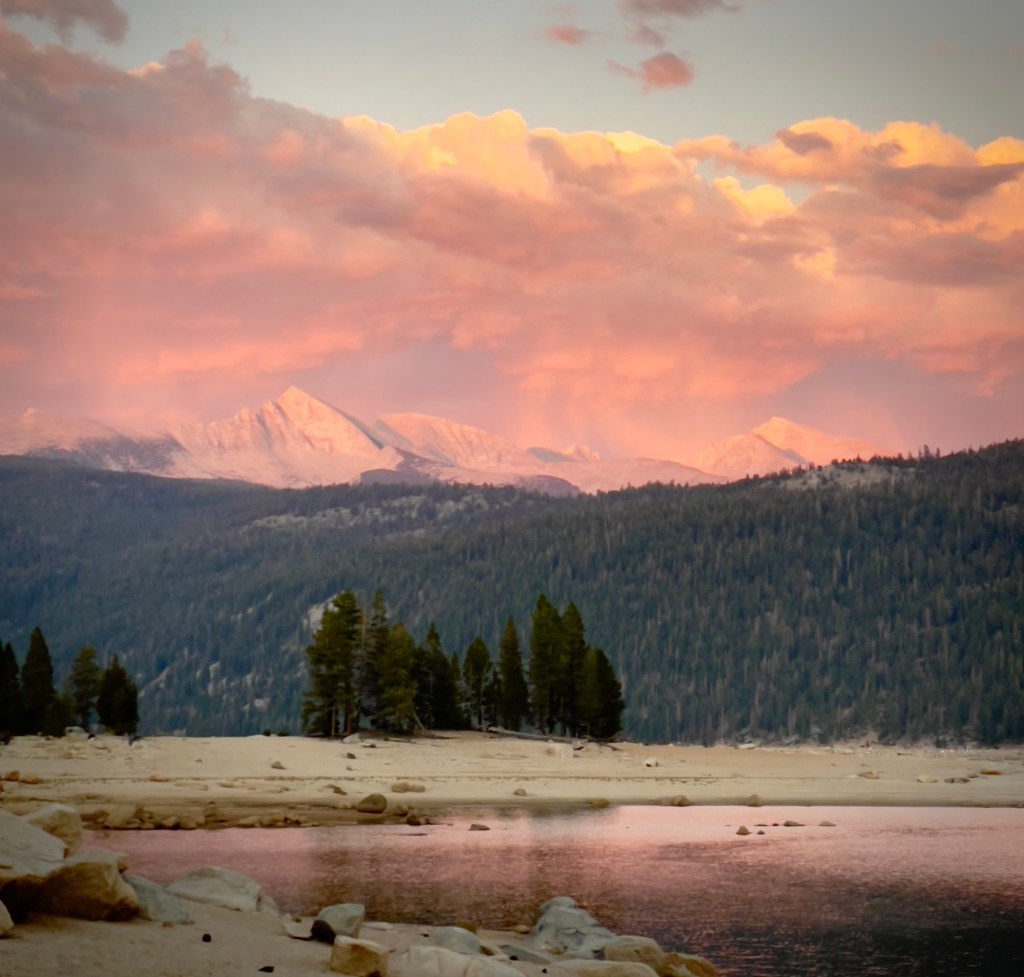
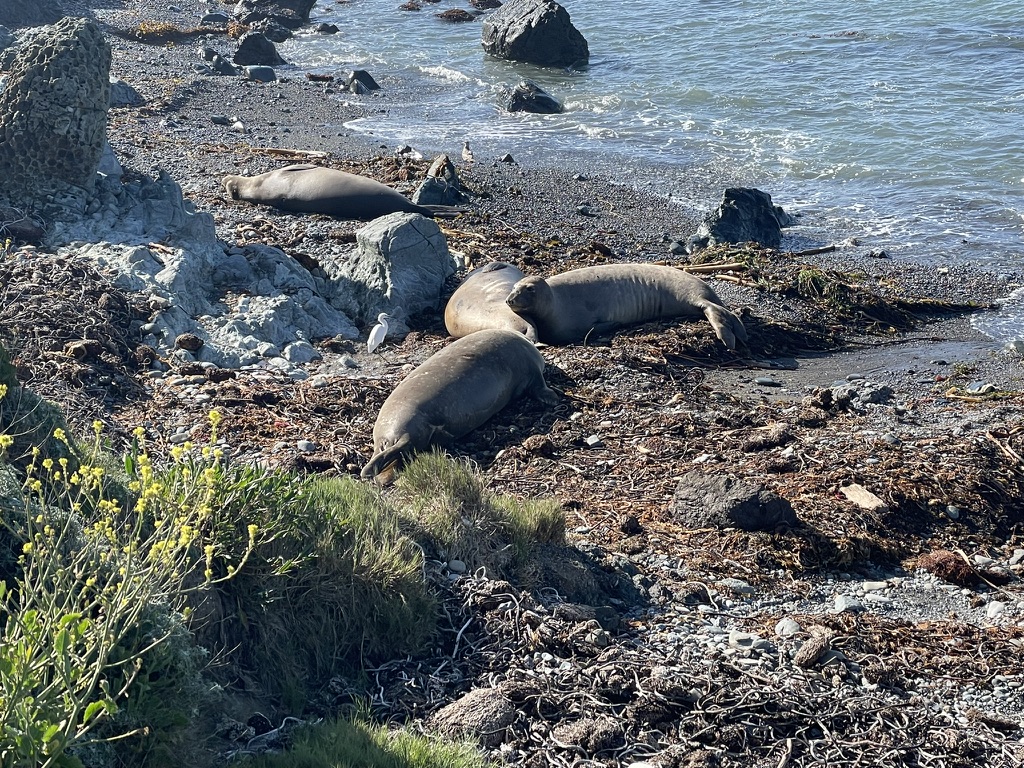
The following map of the topography of the region, while no substitute for the real thing, is worth a look:

Interactive USGS map of Utah

After a harried 2+ hour “tour” of the park (that you can enjoy in 34 minutes at https://youtu.be/_9hdx9c4SfY), we pulled over in Springdale to assess the situation. Pete and I decided to continue on to Hurricane for lunch and then return to our campsite by taking the longer route on AZ-389 through Colorado City to Fredonia and US-89 back to Mt. Carmel Junction.  It was 26 miles back through the park to our campsite.  It was 112 miles on our chosen route back.  Both could be done in the same amount of time according to the predictive Google maps, ~2.5 hours.  

After lunch in Hurricane, we returned to our campsite grabbing gas station sammies in Mt. Carmel junction for dinner along with our 3-R’s beverages.  The Zion Family Ranch facilities were quite nice including a heated bathroom with showers.  Firewood was available, payment made possible by Venmo.  The only human interaction we had was the following morning with a group of off-roaders who arrived after dark that evening as their dogs paid us a visit.  Location, location, location… We were in a secluded, natural setting near a very popular, crowded, National Park.  It was difficult for me to reconcile the incongruity of the events of the day.  Cheers to the 3-R’s!

Day 6, October 27, 2024 Zion, UT to Shoshone, CA

Zion Family Ranch to Shoshone

A longish day before us, some 344 miles, found us on US-89A back to Fredonia to avoid having to navigate the Zion stop-and-go.  Rolling past Colorado City, AZ, another controversial Mormon enclave with a “colorful” history, we soon reentered Utah and the Hurricane-St. George metropolitan area, a sprawling urban area in the midst of the intersection of the Colorado Plateau, Great Basin, and Sonoran deserts.  After a small navigation error (shoulda turned right instead of left) we found W Old Highway 9, avoiding the more scenic I-15 – if you can overlook tractor trailer rigs – that follows the route of the Old Spanish Trail into Arizona.  We were never too far from the Virgin River that is the great spirit of Mukuntuweap as we zoomed across the northwestern corner of Arizona to Mesquite, NV.  NV-169/167 took us past the bath-tub ringed, Lake Mead National Recreation Area, skirting Las Vegas through Henderson on NV-564/160.  With a tip of the helmet to Blue Diamond and the Red Rock Canyon National Conservation area (see our spring 2024 ride on sisyphusdw7.com:  Red Rock Canyons Ramble), we abruptly made a left turn off of NV-160 west on the Tecopa Rd that eventually took us to the Cal-Neva border and CA-127 to Shoshone, CA.

What was at least our sixth stay at the Shoshone RV Park and Campground, sixth meal at the Crowbar Cafe and Saloon, and sixth procurement of 3-R beverages at the Chas Brown General Store, we were set for what has become a favorite night under the stars (and a few sprinkles and some noisy coyotes) in a village that manages the whole preservation vibe, uncorrupted by crass commercialization, we have come to highly regard.  There’s also the issue of the lack of water sustaining a population of 22, modulating the delicate balance between local habitation and the visitation of Death Valley bound tourists with preservation.

Day 7, October 28, 2024 Shoshone to ?

Shoshone to Coalinga, Huh?

Our plan was to camp at Taboose Creek, midway between Independence and Big Pine along the Eastern Sierra, then make our way to Kernville overnight before returning home.  At a stop for lunch in Panamint Springs, another of our favorite “balanced” destinations, we overheard a conversation by a couple of locals of 50 mph winds stirring up that afternoon. Thus confirmed our concern that a rapidly developing frontal system would likely close Tioga Pass and would require changing those plans.  New plans:  We would bomb to Kernville for the night, some 288 miles, and get a roof over our heads.  

Setting out, the predicted winds materialized and our ride down Panamint Valley and Wildrose-Trona Rds eventually to CA-14 and CA-178 over Walker Pass was like riding a bucking bronc through drifting sands obscuring the road with fine dust breaching the seals of our helmet’s visors.  I’ve ridden in rain in the Rockies, fog in the Central Valley, searing heat across the Mojave, and snow flurries on the Paunsaugunt Plateau.  I’ve pedaled across the Big Horn in Wyoming in a thunder shower with hail pelting me on a bicycle, exposed to lightning.  I’ve weathered a Sierra thunderstorm and cross country skied in a whiteout.  Maybe because I survived all of those, my fear of calamity was only slightly moderated.  I was scared s*#tless.  But, as of this writing, I survived!  

I was in the lead and when we arrived in Lake Isabella where a right turn onto CA-155 would have taken us to Kernville. The wind, menacing dark skies, and light precip compelled me to forge ahead our next stop, Hart Lake, just north of Bakersfield to fuel up and make a plan for the night.  We had made 276 miles and the afternoon shadows were lengthening.  Our three options were to slab back to Merced on CA-99, the Bloody Highway, to zig and zag through the foothills ensuring a well after dark arrival home with the specter of a collision with Bambi, or shoot across the Tulare Lake basin to Coaling to stay at the Best Western Plus, where we stayed on the infamous, A Moment’s Inattention ramble.  

North on CA-65, west on CA-46 and north at Blackwells Corner, the last place James Dean was seen alive, an on to CA-33 where we arrived at the Best Western just as the sun set, 391 miles later.

We arranged for a room and after unloading the bikes we headed into Coalinga for our ritual of finding nourishment and refreshments.  It had been a long day of “riding hard” as Pete would snarl, and I was completely exhausted making decisions.  Taking the lead, rather than hitting the State Foods Supermarket or any of the fast food joints or taquerias, Pete pulled into the Coalinga Valley Market on Polk St. 

Entering this store, after such a long day and our decision making capacity compromised, we wandered around in circles through the floor to ceiling canyons of packaged food items.  The market was well stocked, but the only thing fresh in this store was at the carniceria.  

Such a colorful desert…

We found the beverage selection limited, but that didn’t stop us from landing a couple of 24’s.  As for food, I ended up getting a tin of smoked oysters and Lays Kettle Jalapeno chips, striking a nutritional balance between proteins, fats, and carbs.  Pete got a can of low sodium Spam, preferring a balanced saturated fat, protein, and even at 25% less sodium, salty fare.  The rest of the evening is a blur…

No wind, crickets, ravens, or coyotes at the Best Western Plus in Coaling Station A

Day 8 October 29, 2024 Coalinga Homeward

Homeward Bound

Approximately 91 miles north on CA-33 to Hudson Rd, a zig and a zag to CA-152 & 59 and presto, home from an 8 day odyssey that may seem from this narrative that at times wallowed in disappointment about the vibe, but, was by any definition an adventure:  an exciting ✔ or very unusual experience ✔; a bold, usually risky undertaking ✔; hazardous action of uncertain outcome ✔; filled with peril ✔, danger ✔, risk ✔, chance ✔, fortune ✔ and luck ✔.  All the boxes checked!

I harken back to a conversation during the relaxation, rehydration, reflection hour(s) around a campfire in Three Rivers a few years ago where we met Chris Baer, a white water adventurer who was running the Kern during a massive spring runoff, who when asked, “So, what’s the favorite river you’ve paddled?”  His reply, without hesitation, “The next one…”

I’m looking forward to a winter of bicycle riding and maybe I’ll hit the slopes, mended ankle permitting.  Until then I’ll be searching my AAA maps, Butler Maps, Google Maps, and fellow moto-touring YouTubers for what will invariably be my favorite, next ramble.  Until then, thanks once again to Pete for indulging me as a brother rambler, only slightly overwrought .

All the Best,

Sisyphus

sisyphusdw7.com Sisyphus and Associates, Much Ado About Nada 

@tjdw7 on Instagram

TjDW7 on YouTube

2024 Perseid Meteor Ramble

What is the purpose of a ride?

August 10 – 11, 2024

Every August, just when many people go vacationing in rural areas where skies are dark, free from light pollution, the famous Perseid meteor shower makes its appearance. The meteor shower peaked overnight this year on August 11-12.

August is also the month of “The Tears of St. Lawrence.” From Space.com:

Laurentius, a Christian deacon, is said to have been martyred by the Romans in A. D. 258 on an outdoor iron grill. In the midst of this torture, Laurentius was said to have cried out, “I am already roasted on one side and, if thou wouldst have me well cooked, it is time to turn me on the other.

Regardless of whether this actually happened (some believe that the story is a product of morbid medieval imagination), King Phillip II of Spain certainly believed it: He built his monastery palace, known as “El Escorial,” based on the floor plan of the holy gridiron. St. Lawrence’s death is commemorated every year on his feast day (Aug. 10).

To this day, the glorious Perseids — which peak every year between approximately Aug. 8 and Aug. 14 — are referred to as St. Lawrence’s “fiery tears.”

Mike Wickersham caught a colorful Perseid meteor giving the colorful aurora a run for its money in the skies above Lincoln City, Oregon, U.S.
(Image credit: Mike Wickersham)

On the Nature of Purpose

I’ve heard that the entire purpose of motorcycle riding is to make beer taste better.  In fact it was declared on The Lowdown podcast in a story related by its host, Neil Graham, in a recent episode. 

It is well known among the readers of this site that as a part of the customary Sisyphian 3-R  post-ride ritual of relaxation, rehydration, and reflection, a fermented carbonated beverage or two are consumed. Only in the spirit of nudging or expanding the reflection aspect while rehydrating with electrolytes, as we relax after a long day in the saddle.

But that is not our purpose when riding.  Our 3-Rs ritual’s “purpose” is not the purpose of the ride.  The ritual can be imagined as more of a tack in the sense of  a course of action or conduct, especially one differing from some preceding or other course.  As in sailing. For example, we do not drink while riding as we await the conclusion of the ride to imbibe.  As you might imagine, making sense of the events of the day in the reflection step of the 3-Rs is something we take seriously.  But rehydration, as in making beer taste better, wasn’t the purpose on this ride.   On the other hand, a bicycle ride just might enhance the taste of beer, to say nothing of the taste of tacos.

Our purpose on this ride was to view the Perseid Meteor shower.  The Perseid meteor shower peak was anticipated on or about August 10 and 11, 2024, as it occurs annually when Earth passes through debris — small bits of ice and rock — left by Comet Swift-Tuttle, which last approached Earth in 1992. This year the appearance of the Perseids was to occur as simultaneous auroras were expected in the more northerly latitudes which meant, auroras were unexpected in latitudes where we were visiting. 

Alas, we were in Bridgeport, CA, and not in Lincoln City, OR where the above photo was taken.  Lincoln City is approximately 44.65° North latitude whereas Bridgeport, California is approximately 38.08° North latitude.  The difference:  Lincoln City, OR’s latitude of 44.65° – Bridgeport, CA’s latitude of 38.08° puts Lincoln City, OR 6.57°of latitude north of Bridgeport, CA. 

Meteors would be visible but the 6.57° difference in latitude was apparently enough to preclude seeing any aurora.  

Wouldn’t you know it, though we had chosen an ideal rural area with little light pollution to obscure the Perseids, on Saturday, August 11, as seen from our campsite at Doc and Al Hunewill’s Campground, there were beautiful lenticulars streaming over the Sierra.

The setting sun created an alpenglow overcast that would later limit our sighting of all but one meteor that night before we abandoned the campfire to slumber. It wasn’t an aurora, it wasn’t a meteor shower, but it wasn’t half bad!

I have to admit that a campfire does somewhat improve the taste of beer but is that the campfire’s purpose?

Day 1 Wheels Keep on Turning

Our journey began early on Saturday morning, August 10 to beat the remnant heat dome smothering the Central Valley of California along the route over Sonora Pass on CA-108.  This familiar route took us from our home in Mercerd, California (without the requisite reservation for traversing the Sierra over Tioga Pass in Yosemite), past the new Chicken Ranch Casino and what I believe to be the only round-about in Tuolumne County.

We rambled past Jamestown, through Sonora and the unincorporated villages before reaching Pinecrest Lake.  Stopping in Strawberry at the Strawberry General Store for coffee and a snack we met Pup and Larry the store dogs. Larry never met a stick he wouldn’t fetch and Pup makes sure the middle of the parking lot is secure. So secure, he naps there.

On to Dardanelle, and Kennedy Meadows then over Sonora Pass, past the Marine Corps Warfare Training Center to US-395 and with a strong 5 iron (or field artillery cannon shot), south on US-395 and you arrive in Bridgeport.  Not only did we not need a reservation, but according to Google, we shaved 16 miles off of our first leg over CA-168.

No conga lines on CA-108 like those at any of the Yosemite pinch points

We checked in at Doc and Al’s about 6 miles west of town along Robinson Creek around noon having successfully beat the heat.  Bridgett, the gracious campground hostess, had just opened the office.  She is a member of the Hunewill Family that has been a part of the Bridgeport Valley since the 1860s. Currently, the 4th, 5th, 6th, and 7th generations run a guest ranch a couple miles down the road from Doc and Al’s. 

The ranch and campgrounds are located on a beautiful verdant plain that provides feed for the working cattle ranch and the numerous horses that are employed by the guest ranch that is kept green by the waters of the Sawtooth watershed.  Bridgeport is what much of the Owens Valley must have looked like before the Los Angeles Department of Water and Power captured the watershed of the Eastern Sierra sending it to La La Land.  

Doc and Al’s and the Hunewills Family, all four generations

The campsite was ideal for meteor watching with a large tended grass field with 360 degree open sky views framed by the Sawtooth Range to the west.  Further up the road is Twin Lakes, a popular summer fishing and camping destination.  Beyond Twin Lakes one enters the Sawtooths where once upon a time in the mid 80’s was a backpacking destination. 

Lower Twin Lake and the Sawtooth Range

Since the Perseids weren’t to make an appearance until 11:00 pm, we decided to head out to Bodie, a ghost town in the Bodie Hills east of the Sierra Nevada in Mono County, 19 mi east-southeast of Bridgeport at an elevation of 8,379 feet. 

Our destination: Bodie, a ghost town in arrested decay

Bodie became a boomtown in 1876 after the discovery of a profitable vein of gold and by 1879 it had established 2,000 structures with a population of roughly 8,000 people.  Besides several devastating fires over the years, the town went into decline in the subsequent 35 years and came to be described as a ghost town by 1915. The U.S. Department of the Interior recognizes the designated Bodie Historic District as a National Historic Landmark. Bodie is also registered as a California Historical Landmark and the ghost town officially was established as Bodie State Historic Park in 1962 in a state of “arrested decay.” Some would believe we live in a state, California, that is in “arrested decay.”  I, for one, am not one of them!

Glory to the Grizzly!

Surprised there was no Clamper plaque

The road to Bodie is paved except for the last 3 miles into the ghost town.  The washboard dirt/gravel road is sound and we had no issues with the modest knobbies on the V85-TT and street tires on Pete’s VStrom aside from some filling rattling on the washboard and some slip-slide-aroos in the drifted gravel corners.

The delightful ranger at the kiosk patiently waited for me to clumsily remove gloves, search for my wallet, and provide the $8.00 entrance fee.  Much to my dismay, there was no “senior discount” and since it was an Historic State Park, my NPS Senior Pass was useless.  But, what’s $8.00 in the larger scheme of our Perseid bound purpose? Upon handing me a site map that she described as free, I couldn’t help but mutter, “Free?  Nope, it cost $8.00.” 

I suddenly felt like the man called Otto.  She laughed, so I didn’t feel quite the schmuck.

Given all of the small bottles in the window, I say this was an apothecary

This may have been a mercantile

The remains of a stamp mill that once numbered in the dozens

The remains of the mill at the Standard Mine

No, we’re not reenactors posing as miners

We met Blue, the fellow in the camo cap who with his brother and a couple of other buddies were riding the California BDR section from Mammoth to Oregon.  He asked what it was like coming in on the gravel road on street tires.  Since we hadn’t crashed, we replied, it wasn’t bad.  At which time he admitted that he was inexperienced in the grueling backcountry discovery route and that his crew had greater experience riding in the backcountry.  His preferred moto was a Harley.  We agreed that ignorance can be somewhat blissful, of course, until it isn’t…  

I was intending to get Pete who was in conversation with Blue with ADV bikes in the background in this sunscreen smudged frame, but alas, as you can tell from my expression, I cannot see.

I remembered that a few years ago on another trip to Bodie that when electrification came to the town to run the ore crushing mill, it was something of an experiment.  From Bodie.com

Originally, the Standard Consolidated Mill was run by steam power, but wood was a resource that was expensive and became more expensive as it had to be hauled from further and further away. In November 1892, Thomas H. Leggett convinced James Cain to invest in his idea of transmitting power over a long distance. The power was to be used in the Mill, which would greatly reduce the amount of wood needed, and thus the costs associated with it. Cain agreed and work began. The Mill had new electrical equipment installed, a power substation was built, and lines were run from the Mill to the substation, and from the substation to Green Creek, where the Hydroelectric Power Plant was built. In fact, the lines were run 13 miles in a straight line! At the time, it’s believed that engineers weren’t sure if the power would ‘jump out of the line and into the ground’ on sharp corners – on the other hand, it cost less to run a straight line, rather than adding footage for turning corners…

I never cease to be amazed by the tenacity of the miners of that era. To have seen the elephant must have been as much a spiritual quest as it was ambitious, to say nothing of how arduous their pursuit of riches, more often, ended unrealized.

Taco time

Upon returning to Bridgeport to deal with having starved Pete by taking our afternoon Bodie diversion, we were told by Bridgett at Doc and Al’s about a taco truck by the Big Meadow Brewing Company.  Now, normally that’s a guaranteed good mangia e beve.  And while the food and drink were satisfying, Pete’s Place Truck in Bridgeport has a way to go before it achieves Central California truck taco authenticity. 

What was authentic was the Saturday afternoon entertainment by the Sawtooth Rangers featuring a mandolin, guitar, bass, keys, drums and Chris Murphy on the fiddle.  Wait for the fiddle solo in the clip.

The Sawtooth Rangers, Harvest Moon

After shopping for Perseid inspired beverages, we headed back to Doc and Al’s and settled in for the evening.  Disappointed by the cloud obscured heavens, we nevertheless enjoyed the 3-R’s and a wonderful campfire.

Sunset at Doc and Al’s

Relaxing, Rehydrating, Reflecting and perhaps, making the beer taste better

Day 2 Aspendell, a Lake, Bishop, & Benton

There’s nothing quite like an Eastern Sierra sunrise

Through a restless night, a sore throat and congestion began to rage.  Coughing and sneezing as I stepped out of my tent to view a glorious sunrise, I was reminded of my career following the summer recess and joining my 105 middle school students.  It would be the second week or so of the new school year, about the time of our Perseid Ramble this year, that I would get my first late summer viral infection that would morph into a bacterial sinus infection.  Nothing like cramming 35 kids into a petri dish with deficient air circulation for six periods a day allowing a rhinovirus to spread like wildfire. 

Recommended fast breaker

And just as I persevered back then, I popped a couple of Tylenol Gels, downed a camp mocha, and after a delightful breakfast at the Bridgeport Inn, we headed south on US-395 with Aspendell and Sabrina Lake on our this-day diversion as we awaited the second night, and hopefully clearer skies, of the Perseids.   

A nice Eastern Sierra day-ramble

Aspendell is a vacation community near the terminus of CA-168 East that terminates at Sabrina Lake.  Over the Sierra crest lies the terminus of CA-168 W just east of the shore of Huntington Lake.  The Central Sierra can be crossed over CA-108, Sonora Pass, CA-120, Tioga Pass, and Sherman Pass Rd with the southernmost crossing at Walker Pass.  I wonder if ever CalTrans considered a route across the Central Sierra, between Tioga Pass, CA-120 and Walker Pass, CA-178?  Mt. Wendel, Mt. Darwin, Mt. Haeckel, and Mt. Wallace guards the entrance to the Evolution Basin just over the crest.   For more information and the history of the Cardinal Mine, check out: 

A Guide to Cardinal Mine in Bishop Creek Canyon

Main Street in Aspendell

In the heart of Aspendell

Sometime in the mid-80’s a group of friends and I hiked from Sabrina Lake to Lone Pine by way of Whitney Summit concluding the trip with a fine meal at the Merry Go Round restaurant in Lone Pine.  It was then known as something of fine dining in Lone Pine.  I believe it has now reincarnated as a Chinese food restaurant.  I’m sure hungry Whitney conquerors would today enjoy a Chinese spread as we enjoyed steak dinners with wine back in the day. 

Mt. Wendel, Mt. Darwin, Mt. Haeckel, and Mt. Wallace

Sabrina Lake AKA Lake Sabrina

The locals pronounce the lake “Sah-bry-nuh”

Lake Sabrina was created by damming the middle fork of Bishop Creek. The dam was built in 1907-08 to supply a constant flow of water to hydraulic power plants. The lake is part of the Bishop Creek system.

After noting the failure of my left leg zipper on my armored pants, I attempted to solve the issue with a safety pin.  Given the density and thickness of the ballistic nylon material to which the zipper was stitched, I would have needed a ballistic safety pin which the young lady manning the register at the Cardinal Village Store, who graciously searched for any safety pin, could not locate. 

No super glue but anything you could think of for fishing

My next brilliant idea was to super glue the section at the top of the pant leg where four teeth were mysteriously missing causing the zipper to unzip, thus creating a new stop at the end of the zipper.  Alas the store had no super glue.  I decided it was warm enough to welcome the extra ventilation of a completely unzipped leg certain I could find super glue in Bishop.  

By the time we reached Bishop, the temperature was around 102 degrees.  After a quick refuel, we made our way east and north on US-6 headed to Benton where we would then head west on CA-120 to Lee Vining and US-395 north back to Bridgeport, the Bridgeport hardware store for super glue, a bite to eat and provisions for some Perseid watching at our camp at Doc and Al’s. 

Get this, we had cooling vests that when soaked in water, afford some relief from the heat by way of evaporative cooling.  Did we elect to adorn them in Bishop?  Negative.  Compelled by the unrelenting heat, we embarked on the ~35 mile ramble along the western slope of the Inyo Mountains to Benton.  It was miserably hot but there was some relief along the route where adjacent irrigated alfalfa fields yielded somewhat lower temps.  Some decisions are best not ignored…

Note: It just so happens that upon my return from our Perseid Ramble, I watched Brent Underwood’s, Ghost Town Living YouTube channel about the Jeffrey mine located east of those irrigated alfalfa fields.

I Climbed To A Forgotten Mine That Transformed The Automobile Industry

Bishop to Benton in the heat of the day

In Mr. Underwood’s own words:  “In this video* I take a beautiful trek to a mine that once produced a mineral that they called “more rare than gold!” It was a mineral that was only commercially mined in this location in the entire world, yet it was responsible for something that is part of our everyday lives.”  If you guessed the mineral to which he referred that went into the manufacturing of spark plugs in the earliest era of automobiles, you’d be incredibly prescient.  Once again, how tough were those seeking reward in the early days of mineral extraction in the deserts and mountains of California and Nevada!

One of the last payphones in California?  Not a gold mine, but at $0.25 per call, it might supplement SSI benefits

The Guzzi’s air cooled engine preferred the shade, what little was available

In Benton we came to our senses and rehydrated with questionable energy/electrolyte beverages. We did finally soak our cooling vests for the ride into Lee Vining. 

Boundary Peak

Benton Station whose gloried past was just that…

Benton is one of the oldest existing towns in Mono County. The town was founded by the western [Piute and Shoshone] Indians who came to make use of its hot springs. As the nearby towns of Bodie and Aurora grew in size and population, Benton soon became a checkpoint for southbound travelers in 1852.  Gold was discovered in the hills of Benton in 1862, and its population quickly grew. After the initial gold strike, little more was found. Benton’s profits were soon primarily from silver. Unlike other mining towns, Benton was able to provide enough for the town to thrive and flourish for approximately 50 years in supplying the more prosperous mines in the area. Although most mining activity occurred between 1862 and 1890.  The Carson and Colorado Railroad reached Benton in 1883.  (Wiki)

Once a small mining town with up to 5,000 inhabitants and with many of the original buildings remaining, the town has never completely died.  The gas station/cafe and adjacent, Smally’s Market, along with the Inn at Benton Hot Springs sum up the commercial side of this quaint intersection at US-6 and CA-120 that provides the current residents and tourists with an approximation of the thrive(ing) and flourish(ing) of the town’s past.

A-120 from Benton to Lee Vining  is one of my all-time favorite moto routes

Sweeping curves, open vistas, undulations, a juniper forest corridor, and Mono Lake make this route through the volcanic landscape of the Eastern Sierra a motorcyclist’s dream!

Whhhoooop-whhhoooo!

Back in Bridgeport we secured some Gorilla Glue and made our way back to Doc and Al’s to make repairs on the pants before heading to The Barn for their acclaimed Carne Asada Fries.  While I find much of Wonderhussy’s YouTube content amusing, her culinary recommendation leaves the epic out of epicurean.  I found her endorsement of The Barn’s Carne Asada Fries to be less than epic.  Satisfying, but not epic. The burgers and other menu items are great, even the fish tacos I have had on previous visits were among the best I’ve had in this land of little rain.   The asada, however, was nada. 

By nightfall, my germinating head cold had blossomed into a raging sore throat, headache, runny nose, and coughing/sneezing affliction.  So much so that my 3R’s were reduced to a single R, reflection.  There would be little relaxation and no rehydration, least wise of the fermented beverage sort (okay, maybe most of one) as it was all I could do to enjoy a cozy campfire and what turned out to be a satisfying meteor sighting event.  Fortunately for Pete’s sake, we saw a good two dozen or more significant meteor trails in the course of the hour or two that we endured beginning at the appointed 11:00 pm showtime.  We also had to burn through three bundles of firewood procured from the campground office.  My less than enthusiastic disposition didn’t dampen Pete’s excitement at viewing the meteors, Starlink and other satellites impersonating UAP’s, roaming the heavens in our fertile imaginations.

I cannot take credit for the photo, though we saw several like this one Perseid meteor shower: Bill Ingalls/NASA via Getty Images

Laurentius was said to have cried out, “I am already roasted on one side and, if thou wouldst have me well cooked, it is time to turn me on the other.”

Day 3 – The Curse of St. Lawrence’s “fiery tears”  

The next morning I was no less congested. As we were enjoying our ritual mochas, we were visited by some local denizens, perhaps employees of Doc and Al’s.

Pete Makes New Friends

It was time to pack up and head home.  I think the route back from the East Side over Sonora Pass is more difficult than the ride up and over the western slope.  Namely because there are a series of 10 and 15 mph uphill compound curve switchbacks that require a little braking/throttle finesse that when loaded with gear tends to increase the pucker factor.  

Pucker Factor Formula

If you ride or remember high school physics, the graphic above makes sense.  If it doesn’t, refer to Burr Trail Here We Come, a blog from a previous tour to Utah.  Towards the end of the blog, I explain how similar uphill compound curves on CA-4 over Ebbetts Pass resemble those on the way to summiting Sonora Pass from the east and how they are fraught with pucker peril.  

Sonora Pass, CA-108 from the East

Like the 45 minute leisurely walk to the midpoint of the trail ride and 15 minute gallop back on the return leg of the 1 hour horseback ride at the beach, our only stop on the way home was in Jamestown at the 76 Station just off of CA-49 to soak the cooling vests for the remainder of the ride across the sweltering foothills and plains home. 

Upon descending from the pass, el. 9624 feet, my eustachian tubes were now filled with covid spooge and were comparably aching to ear infections I incurred during long summer days spent in the 17th Street Pool  in Merced as a lad.  You might say I was experiencing tympanic panic, especially as I extracted the ear plug we use to soften wind noise in one’s helmet.  You see, air in the middle ear expands as one gains altitude, and pushes its way into the back of the nose and mouth.  Then on the way down, the volume of air in the middle ear shrinks, and a slight vacuum is produced sucking spooge from one’s sinuses into the eustachian cavity while making the removal of the earplug a painful ordeal, in this instance, requiring the Leatherman tool to extract.  Since space abhors a vacuum, covid spooge filling my eustachian tube, also called the auditory tube or pharyngotympanic tube, hence tympanic panic

Passing our favorite taco truck in Snelling, M&D’s, despite what I’m sure was Pete’s voracious hunger, we rambled on, weary from the heat.  When finally I pulled into my driveway back home in Merced, I immediately took off the ATGATT costume and jumped into a cool shower.  Somewhat refreshed, I managed to remove the panniers from the moto and garage the bike before becoming overcome by fatigue.  It was then my, wife who in responding to my text that I had arrived safely home, suggested I take a covid test.  

HOLY SCHNIKES! Well, at least it wasn’t pneumonia…

In spite of dutifully updating my vaccinations, it was then that I conceded my attempt to mask my condition as a head cold, like those of my days in the classroom that would visit me not long after the resumption of the school year, was at best an incautious ruse.  Thankfully Pete, who had been belted by the C-19 only a few weeks prior, tested negative upon my notifying him.  As for any of the other folks with whom I shared a common air space, Typhoid Tommy begs your forgiveness!  Alas, whoever infected me, be damned!

A course of Paxlovid and Benzonatate later and my recovery is nearly complete.  Just don’t let my wife know that my (fabricated) covid symptom of “brain fog” or hearing loss is as much of an excuse for being lazy or intentionally inattentive as it is likely real.   As always, thanks for enduring my overwrought loquaciousness and stunningly mediocre photography.  Check the blog at www.sisyphusdw.com for other harrowing tales of geezers on bikes. 

Arrivederci!

Postscript, August 27, 2024

An early October trip is in the works.  We’ve wanted to ramble into northern California and Oregon.  We’re hopeful that the fires that have plagued the region this summer will have abated.  Then there’s a return trip to Utah that might just compel a trip east.  Ours is a curse of abundance when it comes to planning one of these rambles! 

In either case, thanks for joining us from the comfort wherever you can catch a screen…